
By Amelie Patel, Comment Deputy Editor
Soon enough you’re going to hear whispers of the NUS and heated on-campus debate of people screeching ‘yes’, ‘no’, ‘we must disbar!’. You might wonder what the hell the NUS is, so let me bring you into the loop and relay all the necessary facts. Right now, it is a sinking ship, waylaid by financial deficit, political scandal and deep-seated corruption. Accordingly, the most important thing to note is that it’s time for the university to disaffiliate.
The National Union of Students (NUS), represents around 95 per cent of university pupils across the UK. In theory, they are a powerful body; able to organise students' voices into a collective and amplify their voices nationally. In reality, they’ve faced an unprecedented number of issues in the past 10 years, leading a growing collection of universities to question whether the organisation still delivers meaningful benefit - a question for Bristol to ask too.
The infrastructure of the NUS is fundamentally weak, since in 2018 they announced a 3 million deficit. As a result the union had to significantly downsize, with 22 full time officers scaled down to 6, and far fewer resources. Then, in 2022, the Conservative government suspended their relationship with the body because of antisemitic investigation outcomes. With the removal of NUS reps from government education boards, it is much harder for the organisation to contribute to policy change, minimizing their contributions to grass-roots level. Factoring in their financial woes, their capacity to effectively advocate for over seven million students is clearly inadequate.
For many years the NUS has faced allegations of failing to represent a majority of students. In 2016 the student NUS representative from Durham, Tom Harwood said ‘It's run by a very narrow group of people who come from an even narrower spectrum of opinion’. Others accuse it of being an access route to Westminster for Labour politicians; the current Health Secretary Wes Streeting was previously president of the NUS. As such, some argue its annual conferences have become opportunities for political fanfare rather than focused calls for action. These perceptions have deteriorated trust in the organisation, whether fair or not.
‘If the institution cannot adapt and rework itself in response to failure, it has no meaningful value.’
Their most damning failure has been an inability to target antisemitism. In 2022 their annual conference lineup included the British rapper Lowkey, who had recently shed controversial views on neo-Nazism and Zionism. When members of the UJS (Union for Jewish students) expressed concerns about the booking, they were told that they could move to a ‘safe space’ while the event took place, before the NUS ultimately cancelled Lowkey’s appearance. Then, in 2023, investigations found that the NUS failed to target antisemitism across its departments, despite previous enquiries. It now has an antisemitic action plan in place, though it feels like too little, too late.
Last year, Cambridge disaffiliated due to the NUS’ lack of support for Palestine campaigns, though more widely in the past decade disaffiliation motions have cited issues ranging from Islamophobia to Antisemitism for their withdrawal. The NUS has had ample time to address and reform itself in response to these worryingly blatant counts of racism, and has failed. If the institution cannot adapt and rework itself in response to failure, it has no meaningful value. The University, by failing to disenroll, risks promoting the organisation’s prejudices by association.
 Sophie Lee
A strained organisation now devoting resources to necessary ethical reviews and action plans is completely unable to support students in a currently turbulent socio-economic climate. A former NUS employee told the BBC in 2022 that issues like the cost of living appeared ‘sidelined’ while the NUS has been grappling with the fallout of their review. With students facing huge obstacles like rising student loans and high post-graduate unemployment levels, many are debating the merits of getting a degree in the first place. If the NUS cannot prioritise these issues, or communicate directly with policy makers on these issues, its purpose comes into question.
Whilst the NUS may still carry out valuable student-based research, or raise awareness on important issues, it has lost the crux of its power: legitimacy. No longer worth the annual investment or negative reputational associations, it is time to disaffiliate. Crucially, disaffiliation is not permanent, and the university can always choose to rejoin if meaningful reform takes place. For now, stepping away may be the most responsible choice.
Featured illustration: Epigram / Gina Nevin
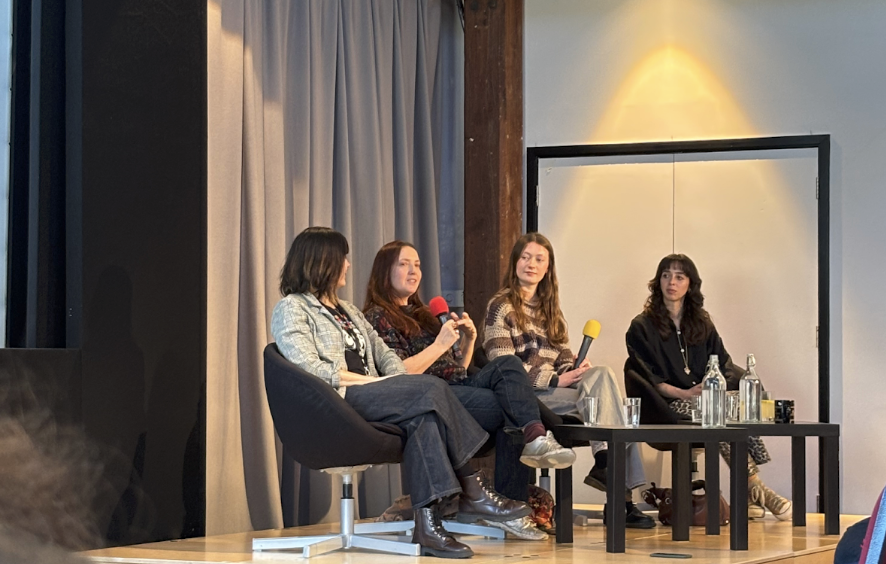
Epigram will be hosting a debate on the 6th March in the Balloon Bar.
Voting will open from the 9th to the 12th March.