By Finn Wastnage, Second Year, Politics and International Relations
Ever since Manchester City’s iconic first Premier League win in 2012, they have been an utterly dominant, even unstoppable force at times, both domestically and internationally. But recently, the club’s success has been under scrutiny, following the Premier League commission's findings that Manchester City was found guilty on 114 charges related to serious breaches of the Premier League’s financial rules over nine seasons, with the majority of these charges being triggered by City's failure to cooperate with the League's investigation. The punishment is yet to be announced; some call for point deductions, for their titles to be revoked, and even for relegation to the fifth tier of English football. But whatever the sanctions may be, these charges have put a stain over this era of Premier League football.
Manchester City and the United Arabs Emirates
Manchester City were taken over by the Abu Dhabi United Group in 2008, which is inextricably linked to the United Arabs Emirates (UAE) government. The link is so close that the owner of the Abu Dhabi United Group is the Deputy Prime Minister of the UAE and brother of the President. Many called this financial takeover a matter of sportswashing, due to the UAE’s incredibly controversial human rights record, and: no democratically elected officials, censorship in the media, and the restriction of women’s rights. This is not directly related to Manchester City’s charges, but it provides context for the intense financial investment the club received and the dubious nature of the ownership.
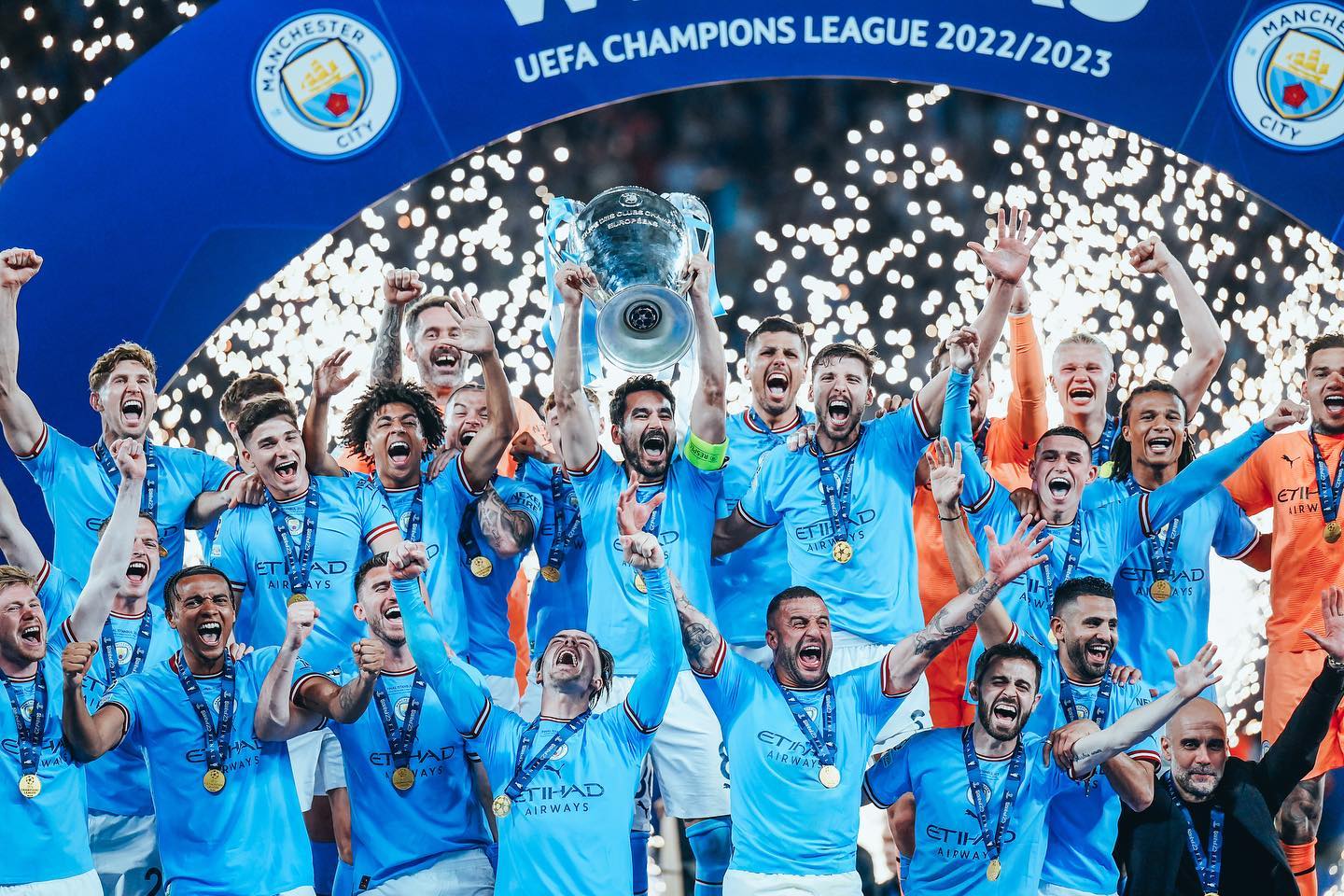
However, despite this, there is only one way you can describe Manchester City following their financial takeover in 2008: serial winners. Following their first FA Cup in 2010/11, they won seven of the possible ten Premier League trophies, breaking the points record in one of them. They also secured three more FA Cups and seven League Cups and won the treble, meaning the Champions League, FA Cup and the Premier League in one campaign in the 2022-2023 season. Manchester City were only the second team to achieve this treble, much to their rivals, Manchester United fans’ dismay, as they achieved it under Sir Alex Ferguson back in 1999. Former United Player Gary Neville is now, not unreasonably, stating ‘the titles should be stripped for the relevant period’, in relation to the 114 charges levied against Manchester City.
These charges were revealed when founder of Football Leaks, Rui Pinro, hacked Manchester City’s emails, exposing financial irregularities. The charges themselves are severe breaches of the Premier League’s financial regulations. The CEO of the Premier League, Richard Masters, stated that City 'systematically broke Premier League rules for nearly a decade'. This was allegedly done through 'sham' contracts, artificially inflating Manchester City’s revenue, allowing them to make more signings. This was to the region of $1.08 bn, slightly more than you will find down the back of the sofa.
This rule-breaking was said to occur between 2009 and 2018, and in this time City signed Sergio Agüero, David Silva and Kevin De Bruyne - all of whom would prove to be integral to their success, especially the latter, winning PFA player of the year twice and being the top assister of the Premier League four times. City manager 2016-2026, Pep Guardiola has responded to the charges by telling fans that ‘[they] will get through this’ and that he is fully ‘behind’ the club. In a similar vein, the current manager, Enzo Maresca, is urging fans to ‘stay positive’ in dealing with the guilty verdict.
Manchester City have firmly denied any wrongdoing and have submitted an appeal to the Premier League commission. In their response to the charges, City stated they are ‘disappointed’ by them, and have ‘irrefutable evidence’ proving their innocence. It is difficult to find this entirely convincing; however, if this said ‘irrefutable evidence’ exists, why was it not provided to the Premier League at any point during their lengthy investigation to absolve themselves of the potential charges?
These charges are very serious, with allegations of ‘systemic’ cheating. The Profit and Sustainability Rules (PSR) are a set of Premier League laws introduced following Portsmouth’s administration in 2010. These rules stipulate that clubs can not lose more than £105m over the course of three years, thus restricting clubs from spending infinitely and ensuring they spend relative to their earnings.
With these rules in place, Manchester City were technically able to spend £300m each summer as they did, provided they were recouping this money in different forms of income. They did not. Manchester City reported that their revenue was continuously rising, up to £500m in 2017/18, with their income inflated by over £900m between 2009 and 2018. Manchester City claimed sponsors were paying high amounts to the club, when in reality these amounts were mere fractions of the full amount, and the revenue was instead artificially funded by club owner Sheikh Mansour, of the Abu Dhabi ruling family. Leaked emails revealed that Mansour was funding the £67m sponsorship of the club's shirt, stadium and academy through Etihad, his country's airline. Through these emails, it became clear that in reality Etihad paid a mere £8m, and the rest was covered by Mansour personally.

It has been seen before
Is there any precedent for this at all? Yes, and no. There is nothing on the scale and size of Manchester City's alleged cheating in the Premier League; however, something similar happened in Serie A. Calciopoli (which roughly translates to footballgate). A large number of the top-flight Serie A clubs were found in a criminal trial to be guilty of match-fixing in 2012. Most prominently, the Juventus general manager Luciano Moggi and Chairman Antonio Giraudo were pressuring referees to give them favourable treatment. Following this, Moggi received a lifetime football ban, and Juventus was stripped of their titles and relegated to the second division. It was not just Juventus that suffered consequences, as Arezzo, Fiorentina, Lazio, Milan, Pescara, Reggina, Siena, and Triestina all received points deductions. This scandal tore the foundations of the Serie A, and took Juventus years to rebuild, with pundits theorising that the Serie A is still yet to fully recover.
Other teams in the UK have breached financial rules, such as Everton, who also breached PSR. Everton overspent by £19.5m and £16.6m in two consecutive seasons under PSR. The consequence of this was a 10-point (later reduced to 6-point) deduction, and they were ordered to pay £35m to Burnley in compensation. This was two seasons of overspending, not a sustained effort to breach financial rules over a long period. If a proportional sanction were to be placed on Manchester City now, it would be a 158-point deduction, and countless compensation payments to clubs who missed out on European positions, cup wins and League trophies.
Fans await the verdict
Due to the sheer unprecedented nature of these charges, it means the punishment is also unprecedented, leaving ample ground for debate. Some, such as former United players Rio Ferdinand and Paul Scholes, have argued that they deserve to be stripped of all their titles from this period as they won them illegitimately, and asked for them to be awarded to the teams that came second instead. Others have put forward that Manchester City need to be relegated from the football pyramid entirely and that a slap on the wrist will not be a significant enough deterrent to future clubs considering following in their footsteps.
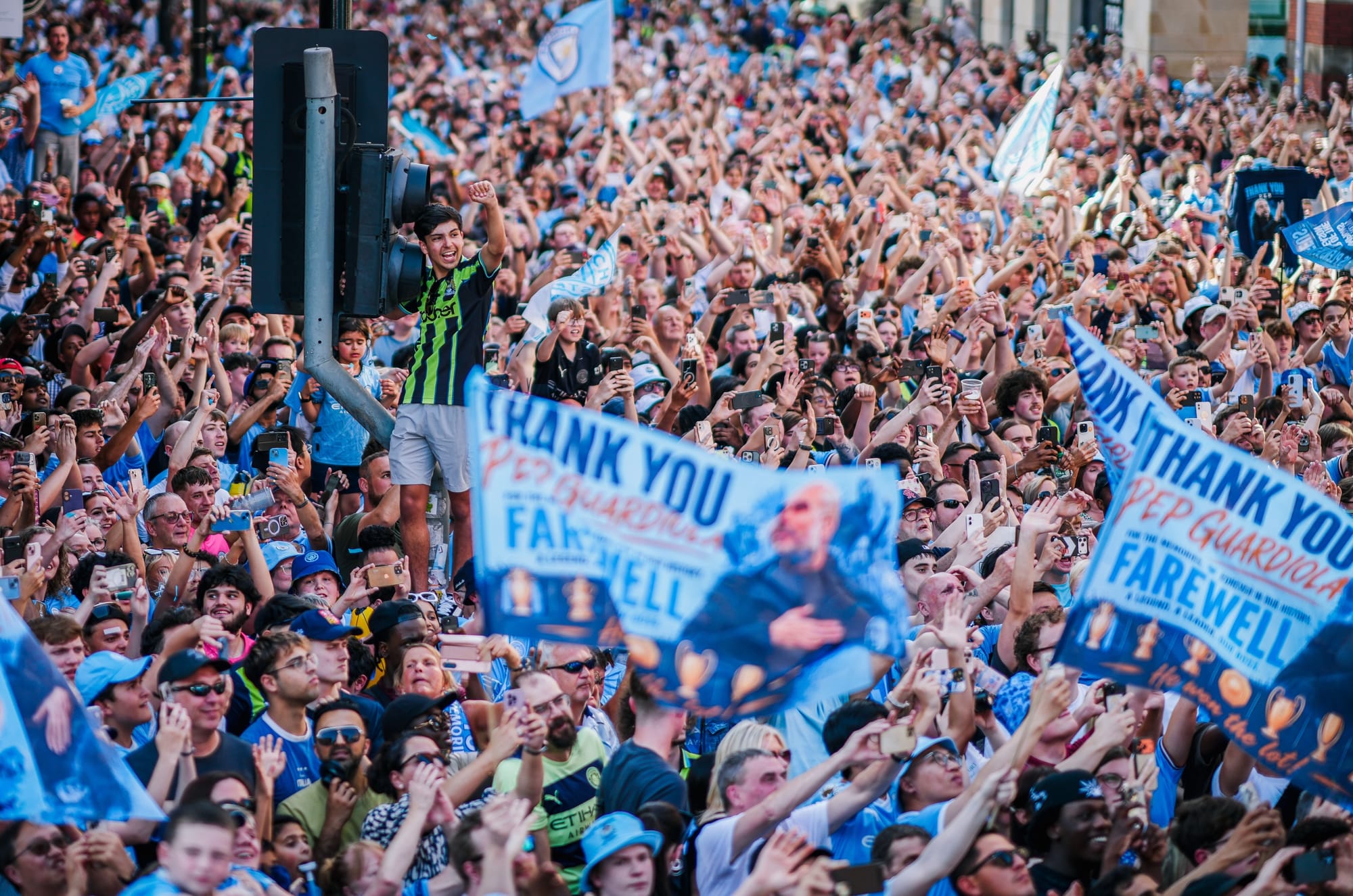
Whereas Jamie Carragher has contended that ‘it's all about the owners’, stating that he wants the UAE owners removed for the ‘stain that will be left on the Premier League for the next ten years’. For me, it's only fair for Manchester City's 2019 FA Cup to be removed, and for the final to be replayed with Brighton in their position against Watford.
So, should Manchester City be relegated? Almost certainly.
But will they?
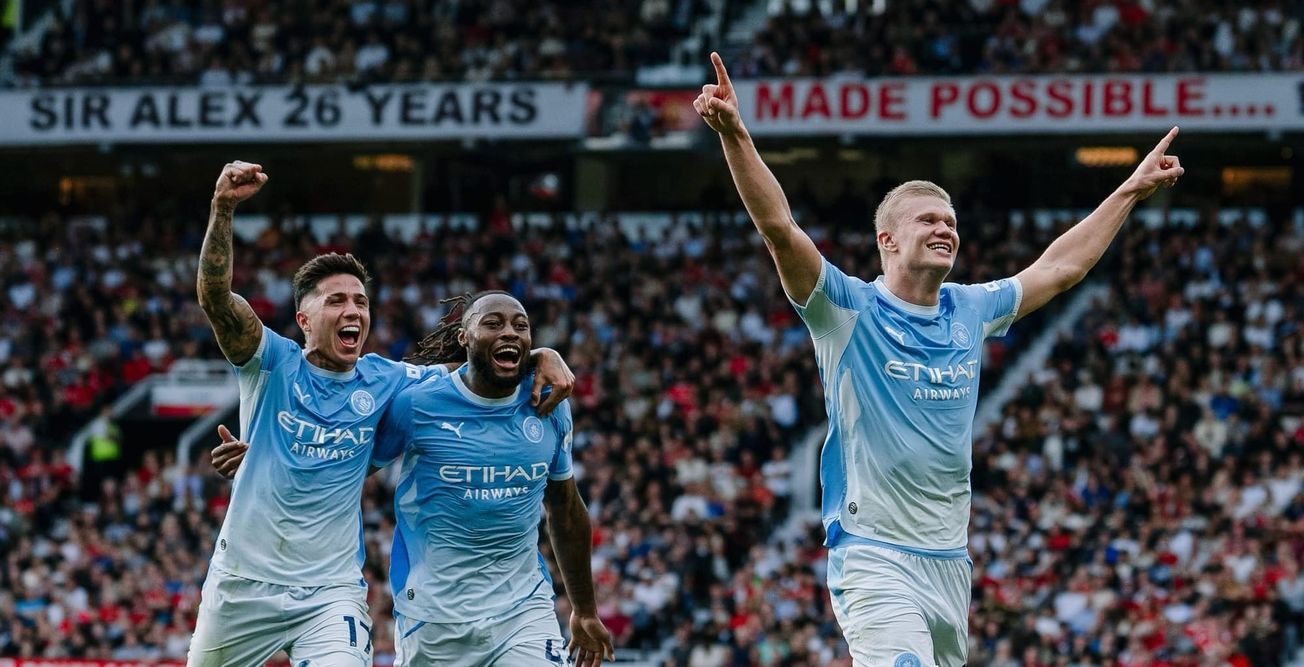
Featured Image: Instagram/ Man City.