By Holly Nicholson, Third Year, English
From the 2nd of December until the 29th of January, the Royal West of England Academy (RWA) presents ‘Down to Earth’, a student-curated exhibition drawing from the gallery’s own collection. For the 11th consecutive year, the University of Bristol’s Art History MA students have once again curated a stunning collection that preludes the gallery's forthcoming major exhibition: ‘Cosmos: The Art of Observing Space’, opening in January 2026.
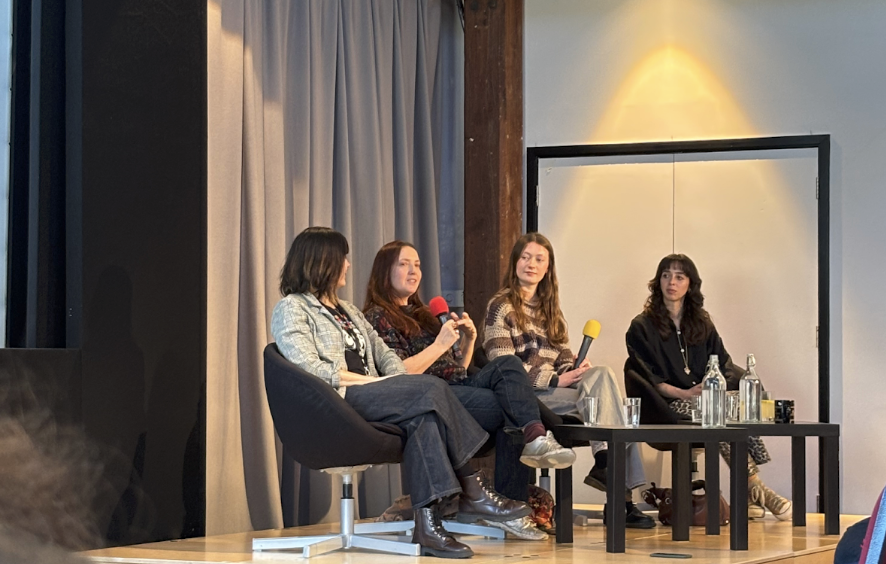
Working only from press releases and thematic outlines of the yet-unseen Cosmos exhibition, the 11 MA students responded to the exhibit by turning their attention ‘back to earth’ focusing on the landscape and the human relationship to the natural world. At the opening drinks reception, project supervisor and university lecturer Ann established the show as another testament to the ‘thriving partnership’ between the University and the RWA, put together in just 10 weeks. The show was deemed an integral part of the Collaborative Curatorial Unit that allows students to come together to create what is so obviously (as Matchette accurately observes) an ‘eclectic collection’ of artwork from the RWA’s storage.
Elaoise Benson and Ofelia Andersson (MA students who worked on the curation) expanded on their lecturer’s introduction, saying that the exhibition explores ‘fresh ways of seeing the landscape, from microscopic and macroscopic points of view’. After raising a glass, we were encouraged to explore the exhibition.
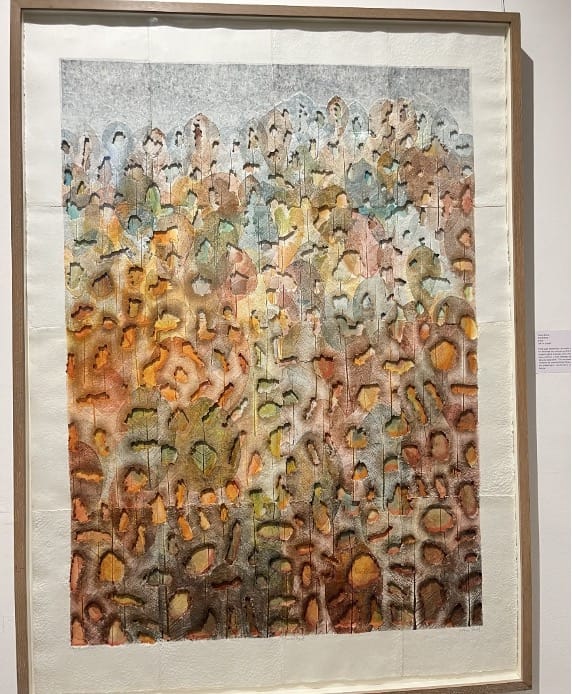
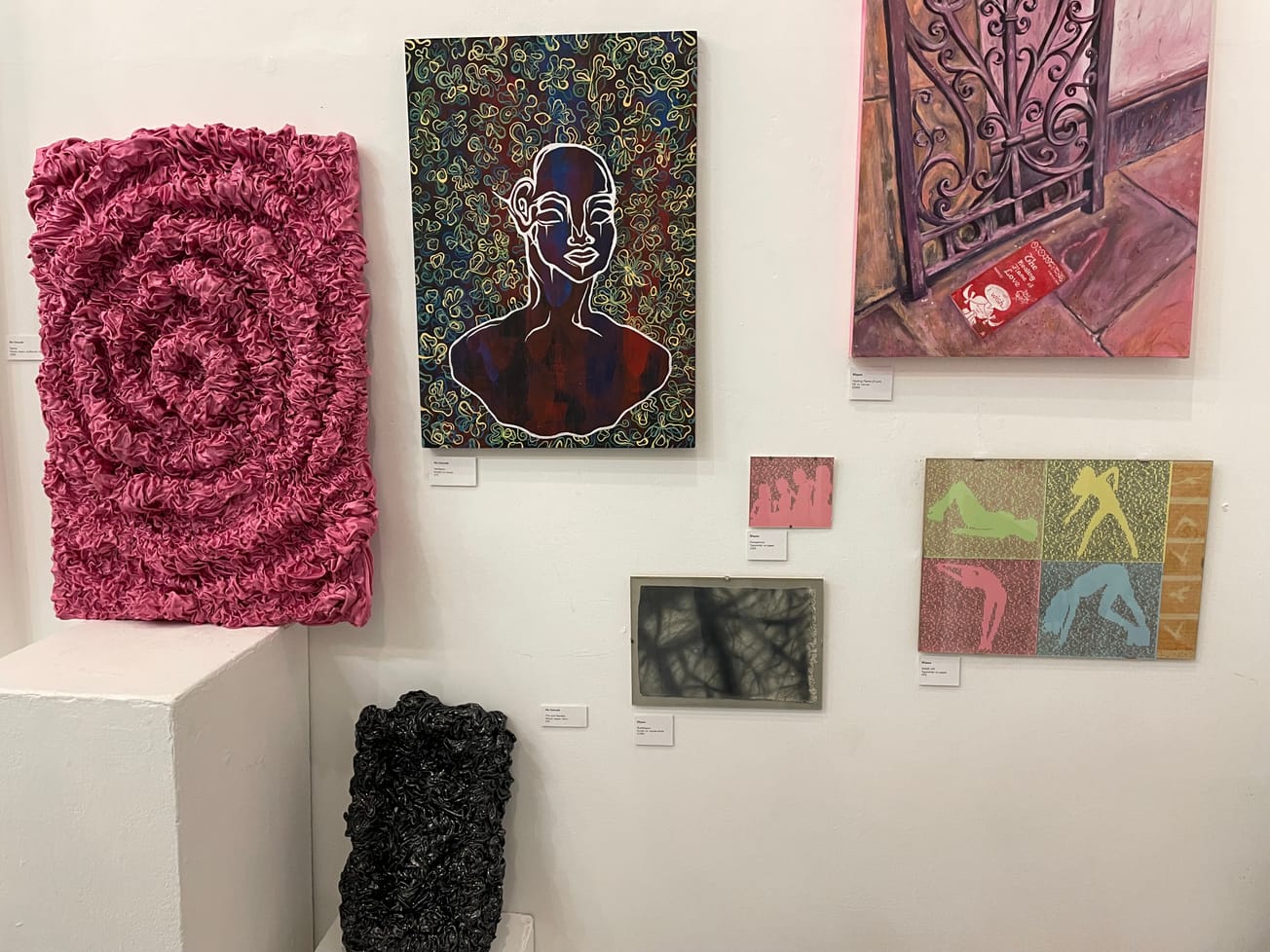
The exhibition itself was striking and beautifully curated. Despite artworks spanning from the early 1800’s through to 2017, the exhibition's range did not hinder its impact. In fact, the multitude of different styles, forms and techniques found within the curation only reinforced its central theme, emphasising it as an allegory for the multifaceted ways of interpreting the natural world. Several pieces caught my eye, but the one I found most fascinating was the Piece by Peter Ford, Ink on paper (2002). The piece amasses dyed, handmade, recycled paper that attempts to imitate the texture of the natural world. In the making of the piece, the artist allowed various insects to eat through layers of paper, creating a remarkable collaboration between human intention and natural intervention.
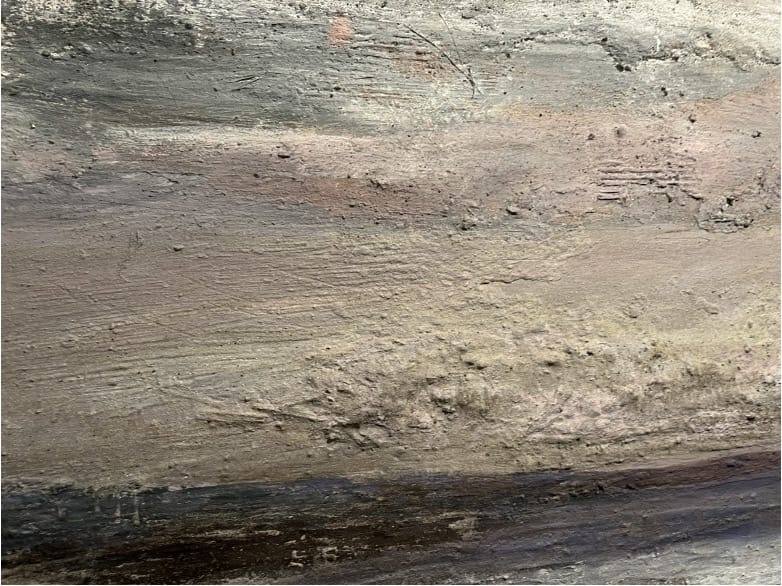
Another standout was a piece by Andrew Hadwick called ‘Somerset Coast’ (2012), which combined acrylic paint, PVA glue and elements of the natural earth (soot, twigs) to construct the landscape. The mixed media piece seamlessly accompanies the curation’s aim to observe the natural world from varying perspectives. The curation was skilfully interactive, with magnifying glasses accompanying certain works, adding a subtle but immersive dimension to the show, encouraging visitors to engage closely with the compositions.
After taking a good look at the works, I approached Elaoise and Ofelia to get their thoughts on the process and formation of the show. Elaoise said the project ‘challenged [her] take on the natural world’ and prompted her to ‘reconsider [her] own assumptions’ made regarding the art. Ofelia agreed, stating that the end result was a testament to the ‘collaborative, coordinated input’ of the cohort.
RWA curator and head of exhibition Katharyn Johnson affirmed that the close partnership is one that ‘absolutely’ has longevity. She notes that the project is not just visually and thematically complementary to the Gallery’s primary exhibition, but a place for students to learn the ‘logistics and practical skills’ needed for a career in curation.
 Daisy Guilor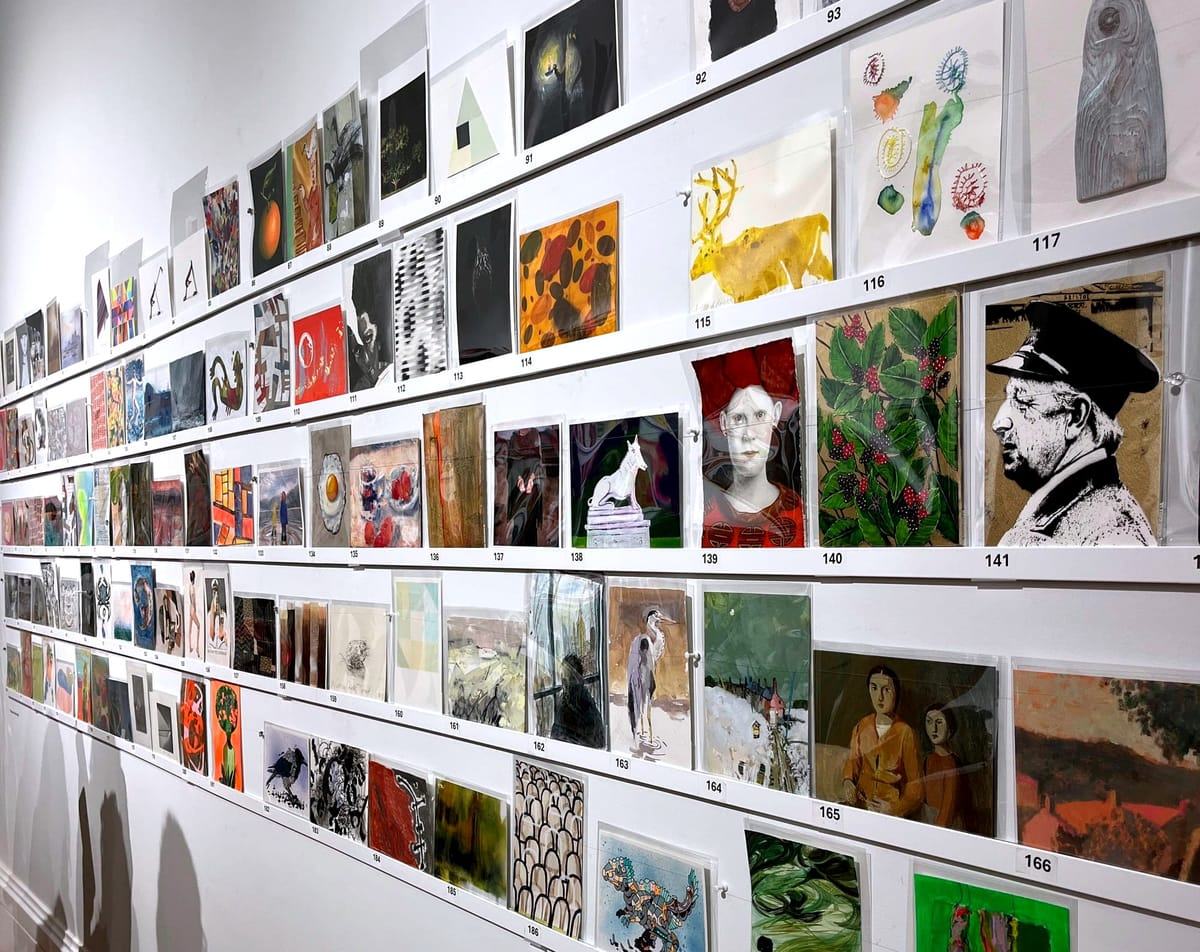
Ultimately, Down to Earth is a cohesive yet varied meditation on our relationship with the natural world. Drawn entirely from the RWA’s archives, it stands as a testament to the curators’ collective eye and a compelling exploration of the many ways we observe, interpret and inhabit the landscape.
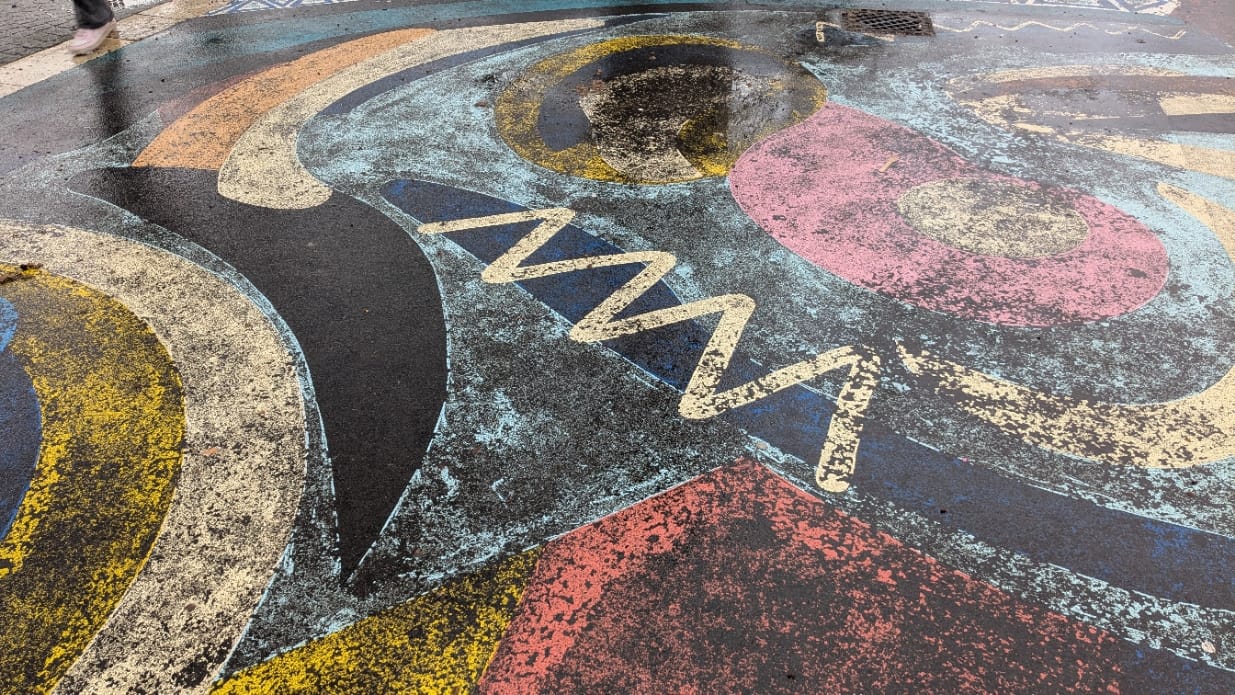
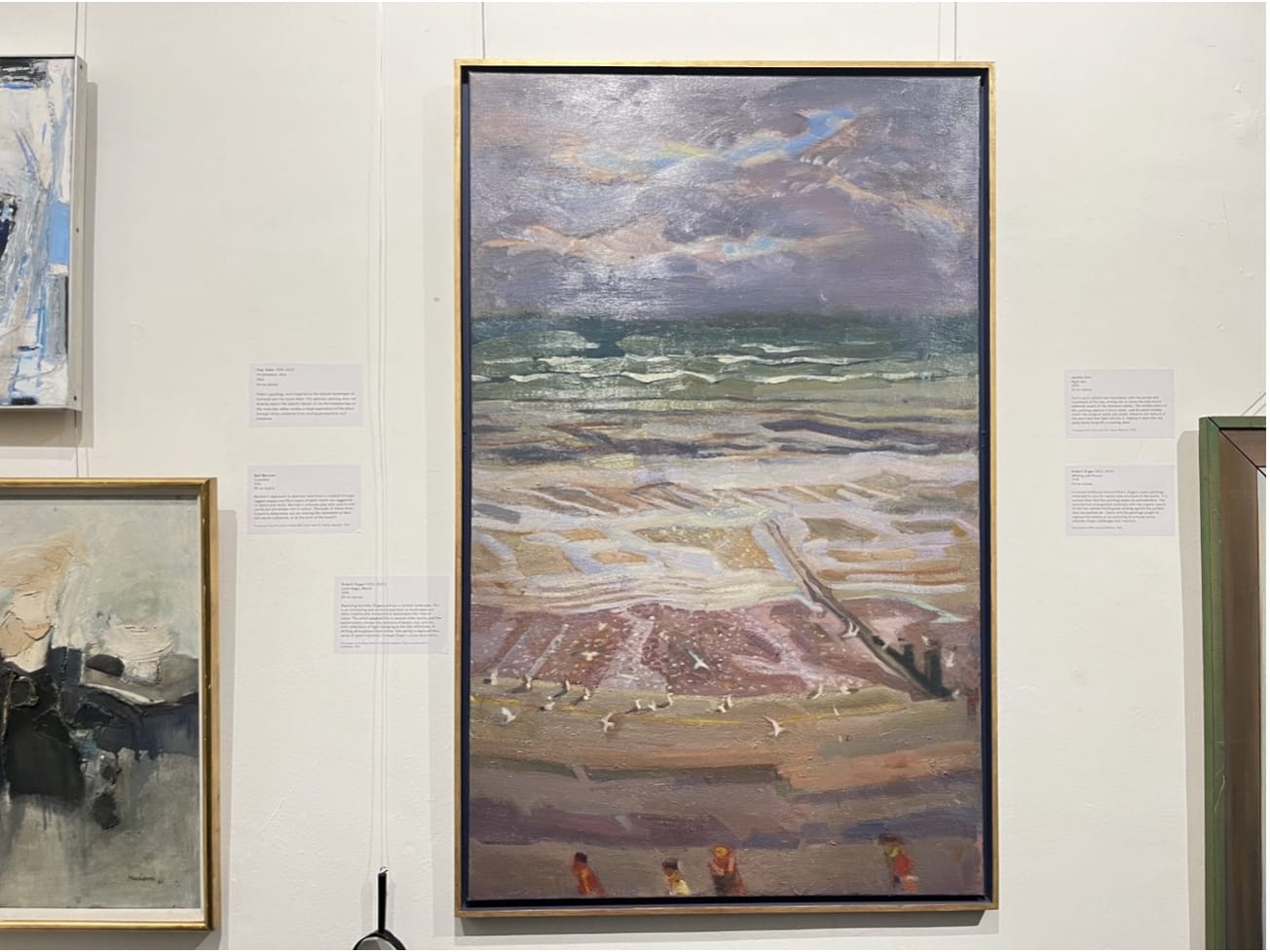
Featured Image: Painting by Robert Organ (1959) | Holly Nicholson
Why not stop by the RWA?