By Ruby Wright, Literature columnist 25/26
What is translation and why is it important? In the most literal sense of the word, translation involves transferring meaning from one language to another. In terms of professional translation, specifically concerning the translation of literature, it requires more: cultural knowledge of both languages, the ability to convey context, and an understanding of tone, pace and atmosphere.
Although not literary, an example to explain this is Top Boy (2011-2023). The language used in the show is pure slang – it is rich and dense with local culture and context that has been created by social circumstances that are specific to the area where Multicultural London English (MLE) is used. The show has been dubbed and subtitled into eight different languages – but how effectively can ‘council estate’ and all the sociopolitical ideas and meanings behind it be translated into, say, French, where no equivalent exists? But this example only concerns itself with the pure language, or vocabulary side of things – when it comes to a novel, translation is without the aid of any visual cues, so requires the reproduction of not only words, but pacing, atmosphere, rhythm and emotional timbre.
'The biggest challenge of literary translation is bridging an unbridgeable gap between two languages that do not exist in the same cultural environment'
Long story short, the biggest challenge of literary translation is bridging an unbridgeable gap between two languages that do not exist in the same cultural environment. The development of AI language models as an ‘innovation’ in translation presents itself as a 'quick-fix' solution to this gap, but in reality it creates more divide. Another gap emerges: that between a machine's and a human's understanding of language.
When we describe AI as innovative, we are not talking about something that is able to better 'bridge' or translate than humans, but an algorithm that translates faster and cheaper. This is all well and good when it comes to translating business transactions, legal letters and other short documents where the quality and technique of the text has no real importance. Yet when it comes to literature, surely, we expect a translation that preserves, or attempts to preserve, the skill and beauty of the author's original text rather than merely pattern recognition and automated reproduction? An AI translation might always be good enough – but is literal meaning the only thing that makes a good novel?
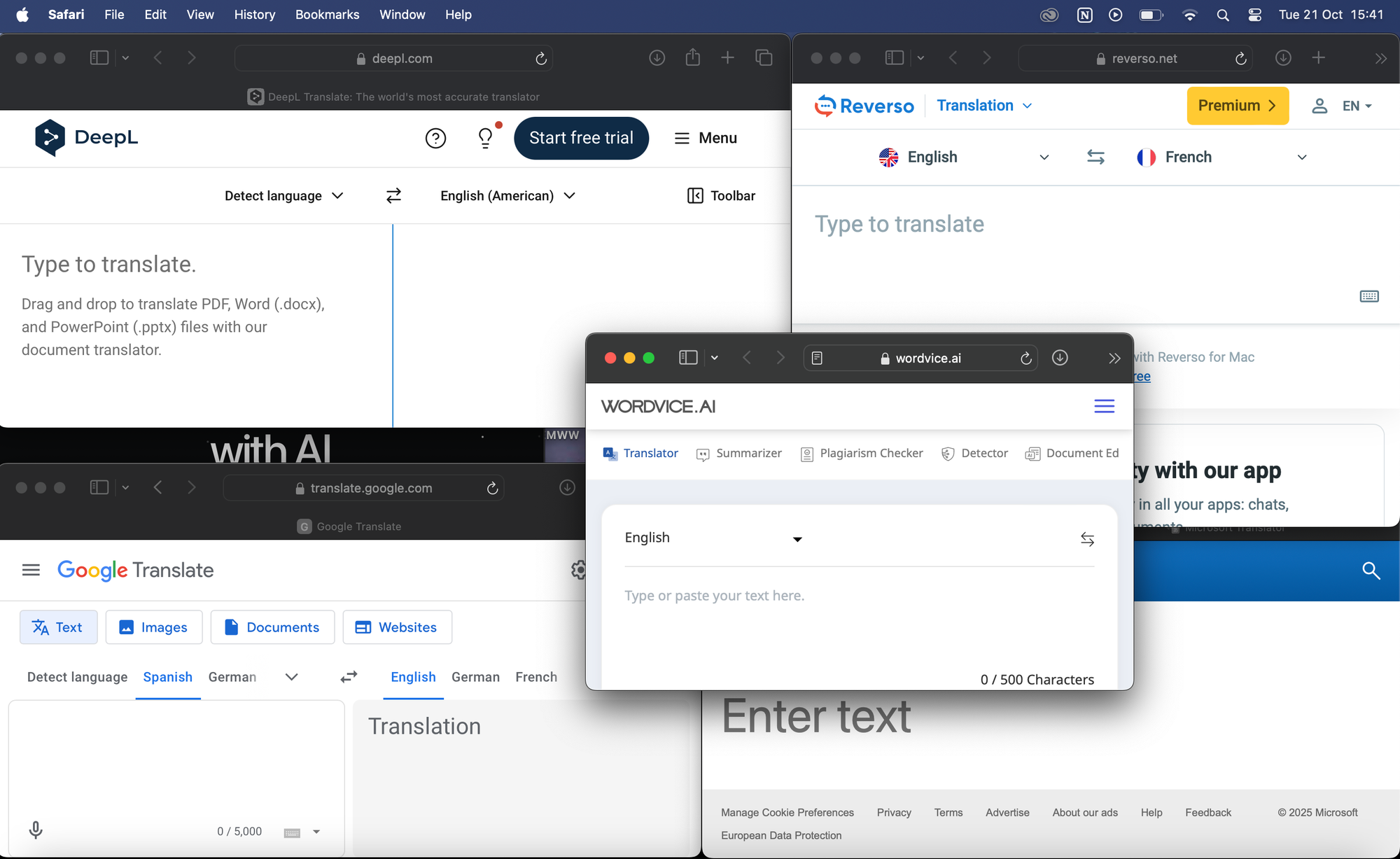
It’s no secret that there has been a massive influx in free AI translation tools online; ever since Google Translate’s 2006 launch, crops of translation software have been spawning seemingly out of nowhere. AI translation on this small scale has existed for years – but there has always been a character limit, and so this has avoided completely targeting the professional translation of books. However, the recent July 2025 launch of GlobeScribe AI changes this. Charging a $100 fee per book, per language, the company offers the instantaneous translation of fictional works to be published to an international market. In a company statement, the founders declared that 'feedback consistently showed that readers could not reliably distinguish between AI and human translation', but that 'there will always be a place for expert human translation, especially for highly literary or complex texts'.
'The best literary translations offer more than simple accuracy'
Needless to say, the translation community responded by denouncing this development. Deepa Bhasthi, whose translation of Banu Mushtaq’s Heart Lamp from Kannada into English won this year’s International Booker prize, said that 'there are many words in Kannada that contain whole cultural worlds in them … a human being is needed to translate these words'. Polly Barton, most known for her translation of the bestselling Butter by Asako Yuzuki, said, 'The best literary translations offer more than simple accuracy', more than literal fidelity to the words making up the sentences'.
 Grace Golby
Despite how strongly I feel about it, the consequences of AI on translation are arguably minimal compared to some of its other posed risks. Frequently referred to as the ‘Godfather of AI’, Geoffrey Hinton helped develop AI technology at Google before quitting over concerns about the risks it posed to society. In his Nobel prize acceptance speech, he listed the coming consequences of AI, including mass unemployment, governmental corruption and its military applications potentially leading to violence.
So, in the grand scheme of the many things that AI is going to dramatically and permanently alter in the next ten years, the business of translating fiction falls relatively low down. But, in a world where casually scrolling on social media already means confronting a multitude of vaguely alienating AI content, there must still be an appreciation for the work and the handling of art that can only, at least only skilfully, be done by humans.
Before I end with a short list of translated fiction, I leave you with Anne Carson’s words on translation – 'there is no easy way to do it'.
- If Not, Winter: Fragments of Sappho by Anne Carson
- Heart Lamp by Banu Mushtaq (Trans. Deepa Bhasthi)
- Madonna in a Fur Coat by Sabahattin Ali (Trans. Kürk Mantolu Madonna)
- Boulder By Eva Baltasar (Trans. Julia Sanches)
- The Years by Annie Ernaux (Trans. Alison L. Strayer)
How much translated fiction do you read?
Featured image: Unsplash