
By Tylah Hendrickson, Arts Subeditor 25/26
For its debut production, Late Shift Theatre presents Take Care – a comedy following six quirky care workers on New Year’s Day, all unified by their compassion and desire to help others. This one-scene act navigates responsibility and vulnerability, offering thoughtful perspectives across generations and an insightful glimpse into the realities of care work. In the staffroom, they can take a breather from the pressures of their work to unload their shared responsibilities and support each other.
The play begins with the daily radio report (narrated by Edie Doherty herself) as the cast files into the staffroom, exchanging ‘good mornings’ as they hang their coats, ready for their first shift of the New Year. A familial bond is quickly established. Their dialogue quips naturally, flowing from a well-written script that's packed with relevant and hilarious pointers that didn’t go unnoticed by the audience. William, played by Arsney Zhurba, was a comical highlight as the newly hired American priest, cluelessly sticking to his small black book and sharing personal anecdotes often misinterpreted by the other characters or himself: a personal favourite of mine was the time he ‘sent his colleague to the Amazon Prime.’ Topical references to Fantasy Football bravado and spontaneous palm readings make the world feel insanely familiar.

This familiar harmony is disrupted when a radio broadcast alerts that the fictional ‘Redland shopping centre’ has been hit by a terrorist attack. The tone shifts powerfully, as the event sparks a range of emotions. The older characters hurry to call their families and verify their safety, triggering conversations about the passing of time and struggling with loss.
It’s here that the play explores vulnerability with great care. Lilian’s quiet breakdown, crying alone in the dimmed room after a call with her daughter, is the play’s single moment of melodrama – and a potent reminder of the caregivers who reject the very nurturing they constantly provide to others. The play thoughtfully contrasts this with male vulnerability. Former army veteran Richard seeks out the advice of 18-year-old Aiden in the hopes of finding common ground in their shared fear of emotional exposure. Their quiet acknowledgement of the pressure to ‘be strong’ (shown through awkward fumbling to avoid their feelings) provides a sharp commentary on the masculine ideal and its limitations.
‘I’m still hungover from last year, I’m stuck’
Amidst the tension, the script remains rich with authentic, caring details, perfectly captured in Chloe’s character (Maddi Jabir). After causing a mishap with the care patients Chloe opens up about her fears of missing out and the ‘what if’s’ of what her life is ‘supposed’ to look like. The relatable line ‘I’m still hungover from last year, I’m stuck,’ provides a sentiment felt by many at the cusp of adulthood: the fear of never truly knowing what you want while feeling pressured to be constantly progressing through life.
The cathartic release comes at the end as the romantic plot between Lilian and Richard is sealed with a light kiss, leaving the audience on an optimistic note.
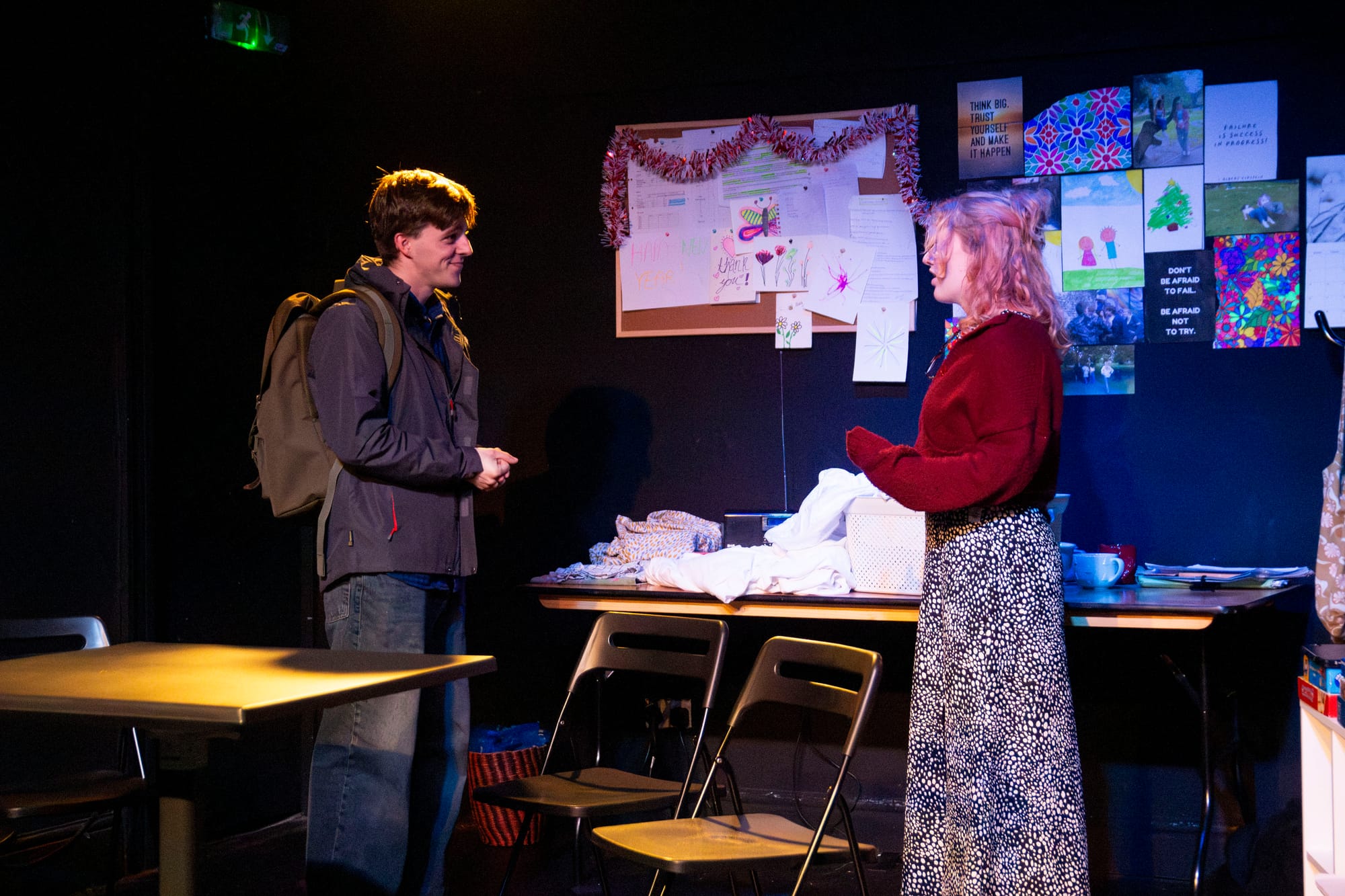
What truly sells the performance is the genuine connection between the actors and everyone involved in the play’s production. During the six-month rehearsal process, it was obvious from interviewing the cast that this is a project they are deeply attached to, with a great bond between everyone involved. Informed by producer Millie Thomas’ own experiences working in a care home over her gap year to present day, the play achieves a resonant, gritty realism by hinting at (rather than theatrically depicting) patient mental health outbursts and bathroom accidents which keep the ensemble in a constant rotation in and out of the staffroom.
This foundation of authenticity is what allows the play to touch on weighty themes – from PTSD to the lingering effects of COVID-19 – without ever feeling overburdened. Ultimately, Take Care succeeds because it is a play made by its characters, for its characters; it’s a heartfelt and optimistic tribute to the vast range of people drawn to a profession built on compassion.
 Megan Oberholzer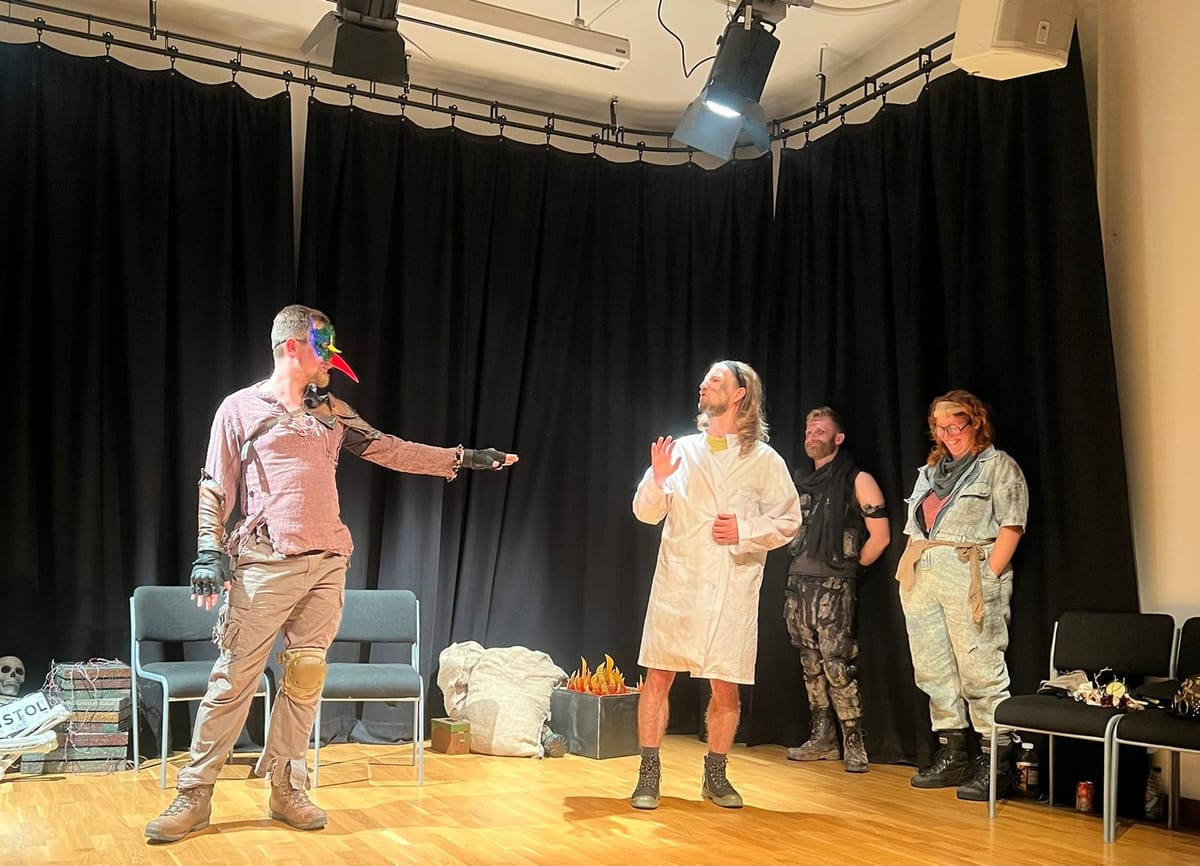
Featured Image: Late Shift Theatre / Isabel Hay
Do you know anyone in care work?