By Gabriella Adaway, Third Year Theatre and Performance Studies
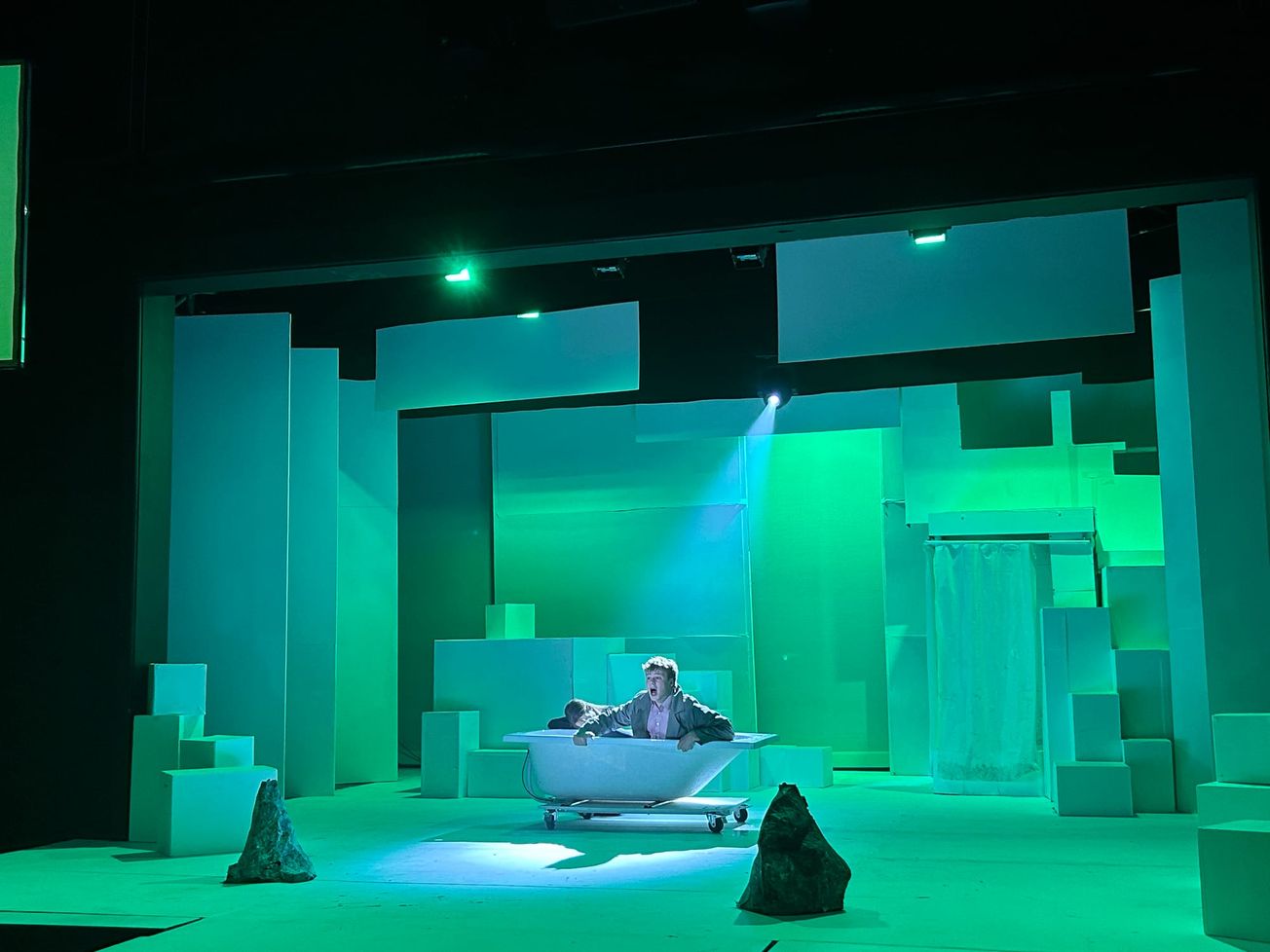
Immersion Therapy was the first performance by Bristol’s student written theatre society, Spotlights, that took on the largest stage the university has to offer, the Winston Theatre. What can only be described as an entanglement of performance art and poetry, Ollie Binnie took on the task of writing about the different stages of dealing with a breakup. In what was explored through the seven steps: shock, denial, anger, bargaining, depression, testing and acceptance paired with varying different colours to symbolise such stages, the overall piece chose not to follow a clear linear story but rather express emotion and plot through duologues and pieces of ensemble performance.
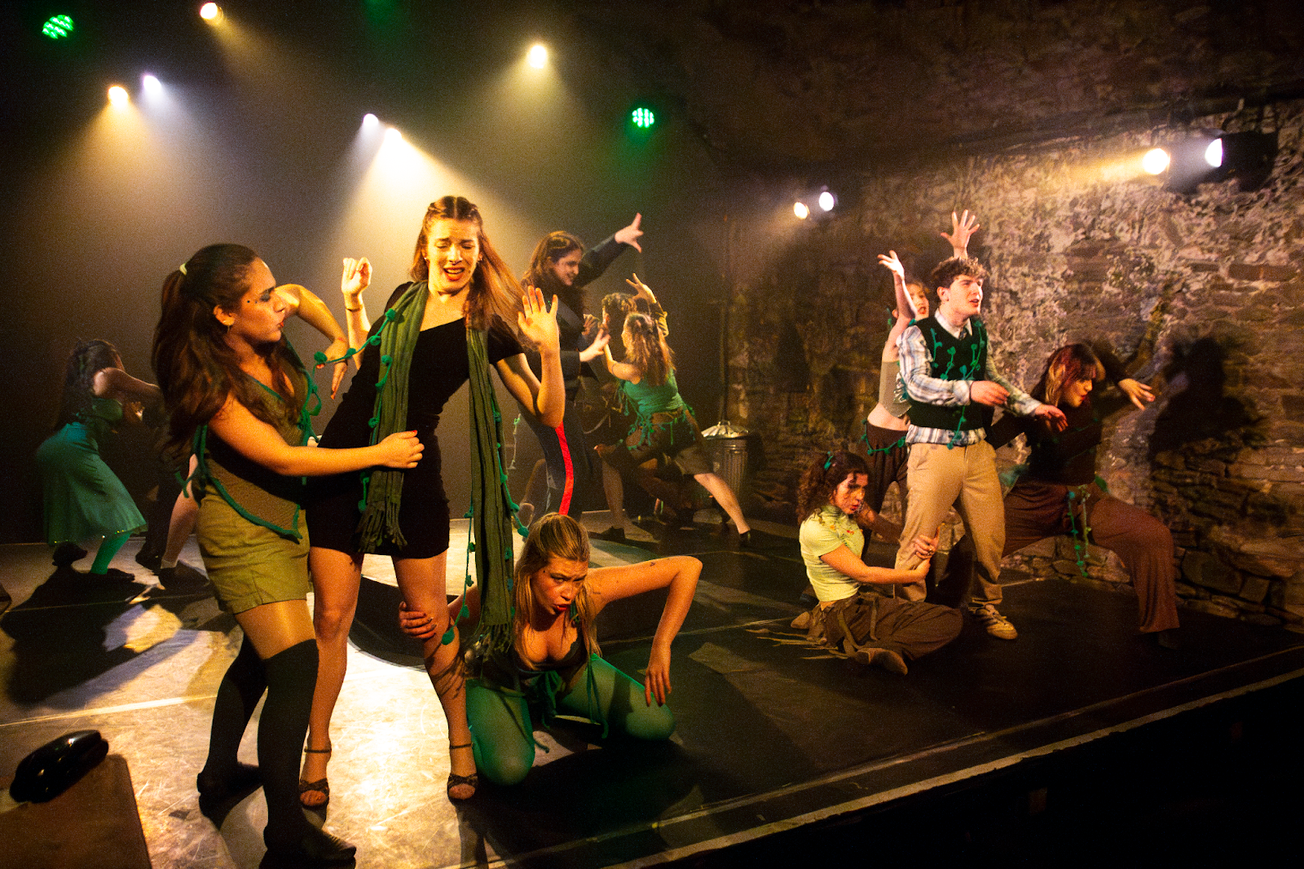
Immersion Therapy, when looked at as a whole, was a clean and fluid piece of theatre. The performance required the ensemble to be in sync and conscious of each other throughout. For language that at times felt slightly inaccessible, based on the fact the whole show was spoken in prose, the actors never dropped in pace or energy that was required in order to keep the audience engaged, even when the action stopped. In between each stage, the participants were released from their ‘trance’, released from the action and were communicating with one another to reflect on what they had said and done. An interesting choice from Binnie and Marles (co-director) as it broke up the flow of the play and was the only time the audience where watching, without being spoken too. What is clear through their direction is how they wanted this play to be an expression of both language and movement, unlike the traditional plays we see on the Winston stage, Immersion Therapy enhanced the surrounding space of the theatre, by placing the actors throughout the audience and at different levels of the auditorium. Whilst affective in encompassing and absorbing the audience in the action, sometimes felt difficult to see and engage with the actors, potentially minimising the effect it could have had if they were visible at all points.
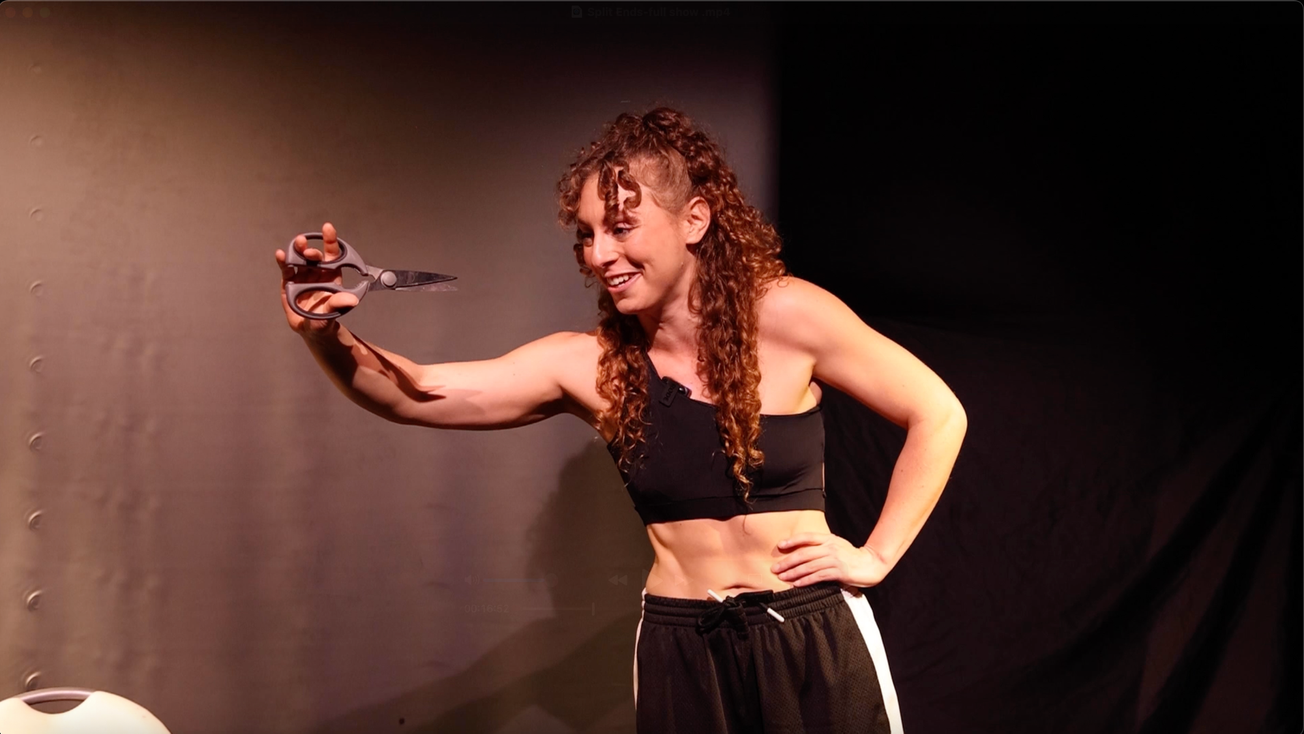
Whilst being an ensemble-based piece of theatre, there were several individuals who took the stage in their stride. Bea Thomas was a captivating performer whose energy felt unmatched and without fault. Molly Parnell and Alice Lewis were also excellent in both their delivery and commitment; they were engaging and at moments stole the stage. Charlie Warick and Zaara Chadda, greeted the audience as they entered, interacting and then introducing the ‘participants’ by the actor’s real names, even attempting to get some of the audience on stage too. Despite being the smallest characters of the play, were able to engage with audience, creating moments of comic relief that were brilliantly funny – so it’s clear to say, there are no small parts and, in this case, no small actors.
It is clear from the large list of names involved, that this was not just a piece of ensemble work within the actors, but also the creative team as a whole. Lighting and colour played a crucial role in the delivery of Immersion Therapy, the head of lighting being Bryn Fergusson, assisted by Okan Erdem. Whilst movement direction was incorporated into the action, Ivo Burton-Franklin, Jess Edwards and Izzy How are all credited for transforming the script into elements of connection between the actors and enhancing their dominance on such a large stage.
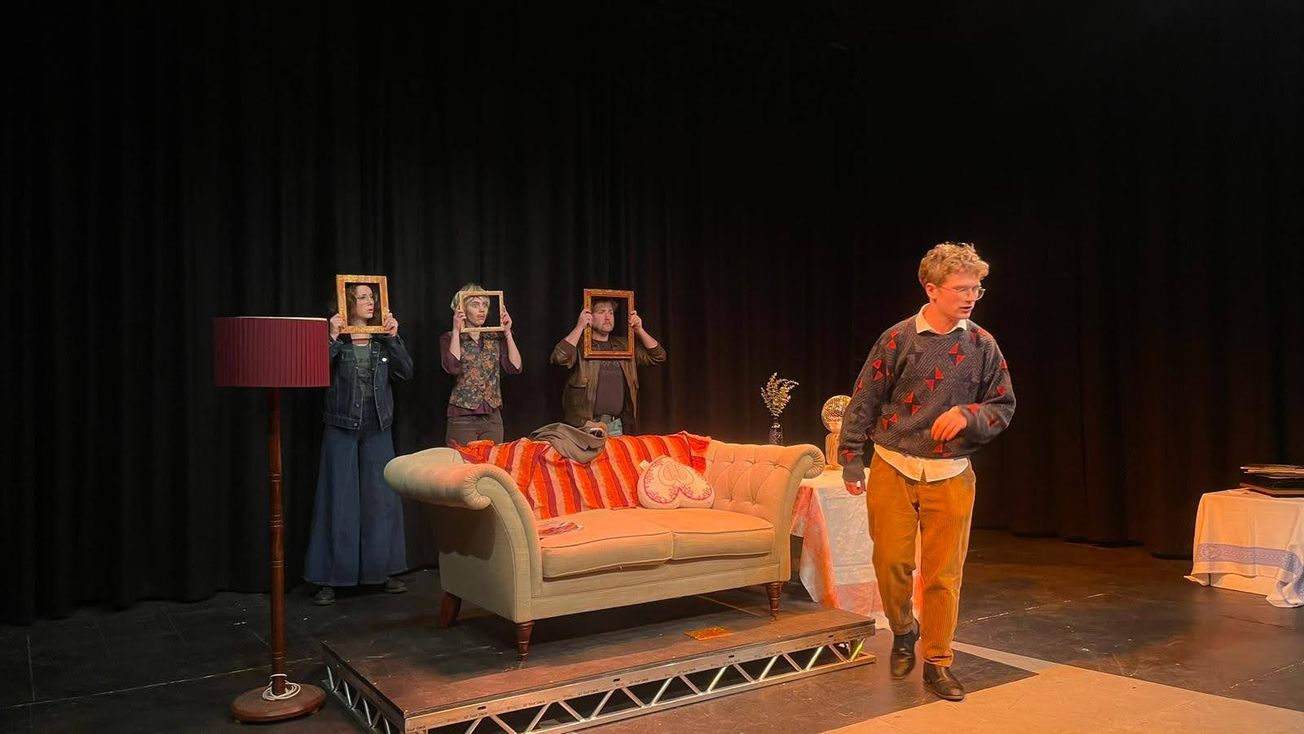
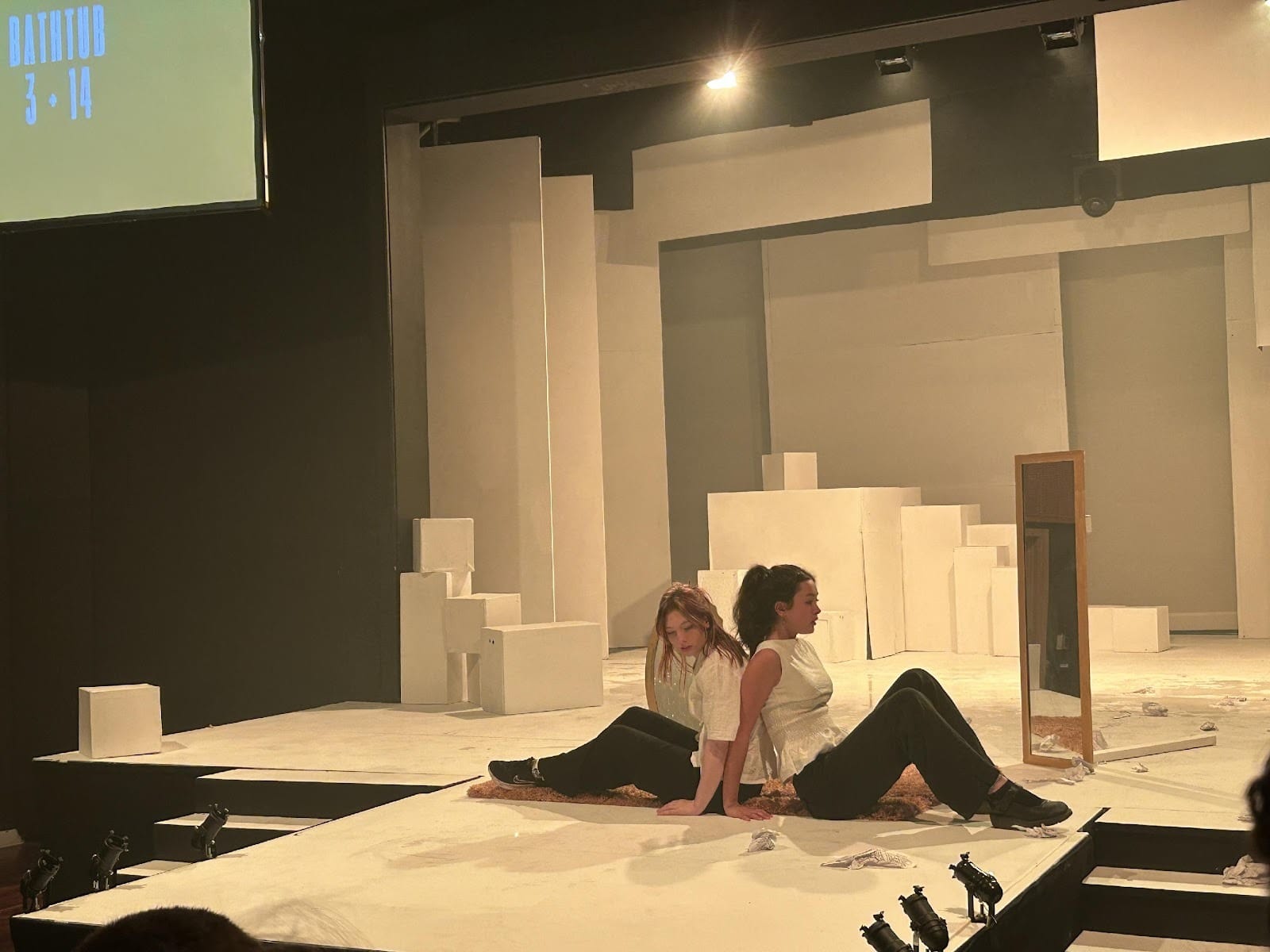
Eli Grundy’s set design and execution is something parallel to West End theatres. A layered design that matched the expressionist identity of the performance. What felt like a character in itself, the set was changed throughout the seven steps of the show. Grundy incorporated naturalistic elements like water (including a working shower and full bath), a full-sized bed, carpets and even blood but placed them on a stage that was completely abstracted. The overall appearance, simply by using the absence of colour to let the lighting design take effect, give a playground for the actors to create levels and silhouettes in their direction. It is hard to find fault in such a developed and interesting set design.
 Zaara Chadda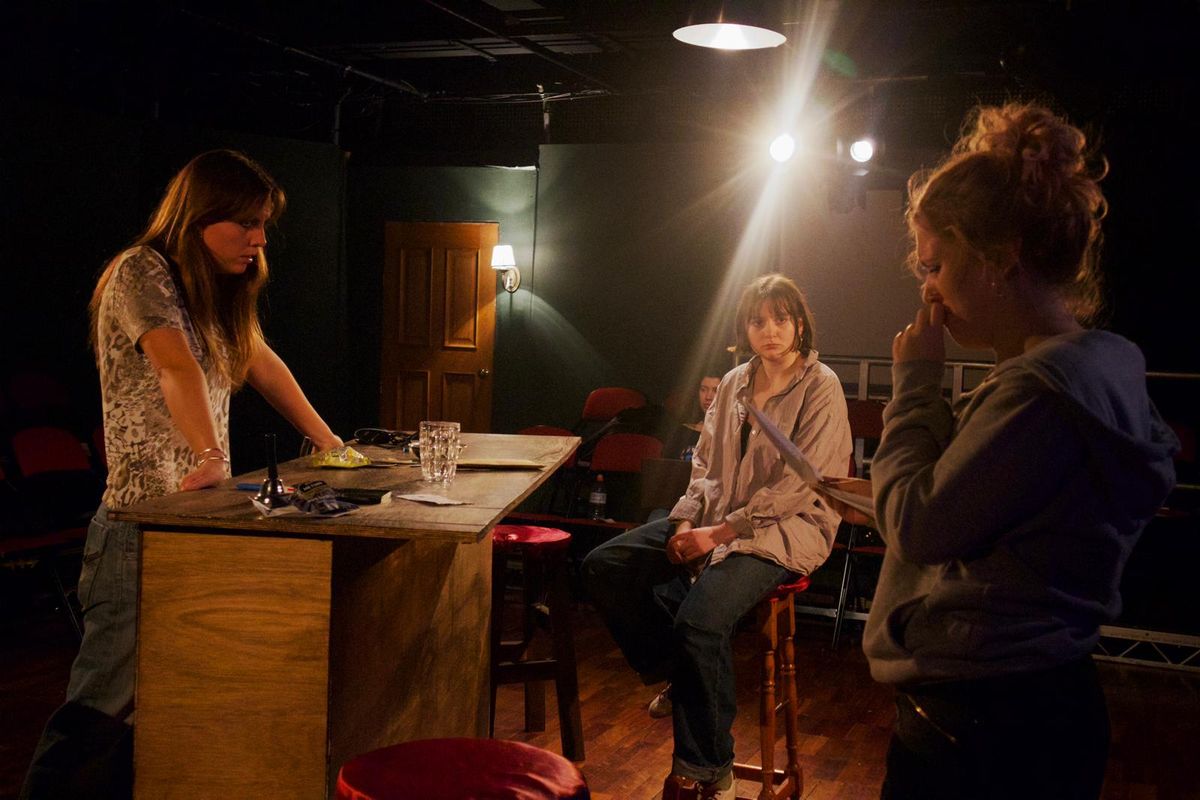
Overall, Immersion Therapy was an interesting and unique piece of theatre. For student-written work, Spotlights has been able to transform the expectations of their audiences by putting on something so different from what they have shown before. Binnie and Marles were able to execute a distinctly expressionist piece of theatre that maintained a hight standard throughout. Whilst it should be noted this form of performance is not for everyone, there is certainly a place for work like this to be shown and celebrated in order to diversify what we can expect from student-written work and challenge traditional storytelling.
Featured image: Gabriella Adaway
Have you seen any Spotlights productions?