By Arthur Baldwin, Third year, History
In the wake of this summer's World Cup, I recognised that I had felt an enormous sense of pride in being English in moments such as Harry Kane's hilarious post-match interview in the Azteca, Jude Bellingham's equaliser just before half term against Norway or Djed Spence's crunching tackle against Argentina. This felt strange as I am not normally a very patriotic person. However, a World Cup can invoke pride and even help to unite the nation.
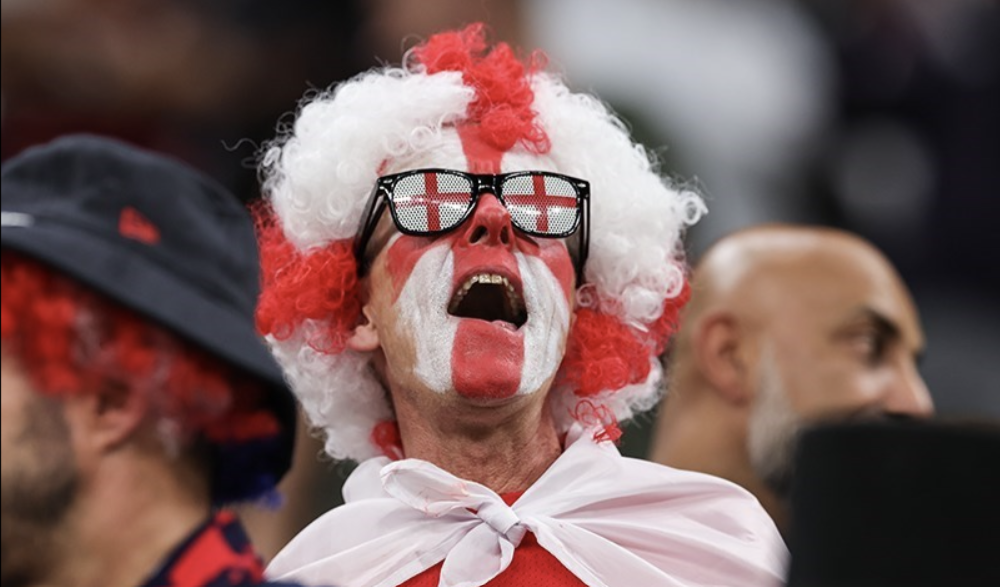
This summer's World Cup was my fourth as someone old enough to remember, and in the three before it, the streets used to be littered with the St George's cross. This time, there were noticeably fewer flags. The reason for this was because of a recent shift in what the flag represents. A shift towards a more divisive and exclusionary representation.
It's not just me who thought this. Guardian journalist Steve Rose said that he drove past an area where there were loads of England flags and he immediately assumed it was just one of those areas of "a certain kind of politics", but was embarrassed when he found out that it was just preparations for the World Cup.
Since the Brexit debates, the flags increasingly became a symbol of right-wing politics. However, in the last couple of years, both the flags' representations have been dragged even further right. Operation 'Raise the Colours' in August 2025 saw the St George's cross and the Union Jack raised up and down the country and was said to symbolise Patriotism. However, as the flags began to be filled with hate speech, it became clear that the movement's intention went beyond just spreading patriotic sentiment. The movement's connections to the English Defence League (EDL) were recognised by many media outlets. Similarly, many councils removed the flags due to safety reasons.
Following the stunt, the meaning of the flag has become even more associated with far-right sentiment. A YouGov Poll at the end of 2025 found that 69% of English people thought that the St George's cross was a way of expressing anti-migrant or anti-ethnic minority sentiment.
It has not always been like this. What the Union Jack and the St George's Cross flags have stood for has changed over the years. For example, in the 1970s the Union Jack also had a right-wing representation, with the National Front attempting to adopt it.
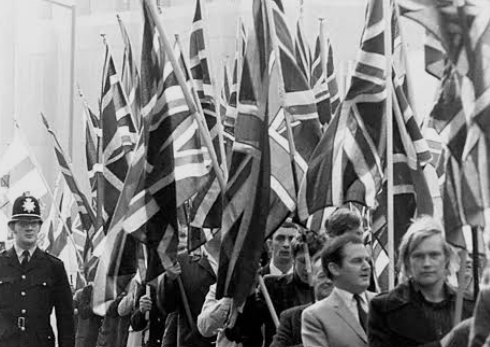
However, in the 1990s this changed drastically, and it became synonymous with music. Whether it was Noel Gallagher's Union Jack guitar at Maine Road, or Geri Halliwell's Union Jack dress at the 1997 Brit Awards, the flag was a massive symbol of Brit-pop or 'Cool Britannia'. Similarly, football fans gained strong ownership of the St George's cross during the World Cup or the Euros, since 1990, most notably in the 1996 tournament hosted in England. Sociologists in 2005 writing at the University of Leeds found that the British Pakistani community were proudly waving the St George's cross and saw it as a reflection and celebration of multi-ethnic Britain during the 2002 World Cup.
The meaning of the flag has changed before, it can change again.
Benedict Anderson in his book 'Imagined Communities' (1983) looked to understand the origins of nationalism. He argued that the only way we feel connected to the nation is through our imagination. This is shaped by myths, narratives and traditions. When I think about how I felt patriotic this summer, I find Anderson's view very convincing. I celebrated Anthony Gordon's opener against Argentina and was surrounded by just three people, but I could imagine the shared joy I felt with the rest of the country. We went on to lose to Argentina after two late goals from Enzo Fernandez and Lautaro Martinez, but even in defeat I felt pride in England's performance at the World Cup, a feeling I felt I shared with millions of people I have never met and will never meet. But even if the connection is imagined, it still existed.
Because Britain, like every country, is an 'imagined community', we can shape what we feel patriotic about. The flag's current meaning according to the YouGov poll is one of anti-ethnic minority sentiment. This is not just the fault of those on the far right of politics; those who disagree with it seem to accept this racial representation of the St George's cross too. The meaning of the English flag has changed before, therefore, it can change again. If the current meaning of the flag is to exclude people and create a divisive culture in England, then what the National Team did during the World Cup seems to be the perfect antidote. The England football team is not exclusive to white people or even to players who were not born in England. It is not an inclusion out of pity for 'poor multi-ethnic' people. Diversity makes us more interesting, but it also makes us better. Run through England's starting eleven at the World Cup and you find players born in Sunderland (Jordan Pickford) alongside players born in the Ivory Coast (Marc Guehi). In fact, the team was filled with players whose ancestors were immigrants such as Bukayo Saka, Declan Rice, Harry Kane and Jude Bellingham. The team united England, the country felt proud of them, and it felt distinctly English. The images of the team singing Wonderwall with the fans were especially nice. However, I was disappointed that the England flag was less seen at this World Cup. The flag seems to have always been the subject of a tug of war, as people try to make it represent different visions for England.
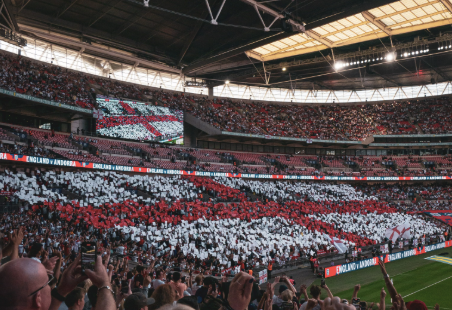
The England squad's performances this summer will not be enough for the meaning of the flag to change quickly, but I hope the type of Patriotism generated by the team can at least contribute to winning the flag back away from far-right protestors' image of a divided and exclusionary England. It could stand for something more uniting, something that the football team encapsulated, to be proud of what England is, not despite our diversity but because of it.
Featured image: 'English Supporter' / Hossein Zohrevand