By Charles Hubbard, Second Year, Theatre and Performance
Of all the currently working filmmakers widely regarded as major cinematic voices, it is perhaps Richard Linklater’s reputation that is the most unearned. The Texan-born director is best known for helming such timeless classics as Dazed and Confused (1993), School of Rock (2003) and The Before Trilogy (1995, 2004 & 2013). However, he should be best known as an anonymous hack who coasts on the charm, adlibs and improv of talented stars to occasionally stumble arse-backwards into a great film.
That’s right - I’m afraid this is going to be quite a negative review. Perhaps most infuriating is that all his films, especially in the decade since his undeservedly lauded coming-of-age film Boyhood (2014), have felt about as weighty and important as a paper clip. I’m sorry to say that his most recent film, which ironically tells the story of one of the most important and innovative films in cinema history, is no different. Like his equally smug and only slightly more endurable Blue Moon (2025) earlier this year, Nouvelle Vague hyperfixates on a fairly niche realm of popular culture and yet never dives deeper below the surface of its subject matter than a sunbather on a swim raft. You never know more about Jean-Luc Godard (the director of Breathless (1960) and the film’s protagonist) than the fact that he’s a prick to work with and wears sunglasses indoors. And I’m sorry but that, and the novelty that a film spoken almost entirely in French was directed by a man who only spoke English, just isn’t enough to sustain a 20-minute long video essay, let alone an entire film.
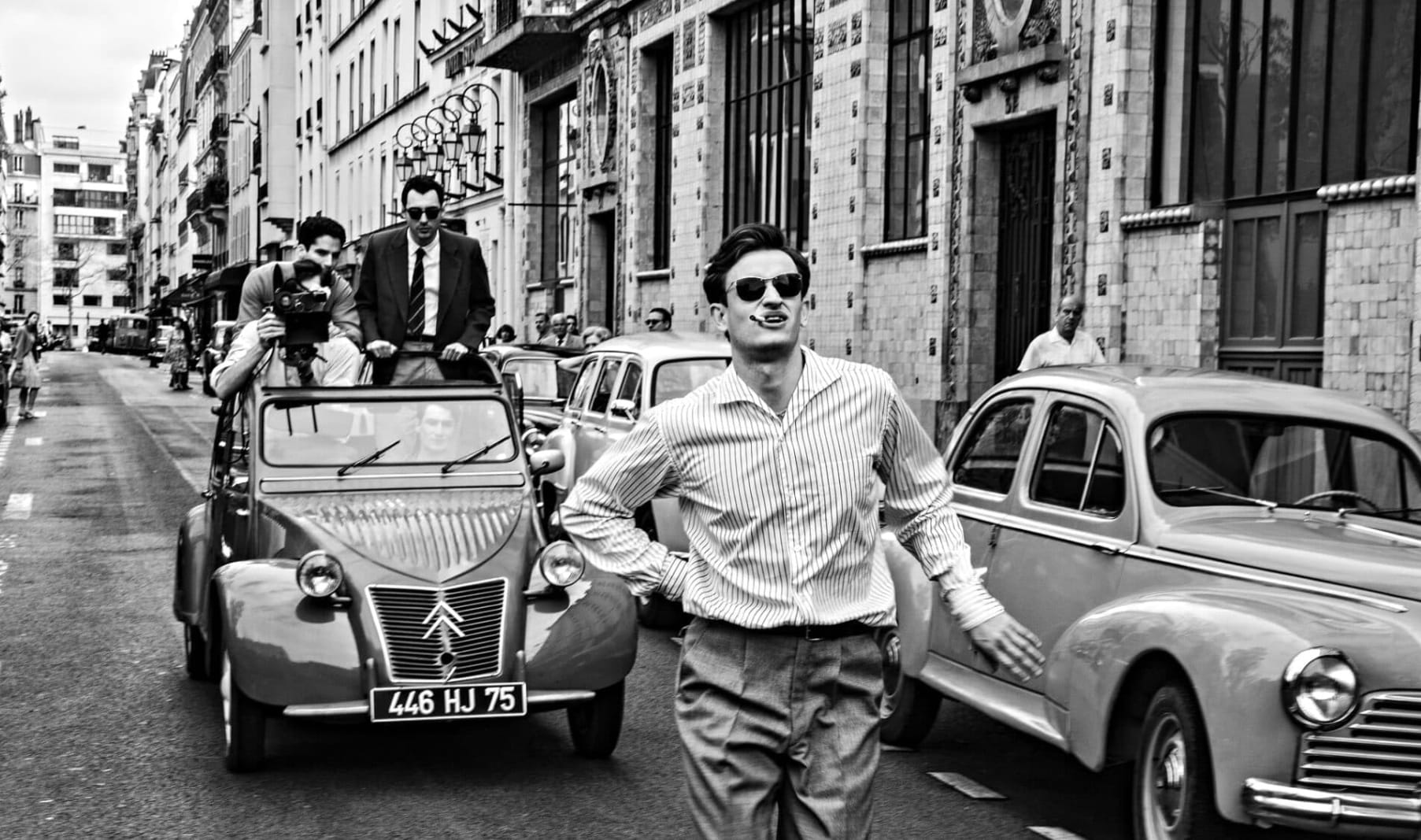
Jean-Luc Godard (a necessarily one-note Guillaume Marbeck) is a frustrated young artist who has just watched his best friend Francois Truffaut (Adrien Rouyard doing nothing to challenge the myopic stereotype of Truffaut being “the nicer Godard”) make a smash hit: The 400 Blows. Desperate to escape his reputation as the runt of the Cahier du Cinema litter, he embarks upon the production of his first of many monuments to his own egotistical genius, armed with a reluctant producer, no real experience and a cast who have absolutely no idea what they’re getting themselves into. What ensues is an obnoxiously blow-by-blow recreation of the production of Breathless, which has already been written about to such an extent that transposing its events into the realm of a non-documentary film feels like nothing more than a reminder that Breathless was pretty good and even a little influential. The film certainly isn’t wrong there but, once again, did Linklater really need a sizable budget and a grand opening at Cannes to make that point? But I suppose, at the rate French people flock to the altar of Godard and Truffaut, the response it got at Cannes is ten times better than it’s going to get anywhere else. Call it this year’s Emilia Perez (2024). Only slightly less transphobic.
The result essentially forms a medley of already annoying biopic traits dialled up to a genuinely unbearable degree. Every time a new character (or, I guess, real person - though recognisable human behaviour isn’t exactly something Holly Gent and Vincent Palmo’s asinine script knows how to emulate) is introduced, they pause for a moment with their name floating below them. I suppose this is to give the audience enough time to do the full Leonardo DiCaprio “point at the screen” if they happen to know who Jacques Demy or Agnes Varda are. We as the audience are treated the several sequences that are essentially just watching famous scenes from Breathless be shot, but with Godard repeating the lines of the actors right before they say them (if this film reveals anything interesting, it’s that Breathless was greenlit entirely without a proper script and Godard had to feed the actors their lines in the middle of takes). Again, I suppose this decision is motivated by the thinking of “If French New Wave fans already love the lines in Breathless so much, why don’t we let them hear them twice?”. In this, the film would almost function best like a Rocky Horror-style rowdy screening where fans of the film could shout out the famous lines as they happen. That would certainly be preferable to Godard delivering his oft-repeated adage “All you need to make a film is a girl and a gun” to pindrop silence.

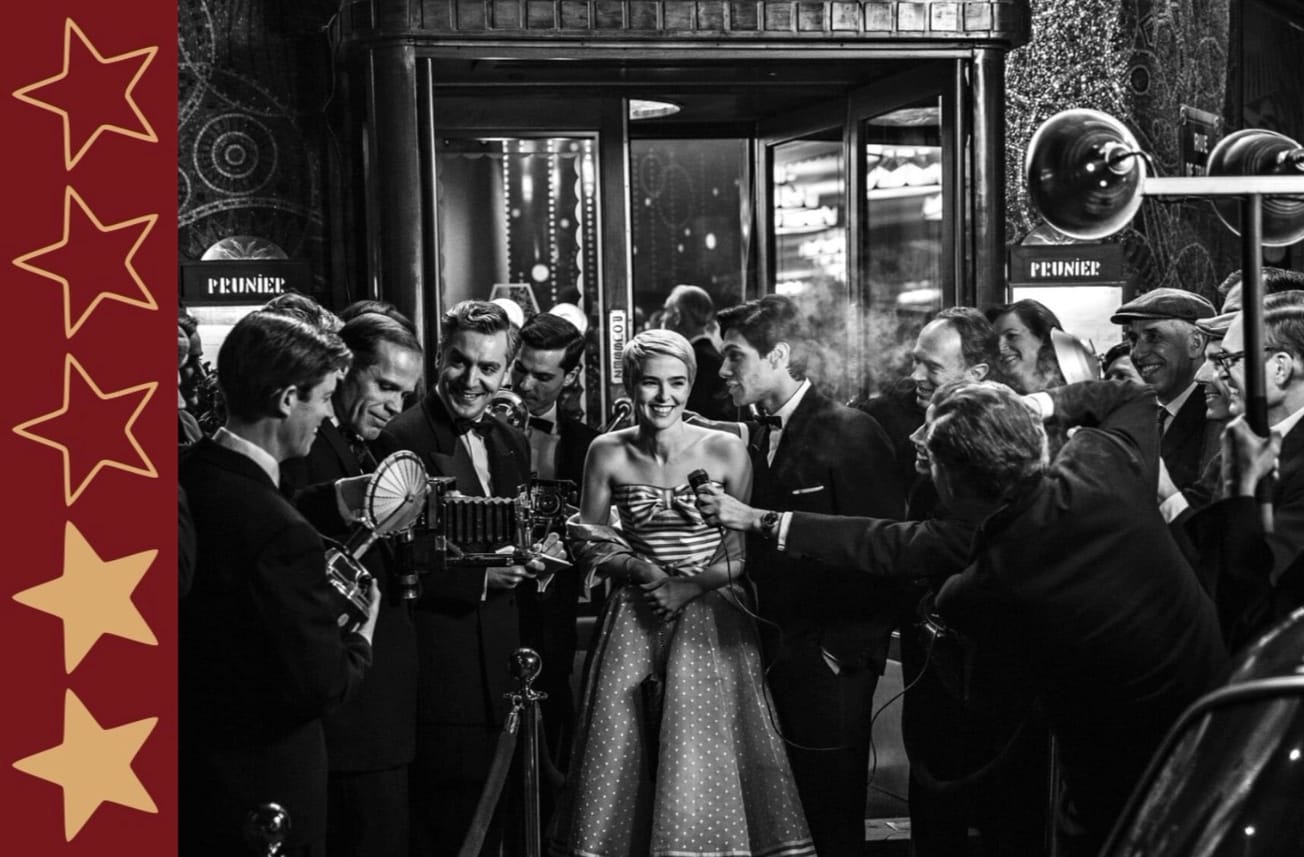
Most frustratingly, the film punts Godard’s single most revolutionary contribution to film history - his trademark jump-cut - to the final ten minutes. The film sure does take its time walking us through each of his smaller, less important convictions as an artist, so why is his biggest stylistic innovation treated as an afterthought? The film only really warms up when it embraces its nature as a somewhat farcical comedy and the cast is instrumental to making this work. All complete unknowns and often non-actors, with the notable exception of Zoe Deutsch as the American-born Jean Seberg (whose fascinating political legacy is completely glossed over here), they were likely cast for their close resemblances to the real-life figures, which is often so uncanny to be unsettling. Benjamin Clerey is particularly funny as Pierre Rissient, Breathless’ assistant director, with his performance the only one to successfully evoke the more heightened performance styles of pre-New Wave French cinema.
 Skye Cox
The film is essentially just a trifle. And there wouldn’t necessarily be anything wrong with that, if the director in question had made anything in the last twelve years but trifles. Unfortunately, this kind of light, fluffy nonsense might be Linklater’s ceiling of quality nowadays - at least this is better than his more serious efforts like the bitterly humourless Last Flag Flying (2017) and the bafflingly misguided Where’d You Go, Bernadette? (2019). It’s just slightly painful to watch such a flavourless journeyman try to emulate one of the most idiosyncratic voices in film history. This material would have been much better suited to Steven Soderbergh, whose career is as eclectic and extensive as Linklater’s, but who actually has the benefit of a personal style (not to mention the fact that his run-and-gun attitude towards filmmaking is closer to Godard than any other director working today). Anyway, don’t go and see this - if you’re a stranger to the French New Wave, you’ll be left without a handle, and if you’re a dedicated cinema fan, you’ll be insulted by the way this tries to talk down to you.
Featured Image: IMDb / Nouvelle Vague | Illustration by Epigram / Sophia Izwan
What did you think of Nouvelle Vague?