By Jenna Baker, Third Year, English
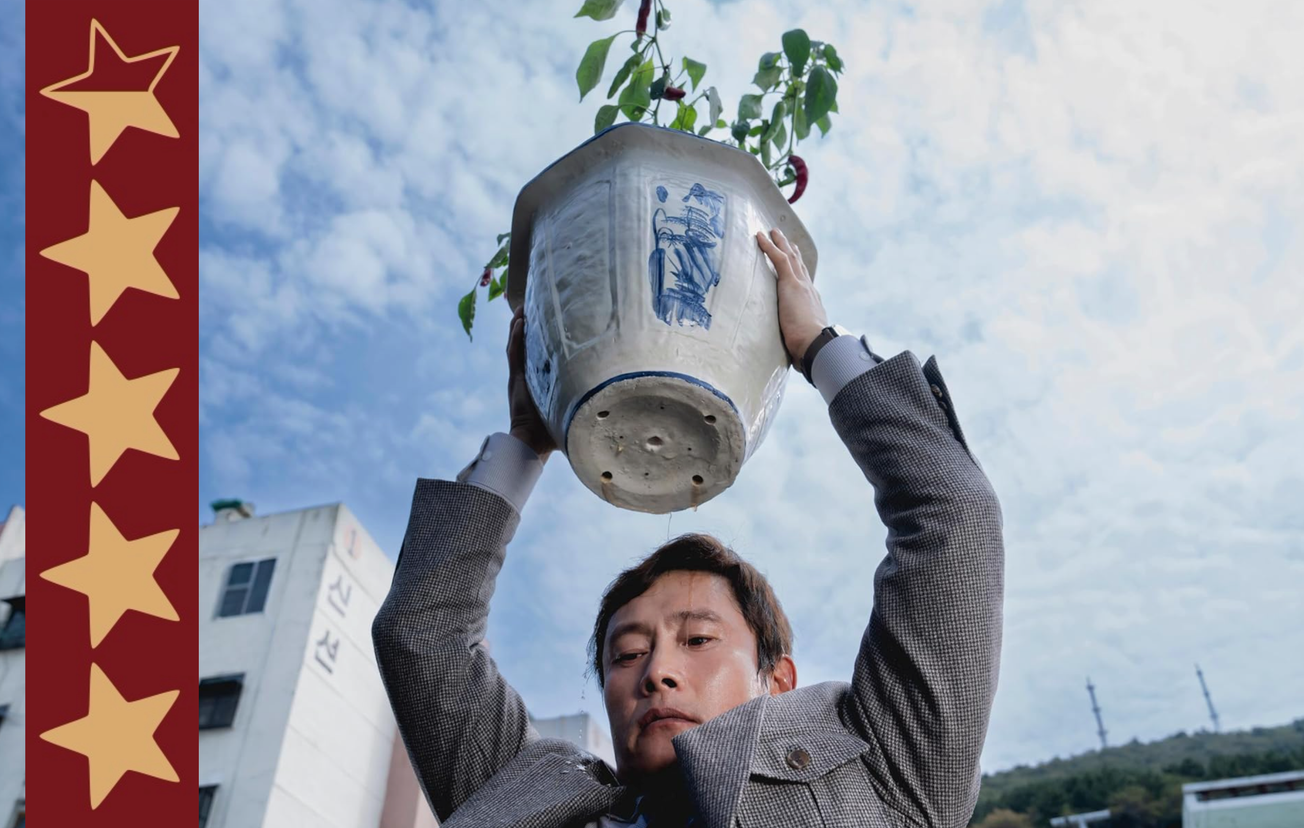
Park Chan-wook’s new film No Other Choice (2025) offers a complex insight into the darker side of capitalism. The film is densely packed with rich metaphorical visuals and recurring narrative motifs, but Park ultimately concludes by incorporating real-life footage of deforestation.
In a society obsessed with categorising, we often rely on labels to shape our identity. In No Other Choice, the devastating blow to a fragile male ego comes when the main character, Yoo Man-su, loses his job. This act of redundancy serves as the catalyst for a dark psychological spiral, marked by jealousy, obsession, and brutal physical violence.
Alongside Man-su, three other men of varying economic success are competing to secure the same new position. Having all been made redundant from the paper trade, the four men are desperate to find employment and cannot shake their dedication to the industry, despite its obvious neglect of them — an inevitable consequence of a society that prioritises profit above all else.
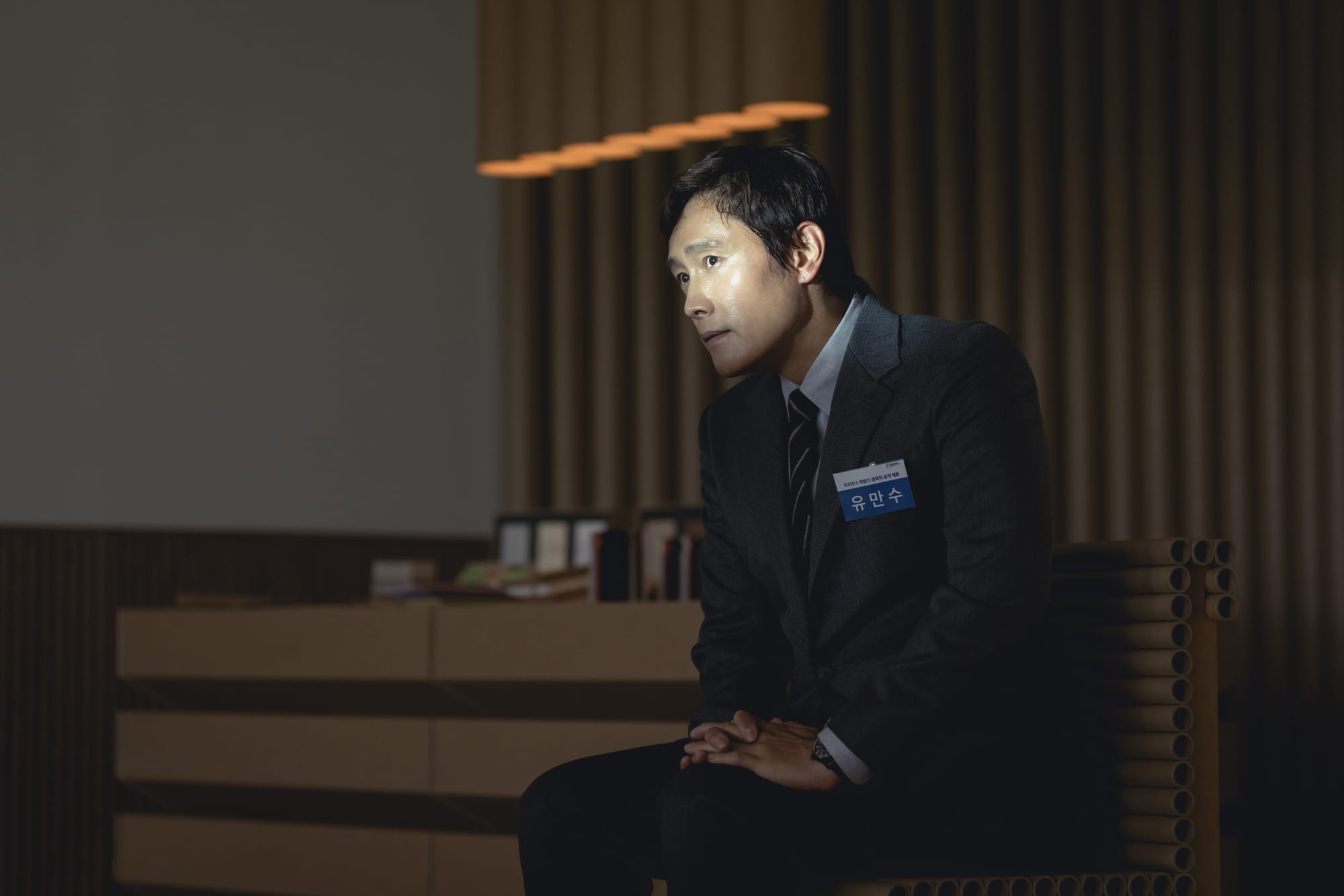
Man-su’s wife, Lee Mi-ri, states that in order to save money, the whole family must give up their hobbies — one of their children is a musical prodigy on the cello — as well as, at least temporarily, their beloved two dogs, in addition to their house. Man-su concludes that the only conceivable way to ensure he can continue feeding his family and avoid these sacrifices is to murder his work-related rivals. What begins as a seemingly trivial plot develops into a cruel and horrific (yet arguably insidiously ingenious) series of murders targeting his three opponents. Men will do anything but go to therapy, I hear you say.
Early in the film, Man-su does in fact attend a form of group therapy alongside several other unemployed men. They practise EFT tapping, an acupressure technique intended to reduce stress. Wook is not necessarily critical of this method, but it is presented as clearly inadequate, as the problem is rooted far more deeply within an economically driven capitalist society.
A motif that accentuates this is Man-su’s persistent rotten tooth, which would, of course, require root canal treatment. Instead, he insists he is fine and refuses to see a dentist, mirroring his unwavering yet carefully masked emotional turmoil, a battle he ultimately attempts to escape through violent killing.
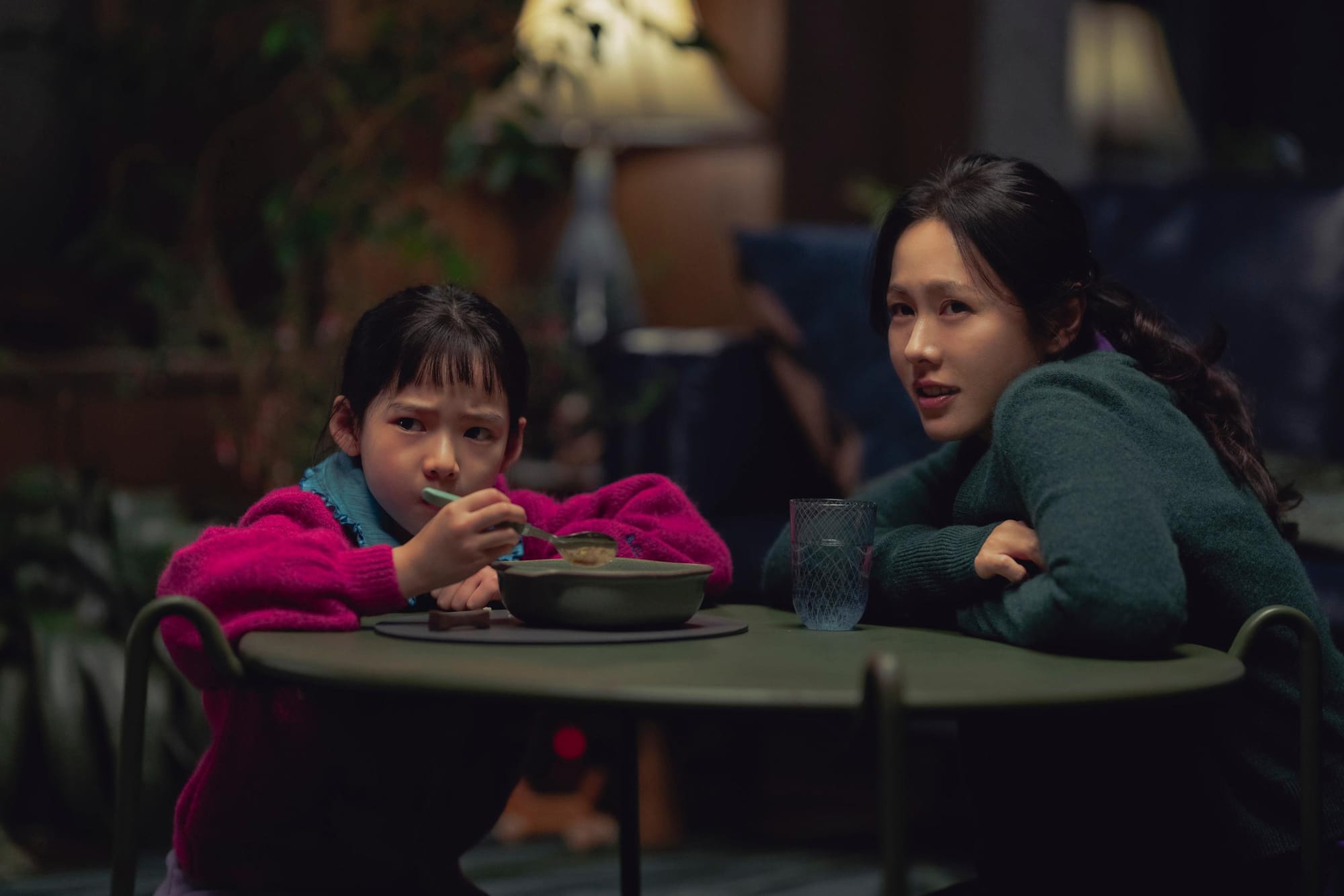
Man-su and Mi-ri’s young daughter’s musical prowess is a detail that stands in sharp contrast to the masculine-centred obsession with money and employment. Wook gestures towards the inability of art to exist freely within a society so tightly bound by economic constraints, particularly when her lessons are forced to stop because they can no longer afford a teacher suited to her level.
Actually, Man-su does manage to overcome unemployment. He secures the job he wanted, and in the factory he is now surrounded by robotic co-workers. Wook portrays Yoo’s success as isolated, mechanical, and devoid of compassion or humanity; he highlights the lack of basic empathy required to fully commit to an industry that is remarkably unethical in contemporary society.
AI’s possibly unavoidable domination is alluded to through these machines. With ChatGPT’s founder recently revealed to be one of Trump’s biggest donors, the issues of immoral wealth, political power, and AI appear unequivocally interlinked.
Beneath this film, filled with parallel narratives, absurd yet ultimately refined metaphors, and recurring motifs, lies an eco-critical insight into capitalist society. Affecting the whole family in the end, the victims of the murders are never found, with Man-su seemingly escaping punishment and excelling in his position within society. Wook explores the ineffectiveness of the policing and justice system, where powerful people remain untouchable even after being exposed as violent, criminal, paedophilic, immoral, and/or inhumane.
Park Chan-wook concludes with real-life footage of deforestation, machines working relentlessly to cut down trees accompanied by stirring background music. Wook exposes the inextricable links between corporations and the irreparable damage they inflict on both the environment and individual families. Yoo Man-su is arguably the perfect billionaire: armed with a vast, untouchable ego, yet undeniably plagued by insecurity and jealousy that provoke him to murder. His warped perception and psyche rely almost entirely on work, underscored by a devastating lack of empathy and compassion. As outlined by Wook, wealth demands immorality and sacrifice; it appears almost inherent to success in contemporary society.
Whilst Wook does not necessarily encourage empathy towards the film’s protagonist, he nonetheless allows the audience to understand that this man is an extreme product of an unequal and deeply flawed society. Underlining the unstoppable force that corporations exert — regardless of the consequences for nature, individuals, and families — Park Chan-wook’s No Other Choice stands as a warning of what may come.
Featured Image: IMDb | Star Illustration: Epigram / Sophia Izwa
Do you think No Other Choice was snubbed this awards season?