By Katie Asha, Deputy Music Editor
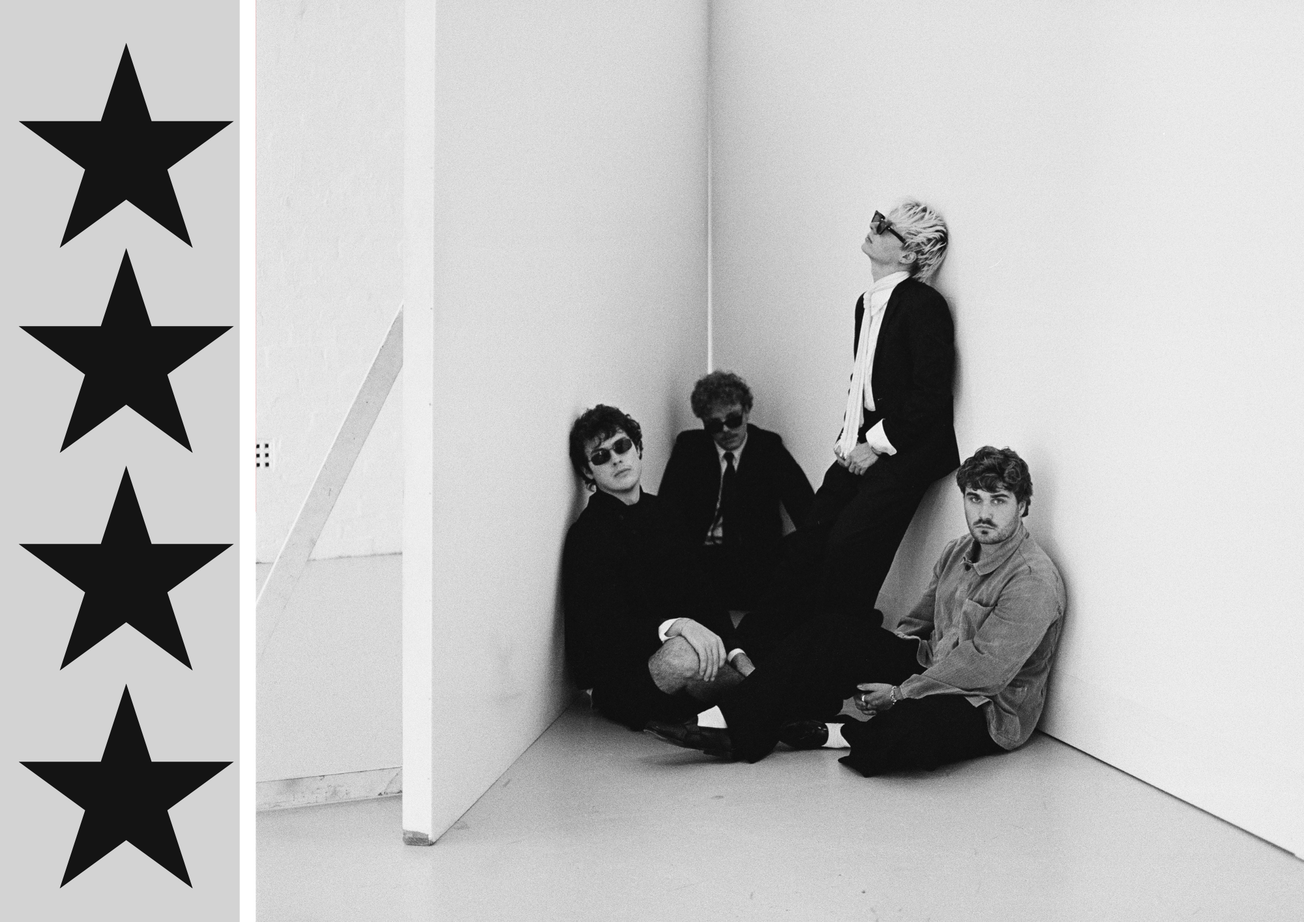
The Rions are an indie-pop band originating from Sydney, Australia, with several accolades under their belt already: nominated Rolling Stone Australia’s Best New Artist in 2024, winning Triple J’s Unearthed High competition in 2021, and reaching #5 in the Australian charts with their latest record.
In May 2026, they released the deluxe version of their album 'Everything Every Single Day', and subsequently went on a festival run around the UK – playing Islington Assembly Hall, Victoria Park in Warrington, and Dot To Dot festival in Bristol and Nottingham. After they concluded their second day set at Dot To Dot fest I had the opportunity to interview them: finding them on the sunny side of the pavement outside of our agreed meeting point (the pub) all holding pints of Guinness – something that struck me as a very earnestly British choice. I learned many things about The Rions through our conversation, but I think the biggest thing that came underpinning all of their answers was that The Rions have formed a band as a product of a friendship, rather than vice versa.
Noah and Harley met in year three, and Asher and Tom then joined the band later. After being friends since such a young age, what was it that pushed you to take the leap and think – yes, this is who I want to make music with professionally?
Harley: Noah and I started playing music together in like Year 6, and then in Year 7 we all started playing together as part of a school music project. Obviously, no one at that age is consciously thinking about recording music or performing, or how well a group might be received as a band
Noah: We became really close as friends in general outside of music: Asher had just moved schools so he didn’t really know anyone, and Tom hadn’t found a proper friend group yet. When we first became friends, we really all just clicked and found a home with each other. It wasn’t a question of a band, you know – we all just went to the movies together as nerds.* We weren’t thinking about a label or a contract… we just all happened to play the right instruments.
*This statement is not solely consolidated in past tense: the group went to watch the new Star Wars movie directly after we finished at the pub.
How do you handle creative disagreements? How do you honour each person's creative vision while maintaining a cohesive image and sound as a band?
Asher: I’ve seen with other bands – if they weren’t friends before the band, when those creative disagreements come they really have nothing to rebound on, they don’t have that base relationship.
Harley: It’s not ever a screaming match debate of ‘we should go with my idea’– we’re all willing to be like, well, why do you think we should do yours? The music comes first rather than egos, and so we genuinely want to make whichever creative choice would make the song better.
You described Everything Every Single Day as 'the most open wound we've allowed the world to see so far.' How did it feel to be that vulnerable, and was there anything you almost didn't put on the record?
Harley: Songs aren’t this permanent thesis statement, they’re a time capsule – this is how I felt at this point in my life.
Noah: By the time we release the songs they’re not ours anymore. From the time it takes between making the song and it coming out, you know, I don’t even see myself in this song anymore. This is for other people, and it becomes an external experience, which takes away the anxiety of releasing it.
Is playing live part of externalising those songs? Do you form a relationship to a song all over again when you start playing it live, as opposed to when you first wrote it in the studio?
Tom: Performing a song can make you see it in a new light.
Noah: After we work so hard on a song, and then release it, there is always wiggle room to make it better; there’s always new things to experiment with and new things to learn.
Harley: Getting to play songs live is almost a revision in a way; Noah will add different embellishments to the melodies which to me sound objectively better; there’s more room to play around with the guitar parts live. So when I hear one of our songs live – they sound better to me.
Writing honestly about being young men – accountability, paternal relationships, or generational negative patterns – feels countercultural in some ways. Do you ever feel pressure to shy away from that, or has it always felt non-negotiable?
Harley: Because we started writing music when we were fifteen, we had a bit of a desire just to make sound, make noise – we didn’t have the confidence to apply our own lives to a song yet. It also can feel a bit ego-based to take the leap and go, ‘I want this song to reflect myself’. It’s operating on the assumption that other people would want to hear about that.
But as you get older you realise that’s not even how other people see it. When people hear music, they are listening to the lyrics and applying them to their own life.
Noah: There’s definitely been conversations had in the studio of, ‘is this too vulnerable’ or ‘is this on a topic that people won’t like us talking about’... but I feel like, when you’re having that discussion, it means it’s the perfect time to do it. Once you have a voice, and that momentum, then you’ve got one of a few rare chances to truly voice your opinion on things that matter.
When someone suggested you were too young and naive to be making music with political or social weight, Harley's response was 'when has music not been political'. Do you feel a responsibility to say something with your platform, or does that framing put too much pressure on what is ultimately just your personal experience?
Noah: Rather than seeing speaking about social issues as a responsibility, we see it as something we get to do – we are able to share and speak about the things we’re passionate about, whether that is through art or something else – and that’s amazing.
Harley: Perspective is everything in music: being a musician or any kind of artist is really just sharing the things that you care about. Music has always been inherently personal, and therefore inherently political.
What does success look like to you at this point — is it a number, a room size, a feeling?
Noah: To be able to live life without any worries – phone bills, gas, doctors appointments, being able to hand that over and get on without it. Just being able to focus on art, creativity, and family.
The idea of being able to make an impact on whatever you speak on.
You only get one chance, and I don’t want it to be boring. I want to die when I’m older and go, fuck, I had such a cool life.
Being musicians we’ll talk to a lot of fans who will talk about how they wished they pursued music when they were young, but they never had the confidence to do it… being an artist and a musician, we’re afforded the privilege by a world that wants that.
I want to look back when I’m older, and think that I took a risk. Realistically, twenty years from now we could all be working 9 to 5s… but at least we know we did the crazy thing and really tried.
 Lucy Bevan
If the four of you sat down and wrote a list of everything you still want to do, what's at the top of it?
This question sparks discussion of headlining Accor Stadium, Glastonbury, winning various awards. Listening to the voice note of overlapping answers, here are a few I picked out.
Tom: The grammys isn’t decided by the people. I would rather an achievement that’s like playing a big show with a hundred thousand people watching and having a great time than twelve men in a boardroom deciding our music deserves an award.
Noah: Having an everlasting permanent impact that’s preferably positive.
Harley: Music has an infinite power, no one knows the extent of what their own music can do. I mean, look at what The Beatles have done – they’ve changed music forever.
Noah: To be able to have young boys and girls look at what we did and be inspired; I mean, we started a band because of The Beatles. The Beatles have accomplished a hundred times more than just what they did on their own, because they’ve inspired so many people. We just want to be a tiny twig in the massive interlinked and growing tree that is the music industry. And Tom wants a lamborghini.
Featured image: Pat O'Hara
Did you catch The Rions at Dot to Dot festival?