
By Charles Hubbard, Second Year, Theatre and Performance Studies
Materialists is the cinematic equivalent of a weird first date. At first, while you can certainly sense a spark, there’s something weird and off-kilter. Then, as the night goes on and you’re both a couple drinks in, it reveals itself to be quite different than how it presented itself to the point where, when the date has come to an end, you’re really considering crawling back to your ex. In this case, said ex is Celine Song’s debut feature, the safer but far more cohesive Past Lives.
The best way I can describe it is a gender-swapped performance of Stephen Sondheim’s Company, if you cut out all the songs, had Albert Brooks take a pass at the script and colour-corrected it to look like an Apple TV+ show. Much has been made over how the film’s poppy, audience-friendly advertising sells potential ticket-buyers a vastly different experience to what they’ll eventually get but the film itself fully contains both tones. Song’s in full control of the wheel here, I just don’t always like where the car is taking me.
The film centres around Lucy (Dakota Johnson), a New York matchmaker constantly spouting mantras about marriage and love that feel like they were written by a malfunctioning AI. While she may not want to admit it, Lucy vicariously experiences the thrill and despair of dating through her endless list of needy clients to the point where an engagement announcement from one of them almost feels like Lucy herself has finally decided to tie the knot. Her unshakeable faith in the validity of her profession is, well, shaken when she simultaneously meets the handsome, charming and stinking rich Harry (Hollywood’s busiest man, Pedro Pascal) and reunites with old flame John (Chris Evans). However, what follows is not a traditional love triangle where the two men continuously vie for Lucy’s affections. In fact, there’s refreshingly little friction, or even interaction, between her two love interests, as if they are not even human beings but rather the two sides of Lucy’s brain desperately pulling her this way and that. Song seems much more interested in dissecting why we would even take arbitrary sides in a romantic conflict like this. That is, until she isn’t anymore.

Right from the opening A24 eye-dent, the film hums with the kind of restless excitement that only really comes along when a relatively fringe director is given a considerable budget and Hollywood A-listers for the very first time. You would never guess that Song had just made the comparatively timid and shy Past Lives (2023) by the way she gleefully syncs up her “directed by” card with her main character yelling a four-letter word. There’s a real confidence to just how many verbose, metaphor-laden monologues there are about marriage, dating and romantic connection - as if Song is convincing you that she does indeed have all the answers. If only she was able to see this promise through to the film’s conclusion.
Considering the film’s poster clearly tried to present it as the next Challengers (2024), it’s disarming and rather old-school how much the film advocates for monogamy to a fault. There’s never any question of Lucy being able to take both men in her stride as the film’s structure forces them to occupy separate halves of the narrative curve. If there’s any principle that unites all of the film’s duelling and at times contradictory concepts of relationships, it’s that everyone wants to feel valued. It is this desire that single-handedly pulls the strings for all our romantic decisions. While many may find the way Song constantly keeps hitting this point condescending and ham-handed, it’s certainly nice to know that there is an eye of the hurricane in all that the film throws at the audience. At times, it makes last year’s Twisters (2024) look like a light breeze by comparison.
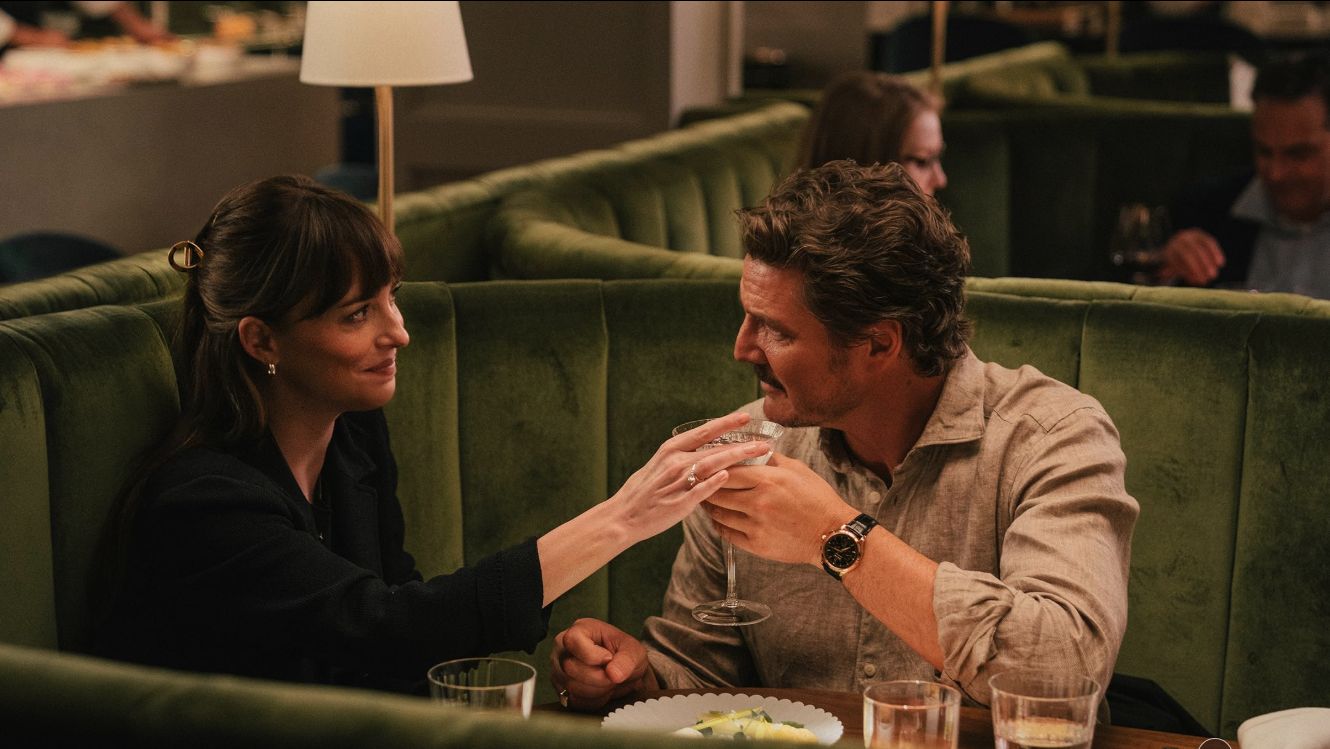
For more than a decade now, directors have had a hard time working out how to use Dakota Johnson. Her perpetual blank stare and monotonously sleepy line deliveries are often reductively mischaracterised as “bad acting” or signifying a lack of effort on her part. In actuality, she just needs to be applied correctly. Playing someone who has to listen to fussy, entitled singles all day while constantly saying “I know this is hard” and “I’m sure things will work out” with all the conviction of every flaky guidance councillor you’ve ever met, Johnson is perfect.
Less spot-on is the casting of Evans, precisely because he offers no counterpoint to Pascal. The latter is ideal casting for an implausibly perfect banker but the choice to cast an equally handsome, equally muscly superhero opposite him makes the choice that Lucy must make between the two men feel all the more arbitrary. It would be like if, in Broadcast News, Holly Hunter had to choose between William Hurt and Harrison Ford, instead of the more unconventionally attractive Albert Brooks. Just close your eyes and point! And it is this kind of anti-climatic shrug with which the film chooses to leave its audience because, by this point, Song feels just as burnt out on the world of the film as her characters do.

When taken as a whole, Materialists closely resembles Adore (the matchmaking company Lucy works for). At first, it confidently struts around, reassuring the audience that it has the perfect answer to the conundrum of dating before reluctantly revealing that the best it can offer you is a slightly flashier version of the same thing you’ve experienced many times before. There’s absolutely an argument to be made that this is intentional on the part of Song (she’s nothing if not conscientious and deliberate in her artistic choices), but it still makes it a crying shame that only the first half actually seems interested in grabbing the audience.
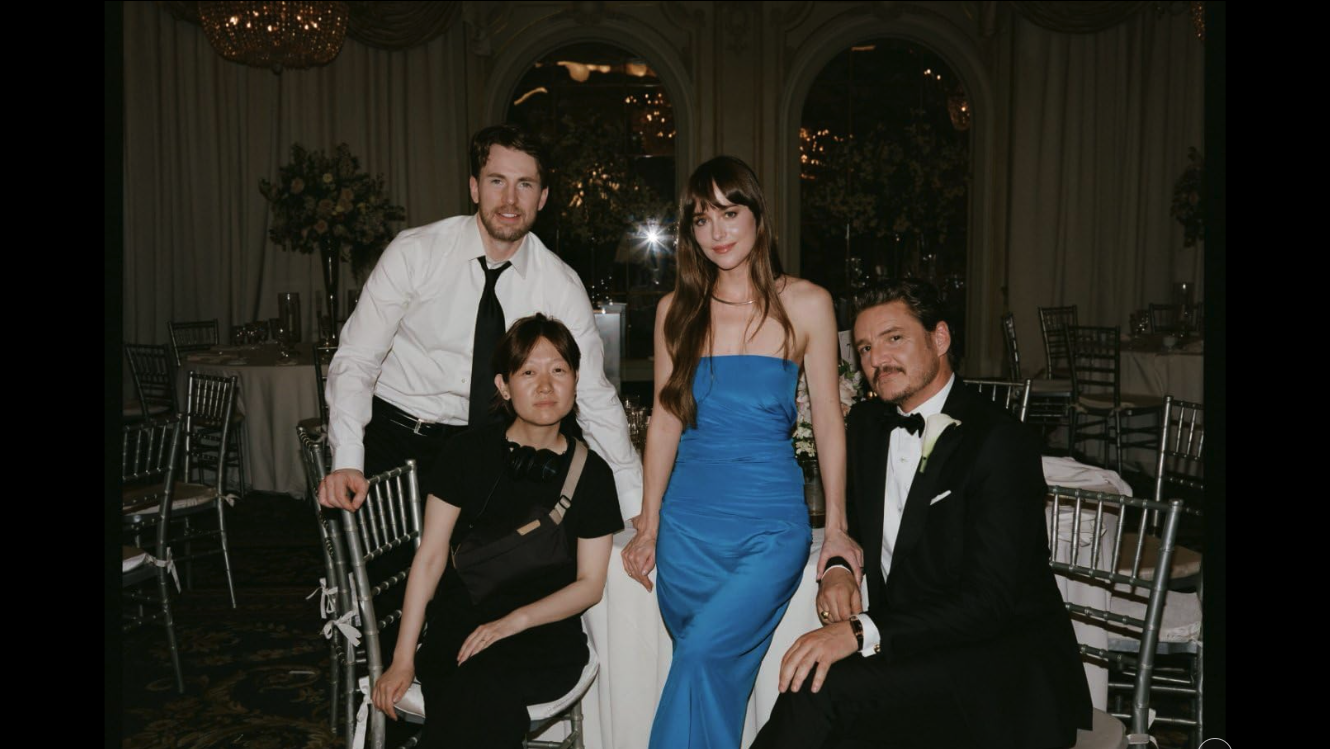
Featured Image: IMDb
Were you convinced by Celine Song's Materialists as a definitive rom-com?