By Charles Hubbard, Second Year, Theatre and Performance
There are movies who star-cast their leads. Then there are movies where the main roles were explicitly written for the actors that eventually inhabit them. And then there are films like Noah Baumbach’s Jay Kelly, where the main character is so inextricably tied to George Clooney’s career, image and public persona that I’m frankly surprised they didn’t just pull a Last Action Hero and call the character George Clooney as well.
However, Clooney isn’t the only one opening himself up here as Baumbach is clearly no stranger to the “man who’s such a ‘genius’ he destroys everyone around him” trope, previously showcasing it in both Marriage Story and The Meyerowitz Stories. And yet, as scathing as the film can often be about its eponymous movie star, it still chooses to share his wallowing in his own fetid psyche. It buys into the myth that Kelly has successfully sold the public (and, rather less successfully, tried to sell those closer in his orbit), eventually letting him off the hook entirely.
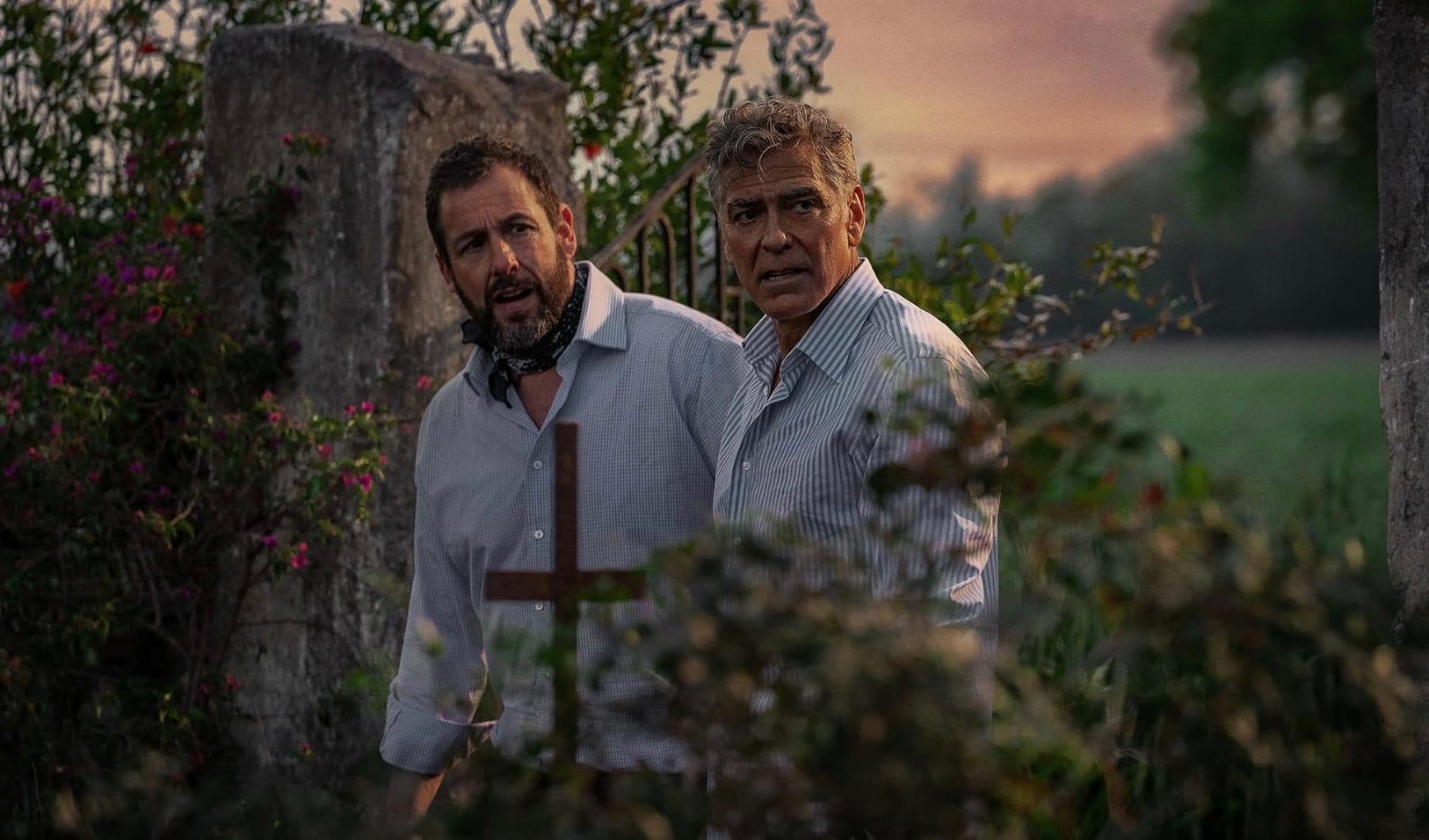
Immensely successful and beloved silver screen legend Jay Kelly has completed his latest in a long line of films, finding his passion for them to be flagging at an exponential rate. He bumps into an old acting school friend (Billy Crudup, making excellent use of his particular brand of slime), who harshly confronts him about how he allegedly ‘stole’ his big break at acting and rode its coattails for the rest of his career. What follows is an intense, vaguely self-loathing spiral (think The Royal Tenenbaums by way of Birdman) that sees Kelly desperately attempting to reconnect with his daughters (Riley Keough and Grace Edwards), his father (Stacey Keach) and his mentor (Jim Broadbent), all while mostly ignoring the man who’s had the greatest hand in his success - his manager Ron (an Oscar-tipped Adam Sandler). The film leaves no stone in Kelly’s psychology unturned, or un-painfully-spelled-out-by-a-thuddingly-on-the-nose-line-about-how-he-doesn’t-know-who-he-is-anymore. In fact, it seems to entirely take the side of Kelly’s harshest critics, be it his closest family or a stranger on a train to Tuscany, before disappointingly switching teams at the final moment. In potentially the film’s most honest scene, Jay’s publicist (Laura Dern) tells Ron “I say the bad things about him [Kelly] to you because I can’t say them to him” and Baumbach seems to have a similarly cowardly attitude to holding his main character’s feet to the fire.
Perhaps because the film is so closely tied to Clooney’s career, Baumbach’s script (co-written with Emily Mortimer, who has an extended cameo as a hair stylist) plays it very fuzzy on the specific details of Kelly’s career. We know that his breakout was a film called “Cranberry Street” directed by Broadbent’s Peter Schneider, but very little else on how his discography progressed from there. Perhaps this is because the film wants you to fill in the gaps with pieces of Clooney’s own career? This would certainly explain the film’s attention-grabbing (but somewhat inexplicable) denouement that I will not spoil here. It’s this black hole at the centre of Jay Kelly that sucks a lot of potential interest up. What kind of a star is Kelly? Is he always a leading man or does he sometimes take supporting roles? Is he critically respected or seen as a master of schlock? Has he, like Clooney, hit a bit of a rough patch since he turned 50? The film constantly underlines that Kelly has ignored his family in favour of his career and yet the career itself is left a major question mark. This may be intentional on the part of Baumbach in order to represent the hollowness of pursuing a career as a Hollywood leading man but it ends up robbing the audience of a fundamental area of interest for any “movie about the movies”.
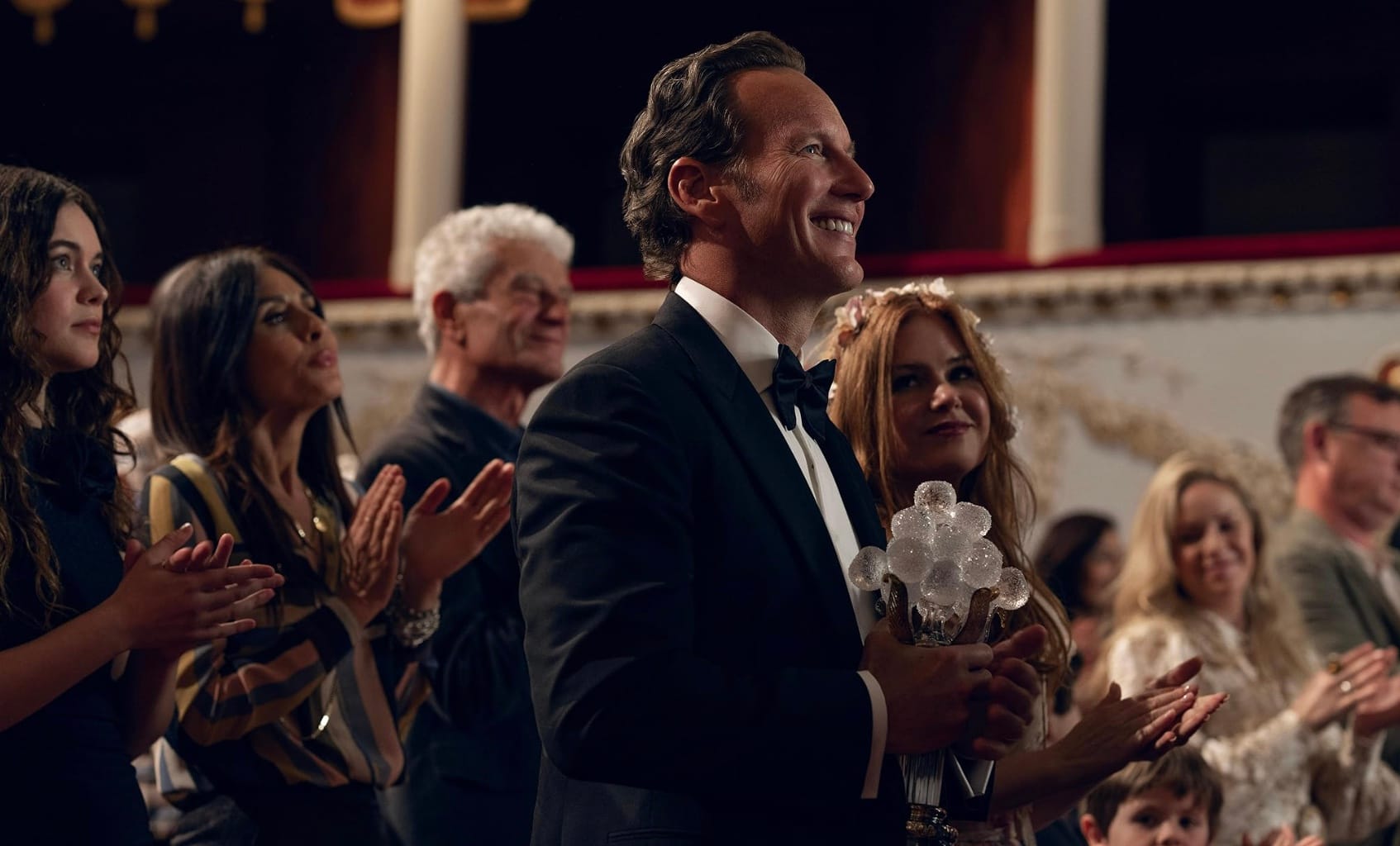
Since the titanic flop of 2015’s Tomorrowland, Clooney has mostly withdrawn into directing some of the most mediocre and forgotten films of the decade, be it The Boys in the Boat, The Midnight Sky or The Tender Bar. So it’s naturally a welcome sight to see him handing himself over to a legitimate filmmaker for the first time in a while, especially when the filmmaker in question co-wrote arguably his most enduring star vehicle - Wes Anderson’s Fantastic Mr. Fox. However, and I know it’s a strange thing to nit-pick, the film has several climactic scenes in which Kelly runs at full-pelt and I’m afraid Clooney, now close to retirement age, can’t quite manage this. In the end credits, I notice that David Neumann (the Tony-nominated choreographer of Hadestown) worked on the film and have to imagine he was hired for the sole purpose of getting Clooney to the point where he could almost convincingly run the length of a field. As someone who’s always found Adam Sandler to be an insufferable screen presence, no matter how good the material he’s given is, I am skeptical of his recent critical reappraisal brought on by Uncut Gems and Hustle. However, even I can’t deny that he’s fantastic here, sketching out an entire history for his character that the script pretends not to have time to dive into. If he does end up getting his first Oscar nomination for this, I certainly won’t be mad.
 Charles Hubbard
Jay Kelly isn’t a bad film - just one that insists on putting its considerable efforts (and runtime) in entirely the wrong places. The film is clearly supposed to be about the relationship between Kelly and Ron and yet forces so many unnecessary flashbacks and subplots upon itself that this key component of the film is browbeaten to the margins and only allowed a little space at the very end. And as for that ending, it seems to assert that, while Kelly may be a self-absorbed, egotistical, hypocritical, morally bankrupt, childish loser, the films he makes make people happy and that’s enough to justify his behaviour. And I couldn’t help but disagree.
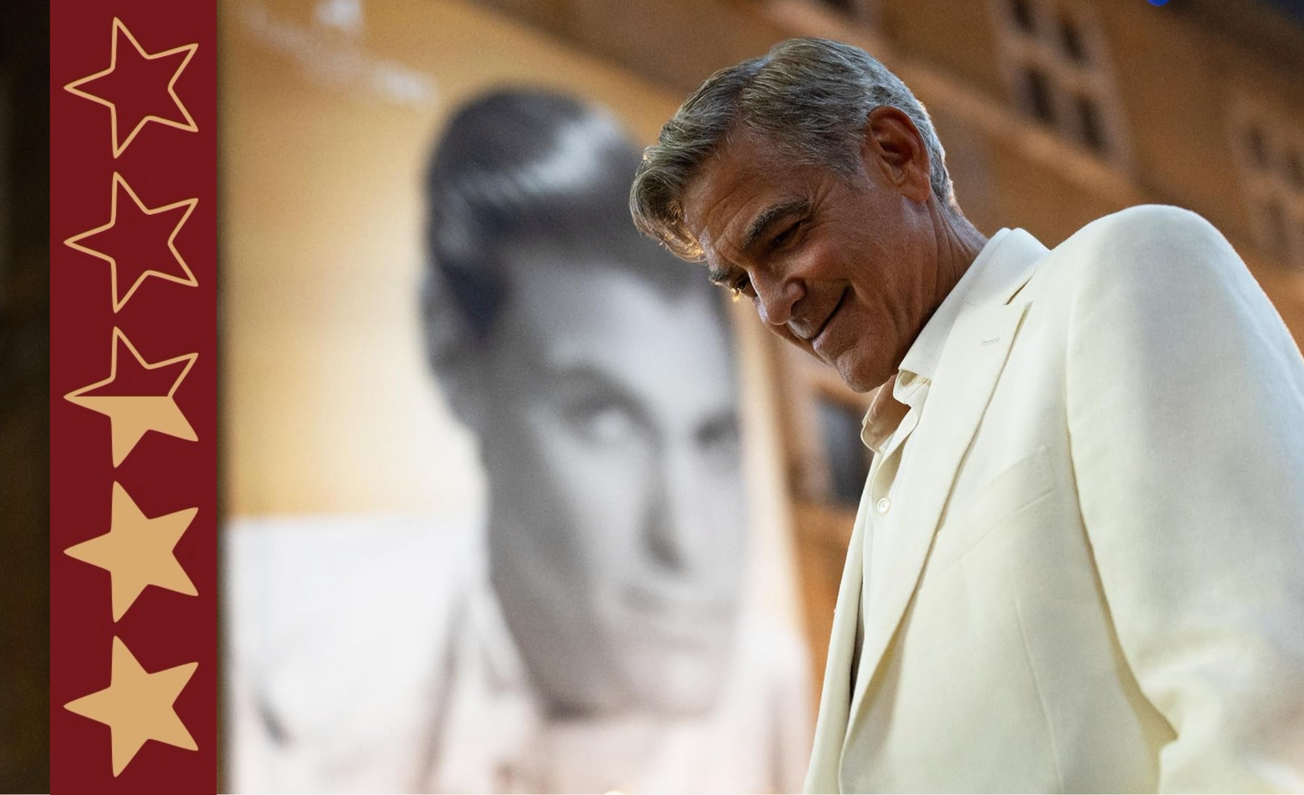
Featured Image: IMDb / Felix Glanville | Illustration by Epigram / Sophia Izwan
What did you think of Jay Kelly?