By Isabel Reilly, Second Year, Philosophy
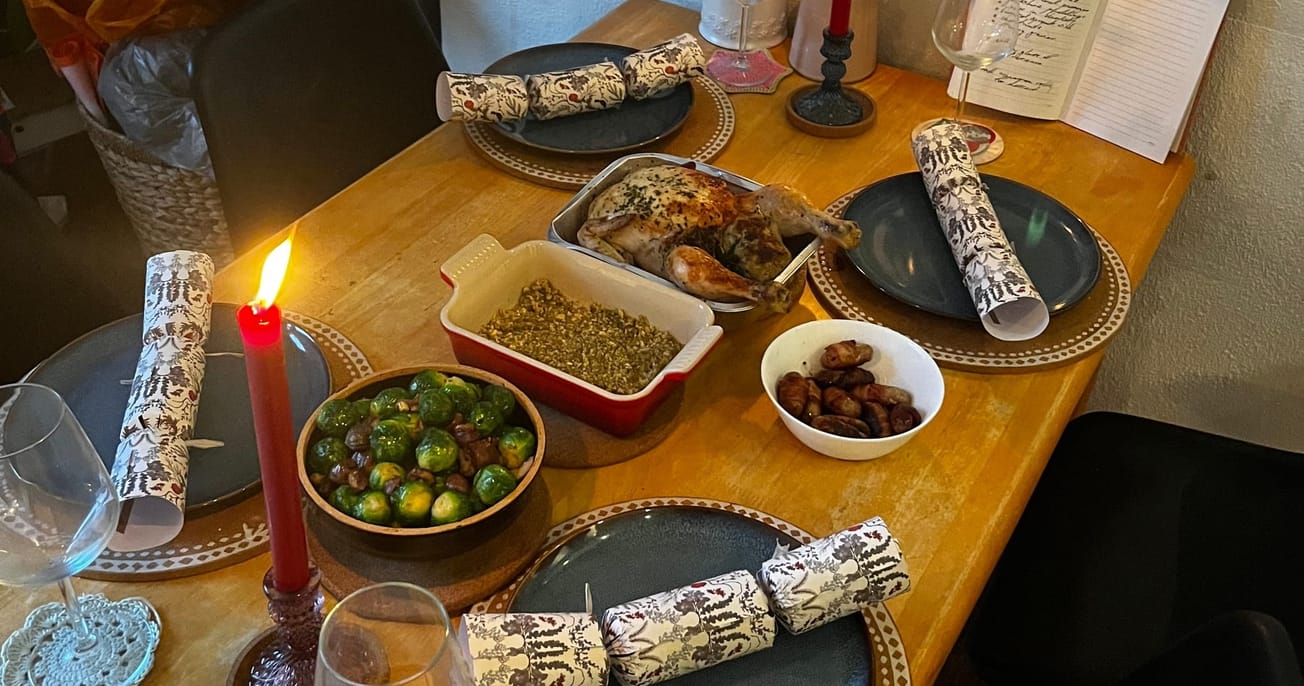
With mismatched maintenance loans, shoddy ovens, and questionable knife skills, the idea of a student Christmas dinner can feel daunting. Allow me, a Michelin-trained-ex-chef-turned-penny-scarping-student, to offer my advice.
I have spent my fair share of time wine drunk and sweating over honeyed carrots. I have burnt myself making rare beef with bearnaise, cried over porchetta with apple stuffing, and swore at a red wine jus. And everyone, everyone praises the Bisto. You can spend your entire day marinating a turkey and people will still ask for seconds of the 10 minute Paxo stuffing.
Social media has ushered in an era of glorified complex meal making. With the rise of moustachioed, all-boys-school alumni making TikToks on homemade pasta (sponsored by Waitrose of course), it’s easy to believe that quality mealtimes are a luxury reserved for the rich and talented.
But the truth is, there is no need to waste time preboiling, fluffing up, cooling down, and hard roasting potatoes when Aunt Bessie exists. Your time and enjoyment are more important than the crisp on your potato. Until you can blindly taste the difference between the two taters, I will call your Bessie slander snobby.

There is of course a caveat here: the price you pay for Bessie’s or other prepackaged goods is, in general, a little more than what you would spend on the raw ingredients. Two important things, however. Firstly, there are often expensive ingredients in these dishes, sometimes ones you only need a touch of. Paying £7.50 for a whole jar of goose fat, when you’re not even fully confident on why it’s better than vegetable oil, ends up being a big deal when you’re splitting costs across a group with different value systems and incomes.
Secondly, you pay for convenience. You are not a restaurant with staff who can peel your potatoes in five minutes, you are likely an early 20-something with very little oven space, and even less money. That is to say, in terms of time, effort, flavour, and price, Bessie is best.
Do [a fancier meal] only if you actually see the value in it - but do not fall for the scam of hosting beyond your means out of a pressure to perform adulthood appropriately.
When planning activities with friend groups, particularly in this city and in this economic climate, it is important to establish everyone’s attitude to value, not just money. If you dream of juliennes and dauphinoise, then £20 towards ingredients may be reasonable to you. But if you’re a chicken and rice merchant with zero tolerance for spice, that price may seem extortionate. Even if someone could technically afford it, it may not be of the same value to them as it is for you.
So, if you are planning your own Christmas with your uni mates, it’s a good idea to think about what everyone wants from it. If you, like me, have a genuine passion for good produce, then by all means, buy locally and cook extravagantly - those saved video recipes won’t make themselves! Make sure everyone agrees to a slightly more expensive shop resulting in a fancier meal. Do it only if you actually see the value in it - but do not fall for the scam of hosting beyond your means out of a pressure to perform adulthood appropriately.
There is no shame in pre-made dish or packeted sauce.
Now, after all that lecturing, let’s get practical. One of the important things about a roast is amount. It’s easy to make way too much or way too little of everything. Here’s a very basic (loosely nutritional) guideline on what the right amount of food is for each person so that no matter how you do your roast, you keep everyone full and your food waste down.
In general, for a meal you want around:
100g of protein per person
80g of vegetables
150g-180g of carbohydrates
Obviously, this number will vary per individual but speaking financially, things come in different sized packets that will not always line up perfectly with how much you need of each thing. Use these weights as a rough guide alongside some common sense, contextual information. For example, if you are cooking for 6, likely 1kg of potatoes would be fine even if technically it should be 1080g.
Featured Image: Annabel Bienfait