By Emma Yeo, Third Year English
After LGBTQ+ Pride Month in June, July marks the commemoration of Disability Pride Month. Originating in the US, Disability Pride Month seeks to celebrate diversity, bring awareness to the struggles disabled people face, and promote necessary change. Nevertheless, Disability Pride Month doesn't always receive the recognition it deserves, and its rich history remains unfamiliar to many.
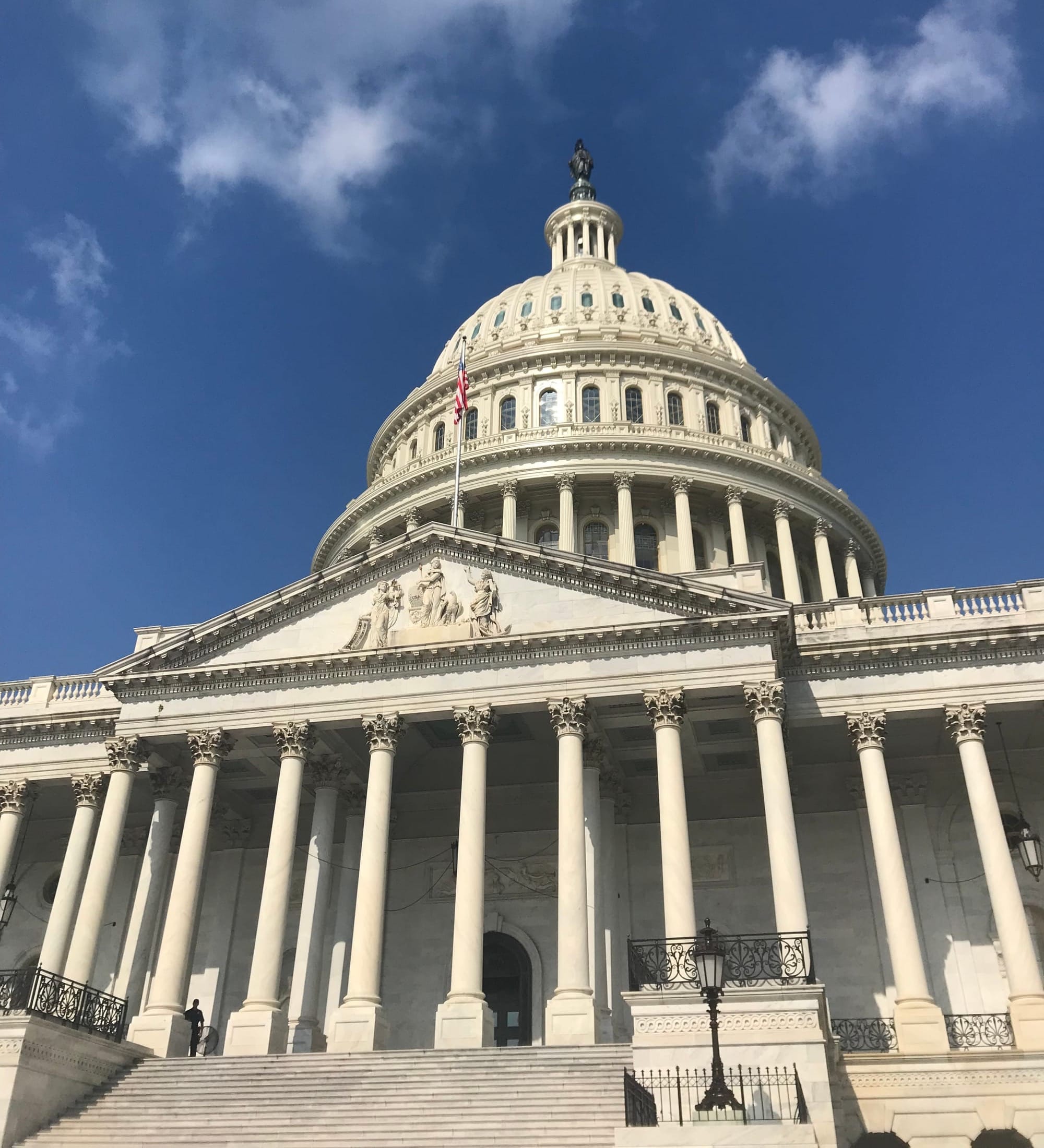
From the 1980s-1990s, disability activism was on the rise in the US. On 12th of March 1990, one of the most recognizable and revolutionary protests took place – the Capitol Crawl. Following congressional legislation stalling due to regulations regarding transport accessibility, disability activists gathered outside the White House and the US Capitol Buildings. In this protest, activists discarded their mobility aids and crawled up the steps of the West Front Entrance. In this 83-step ascent, the activists physically illustrated the struggles that disabled people face daily and the barriers to accessibility within society. With over 1000 reported attendees, this protest came to hold a ‘pivotal role’ in the push for disability legislation.
Just four months after the Capitol Crawl, on 26th of July 1990, President Bush passed the Americans with Disabilities Act (ADA). In the words of disability activist, Justin Dart, the ADA formed ‘an essential foundation on which solutions will be constructed’, which is a valuable way of understanding the purpose of this act.
Essentially, this statute sought to establish protective laws, confront the discrimination that disabled people may face, and ultimately, provide equity and equal opportunities. Being the first comprehensive civil rights law for disabled people, the ADA was remarkable and led many countries to take similar steps towards passing protective disability legislation.
In 1995, the UK followed the US's lead, and the predecessor legislation to the Equality Act was passed: the Disability Discrimination Act. As the first UK law to protect those with disabilities, this bill intended to confront the discrimination that existed within education, public transport and facilities, and employment.
Despite the Disability Discrimination Act remaining in force in Northern Ireland, the 2010 Equality Act has replaced it in England, Scotland, and Wales. While the Equality Act compiled over 100 pieces of discrimination legislation based on a variety of protected characteristics, there were noticeable improvements upon the limitations observed in the Disability Discrimination Act. For example, this new legislation meant that people no longer had to prove the impact their disability had on a certain aspect of their life or functioning to be protected from discrimination.
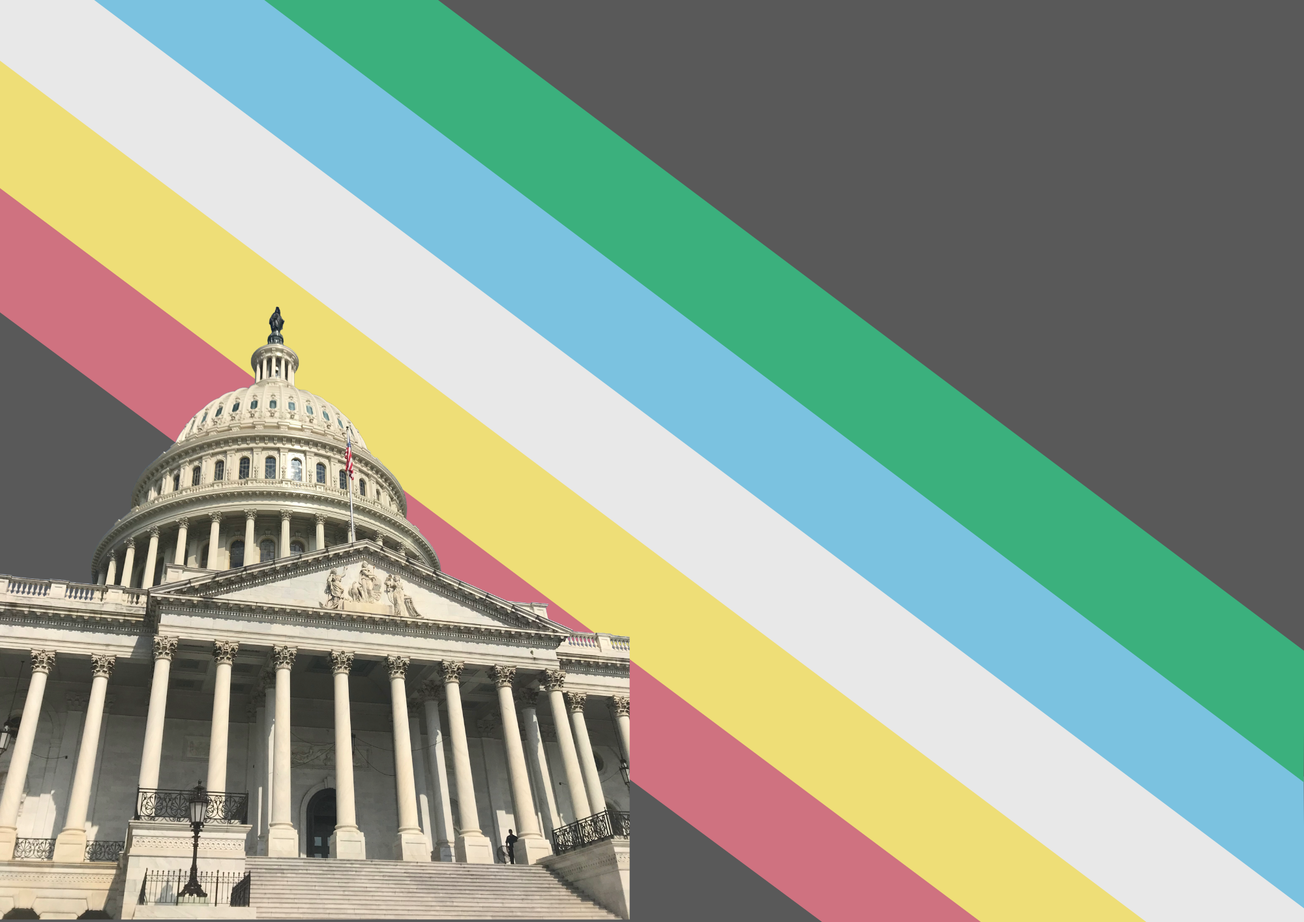
Following this complex history, the Disability Pride Flag functions as a symbol of the community and the challenges it has faced over the years. Redesigned in 2021, the Disability Pride Flag features five coloured diagonal stripes on a charcoal background. According to the creator, Ann Magill, each of these stripes has its own unique meaning and represents a certain group within the community. The red stripes represent physical disabilities, the gold signifies neurodiversity, the blue portrays emotional and psychiatric disabilities, the green corresponds to sensory disabilities, and finally, the white symbolizes invisible and undiagnosed disabilities. Alongside this, the charcoal represents those who have experienced ableism and those who have passed on.

Various events and demonstrations have used this flag. Since the 2010s, the UK has celebrated Disability Pride Month, and this has prompted several parades and local events. The first ever UK Disability Pride parade took place in 2014 in Belfast; this event included the participation of over 800 representatives from 18 charities and carnival activities. From then on, more and more towns and cities have started their own local celebrations of Disability Pride, including Brighton in 2017, Reading in 2023, and Birmingham this year.
Having these events to commemorate Disability Pride Month is extremely important. They create a safe environment where diversity can be celebrated rather than ignored, stigmas can be challenged, and inclusion is a main priority. Speaking to Epigram, one student said:
‘I think it's important people can see representation and meet other people like themselves […] especially in the face of recent political opinions. Disability being destigmatised and accessibility is very important, and people (both disabled and not) taking the time to celebrate the pride month is a good first step to that.’
However, Disability Pride Month is not simply a celebration. In fact – many, including one student, Lucy – believe that it ‘leans more towards a call to action’ than a celebration. According to the 2022-2023 Family Resources Survey from the Department for Work and Pensions (DWP), 16.1m people reported having a disability in the UK. This figure is hard to imagine at a glance; however, this roughly equates to one in four.
 Emma Yeo
On a more local level, the University of Bristol’s 2024 Annual Report found that 22% of Bristol’s student population had a known disability. The prevalence of disability has also increased by about five percent from 2012-2013 according to the DWP. Despite disabilities being more widespread, prejudices and accessibility issues have still not completely improved. In fact, Scope found that 72% of disabled people have experienced negative attitudes or behaviour towards their disability in the last five years. To know that these forms of discrimination are so widespread is indeed concerning, but, as Lucy adds, ‘a large majority of people still do not take disability seriously and are not aware of the ways disabled people are being mistreated’.
While Disability Pride Month is a time to celebrate diversity, it also reminds us of the ongoing work needed to create a more inclusive society. Meaningful change benefits everyone, and it starts with collective effort. After all, disability can touch any of our lives at any moment. So this July, take the opportunity to learn, engage, and be part of the movement toward a more equitable future.
Featured Image: Epigram