By Lenny Osler, News Reporter
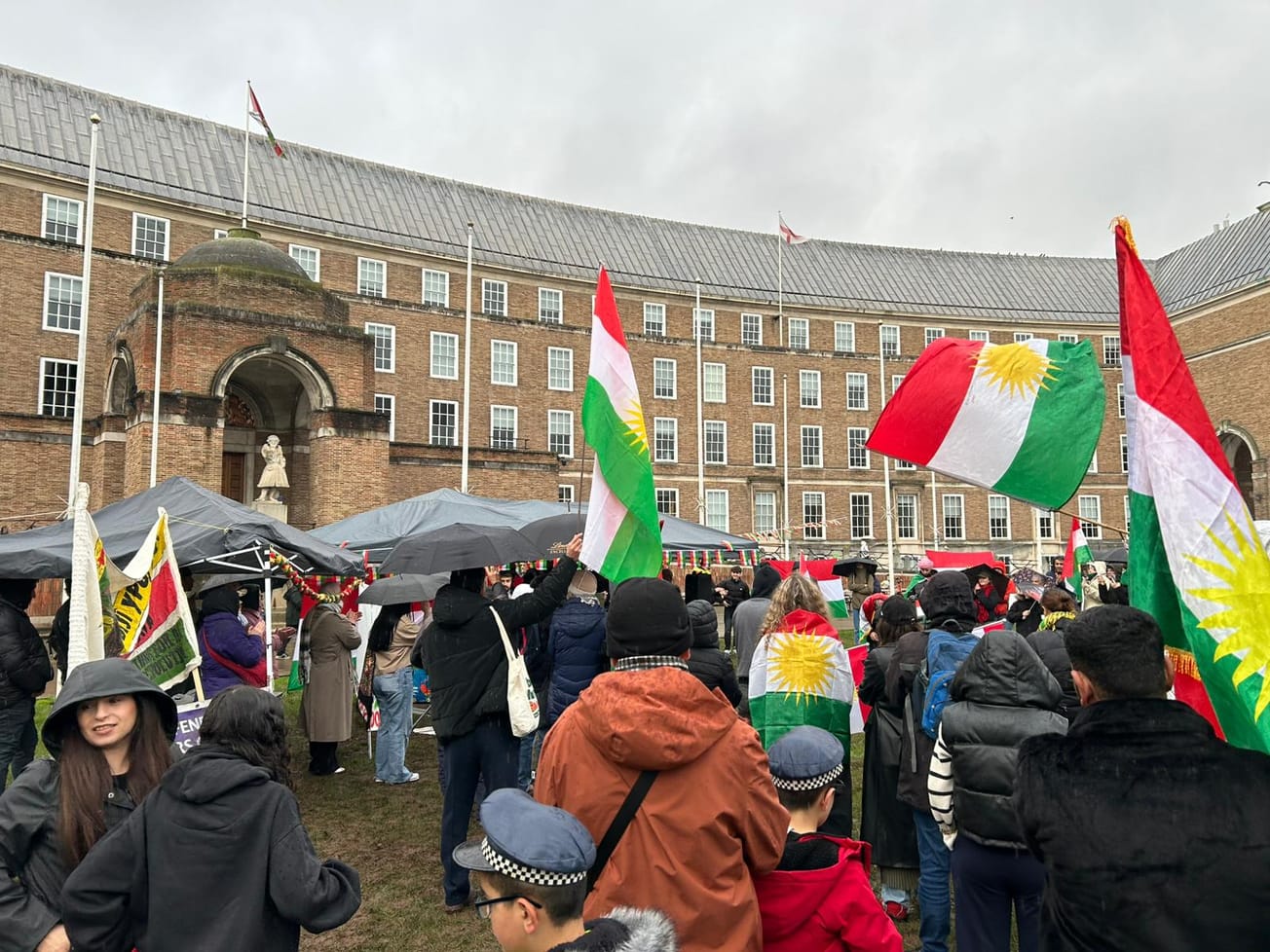
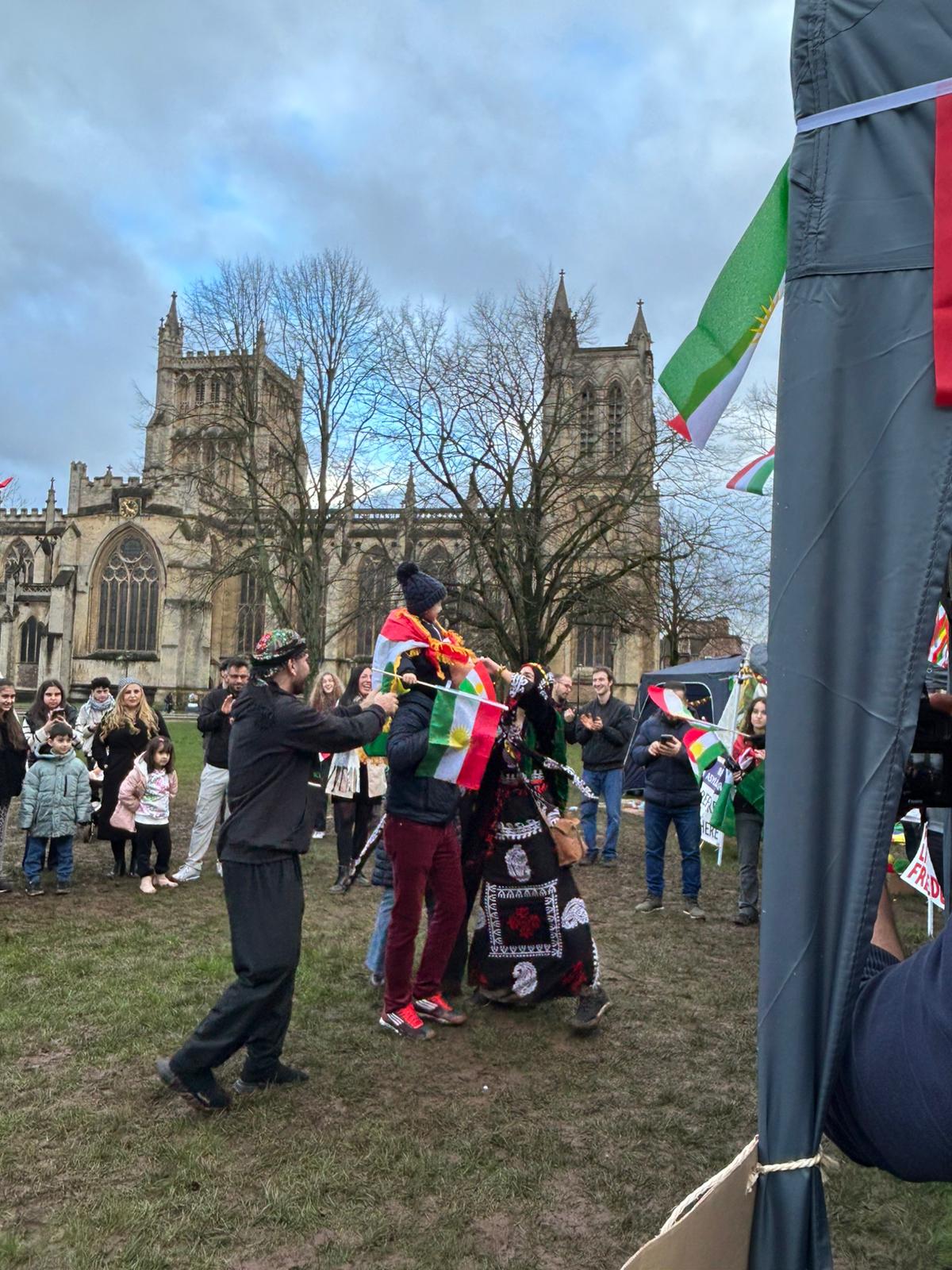
At 2 PM on Saturday 7 February, gazebos were erected on College Green opposite City Hall as Bristol’s Kurdish community were joined by supporters from across the city.
The demonstration demanded support for Kurds facing violence and persecution in the Kurdish-majority region of Rojava in northeastern Syria.
Since 2013, Rojava has been besieged with conflict between ISIS and Kurdish militias including the Kurdish People’s Protection Units (YPG) and the Syrian Democratic Forces (SDF).
Conflict was reignited in the region when Ahmed al-Sharaa, a former member of al-Qaeda, came to power in Syria in January 2025.
His government has been widely accused of perpetrating violence against ethnic and religious minorities, including the Kurds of Rojava.
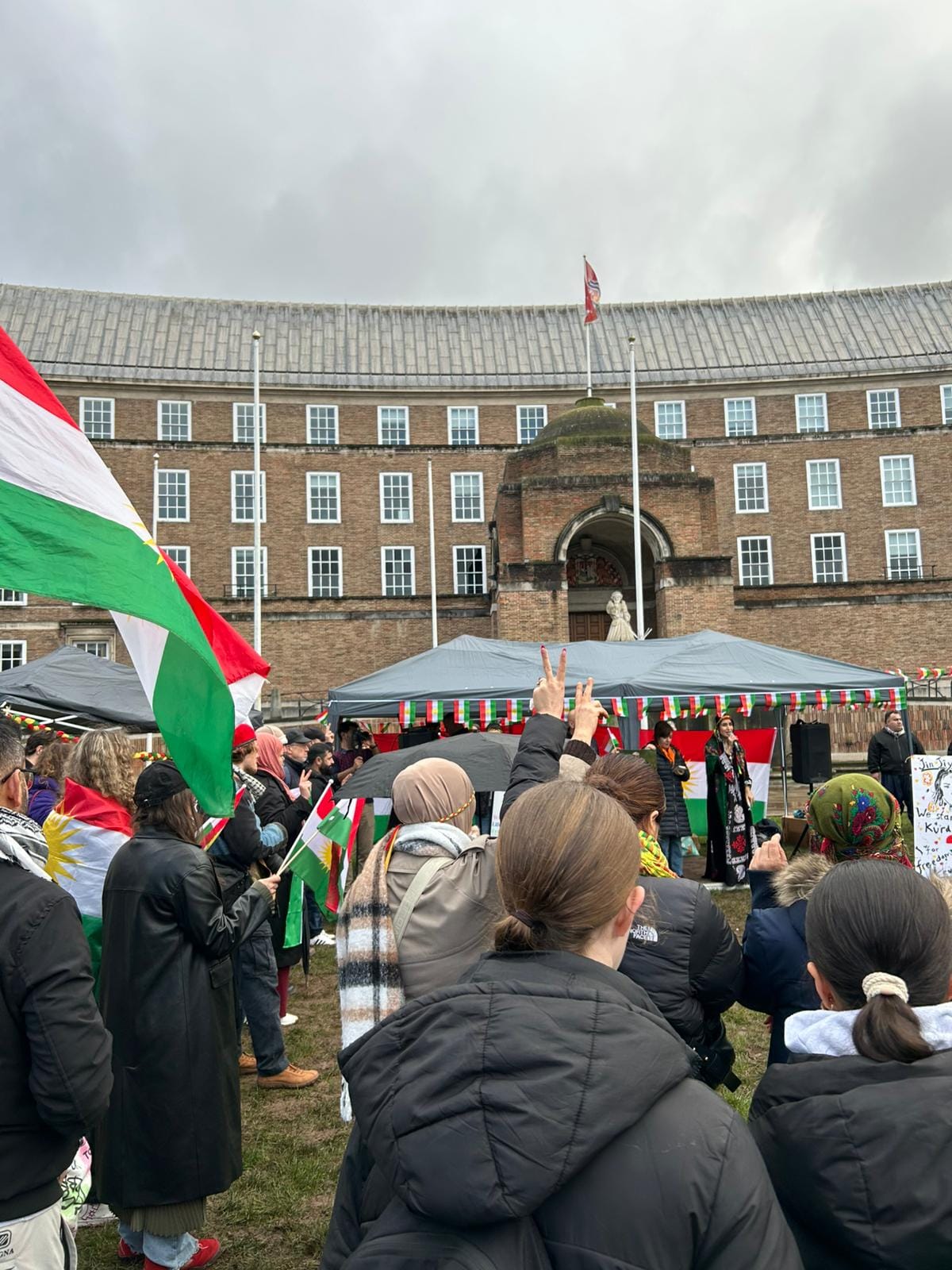
Women’s rights were a key theme of the demonstration, with banners reading ‘Jin, Jîyan, Azadî’ (‘Woman, Life, Freedom’) on display.
According to Genocide Watch, Syrian government forces have continued violence against Kurdish women, often taking their braid - a symbol of Kurdish cultural identity - as a trophy.
Epigram interviewed Tara Miran, a Kurdish activist in Bristol:
‘Jin, Jîyan, Azadî is part of the Kurdish women’s revolution’ she said. ‘It’s a chant, it’s something that strengthens us.
‘For every braid you cut, we will braid 1000 more.’
Tara demanded recognition and support from Bristol City Council, which she claimed had dismissed Bristol’s Kurdish community during Marvin Rees’ time as mayor:
‘Marvin invited the Kurds round the table and promised to help.’
‘They offered us a slot in the city gathering, but when we arrived for it, they said we weren't on the agenda. Within a week or two, every single promise was withdrawn.’
 Lenny Osler
In a speech, Tara said it was ‘nice’ that Bristol Central MP Carla Denyer signed a motion calling for inclusive talks between Syrian authorities and Kurdish representatives to bring an end to the violence. However, she maintained that ‘nice is not enough.’
Epigram spoke to Tanya, another activist:
‘We’ve been writing to MPs all over the country’, she said. ‘We’re asking for recognition of Kurdistan, of Kurdish status, and also to protect the people of Rojava.’
‘The UK and US governments are already involved in the big decisions, so they need to recognise us.’
Yasser, another protester, was critical of the UK government’s lack of support for Kurds:
‘It was the UK and France who created the colonial boundaries and divided [Kurdistan], and still they are supporting al-Sharaa, a jihadist who is a threat to democracy and women’s rights.’
Yasser continued, telling Epigram: ‘We have a famous saying - we have no friend but the mountain - because we’ve been betrayed so many times by different allies.’
The historic region of Kurdistan was divided by Britain and France during the 1916 Sykes-Picot Agreement. Since then, Kurds have been one of the world’s largest ethnic groups without their own nation state.
 Beth Robinson
 Dana Andrea Datu
Tara told Epigram that there is not currently another protest planned.
‘But we will continuously be doing this type of action, all for the ongoing struggle towards Kurdish independence’, she said, adding:
‘If we do have another protest, we will post on the Facebook page called Kurdani Bristol.’
Featured Image: Epigram / Lenny Osler