By Alethea Tweddle, First Year, English
This historical drama shows a truly raw insight into the atrocities committed towards Palestinians in the name of the movement to promote Zionism. The inequality in treatment by the British is part of the story that is often forgotten in the wake of current genocide in Gaza.
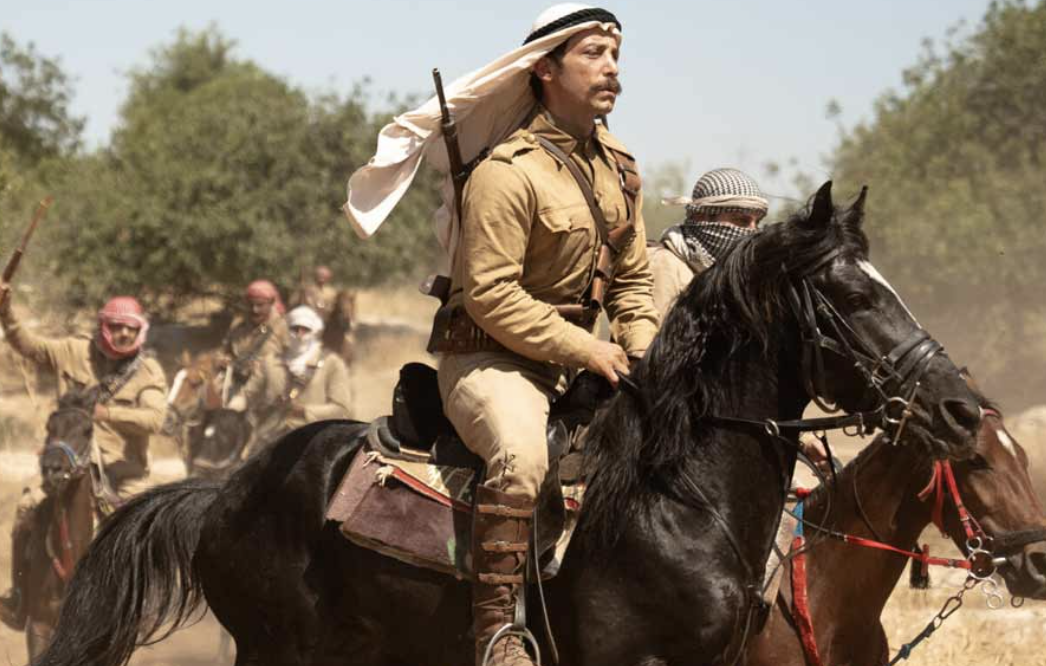
Palestine 36 (2025) offers a beautiful but heartbreaking view into the role that the British Empire played in the rising resentment between Jewish and Palestinian people. It seeks to narrate the journey of a young Palestinian man whose life is in turmoil due to the arrival of Settlers in his home village.
However, Annemarie Jacir (the director), does an excellent job of not villainising the settlers, instead she focuses her criticism on the brutality of the British forces in control.
Whilst this is an emotional watch, we also see some beautiful character studies forming throughout the film, with representations of powerful female role models and youth who have the courage to stand up to injustice.
Overall, Jacir paints a rich picture of the treatment of Palestinians under British rule in the 1930s and is a piece of cinema that is a must see for those who are invested in understanding the history behind the current genocide in Gaza.
This story follows the life of Yusuf, in British occupied Palestine throughout 1936. He begins a determined worker for Father Boulos and his wife Khuloud Atef who writes a centrist-liberal column, travelling between his rural village and Jerusalem. His character treads the fine line between the classes and tracks both the political changes in the countryside and the epicentre of conflict itself.
Another feature that Jacir highlights is the rise of the term ‘Zionism’. This term is founded on the idea that Palestine shall be the ‘Jewish National home’ due their connection to the city of Jerusalem. As the British took a more active role in the introduction of Jewish people into Palestine, they also introduced a new concept of ‘Zionism’ to fight against Anti-Semitism.
With this rise we see a shift in Yusuf’s nature, as he becomes more desperate to protect his home, he becomes increasingly violent. Palestine 36 uncovers the inherent issues with the British choice, as it instead bred resentment between the groups, erupting in the rebellion of 1936 – the climax of this film.
The climatic point of this movie is utterly heartbreaking to watch. Jacir does not glamorise the violence in any way shape or form – she simply portrays the facts – highlighting the consequences of British persecution towards the Palestinians. We are left with an intense feeling of melancholy as this film ends because the audience knows this conflict was far from over after the 1936 rebellion.
The Palestine Film Festival makes a point of displaying films that tell all sides of the current situation in the West Bank – and this film animates a part of history that is often forgotten in the 21st century.
Jacir aims to celebrate Palestinians and their bravery through her characterisations, cinematography and use of Palestinian actors, to implore the viewer to feel respect towards their struggle, not simply pity them.
 Nancy Laurenson
This is arguably one of the most important films that has come out in recent years and is a pivotal piece of cinema that explains the intricacies of this arguably complicated conflict.
I highly suggest watching it if you have any interest in politics or the current genocide happening in Palestine as it is a celebration of Palestinian creativity and narrates such an atrocious political event that still has clear implications on the world today.
Featured Image: Bristol Palestine Film Festival
Did you manage to catch Palestine 36 at The Cube during the BPFF?