By Madeline Richards, Third Year, History
Although the University of Bristol has introduced a growing selection of initiatives to widen access and encourage more state-schoolers to apply, Epigram talked to three University of Bristol state-schoolers who stand as stark reminders that imposter syndrome, for many, remains a central feature of the Fresher experience.
In an elite University setting, it is easy for state-schoolers to find themselves out of the loop and unable to relate to their flatmates’ upbringings. Many battle an unshakable feeling that they are destined to fail: ‘imposter syndrome’. Feelings of inadequacy, heightened by being around uncharacteristically large groups of privately educated peers, makes them more vulnerable to these anxieties.
Two years ago, Daisy* moved into North Village Halls in the leafy Bristol suburb of Stoke Bishop, renowned for its expensive accommodation prices and private school reputation. Coming from a state school in the North of England, settling into Stoke Bishop was a shock to Daisy’s system. Faced with a new crowd that she felt she had little common ground with, first year was a rude awakening to the realities of how boarding school networks dominate the Bristol fresher experience. She soon realised just how unprepared she was for her new environment.
Daisy told Epigram how ‘Badock lived up to the private school stereotypes’, revealing how, out of 10 people on her corridor, over half were from private schools, and not merely private schools, but what she describes as ‘the top public schools in the country such as Marlborough, Eton and Stowe.‘
‘I often felt out of my depth and like I had to pretend to be someone else - someone more affluent’
Although closing the private school gap has become central for Universities in recent years, Bristol University continues to fall behind its counterparts. In 2021, Bristol was ranked 104 out of 115 Universities by the Times higher education, for social inclusion. This ranking that uses metrics such as their proportion of first generation students, non-selective state school admissions and the Black attainment gap. The Times’ data reveals that the University’s non selective-state school intake accounts for just 61.3 per cent of the total student population, a huge disparity from the national figure of 93 per cent of the UK being state-schooled.
Third year student, Beth*, describes the overwhelmingly public school atmosphere that made state-schoolers feel like the minority.
‘I recall on my first or second night of freshers going into a local Wetherspoons and how it felt like a prep school reunion for everyone there except me.’
This accelerated Beth’s normal Fresher anxiety, catapulting it to an imposter syndrome so intense that she tried to change her accommodation and even considered dropping out of university.
‘Many times that I had to be purposely vague and elusive so as to not signal my state schooler status.’
One method that Bristol has employed to tackle its intake diversity issue is by offering contextual offers. Since 2009, these offers have lowered entry requirements by two grades for students less likely to go to University. To qualify for a contextual offer, students must have either come from an aspiring state school, spent time in care, had free school meals or live in indices of multiple deprivation.
However, Epigram talked to second year politics student Arianne from Wales who explains how her contextual offer left her feeling acute imposter syndrome and as if she could not compete with those who had achieved the original course offers.
‘I mainly felt imposter syndrome from getting into Bristol on a contextual offer’ she shares, ’I soon found out a lot of people had applied to Oxford and Cambridge. I went in thinking about how hard it was going to be competing in essays with people who had gotten much higher grades than me.’
Arianne recounts how, when getting to know people during freshers, she realised ‘just how removed they were from the reality of an average income household.’ This fuelled further anxieties about how she was brought up, unlocking an insecurity about her school and home country that she had not felt before moving to University.
Arianne felt she had to make an effort to hide her Welsh accent and avoid speaking about Wales as much as possible, in order to more easily fit in with the average Bristol student.
‘There was an immediate barrier talking to these people. I would never feel fully connected to them.’
During fresher icebreaker games, the question ‘what school did you go to’ was a hot topic of conversation for Daisy, Arianne and Beth. It seems as if an almost physical barrier existed between private and state schoolers, with these types of conversations acting as a way to socially sift people into different piles.
‘As someone who was state educated in the North of England, there was often a notable awkward pause after I responded with my school’s name. The average reaction was one of sheer disinterest’ Daisy adds.
The uneven proportion of state-schooled students creates an uncomfortable and closed environment, making state-schoolers feel as if their educational background determines their worth and social currency. It can fuel a desire to hide who you are and where you are from in order to fit in more easily.
An almost social segregation reveals itself when students from the same big public schools all end up in similar accommodation and instinctively stick together. Bristol halls of residences’ rent disparities further fuel this divide, with those being able to afford the top prices of Stoke Bishop ending up as flatmates. Nestled in a new home that is not all that different from a boarding school experience, many students take the familiar route of continuing to socialise in their school cliques.
Arianne recounts feelings of isolation when realising how many of her flatmates had a ready made friendship group at Bristol before even arriving, leaving her already feeling a step behind the rest.
‘On the second day, most of my flat were meeting up with their friends who they knew from private schools. This was really annoying as uni should be about making new friends. It was another way I felt kind of out of the loop’
Although these student experiences may seem bleak, Bristol has introduced some positive programmes to widen access for state-schoolers, including the Bristol scholars scheme . This allows headteachers to nominate students based on individual circumstances to receive a tailored offer from the University of Bristol, a leg up that state-schools often don’t have. However, there is much work to be done to bridge the gap between pupils.
It is all too easy to feel embarrassed of a state-school education whilst being at a University with such a large proportion of privately educated students. However, it is vital to recognise that being state-educated is not a weakness. It should be considered an achievement. On average, a state school has a class size of 22.3 pupils compared to 15 private school pupils. Most state-schools are underfunded and oversubscribed compared to fee paying schools, having scarce time to thoroughly prepare students for University. Succeeding in spite of these disadvantages, whilst others have had an education lined with privilege and entitlement, is something to be applauded and celebrated.
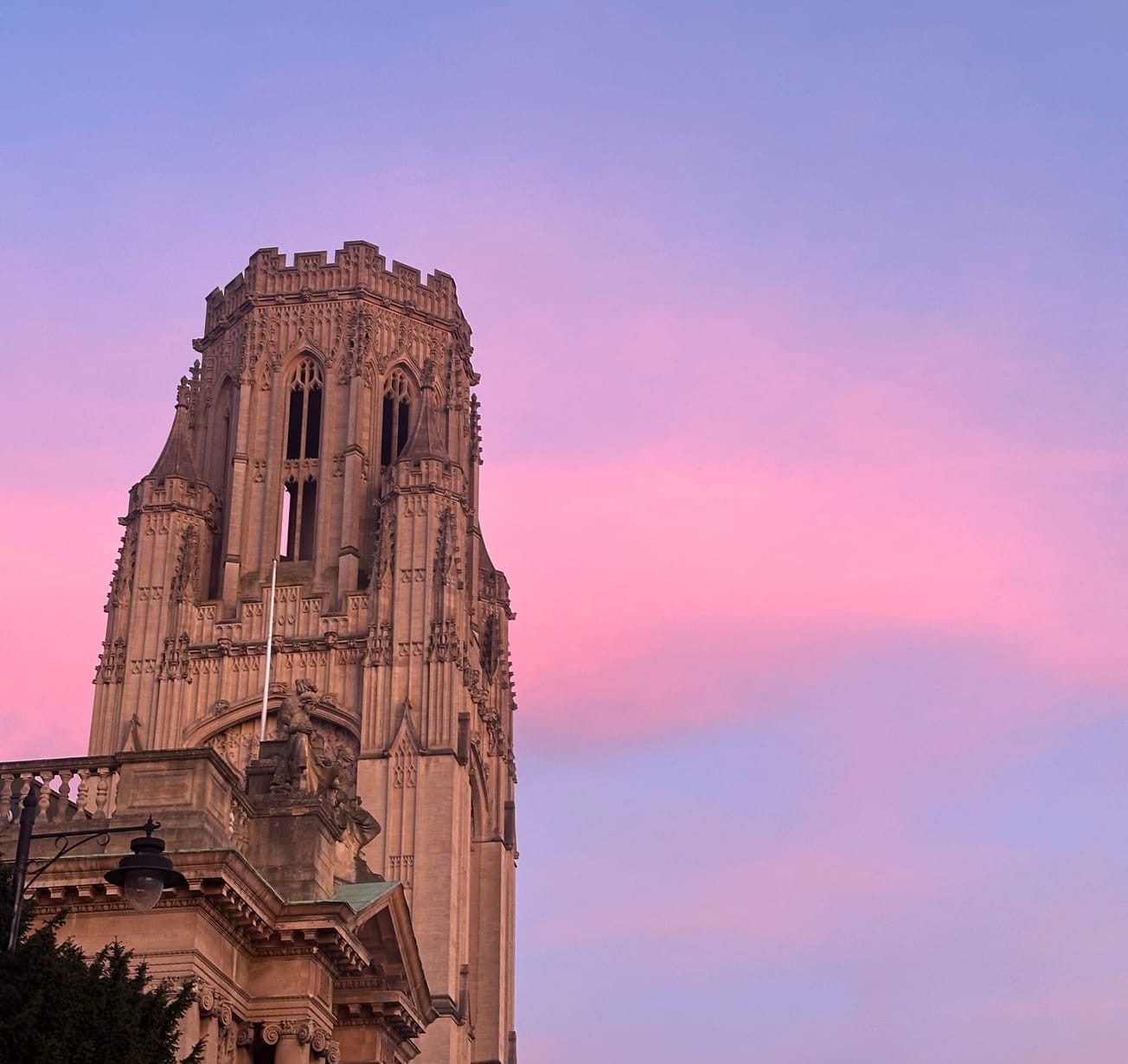
Featured Image: Epigram / Anna Dodd