By Charles Hubbard, Second Year, Theatre & Performance
I’ve come to a point where I’ve been conditioned to skip any film, book, article or social media post that can be summed up as “[INSERT STRAIGHT WHITE GUY HERE] offers their thoughts on political correctness / the MeToo movement”. There’s only so many hours in the day and I for one don’t want to spend any portion of said hours listening to someone complain that they're under attack every time the systems chasms of equality present in our society get a little bit smaller.
For this reason, I wasn’t thrilled to hear that the next film from the increasingly prolific, Italian arthouse favourite, Luca Guadagnino, was going to be his take on who you should believe when someone is accused of sexual assault. However, I can report that the final product is a great deal more ideologically muddy than it may seem on the surface. In fact, Guadagnino and screenwriter Nora Garrett seem to acknowledge that we are now living in a different political climate than the one which came out of the MeToo movement - one where bigotry and dehumanisation are celebrated now more than ever. After the Hunt may be muddled and interminably long, but it does have its finger on the dial of a culture that has recently moved so far towards the right.
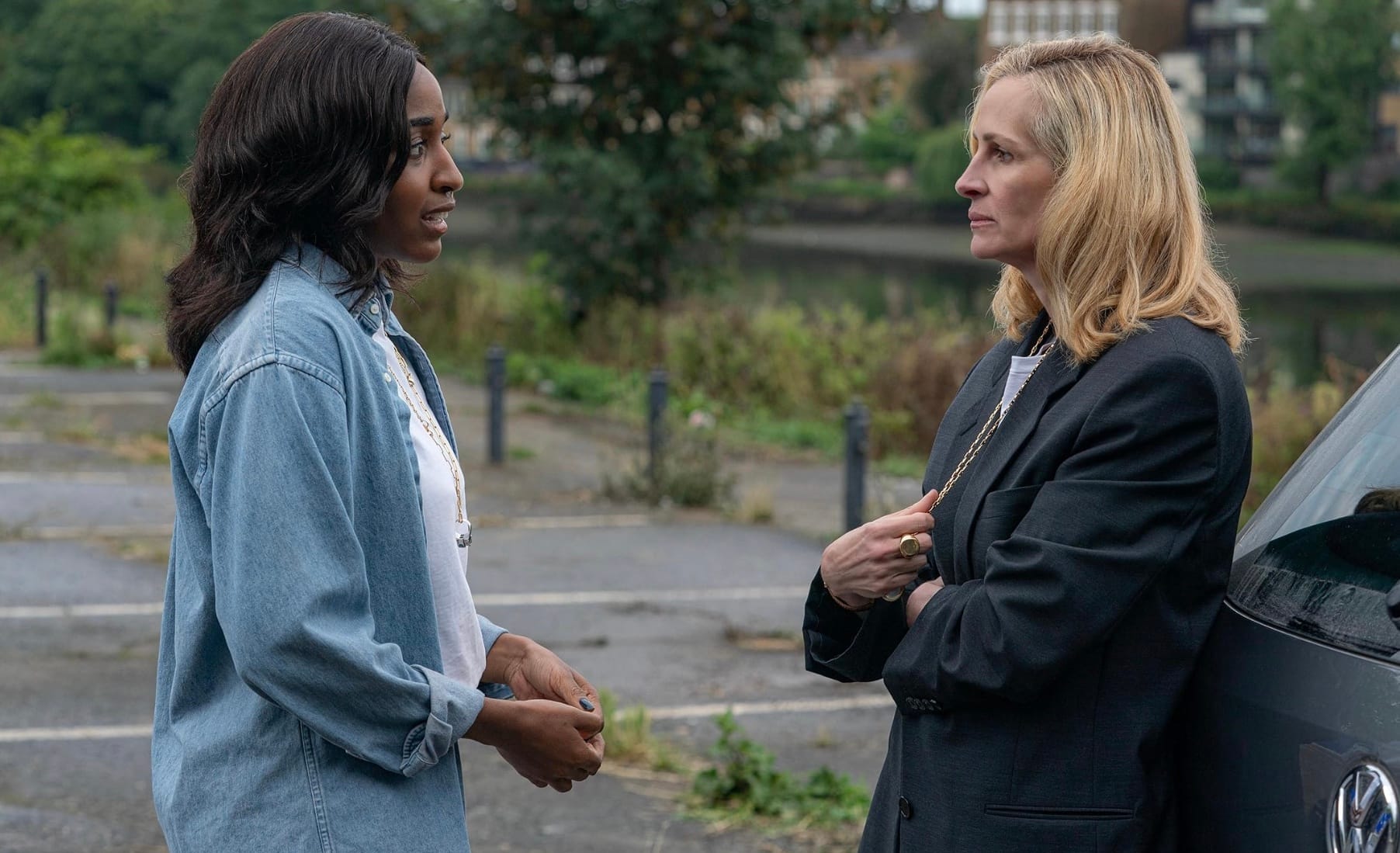
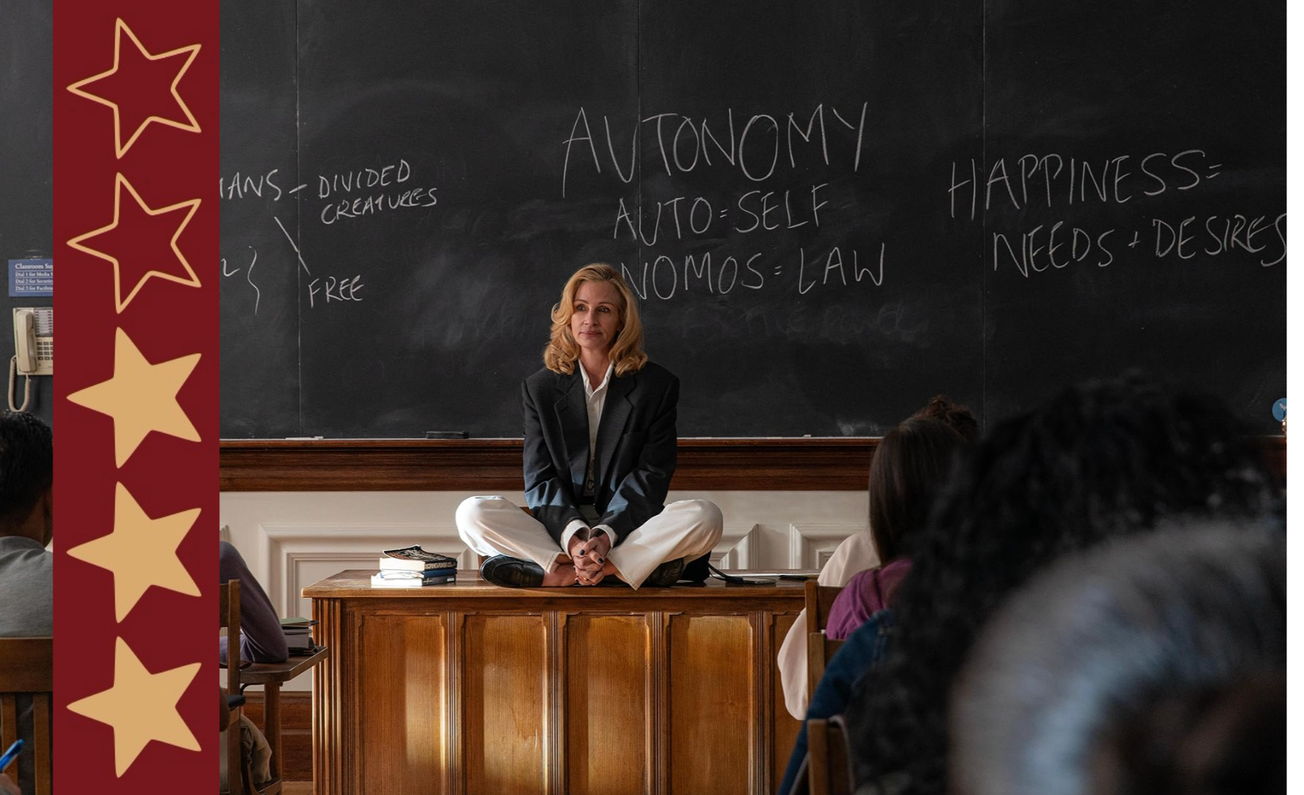
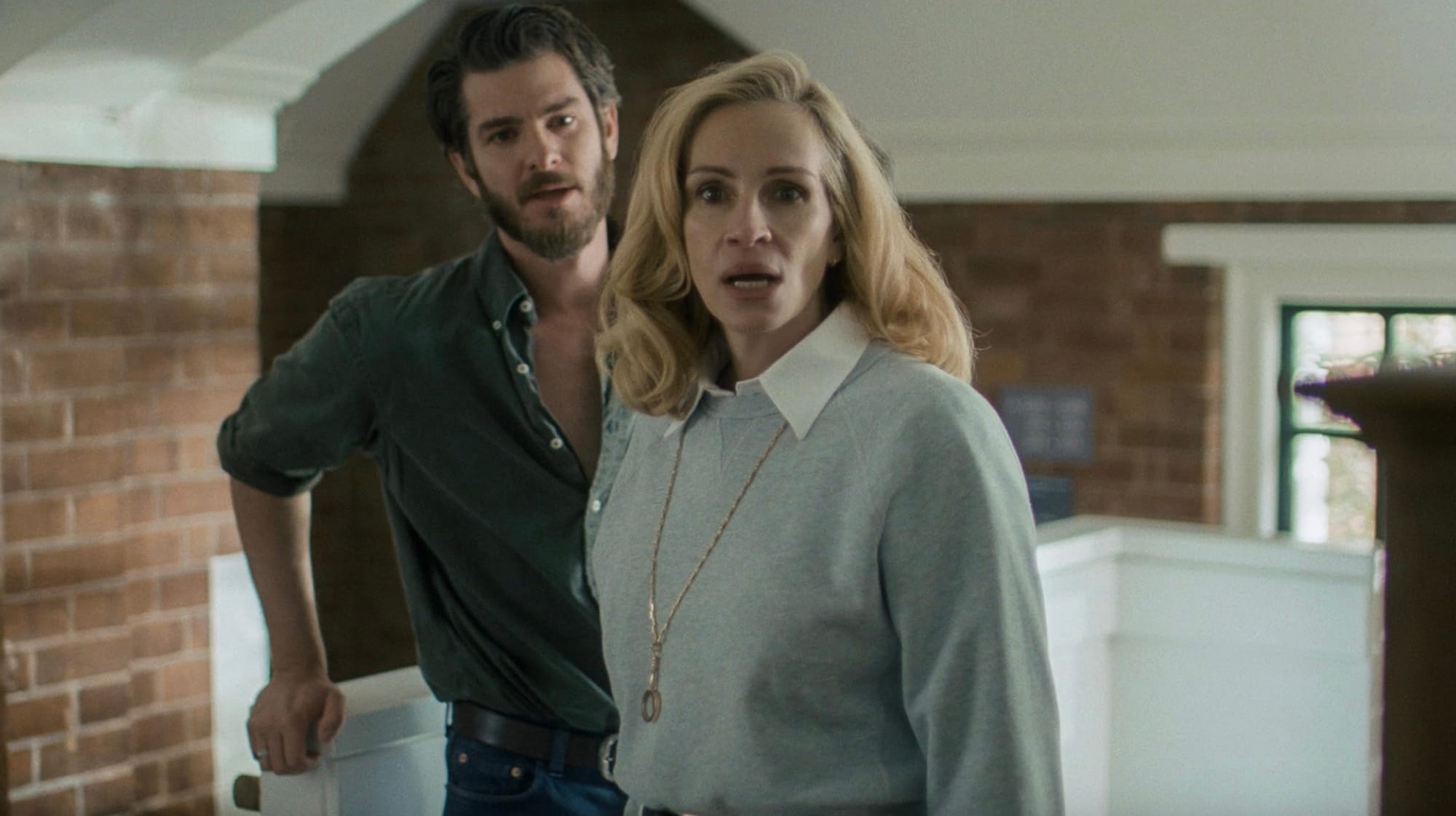
The film centres around frosty, erudite and intimidatingly eloquent university professor Alma Imhoff (an excellent Julia Roberts), who is on the brink of achieving tenure when one of her colleagues - the charismatic but ethically dubious Henrik Gibson (Andrew Garfield like you’ve never seen him before) - is accused of sexual assault by one of her students, Maggie Resnick (Ayo Edeberi). As Henrik’s life spirals out of control and Maggie faces indecision about whether or not to press charges, Alma is gripped by a substantial moral dilemma that ends up costing her almost everything. The setup is indeed very standard and could come from any number of recent films about sexual assault. The patterns are all too familiar at this point, making the film’s opening twenty minute section, that occurs before the assault, feel like a slow-motion car crash. The audience knows exactly what is about to happen and is yet powerless to stop it.
As is the case with this year’s Materialists, After the Hunt is entirely aware that it is getting to the conversation a couple years too late. Many of the characters often remark on the painfully clichéd nature of the central conflict, Henrik chief among them, as he realises that he entirely fits the bill of a lecherous professor preying on a younger student. And yet this self-awareness doesn’t make a dent in the film’s aggressively self-serious tone. The script in general (from newcomer Nora Garrett) is painfully overlong and often loses sight of what its point is ostensibly supposed to be, especially in the second half. I love Guadagnino’s tendency to use his films as a springboard for younger, less experienced writers to get their start, but maybe he should have given Garrett a few more notes before letting the script leave her typewriter. While I’ve already found many comparisons to The Social Network in write-ups of the film, I found it to be most similar to Todd Field’s Tár - similarly about a frosty, distinguished woman in a position of power who is cancelled over controversial behaviour and goes down a spiral of anger, defensiveness and chronic back pain. However, After the Hunt lacks Field’s subtlety and attention to detail, making it feel like an ok cover version of a brilliant and idiosyncratic original song.
 Harry Gillingham
An underrated part of Julia Robert’s magnetic screen presence has always been her slight coldness. It’s surprising how unnerving her features can be when that famous smile of hers is removed. Her role here uses that effect to its full advantage, never letting anyone in, even when they’re begging for her help. The casting of Andrew Garfield as a creepy university lecturer is undoubtedly going to turn some people away. He and Roberts are presented as contemporaries, despite the glaring 15 year age gap between them, and Garfield’s tendency to always read younger than he is. It’s difficult to stomach his monologues about ‘the younger generation’ when he was playing guys in their early 20s not too long ago. However, the more I thought about it, the more impressed I was by Guadagnino’s choice to cast him. Garfield is 42 now and, when you consider this, it’s hardly a stretch to see him as more of an elder statesman. It’s disarming that such a charming and likeable actor is placed in such a role, making the film more powerful as a whole. The ever-reliable Michael Stuhlbarg plays Alma’s long-suffering psychiatrist husband in a role that was so clearly written for Stanley Tucci, I’m surprised that Stuhlbarg didn’t just go all the way, shave his head and buy a pair of little glasses. Trent Reznor and Atticus Ross’ score is just as loud and intrusive as their synth-dance soundtrack for Challengers, yet After the Hunt lacks that film’s sweaty melodrama, just making it feel like a cut-rate Johnny Greenwood score most of the time.
Really, the only interesting thing that the film brings to the table on a thematic level is its coda (mild spoilers ahead), which comments on the recent slashing of DEI programmes and the toxic celebration of bigotry and political incorrectness that has become a pillar of the second Trump administration. The film’s ultimate condemnation of Alma is that, by refusing to properly help her students and combat sexual assault in the faculty, she has inadvertently let them fall into a world whose leaders make her look caring and compassionate by comparison. All in all, the film doesn’t quite have enough new material on its mind to justify its mammoth runtime and general sense of self-importance. Guadagnino’s stylistic touches here, while interesting and entertaining, feel less like natural choices and more like attempts to enervate a text that is dying before our very eyes.
Featured Image: IMDb / Felix Glanville | Illustration by Epigram / Sophia Izwan
What did you think of After the Hunt?