By Madeline Richards and Yezou Aymero, Mind the Gap Editors
Attending a white-dominated university can be a particularly daunting experience for African and Caribbean students who find themselves in the minority. However, there is certainly a space here at Bristol where Black students can expect to find community. The African-Caribbean Society (ACS), as best described by its president, Ayva, is the type of society where everyone feels comfortable enough to wear their bonnet in committee meetings.
'Your column is called Mind the Gap, and we are trying to fill that gap’
Talking to the ACS president, Ayva, and her deputy, Eniola, was a reminder of the thriving space that Bristol has to offer for its Black students. Discussing the two politics students' motivations for leading the 14-person committee for this year’s ACS, Ayva and Eniola present a unified front rooted in their shared desire to grow the Black space at Bristol University.
‘When I was looking at what University to go to, I did look at the ACS as I wanted to know whether there was a place to get my hair braided or people who could tell me where to get cultural food from. This was so important to me.’
From Canterbury, an area not exactly known for its diversity levels, Ayva shares a story of booking a hair appointment on the phone but, upon arriving at the salon, getting turned away when the stylists admitted that they did not know how to deal with her mixed-race hair type. It was simply something that they had no knowledge about. This was an experience that made Ayva realise just how meaningful it is to be able to look around and see people who look similar to you.
‘With the rise of racially fuelled hate currently, you want to know you have comfort at university. You don't want to have to question your racial identity, code switch or change who you are.’
Having access to a Black hair salon is just one example, but it represents so much more; it is a safe space which acts as a beating heart for the community. Ayva’s experience captures just how integral it always has been to run the ACS, in order to act as a custodian of culture for Bristol University students who are in the minority.
Although Black students from less diverse areas of the UK may find Bristol a pleasant surprise, many students from bigger cities find the white-dominated population a sharp shock. This includes Eniola, who had come from London, and describes how difficult she found the transition.
‘I definitely feel the gap’, admits Eniola. ‘ I know we have schemes such as the Black scholarships programme, but the diversity in the University definitely feels like a heavy topic.’
Bristol University data revealed that, in the 2024 intake, only 3.4% of students were black, a statistic that often leaves Black students being the only non-white person in their seminars, lectures, or halls of accommodation.
Eniola shares her white dominated North village experience, whereby ‘In the big 24 Hiatt Baker flat, there was only one Black girl in the whole of F block.’ She says that ‘95% of the black people that I met at Bristol are from the ACS’, admitting how she ‘couldn’t imagine her university experience without the ACS.’
‘We are trying to push ACS to make sure that everyone knows that there is a space, and there is always someone that can relate to your identity.’
In recent years, there has been a push for increased diversity; universities such as Leicester have a black student population of 13.4% alongside Universities like Birmingham and Warwick, which have become well known for their strong Black communities, unlike the University of Bristol.
Even traditionally elitist universities such as Oxbridge have been praised for their efforts to ramp up diversity efforts. Just last year, Oxford University were praised for record intake of Black students, along with Cambridge University, gaining a lot of publicity for introducing the Stormzy scholarship, providing the full tuition and maintenance fees as non-repayable grants to encourage Black students to apply.
‘Oxford have been quite publicly shamed, so they had to change. Whilst with Bristol, there has not been as much public backlash, so then there is a cycle where students think ‘I don’t see enough black students there, so I will go to Warwick or Birmingham where there is a presence of Black students’
This self-perpetuating cycle is something that Eniola and Ayva are attempting to put a stop to and prove to incoming and prospective Bristol students that the ACS is a strong force. It is a space where, as Ayva put it, ‘you don’t have to question the ratio.’
‘Bristol is a very academic University, but I have seen Black people who are very smart holding themselves back because they are scared not to be culturally seen, that is why we want to create a space for you guys.
Eniola’s advice for Black students thinking of what university to apply for would be ‘Do not pass up an opportunity because you are concerned about diversity, organisations like ACS are here to support you.’
’If you want there to be a Black community, be the strong Black community.’
So, what does Black History Month mean to the ACS as a society? To answer this, Ayva rummages around before pulling out a T-shirt that boldly reads ‘Black History Month is Every Month’. From the post-war reconstruction era, reliant on labour flows from West Africa, the Windrush generation, as well as the long standing exploitation of Black communities inflicted by the British Empire, it's evident that Black contributions are intrinsic to British history.
Black History Month, therefore, proves integral. The main planned Black History Month events for the society include a club night at Pam Pam’s and a pub quiz to encourage people to get talking and learning about Black history in the UK.
‘When we don’t remember and study history every day, we repeat it’
The president and vice president explain how the month is not about pushing anyone else out of the way, but instead acts as a moment to celebrate and explore the Black heritage and culture that has been formative in creating the nation that we live in today. It is a dedicated time to uplift and shine a light on the Black British community because of the barriers they have so often faced in the past, delving into a non-white washed version of history that dominates the mandatory curriculum across the country.
 Joshua Edwicker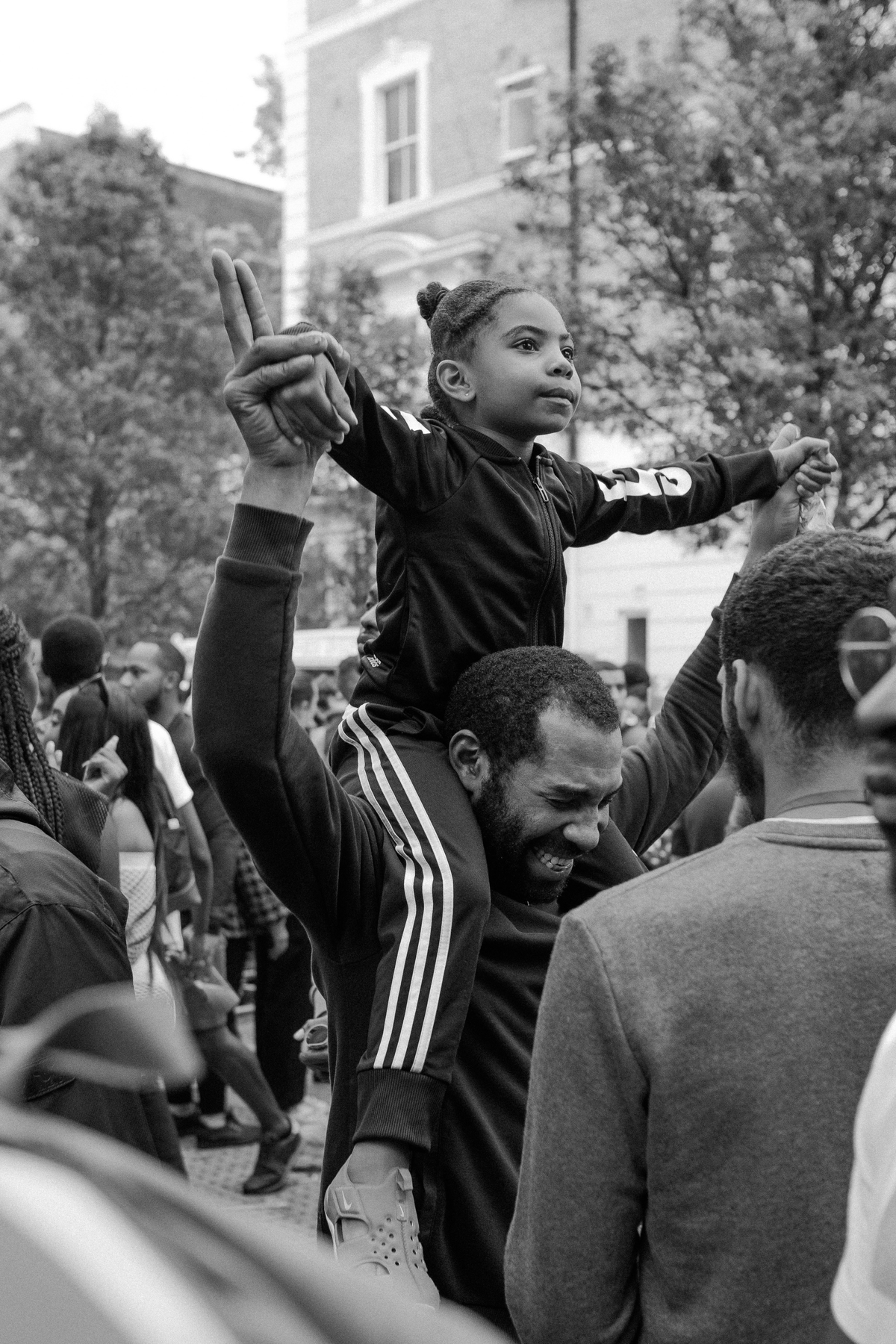
 Sagal Khalif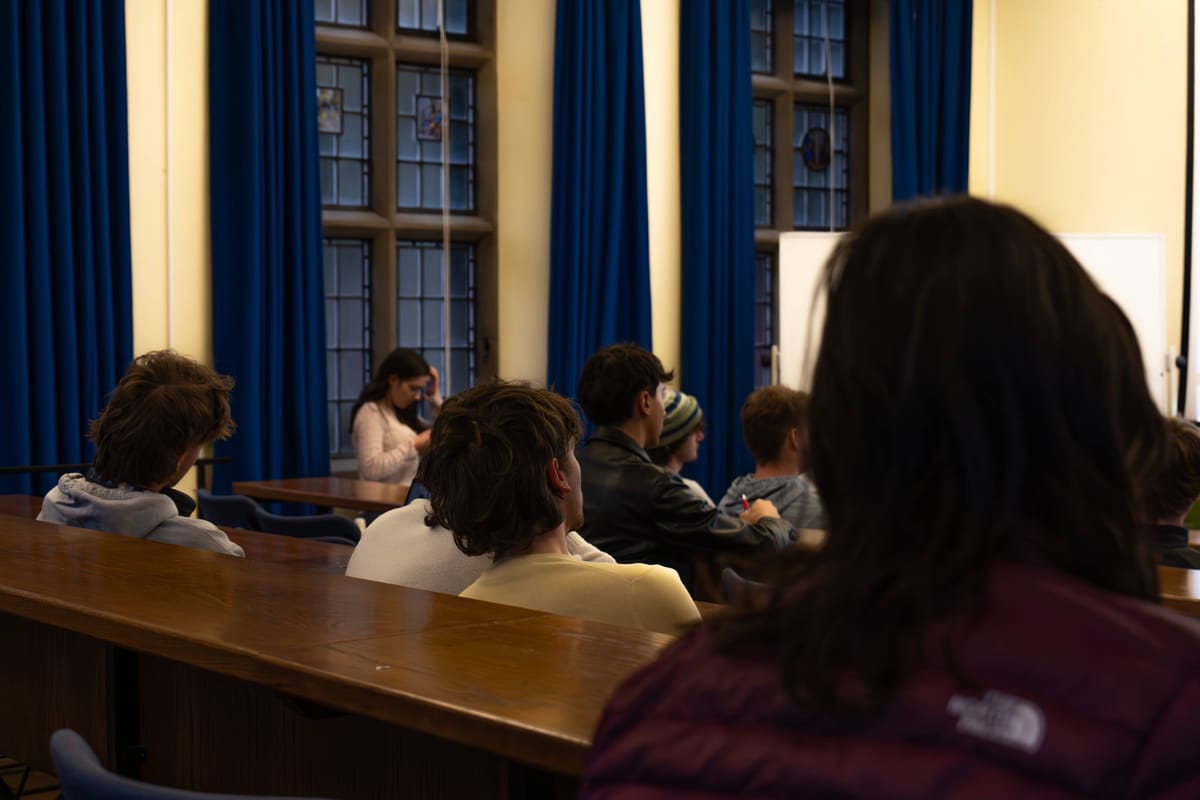
The ACS’ 2025 timetable is certainly packed, offering a new netball team, affordable club nights, regular meet ups and even sports days. Another focus is on forming relationships with companies to set up networking events in order to facilitate professional connections. Ayva also reveals that a talk with ‘Everyday racism’ is something ACS members can look forward to this year. The committee even has a dedicated Caribbean Rep, International Rep and LGBTQ+ Rep to further push diversity and inclusivity, ensuring there truly is space for everyone to be seen and heard.
The ACS can undeniably take pride in the results of its advocacy, and when Ayva chants, ‘We are family,’ we know she encapsulates the community-building essence of the Afro-Caribbean society. Overall, the university can expect a lively month ahead, with celebration of Black history and achievement at the heart.
Featured Image: Photo courtesy of African-Carribean Society