By Erin O'Connor, First Year, English
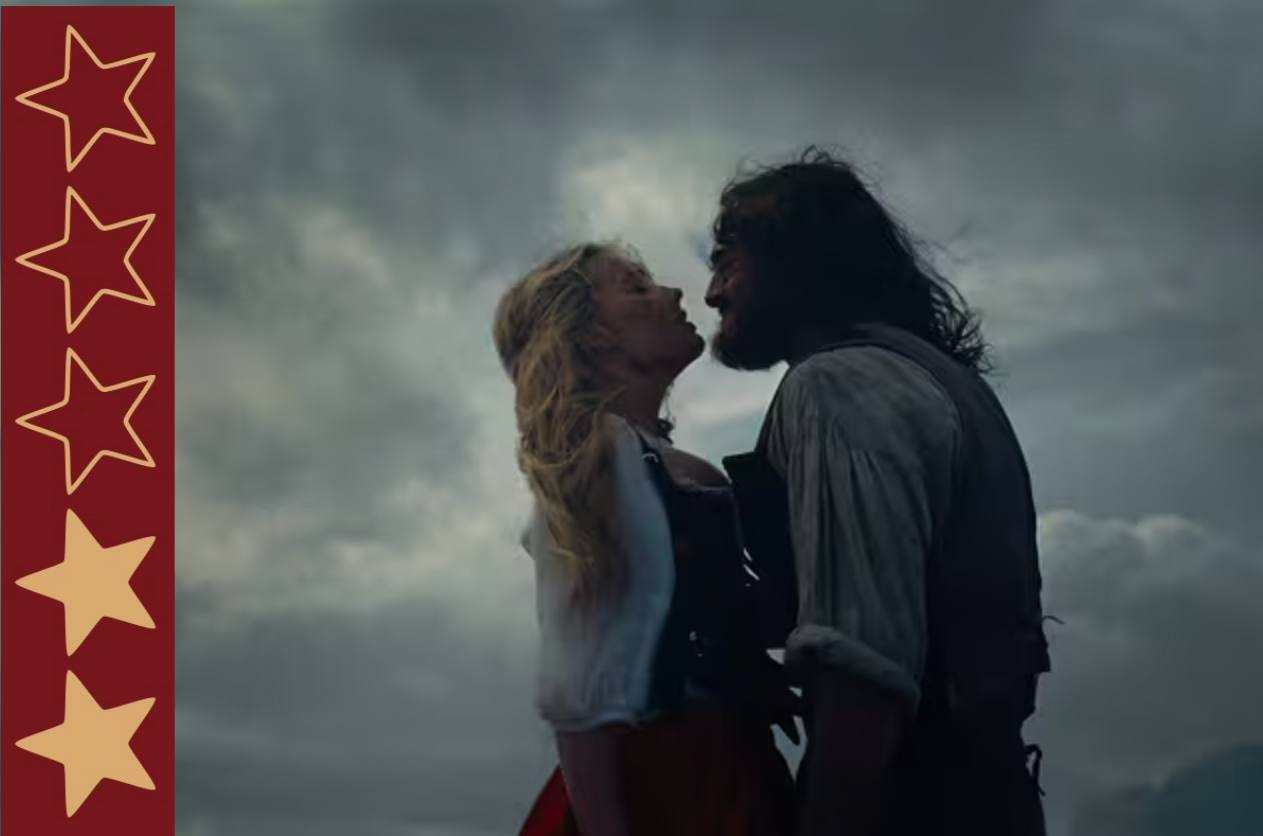
Emerald Fennell’s “Wuthering Heights” (2026), heavily framed as an erotic romance film, fails to capture any essence of the source material and, worse, somehow makes one of the greatest works of Gothic literature boring. Although I was aware the film would be nothing like the source material, I had expected better, considering the success of Emerald Fennell's previous screenplays.
Fennell stated that this is her ‘version’ of the novel, and that’s why the title is in quotation marks. The trailer promises a ‘twisted, provocative, romantic’ watch; it was none of the above and was also completely unrecognisable as the source material. Adapting classics for a modern audience is vital for keeping these stories alive, but not if their meaning and interest is lost.
There is none of the Saltburn(2023)-esque excitement fans were expecting as the sex scenes feel devoid of passion and redundant in the grand scheme of the film. Fennell’s outright refusal to acknowledge the moral intricacies of a single character raises the question, why use Wuthering Heights? The psychological and physical violence of the story is largely lost, and features of the Gothic are vanishingly rare. Characters feel superficial, and the only truly emotional moment of the film for me was the final scene, which is not enough to save the rest of it.
The popularity of Brontë’s novel is due, in part, to the complexity of its characters, who are mutually tortured by their desires and past. By removing the focus from their childhood and the cycle of yearning and resentment, the film loses its depth. Is the tension as palpable if they have sex multiple times throughout, when the whole point is they can never be together?
In a pre-release interview, Fennell explained, ‘you can’t adapt a book as dense and complicated and difficult as this book… what I can say is I’m making a version of it.’ Perhaps if she felt she couldn’t do the book justice, she should have left it alone and made an original screenplay.
One of the most controversial facets of the film is the fact that Jacob Elordi was cast as Heathcliff. While Heathcliff’s ethnicity is left ambiguous in the novel, it is clear he is not supposed to be white. Fennell instead chooses to focus on class (although this is discussed very little), disregarding the racial prejudice at the heart of the novel. It is disappointing that Fennell decided this aspect wasn’t important enough to be included in her ‘version.’ Yet she is far from the first director to give the role to a white actor; Ralph Fiennes, Laurence Olivier, Tom Hardy and Robert Cavvanah have all taken on the role.

The cast’s performance is dependable, in particular, Elordi’s convincing delivery of monologues throughout. I cannot fault the line delivery, expression and physical presence from the actors, even with Elordi’s excess of brooding looks to the camera. The actors play the characters they are given, and play them well, although they are unrecognizable as those from the novel.
Alison Oliver’s Isabella provided a sort of dark comic relief to the film, but this feels misplaced; Isabella is one of the strongest characters in the novel, and reducing Heathcliff’s abuse of her to a sexual fantasy leaves a bad taste in your mouth. Joseph may as well have been a completely different character, and the narrative importance of Vy Nguyen’s Nelly is misrepresented.
Limited time is spent detailing Cathy and Heathcliff’s tumultuous childhood, so they are given little psychological depth in terms of motivation, and their romance feels shallow at times. The intense, simmering tension between Cathy and Heathcliff drives the novel, but their complicated character is sacrificed in the film at the expense of focusing on their sexual relationship.
The lack of period accuracy in costumes and set design is the least of this adaptation’s concerns. While the eye-catching plastic and latex costumes and faux fur carpets are not representative of the time period, their tacky opulence serves to give some kind of explanation for Cathy’s choice to sacrifice her relationship with Heathcliff for a life of luxury.
The garish costumes and jewels do not feel out of place considering the fever dream absurdity of some scenes, and provide visual excitement when the action at times falls flat. The surreal costumes and mise en scène are a highlight of the film, particularly when contrasted with the severe landscape of the Moors.
The cinematography of the film was atmospheric, with the shots panning over the Moors some of the most impressive in the film. The initial montage that shows Cathy’s early days at Thrushcross Grange feels overly-manufactured and out of place, especially when considering the preceding events. Lighting is also used to great effect in furthering the sense of intimacy in some scenes and reflecting the emotional storm brewing between characters in others.
At times, the score felt out of place, almost like a music video, notably during Charli xcx’s ‘House’ and ‘Wall of Sound.’ However, Olivia Chaney’s ‘Dark Eyed Sailor’ and most of Charli xcx’s other contributions are effective in adding to the emotion of the scene.
 Lottie Merchant
“Wuthering Heights” is a visually impressive film with quality performances, but lacks emotional depth and complex characters. The dependency on overt sex scenes to shock and distract from what is a lacklustre film does not go unnoticed, as its marketing as an intense, erotic adaptation is not quite realised.
Even when viewing the film in isolation and disregarding the novel, it feels superficial and unentertaining. The novel and this ‘version’ should be viewed as two entirely separate entities, but I fear the novel may be overshadowed by this adaptation for those who have not read the book.
Featured Image: Watershed | Illustration by Epigram / Sophia Izwa
Did you enjoy Emerald Fennell's adaptation of Brontë's classic?