
By Toby Painter, First year, Chemistry
It’s that time of year again: the streets twinkle with lights, the mince pies are in the oven, and millions across the world turn on their radios to hear the iconic line:
'I’m dreaming of a White Christmas…' (White Christmas)
These are the opening words to Bing Crosby’s 1942 hit, and it’s safe to say he’s not alone - many across the Northern hemisphere are dreaming of it too. But why is it that we’re so keen to see snow on Christmas day, and how will this tradition evolve as the climate gets warmer?
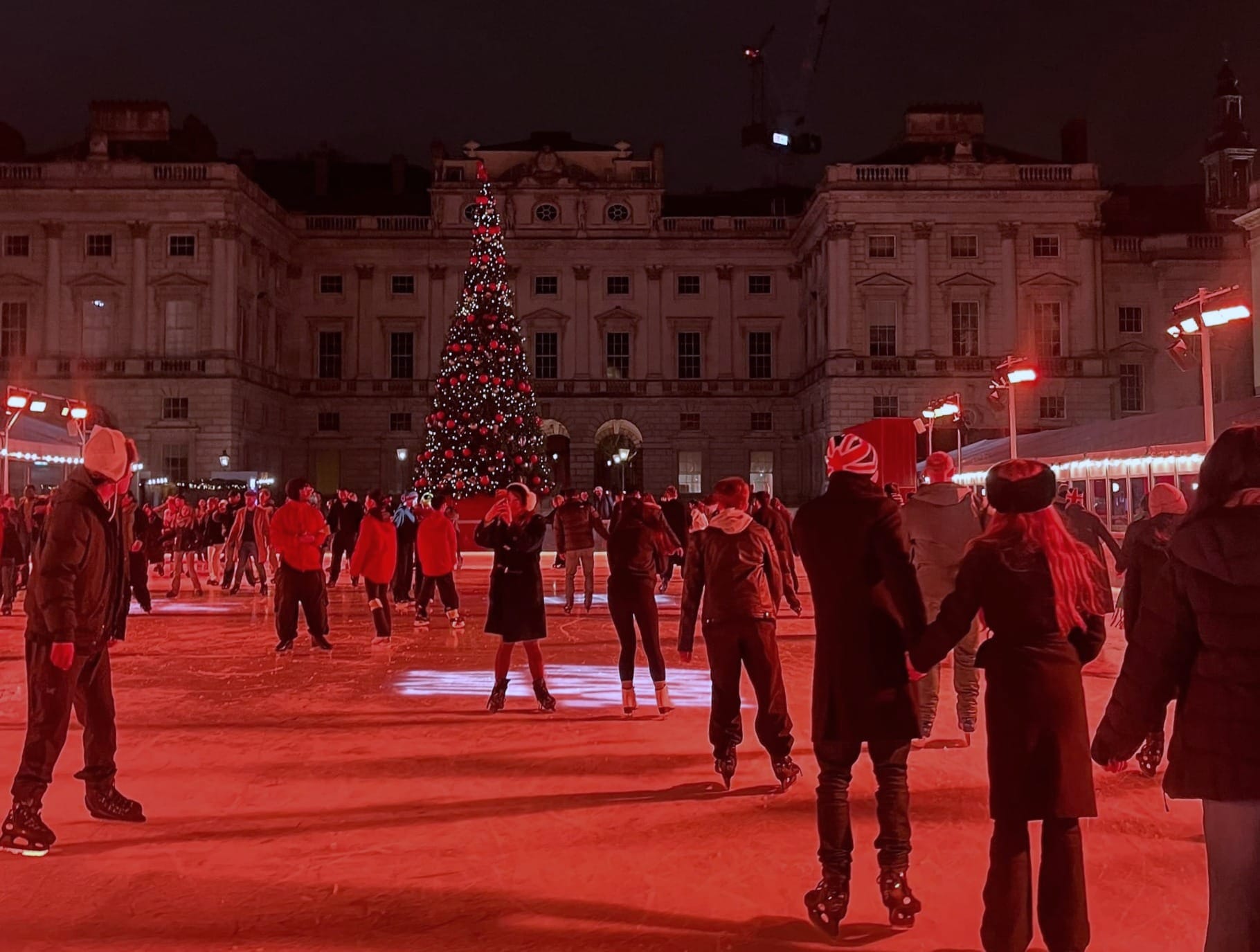
While we think of Christmas as the ubiquitous “winter holiday”, this hasn’t always been the case: ancient cultures in the UK have been commemorating the midwinter period and the winter solstice with feasts and celebrations as far back as the Neolithic period, long before Christianity was even created. The Romans had their own winter festivals, including Saturnalia (a celebration of their chief deity Saturn, and a time of gift-giving and festivity), as well as the birthday of their 'Sol Invictus' ('immortal sun'), which coincidentally fell on the 25th of December. Clearly the midwinter period was of great significance to Europeans thousands of years ago, both marking the return of longer days and the 'rebirth' of the sun, as well as being a time of struggle when celebration was needed.
As Christianity spread across Northern Europe, existing midwinter festivals were gradually reshaped and replaced by the celebration of the birth of Jesus. Though Christmas wasn’t strictly related to the midwinter celebrations, it became associated with short days, cold weather, and of course, snow.
However, perhaps the biggest influence on the idea of the “White Christmas” was Charles Dickens. Dickens, born in 1812, lived through the coldest decade since the 1690s when he was a child, and so his early associations with Christmas were shaped by chilly weather and snow, which he included when he went on to write about Christmas in his novels and short stories. These books, most notably 'A Christmas Carol', became incredibly popular, some even claiming it to have “reinvigorated” the idea of Christmas, and so the Dickens’ childhood memories of white Christmases he depicted in his work became the de facto ideal.
Unfortunately, as I’m sure we’re all too aware, Dickens’ depiction of Christmas weather isn’t particularly accurate compared to its current form – we can thank global warming for that one. Though there have been many nominally “White” Christmases recently (as it is defined as such if a single flake of snow is observed on the day), the reality of a modern British December is usually grey and depressing with very little snow to be seen – only four Christmases in the UK since 1960 have adhered to the true Dickensian ideal of a blanket of snow on the ground on the 25th.
So, how will Christmas look 50 years from now? Well, not entirely different from how it looks currently. The average Christmas weather will continue to be cold, wet and grey. However, the rare occurrences of snow will become less frequent as the warming climate brings milder winters. By the 2040s, climate projections indicate that southern cities are unlikely to experience any sub-zero days over the whole of winter and by 2060, these conditions will only be common in northern Scotland and high ground. The English winter won’t become tropical by any means, but it certainly won’t be as cold as it used to be.
So, the prospect of snow on Christmas in years to come certainly isn’t looking bright. As the chances of a true White Christmas dwindle, we will have to accept frequent disappointment or abandon any hope for it altogether. Fear not: the White Christmas will persist in other, colder parts of the world (at least for now) but relocating to Norway or Canada for the sake of some Christmassy vibes isn’t really the most practical solution. Perhaps it’s time we start romanticising the “Grey Christmas” instead - we’d be living the dream every year.
Featured Image: Unsplash / Call Me Fred