By Laura Sawyer, Third Year Philosophy
The Coe Gallery, founded by British-Wiradjuri artist Jasmine Coe, takes its Winter exhibition to College Green Vestibules, showcasing authentic indigenous art and the inherited cultural knowledge embedded within it.
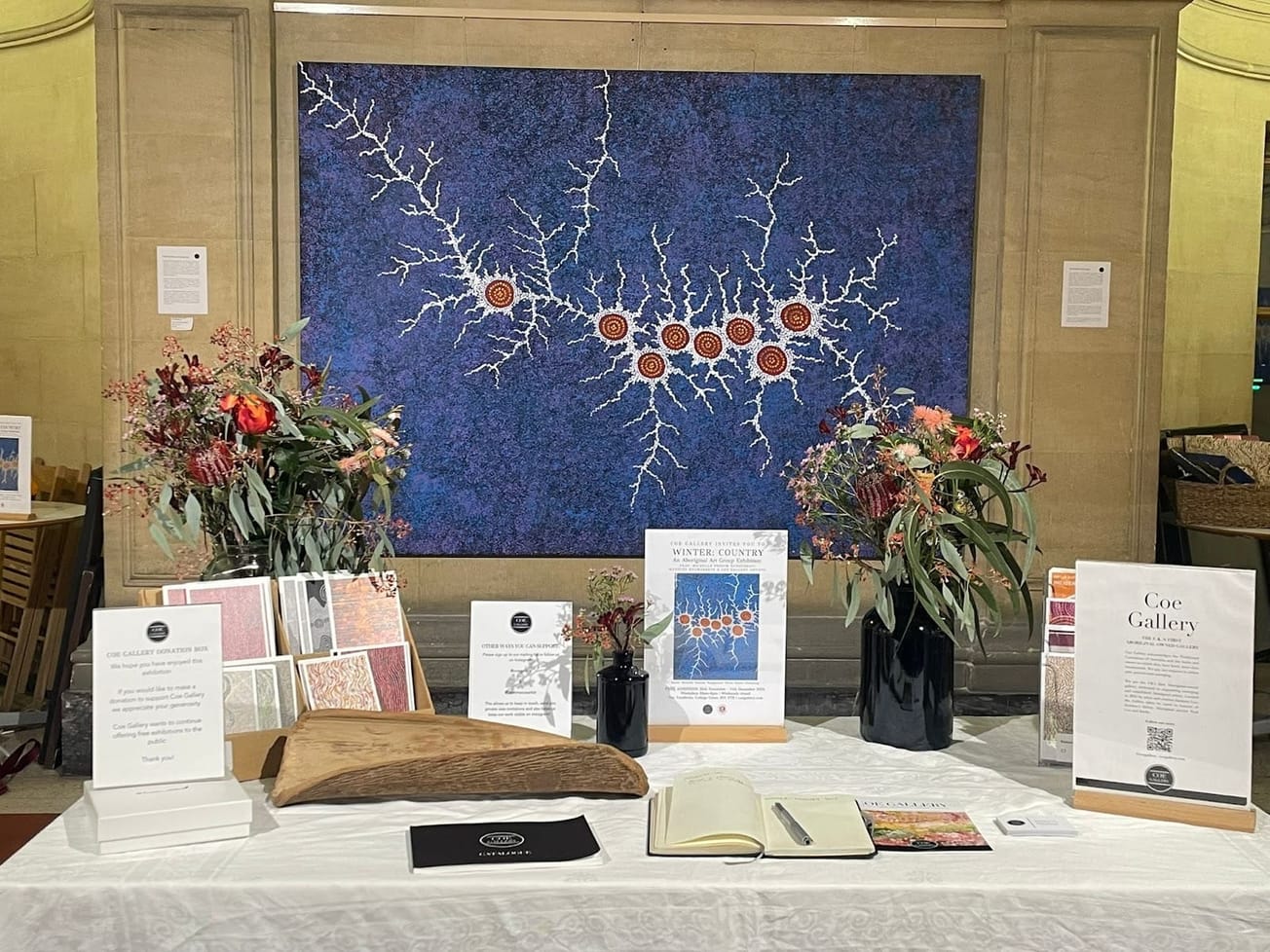
Splashes of deep crimson, dusty pinks, pale blues, ochre and green are dotted around the exhibition room, drawing the eye to large vases of Native Australian flowers. Eucalyptus, kangaroo paw, banksia, and waxflower are bundled together, a small piece of Country brought here, materialising in the rich colours on the canvases that depict the Native land. In this room, it is brought to life for us, and as the doors close and shut out the crisp winter air that has befallen Bristol, we are transported across the world, traversing memories that span across lineages.
The concept of ‘Country’ is at the heart of Aboriginal life, an all-encompassing term that spans from bloodlines to the biosphere. The exhibition carries, with unwavering commitment, the principles of co-existing within the intricate web of life, upholding Aboriginal livelihood, tradition, and Indigenous resistance to settler colonialism.
Jasmine directs us to begin at the canvas behind us before following the paintings round the room cyclically. Each piece captures a personal and detailed insight into the creator’s heritage, sharing inherited knowledge and anecdotal accounts of Country. Mere descriptions alone are not comparable to the artworks, which have their own voices. Yet, if I am able to offer a glimpse into the special quality embedded in these works, to gesture towards the overflowing history and significance within each carefully crafted stroke, then I will be satisfied.
‘Earth With Honeybees’ by Jasmine Coe
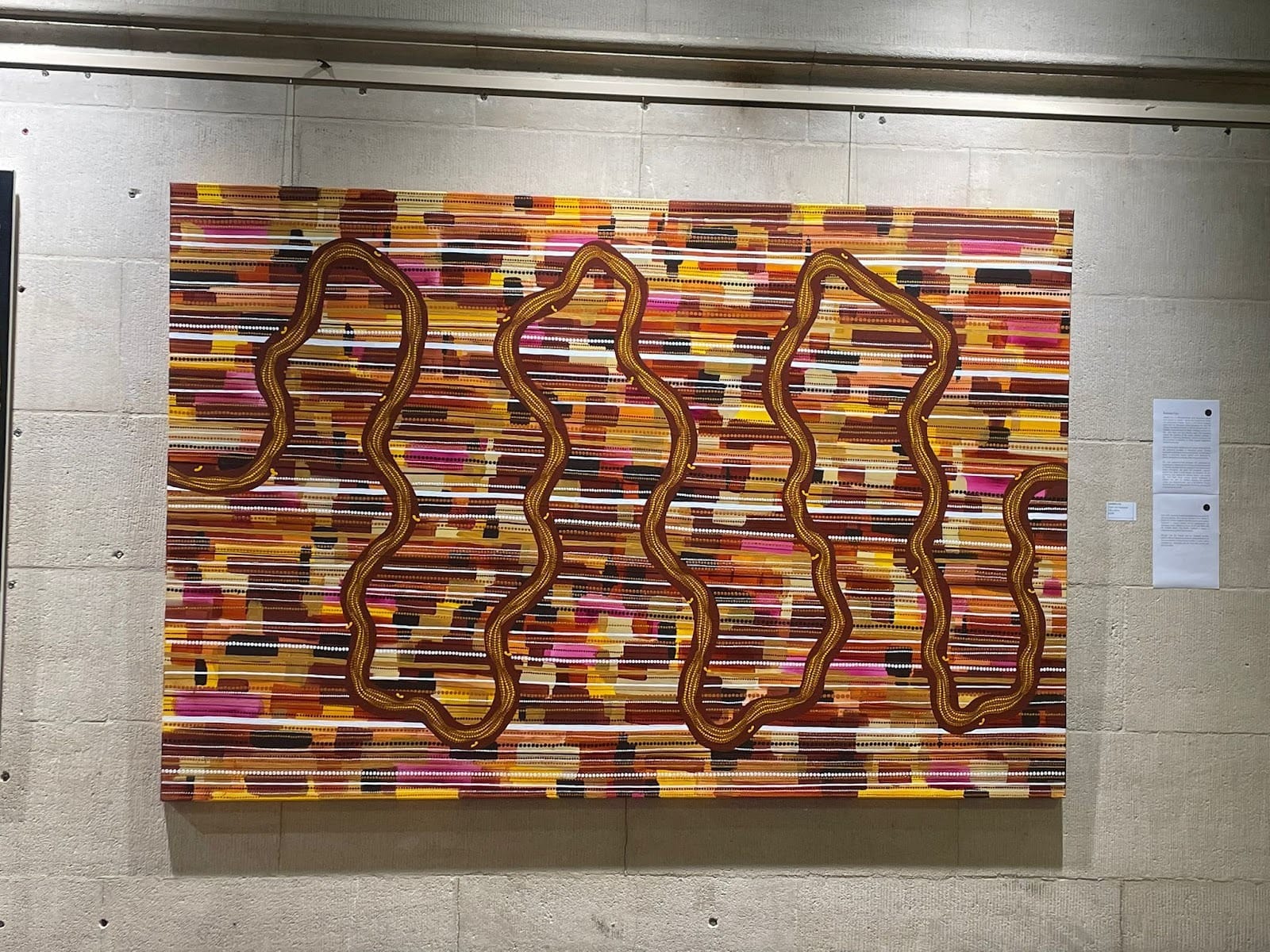
Through the centre of the piece writhes the Rainbow Snake, the creator of Country’s land. Jasmine tells me the story of this creature, who snaked his way underground to carve mountains and hills, the indents of valleys and rivers, who is still there, beneath the ground, to this day.
Country is inherited, through the means of stories and responsibilities; it is important to honour legacies this way. Jasmine generously shares stories with us about her late father, activist Paul Coe, and explains the importance of her family symbol, the honeybee, which is depicted in this painting dotted around the Rainbow Snake. The honeybee is the caretaker of the land, a guardian whose responsibility is to preserve balance. With special permission from her father, Jasmine frequently incorporates this symbol in her paintings, as a homage to her familial roots and its inspiration to her art.
‘Seven Sisters Dreaming’ by Michelle Possum Nungurrayi
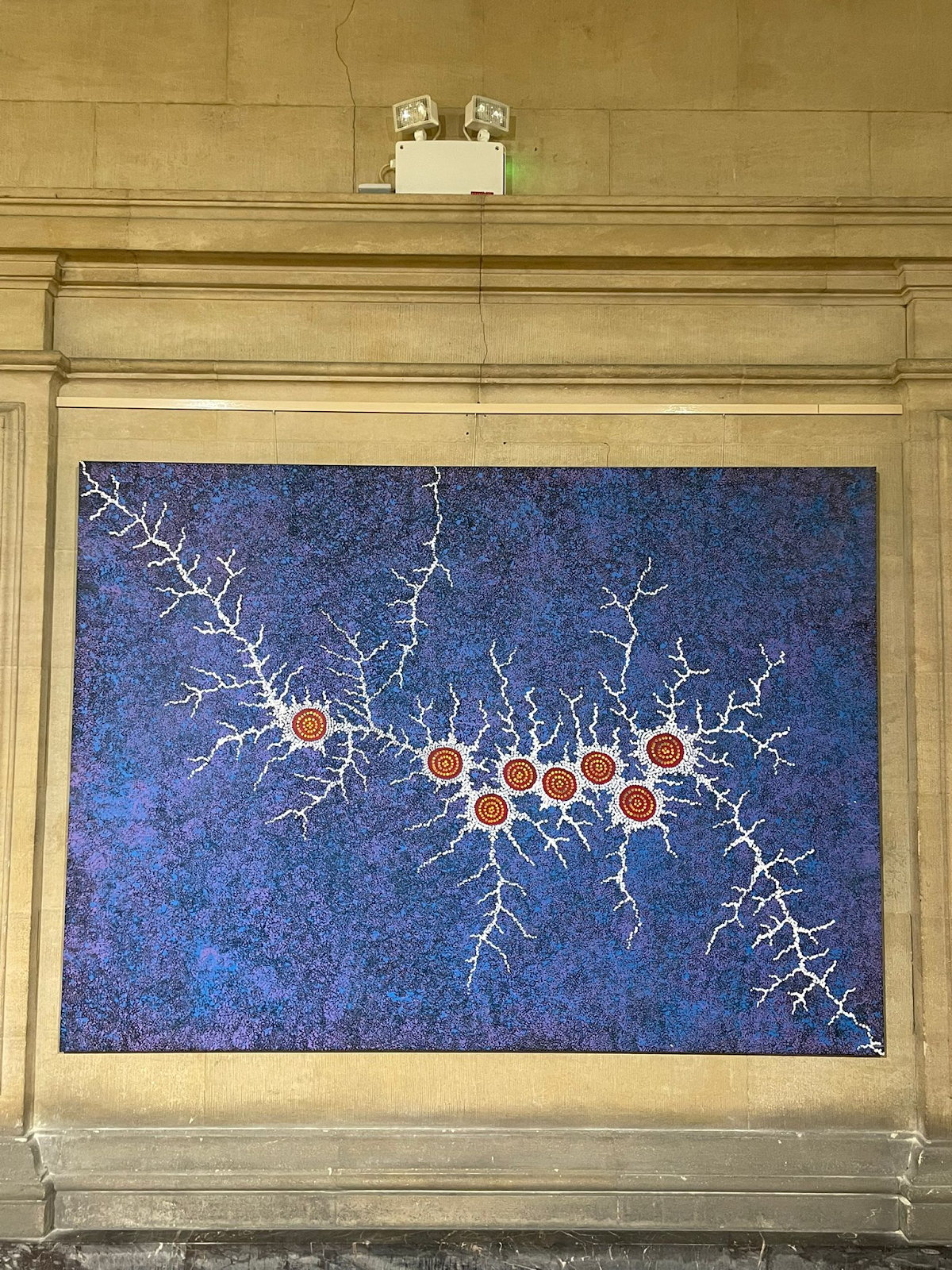
The story of the Seven Sisters is perhaps a familiar one, but here it is especially unique. Using knowledge gifted by her mother, grandmother, and her father, Nungurrayi depicts the Aboriginal myth of the Seven Sisters who escaped their pursuer, a man called Wati-Nyiru, to the Milky Way through a fire at Kurlunyalimpa, becoming the stars of the Pleiades, finally at rest and watching over all women on earth.
Country in its etymological sense traces its origins to land or terrain- but the Aboriginal Country is so much more than this. It encompasses widely shared stories, such as that of the Seven Sisters Dreaming, alongside culture and a personal familial tie of kinship that is particularly special. This story was shared with Michelle Possum Nungurrayi and her sister, fellow artist Gabriella Possum Nungurrayi, by their father, who passed down his own artistic prowess onto his daughters. His legacy continues through the new works by the sisters, each producing their own interpretation of the story in their own artworks. This practice embodies the intergenerationality at the heart of Aboriginal culture, receiving stories from ancestors and in an equal exchange, embracing the responsibility of passing these stories onto future descendants.
‘Grandmother’s Country’ by Michelle Possum Nungurrayi
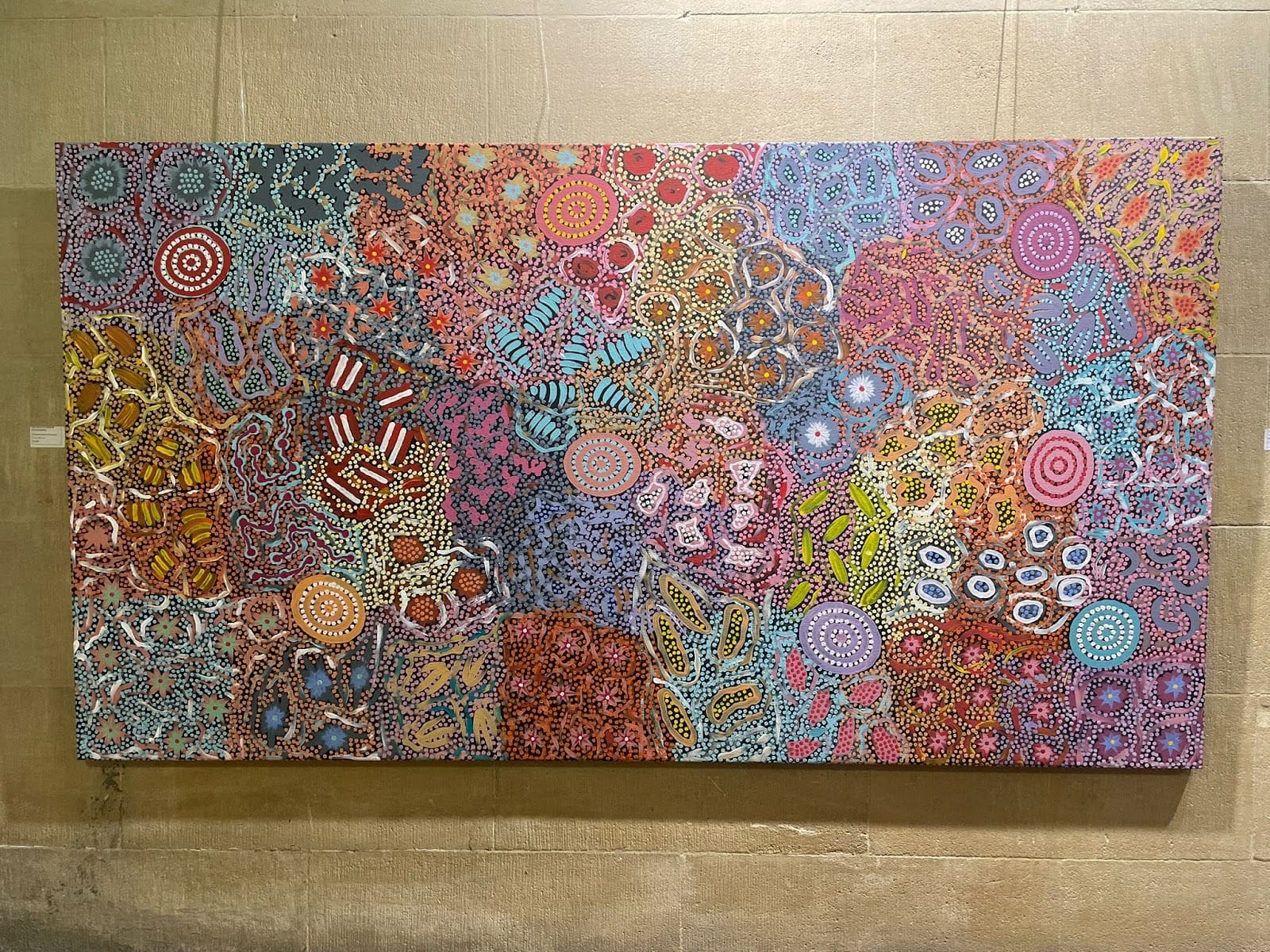
A perfect example of the abundant knowledge that is embedded within Aboriginal paintings is evident in ‘Grandmother’s Country’, a beautiful kaleidoscopic piece which depicts a map of the sacred Country of her grandmother in Laramba in the Northern Territory. The symbols within the painting represent ancestral tracks, women’s gathering places, bush foods, waterholes, and ceremonial sites. Each paint stroke is significant: ‘the U-shapes represent women seated in ceremony, the concentric circles depict places of gathering or abundance and dots or star-like shapes mark bush plums and berries’ (Coe Gallery, 2025).
The map produced is one bursting with vibrant colours, a non-linear map that challenges the rigidity of which a Westernised lens often imposes, offering a glimpse into other kinds of important practical wisdom that has been stored for generations.
Unlike the Western tendency to treat art as secondary, Aboriginal understanding accredits artwork with the ability to hold deep knowledge and wisdom within each brush stroke. In contrast with the many replica Aboriginal paintings, the authenticity of original works displayed in the Coe Gallery provides an overwhelming sense of such a deeply rich history. Exhibitions like 'Country' represent the vital, vibrant storytelling needed to keep cultural knowledge alive, and the embedded generosity of artists and galleries who share this knowledge with us.
After centuries of silencing and oppression from settler colonialism, the community still stands strong. This is not to say there aren’t challenges faced anymore -quite the opposite. Whilst celebrating the recent signing of the Treaty between First Peoples in Victoria and the Victorian government in late 2025, it is important to acknowledge that this is the first treaty of its kind. Indigenous resistance is powered through love, and the exhibition preserves and keeps this special quality alive.
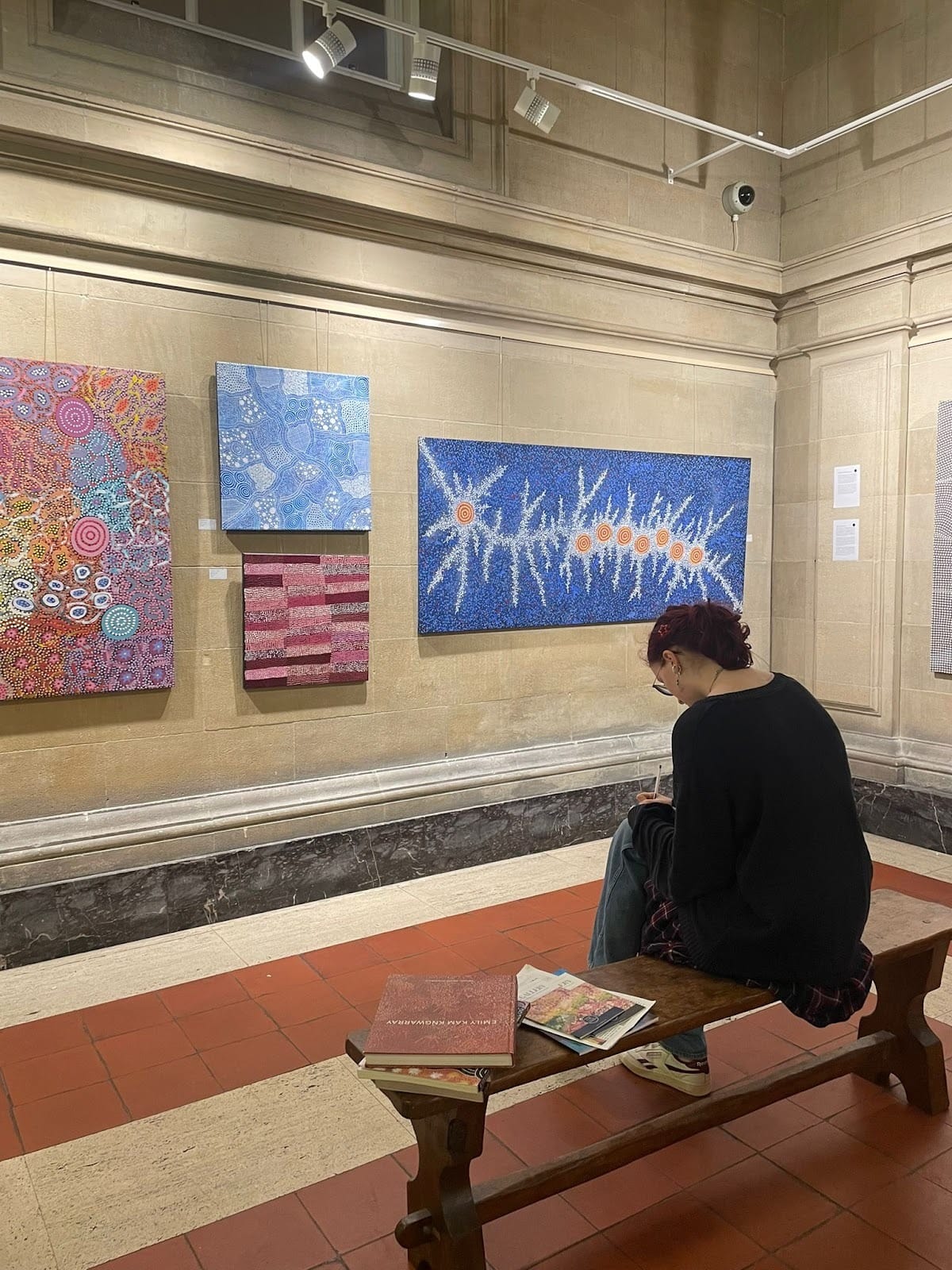
For more details on the pieces displayed and other works in the Coe Gallery’s collection, visit their website. I would strongly recommend experiencing their stories for yourself, and urge you to visit any of the Coe Gallery’s upcoming exhibitions this year.
 Megan Oberholzer
Featured Image: Epigram / Julia Mullins
Will you go to Coe Gallery?