By Miles Gilroy, Senior Print Editor
Hundreds of millions of people worldwide live within 100 kilometres of a volcano that has experienced at least one significant eruption. This makes predicting volcanic activity a vital area of research to save towns, cities, and lives. However, despite this severity, shifts from mild activity to high-impact eruptions remain difficult to spot until it’s too late.
The Ex-X: Expecting the Unexpected study, a new £3.7 million University of Bristol-led research project, will investigate the driving factors behind escalations in volcanic activity and how scientists can better detect them before lives are threatened.
Around 61 per cent of eruptions affect the immediate surroundings of the volcano's summit only initially, before transitioning into much more dangerous and explosive events, capable of impacting much larger populations. Understanding how and why these transitions occur is one of the biggest challenges in modern volcanology, and Ex-X is looking to address this head on.
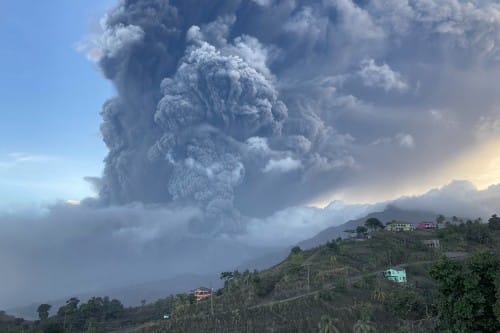
The project will be led by Professor Jenni Barclay, AXA Chair in Volcanology at Bristol’s School of Earth Sciences, and is funded by the UK Research and Innovation (UKRI) Natural Environment Research Council (NERC). Initial research will focus on three volcanic systems in the eastern Caribbean: Soufrière Volcano (St Vincent), Montagne Pelée (Martinique), and Soufrière Hills Volcano (Montserrat).
The team will deploy large numbers of seismic nodes across the Soufrière Volcano to gather data on the activity of the volcano, even when it’s not erupting. These measurements, along with data from past eruptions. Will be analysed using machine learning to help the team recognise subsurface activity before, during, and after eruptive transitions.
Insights from this process will be incorporated into new mathematical models to simulate eruptions. Running these simulations will allow the team to identify key drivers and potential signals of escalations in eruptions.
Alongside this, the team will use advanced micro-analytical techniques, including Bristol’s X-ray computed tomography (XCT) and a state-of-the-art electron microprobe, to examine the small-scale changes in crystals formed during recent and historic eruptions. These changes act as records of changing conditions within the magma system, revealing valuable clues to the processes that precede eruptions.
Professor Barclay hopes the project will ‘benefit those responsible for volcanic hazard monitoring and management,’ and subsequently, ‘the exposed populations and managers of risk in volcanic countries.’
Dr Erouscilla Joseph, Director of The University of the West Indies Seismic Research Centre, a key partner in the Ex-X study, calls the research ‘essential’ as ‘[r]apid changes in activity can overwhelm evacuation efforts and devastate entire regions’ and Ex-X ‘will directly improve how we respond to the next eruption.’
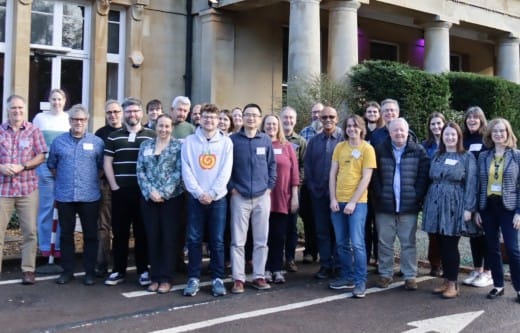
Ex-X is an international collaboration between UK researchers from the universities of Bristol, Plymouth, East Anglia, Manchester, and Oxford, alongside partners in the Eastern Caribbean, the USA, Germany, and Italy.
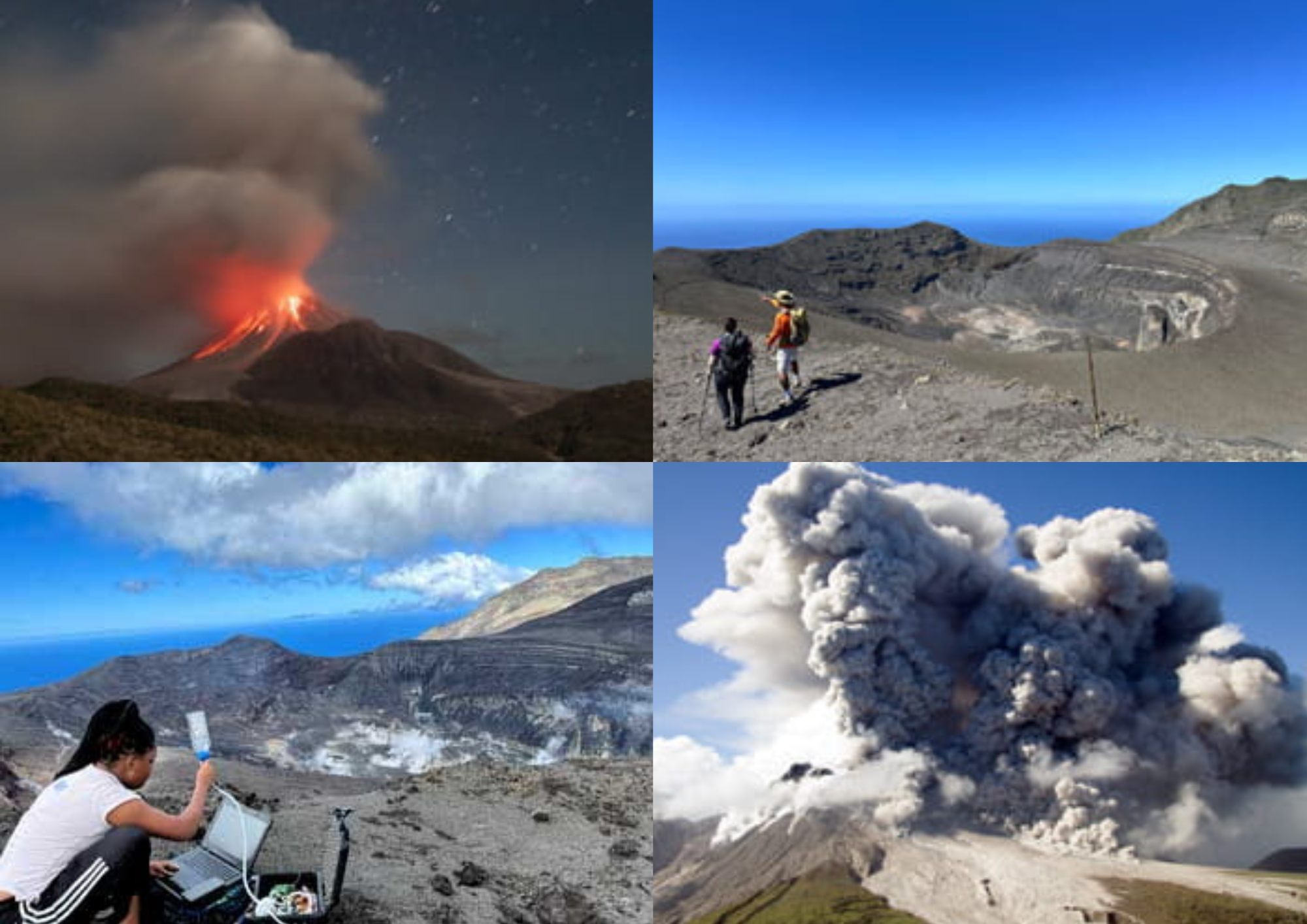
Featured image: (clockwise) Paul Cole/Ex-X, Paul Cole/Ex-X, Jenni Barclay/Ex-X, Paul Cole/Ex-X