By Harry Gillingham, Second Year, Politics and International Relations
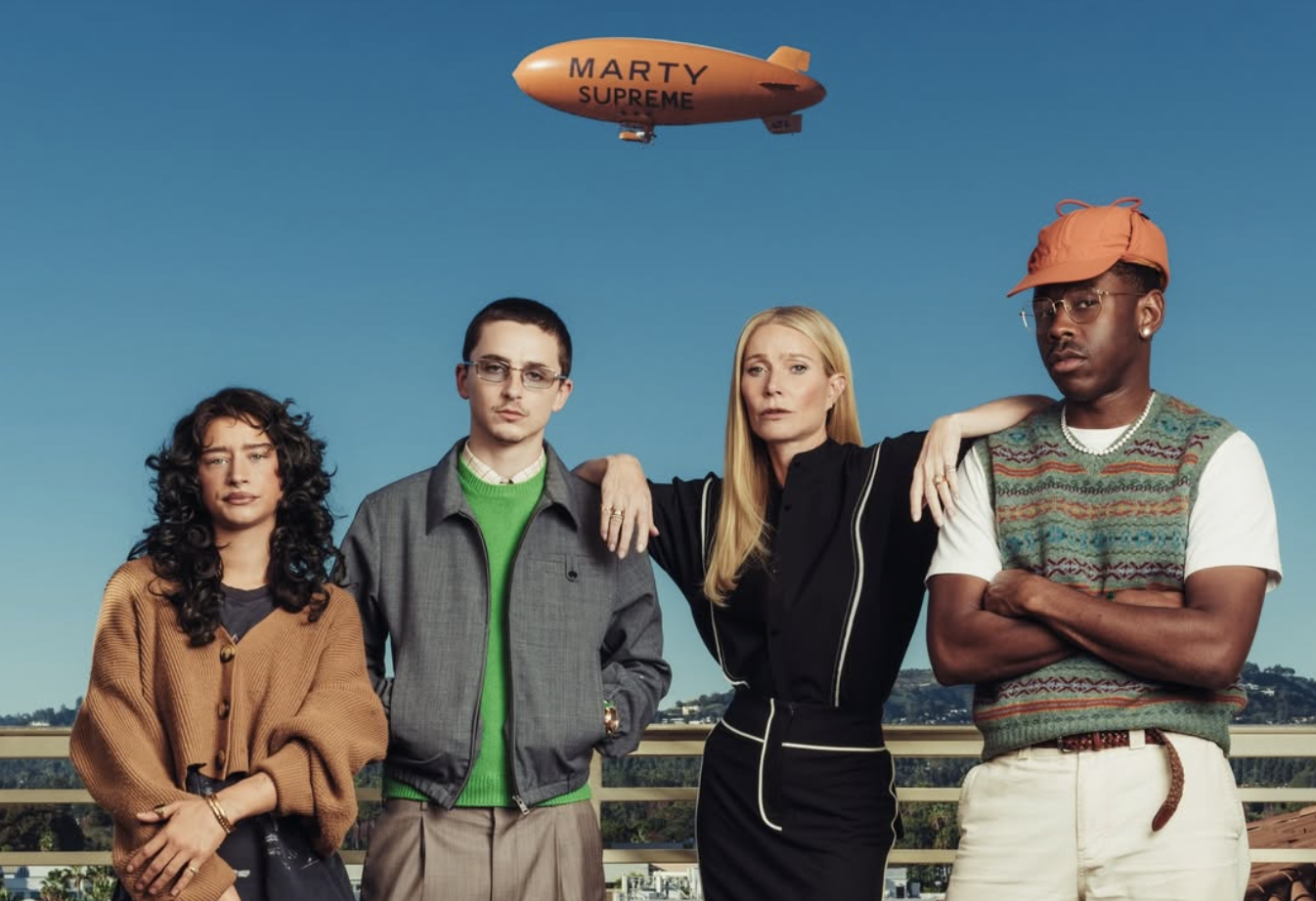
Marty Supreme (2025) is a film irrevocably bound to Timothée Chalamet and his obsessive commitment to his craft. Unhinged promotional stunts ranging from climbing Las Vegas sphere turned orange ping pong ball, invitational table tennis tournaments, comedic sketches of marketing zoom calls, limited edition track jackets to viral collab with Liverpudlian rapper Esdeekid.
Chalamet who, just under a year ago, openly declared at the SAG awards his pursuit of greatness has marketed himself as one of our few new age movie stars. He authentically engages with the youth of today and captures their fixation, in an age of established IP monopolisation and the persistent threats to the maintenance of cinemas themselves. All of that is to say, the stock he puts into himself seeps into the very veins of the film.
Marty Supreme, Josh Safdie’s first solo feature without brother Benny, is a living, breathing embodiment of that pathological self belief. Chalemet’s commitment to this film is an examination of the process of an artist, while the product is a modern classic of the 21st century that pulsates with all the confidence and showmanship of its leading star.
Marty Supreme follows Jewish American Marty Mauser in post-war 1950s New York City, frantically chasing his dreams of becoming a ping pong sensation. The latest edition in Safdie’s filmography continues his occupation with the unraveling of the male ego. Rather than the more liminal focus of previous work such as Uncut Gems (2019) and Good Time (2017), however, his ping pong epic is sprawling in its scope and makes previous entries look like a warm up to the big game.
There are shades of influence from Michael Mann’s 1981 film Thief, where ideals are stripped in accordance to a skewed worldview, paired with Martin Scorsese’s 1985 After Hours’ focus on dissociation and its anxious stream of consciousness narrative beats. Marty Supreme’s screenplay tenuously walks across a tight rope, rhythmically jumping from one chaotic revelation to the next, while our protagonist stumbles further into an increasingly absurd odyssey. Yet the film impressively manages to keep its finger focused on the core of its assertion, just as its more contained predecessors did.
Dusty cinematography captures the rich set design of the 1950s, where every crevice lurking in the environment feels lived in and its grittiness is conceived with touches of sensuality. The film’s sound design encompasses the erratic shouting of downtown New York City accents ricocheting against the towering buildings of its concrete metropolis, only to drown in an ethereal score of intense synths.

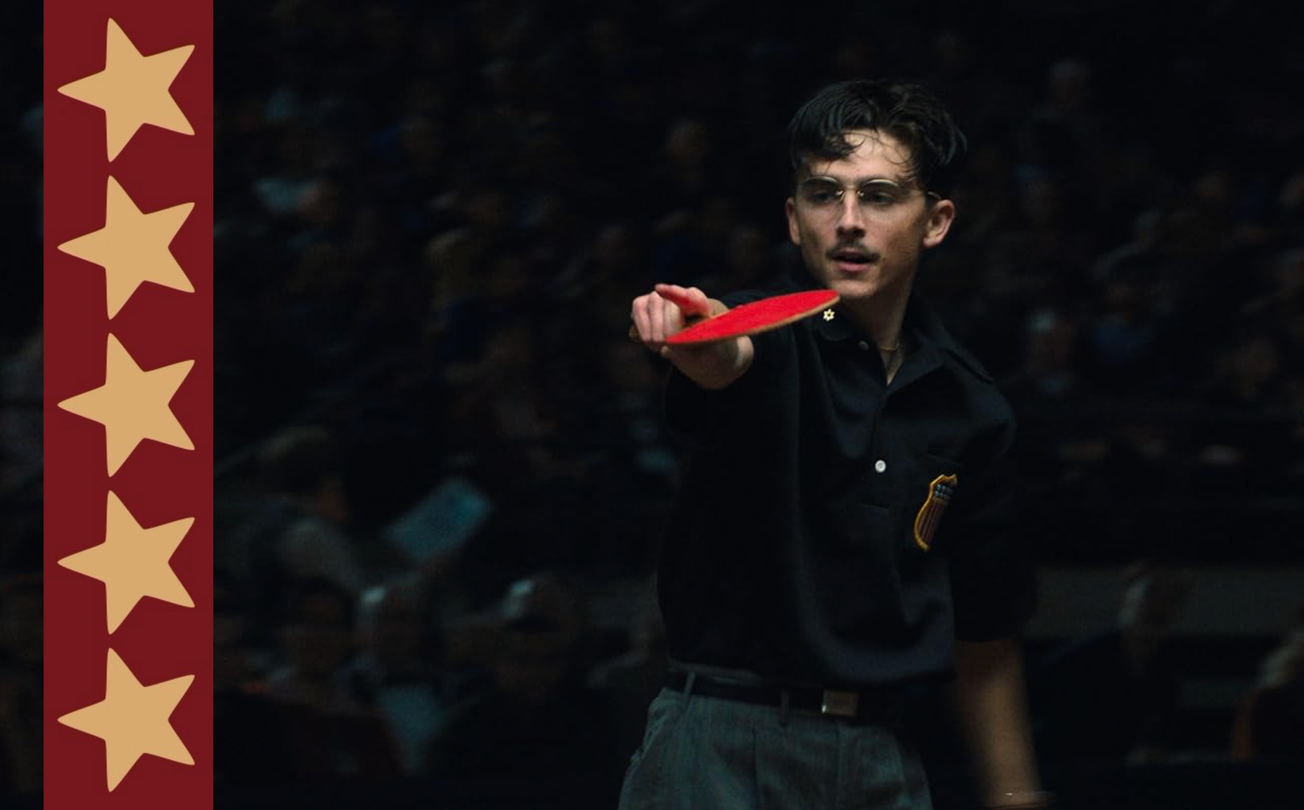
Marty Mauser runs through these streets, amongst the physicality of its environment breathing down upon him an insatiable thirst to be crowned at the finishing line. This scene, Marty running from the police, sees the ecstasy and kineticism of New York City blend into a hazy backdrop against Chalamet. He is composed as the focal point, physically reflecting the egoistic isolation of his character. As he runs through the streets of perceived urban mediocrity, it blurs around him, blinding himself just enough from the ground he treads, so his vision can see glimpses of his fatal goal
Marty Mauser is a figure fanatically ingrained with the American dream and its psyche of individualism, emerging in a post war era. He stands on one side of the ping pong table, dueling with everything that stands on the opposite side. Through an erratic screenplay, the hunger of each scene melts into the next, as his position at the ping pong table relies upon his desperate hops from each of his exploitative decisions.
From Marty’s married girlfriend Rachel, played by Odessa A’zion, hustling best friend and taxi driver Wally, comedically portrayed by hip-hop artistic Tyler Okonma, to rich pen business owner Milton Rockwell, uncannily reflecting ‘Shark Tank’ billionaire turned actor Kevin O’Leary, our lead hoists himself forward from the utility provided by the plethora of memorable side characters.
Undoubtedly, the most notable side character is faded movie star Kay Stone, delicately portrayed by Gwyneth Paltrow. Her relationship with Marty serves as the thematic heart of the narrative and its occupation with the passing of time.
The film’s soundtrack leads with Aphaville’s 1984 song, ‘Forever Young’, yet its chorus lingers throughout the narrative to ironically probe at Mauser and his muse’s desperate attempts to cling onto a world moving forward without them. This is conveyed through the former’s girlfriend Rachel being pregnant and the latter’s poor reception to her comeback performance.
The score that engulfs the film further embraces this theme, as the 1950s merge with the 1980s synth heavy score. This conceives the film’s timeless reflection on capitalistic modernity, ingraining into the psyche its subjects self worth determined by unbridled individualism and its productive output.
 Kitty Atherton
The two of them find brief catharsis in one another as well as resentment for each’s identity and corresponding worldview. Both of them, however, serve as products of the American dream’s mythology that constructs a narrative and, in turn, how that narrative internalises itself into our identities.
Marty Supreme is a purely distilled, maximalist piece of film making, stylishly flourishing and deconstructing capitalistic ambition. The dream born in a post war era incites Marty to craft an intense image of himself, as a matter of self preservation, that is bigger than his own finite mortality. Yet, in an ending that is unexpectedly poignant, the film declares that this immortalisation of the self blinds us to the fruits that grow from the very morality we run from.
Featured Image: IMDb / Harry Gillingham
Do you agree that Marty Supreme is a modern classic of the 21st century?