By Charlotte Kerby, Deputy Features Editor
Questions surrounding the BBC’s performance when it comes to impartiality have been growing. Three months after a Daily Telegraph expose and a BBC director general resignation that came just two years before a charter renewal, it is a tenuous time for the historic media institution. Speaking to University of Bristol Modern History Professor and British media expert Simon Potter, I delved into today’s media landscape and why the BBC seems to be underperforming when it comes to public standards. Our conversation illuminated the uncertain future of the BBC and given the direction in which our media space is heading, Simon and I discussed whether the threat of losing such a figurehead of representative journalism is one that should worry us all.
The recent reveal of the BBC’s editing of its Trump Panorama programme (released just one week before the 2024 US election) was a particularly unsettling moment for the trajectory of public trust in the BBC. The sensationalised headline surrounding the most telegenic element of Prescott's dossier contributed to ongoing public debate about the functionality and performance of the public broadcaster. Yet what was less sensationalised in the news was the wider findings of the document that underlie the recent interrogation of what the BBC means to our society and whether it’s serving its purpose. (The document can be read here with a free 14 day subscription to the Telegraph.) It covers a wide range of issues, from reporting on the gender identity conversation to the Israel-Palestine conflict. The evidence cited is not publicly available and it is important to note that criticism has been made about the document’s impartiality itself. But in Simon’s words 'the document is probably the first time that the people who are making claims about a lack of impartiality have been able to assemble a significant dossier of evidence substantiating their accusations across a range of areas, in a way that's been quite hard for the BBC to rebut in full.’
The BBC has received accusations of bias for a while. On a micro scale its stories that are left untold and a questionable representation of political parties in its day to day coverage. But on a macro scale there has been confusion surrounding the supposed impartiality of senior management figures that once embarked upon political careers, or have prominent political affiliations.
Within my student bubble, the mutterings I hear conclude that the BBC is too right wing in their broadcast. Perhaps your student bubble concludes differently. A YouGov poll from November of 2025 identified that whilst 19% of the population feel that the BBC is in favour of right-wing political views, 31% feel it is in favour of the left wing. And here lies our problem. The BBC is supposed to be for you. It is supposed to represent you and your opinions on how the world should be. But in an increasingly divisive political landscape, it is very difficult for them to cater to everyone all at once. That is not a get out of jail free card but it is to say, the BBC’s job is very difficult.
The BBC is of course the United Kingdom’s national broadcaster that is primarily funded by the license fee, with its commercial branch BBC Studios generating further income to fund its productions. In return for its publicly funded money, its output is supposed to be representative and impartial, amongst wider purposes laid out in its charter, in both its televisual and journalistic output.

But as people disengage with its content and question its service to society the BBC license fee income is depleting. Young viewership is declining rapidly (in 2024 48% of young people tuned in compared to 76% of young people 5 years before), and people are moving towards streaming platforms and alternative outlets for their media engagement, so what is the future of the BBC?
With viewership and income depleting, an upcoming charter renewal, and an interim director general to see them through it, it’s hard to feel like they’ve got it all under control.
However, public uproar about the BBC’s political reporting is not necessarily just a product of current politics. Simon asserts that the BBC has undergone scrutiny for its political coverage since it began. Coverage of the Falklands war, Thatcher’s politics and the Gulf War all placed the media institution at the centre of controversy. The BBC is no stranger to public debate about its news content.
However, Simon did explain to me a key pivot in what people want from their media outlets today. He explained, ‘Historically the BBC has presented itself as a forum for debate’. They provide ‘a space for neutral political discussion. Many people don’t want to have neutral political discussion anymore and many other forms of media … are providing much more partisan polarised engagement with politics.’ Simon also highlighted that the BBC needs to become realistic about their declining income. Many people are boycotting the BBC in favour of more partisan outlets. For this reason it becomes difficult for the BBC to serve their audience, maintaining their output of representative, impartial content in the face of growing populism.

To understand why media outlets are becoming more partisan, Simon and I spoke about the catalyst of advertising revenue. With advertising favouring digitalised social media platforms that can provide demographic data about exactly who will engage with their content, media outlets must compete. By tailoring a particular political view and demographic in their viewership and engagement they can better compete with those advertising spaces. This is a trend Simon has identified:
‘Some outlets seek to guarantee an audience by producing highly partisan reports that will chime with, rather than challenge, the existing views of their audiences. And AI is becoming a pervasive presence in newsrooms across the world, though few consumers of news understand the role it is playing.’
Whilst it can't be ignored that disinterest in the BBC does also stem from belief of wider failings in their operations, a disengagement with our national broadcaster, means disengagement from a platform that attempts to represent the whole UK audience. As newspapers become more polarised from each other to appeal to different demographics of engagement, and as readership builds to specific newspapers, our own echo chambers are only being perpetuated. We are not confronted with different opinions and narratives when it comes to our journalistic engagement. And if the newspaper we choose to read never challenges our opinions or presents current affairs from another narrative, how will we ever evaluate our own opinions and learn to respect differing ones?

Simon explained ‘Many people don’t want to engage with this idea that, across the range of output, the BBC is neutral because they want to judge the BBC on individual news items and use that as evidence that it’s not impartial’
The BBC offers something which we as media consumers are not used to anymore: headlines with opinions which differ to our own. Growing backlash against the BBC might stem from the media industry’s endorsement of further isolation from those whose views differ to you.
So whilst the BBC is being criticised for its underperformance when it comes to impartiality, the trend in other media outlets seems to lean towards partiality in news coverage.
 Alice Graham
 Marine Saint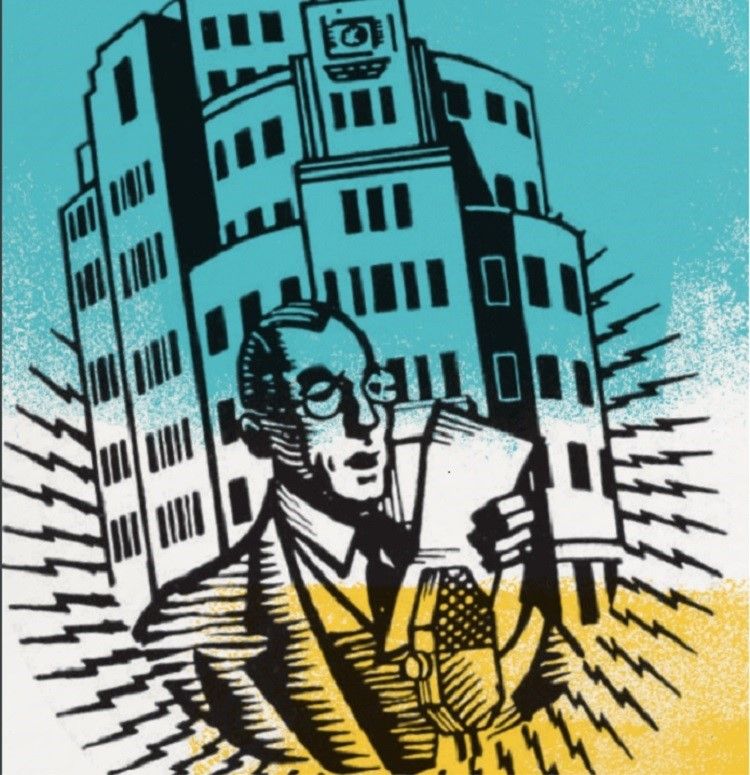
All this begs the question, is a national broadcaster what we as a country want anymore? Do we as a society actually favour partiality in our news? On the other hand, without a BBC we lose a pioneering force in truth and trust when it comes to news. Simon asserts:
‘The BBC's formidable news operation is thus doing the crucial journalistic work that few others have the resources to accomplish. It allows conversations to take place across political divides and the boundaries of communities and nations. At its best, it challenges our assumptions, broadens our sources of information, exposes us to conflicting viewpoints, and calls out liars.’
So what does the BBC bring to our society today? A commitment to taking accountability in its content’s representative, impartial and creative qualities. A service that pioneers truth and accuracy in news, and does its best to investigate itself within its own output. After all, the very dossier published in the Daily Telegraph was produced by a BBC advisor himself. But all this relies on tax payer money and if people feel it doesn't represent them, they shouldn't be forced to fund it. With declining license fee income and no established director general to carry them through their charter renewal, the BBC could become a fading presence in our media presence and wider lives.
Featured Image: Kimberley GohWhat are your views on the BBC?