By Lucy Şeniz, Fourth Year, Liberal Arts
I remember being little and finding resolutions for the New Year was something of genuine excitement. I had strange requests of myself: keep a diary all year, learn to juggle, conquer ambidexterity... Every year, I would want to learn a new language, develop my tongue to form new sequences that would someday rectify me, I was sure of it.
I remember the yellow square Post-it notes and a dutiful sense of commitment, stuck to the wall above my desk.
Twice over, at my grandmother’s house, things were moving differently. There was a sense of something restarting, something promising, found in ritual and belief instead of lists of practical action.
'Turkey’s geography has brought its layered history, finding itself at the intersection of Europe, Asia, and the Middle East. Its organisation means that multiple cultures, therefore multiple New Year traditions exist'
In Turkey, the idea of the ‘New Year’ finds itself as complicated as the cultural background of the country. The concept of the New Year depends on which calendar or community we are referring to. Turkey’s geography has brought its layered history, finding itself at the intersection of Europe, Asia, and the Middle East. Its organisation means that multiple cultures, therefore multiple New Year traditions exist, both regionally and across the country’s diverse landscape.
The Republic of Turkey was founded in 1923 under Mustafa Kemal Atatürk, marking the end of the Ottoman Empire and establishing Turkey as a modern, secular and democratic nation. The country underwent a vast sweep of radical modernisation, including the introduction of the Latin alphabet, changes in dress coding, and the separation of religion and state power. This steered its social policies towards Turkey’s European neighbours.
Among these changes, the Gregorian calendar was adopted in 1926; this replaced the Ottoman Rumi calendar for civil life to keep aligned with Western time-keeping. Although now living by the same calendar, the early days of the Republic did not celebrate New Year's Day as we know it, as it had no cultural weight or significance. But as norms were integrated with time, by 1936, an official New Year's holiday was declared. On New Year's Day 1938, Atatürk published a reply to the New Year's Greetings for the first time, therefore acknowledging the presence and power of the holiday within the republic.
Adaptation happens slowly. Today, some urban parts of Turkey celebrate as many Europeans do: family gatherings, big meals, fireworks and gift exchanges. Food (as nourishment and community) is given high priority, as the night’s activities are seen to bring prosperity and good fortune tenfold for the new year. The meal yılbaşı yemeği is eaten, which is usually a large meat dish alongside other seasonal foods, salads, and drinks. The warmth of roasted chestnuts is a winter staple in Turkey, perfectly complimented by salep and boza.
The traditions are centred around the home, community, and protection. Turkey’s customs also differ widely from region to region and are taken to various levels of sincerity in practice. In Istanbul, old objects are thrown out of the window as a way to expel negative, unwanted energy from the passing year. Pomegranates are smashed on doorsteps for prosperity and abundance, with seeds symbolising wealth, health, and fertility. It is said that the more seeds that are scattered the luckier the year will be. Some sprinkle salt on their doorsteps for peace. Milli Piango, the national lottery, also has a grand prize on New Year's Eve ($18.9 million), which many families take part in to add suspense to the night. Mostly, such practices are used to generate joy, laughter and elevate community feeling which is carried into the New Year.
If we move across to more eastern regions of Turkey, among many Kurdish, Alevi, and Turkic communities, the New Year arrives not in January but in March with the spring equinox festival, Nevruz/Newroz. Before Islam or the Ottoman state, Central Asian Turkic people saw the 20/21st of March as a significant time to commemorate the end of winter hardship; the renewal of nature in spring as the new pastoral-agricultural year began. This overlapped naturally with the idea of Persian Newroz, which was realised as Turkic peoples migrated into Iran and Anatolia. This period is still celebrated today, with festivities including jumping over fires, dancing, special foods, and community gatherings to continually affirm ancestral pasts.
 Anis Fazidin
However, in current Turkey, Nevruz (a term used by the Turkish state) is more than just a seasonal festival, but deeply entangled with the identity politics of Kurdish people. Newroz (used by Kurdish) is promoted as an expression of cultural survival with deep implications for minority rights, recognition, and political legitimacy. Nostalgia anchors ancestral heritage in Central Asia, yet the festival also asserts its distinctiveness against the dominant national culture in Turkey. The Turkish state endorses Nevruz as a part of Turkic heritage, although some view this as another attempt to assimilate the power of Newroz among Kurdish populations into the mainstream/national cultural calendar. The event is seen to socialise younger generations into their collective identity and cultural past. However, celebrations of Nevruz/Newroz are widely publicised with parades, folk dance, traditional dress, and ritual fires. Under such high energy and the tension of national belonging, events can sometimes become protests or statements of cultural survival.
'The country finds itself continuously between worlds, complex in its diverse beliefs and identities that span the country.'
New Year's in Turkey reflects the depth of its social and cultural environment. There are many festivals, traditions, and social groups that are unlisted within this article, and in further exploration, you will be struck by Turkey’s endlessly fascinating cultural legacy. The country finds itself continuously between worlds, complex in its diverse beliefs and identities that span the country. Yet in accordance with its global understanding, New Year's finds its place in consideration of personal resolutions and collective belonging, private ritual, and public celebration. It is known as a time for reflection on the past and a deep imagination for the possibilities of the future.
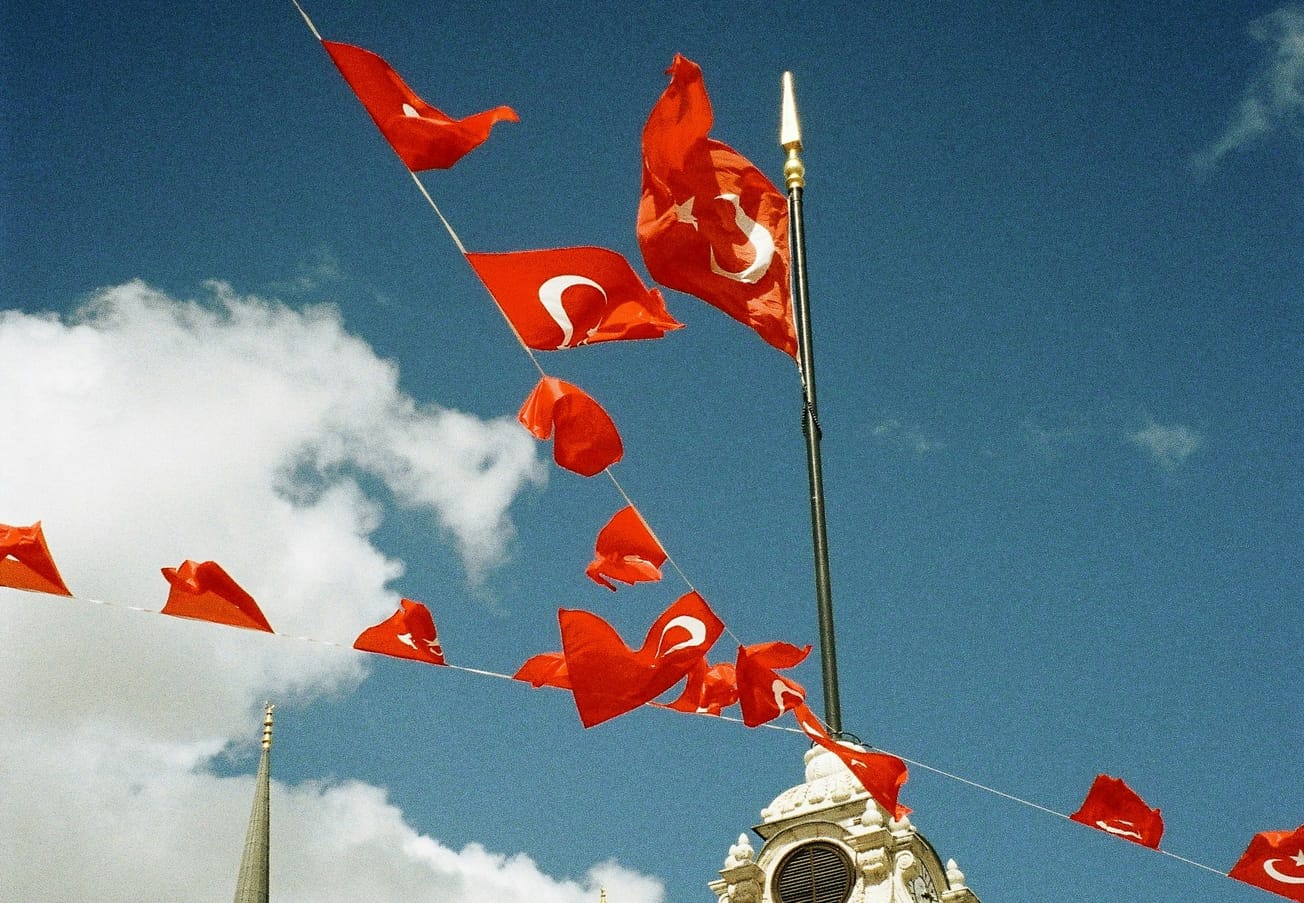
Featured image Isa Sequeira / Unsplash
What country has your favourite New Year's traditions?