By Anna Dodd, Features Editor
Recent polling suggests that nearly two-thirds of adults expect universities to lead revolution when it comes to mitigating the effects of the climate crisis. This is unsurprising considering universities have long been innovative institutions with vast amounts of cultural capital that allow them to publish ground-breaking research and drive social change on an international scale. The contraceptive pill, IVF, the COVID-19 vaccine and wind power technology to name a few were all founded on knowledge discovered at UK universities. The University of Bristol is proudly a world-leading institution for climate research, with the Cabot Institute for the Environment boasting 200 members and collaborating with governments and other organisations to publish leading reports on environmental change.
The students behind the Plant-Based Universities (PBU) campaign call into question whether the running of these institutions reflects their environmental academic work – the answer is apparently not. Universities currently legitimise animal agricultural industries through their on-campus catering, despite the harm it wreaks on the planet.
Since 2021 campaigners have been encouraging universities to begin a transition to plant-based catering, signalling commitment to the environment. The scientific backing for this isn’t hard to find, with culling meat and dairy from our diets being regarded ‘the single biggest way’ to reduce climate impact. The goal isn’t to demand a ban on animal products on campuses, but rather to call for divestment from these industries. The movement has now gone global, with 60 active campaigns stretching across Europe and similarly being implemented in schools and councils.
Switching to plant-based catering at universities would not only reduce CO2 emissions by three quarters and use up less land, but it would also have significant economic benefits. The average university could cut their food costs by 30% on making the change and a medium sized university with 10,000 students could save over £500,000 annually on food procurement costs.
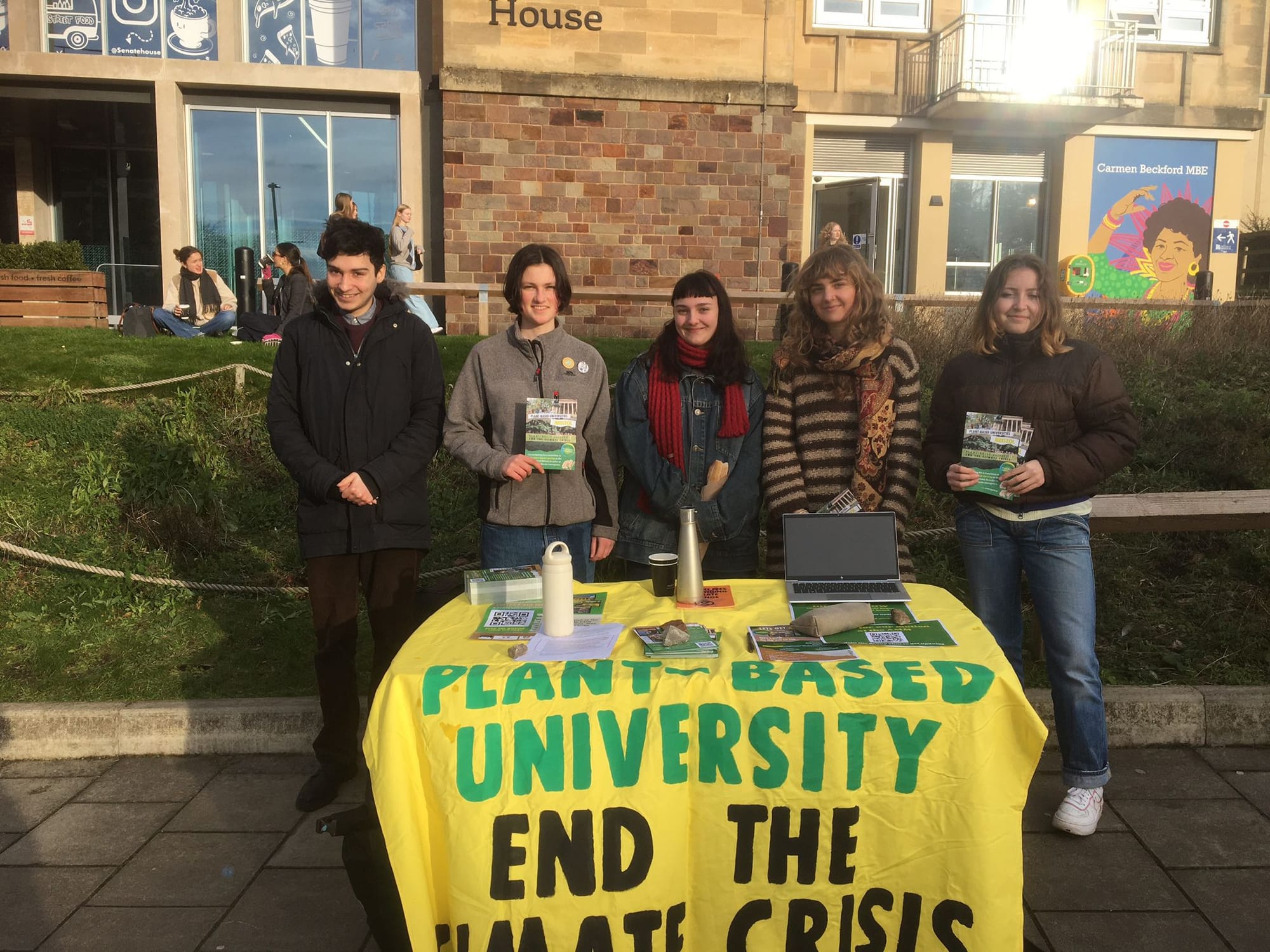
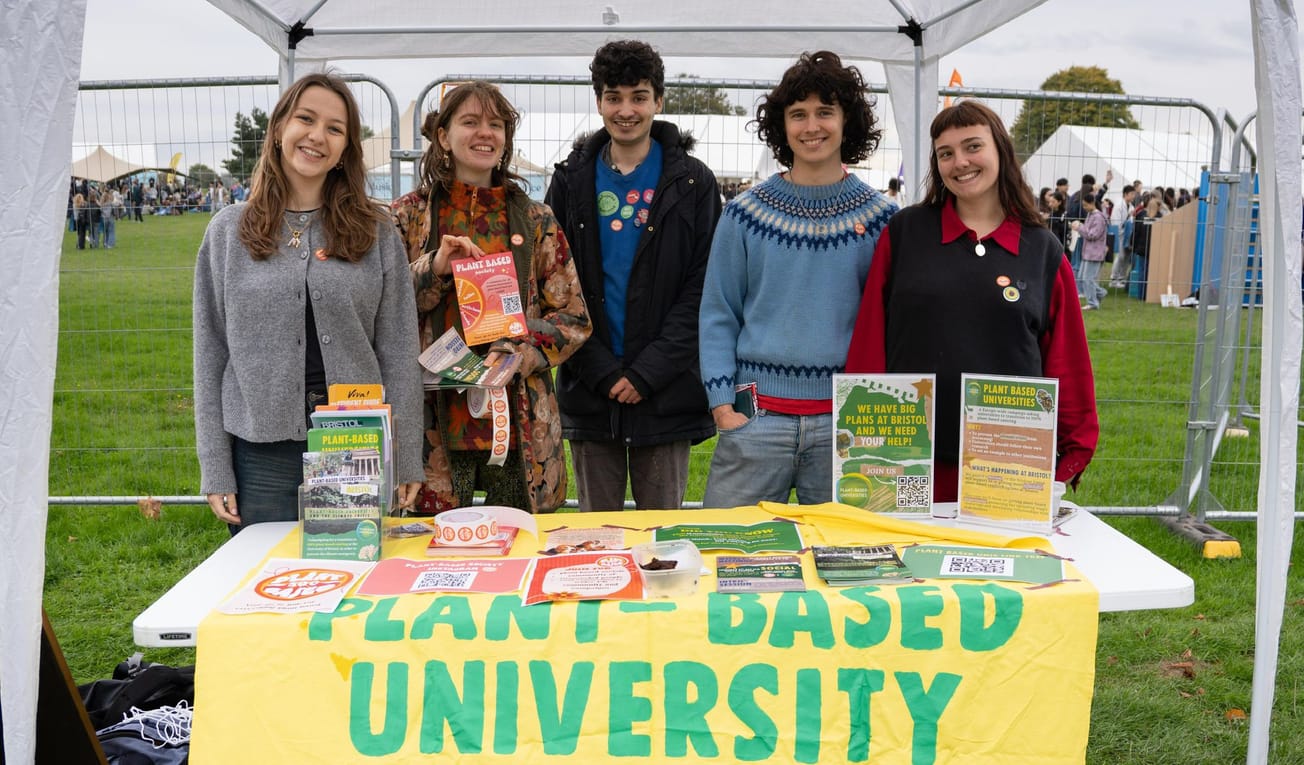
On home turf, the campaign at the University of Bristol has come on leaps and bounds, with students at the SU’s Annual Members Meeting (AMM) voting to support a gradual transition towards more sustainable menus with plant-based options. I sat down with Agnes and Nathaniel to discuss how things have progressed since then, and to learn more about the campaign.
They explained that the Bristol team’s strategy is unique due to the structure of catering within the university, as the Student Union (SU) doesn’t directly control the food served on campus, which is instead managed by Source. A similar motion had been rejected at the AMM in the previous year, but the team reorientated their motion to best help the SU support PBU. After a year of raising awareness and speaking to more students, the majority voted to support a motion that would increase accessibility to sustainable options in Source catering. Agnes explains that in practice this means making Source’s plant-based pre-packaged food more accessible and affordable, as at the time many felt this was particularly expensive and there weren’t many options on offer.
‘It's just about cheap, accessible, sustainable plant-based options.’
They recently celebrated a new win with the opening of Source-V, a fully vegetarian and predominantly plant-based café in the Merchant Venturers Building. PBU intend to develop their relationship with Source going forward, Nathaniel elaborates there’s ‘a lot of work to do to keep going further.’
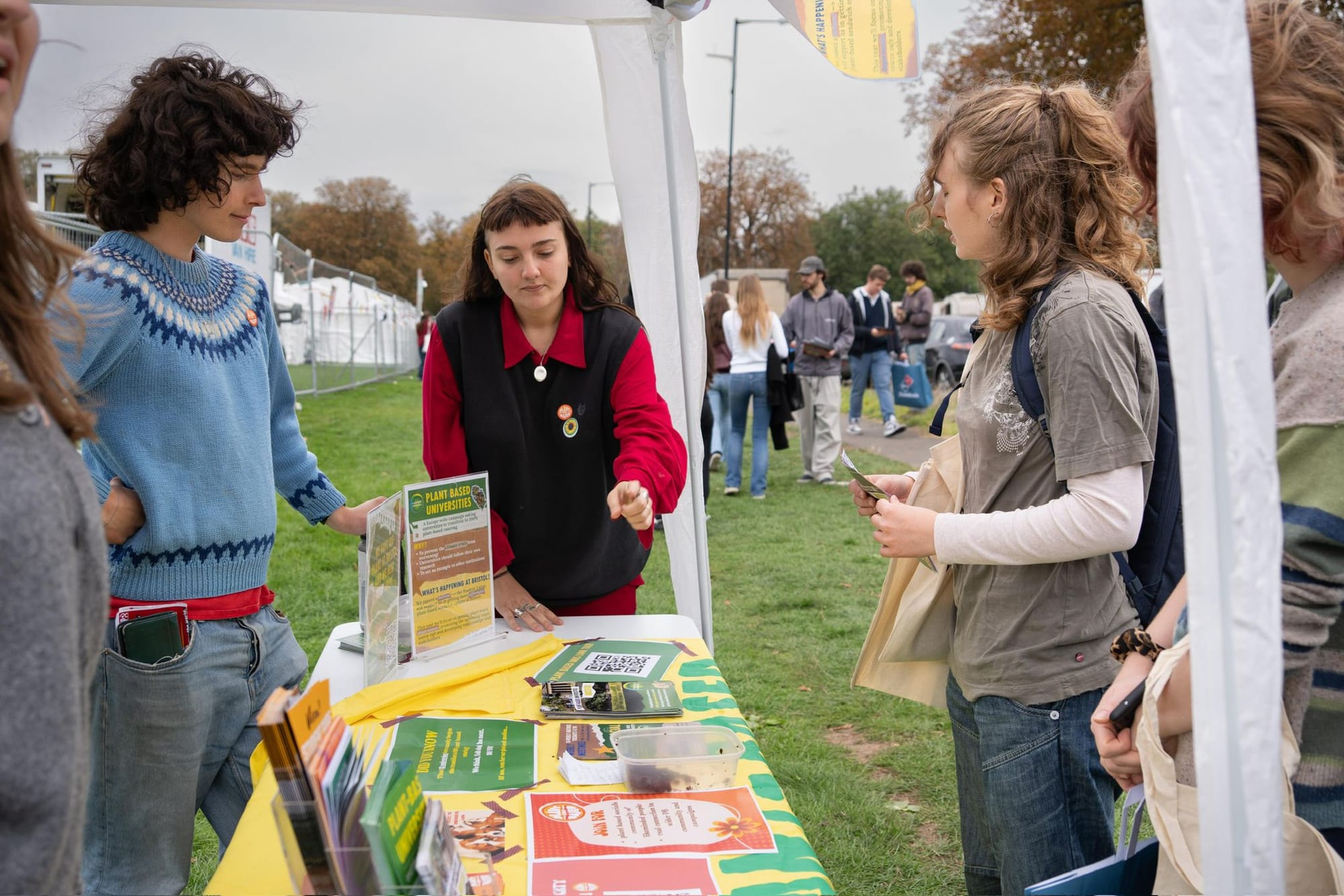
I wanted to know what about this campaign particularly resonated with Agnes and Nathaniel and why universities should be the ones leading this conversation. Nathaniel highlights that universities are the ones publishing significant climate research that tell us society must transition to a plant-based food system if we are to stay below the 1.5C target set under the Paris agreement, and therefore it makes logical sense for them to apply this research within their catering departments.
Agnes additionally explains how universities are micro-societies, and systemic change can be brought about by working with these institutions, which will in turn create a ripple effect to encourage change elsewhere. This is also where young people first encounter the real world and learn to cook for themselves; it is therefore important that the university provides an education about sustainable food, to become change makers in what a maintainable food system may look like. Universities have long been homes for development where young people confront their views and biases to gain a broader perspective, and PBU feel it's important to make universities plant-based so people can see where wider society should be heading. Nathaniel also stresses that students have long been crucial to progressing social justice movements. The plant-based transition should thus be student led because historically movements like this require an ability to look into the future and question the system we currently have – there's no better place to do that than at a university.
‘the university should be the ones setting the baseline and should be providing the most sustainable option - which is 100% plant-based catering.’
They acknowledge the misunderstandings and legitimate concerns that students may have towards the campaign, but this can be resolved by having open conversations which everyone is part of. Students will still be free to buy food nearby or bring in their own meals, but ‘the university should be the ones setting the baseline and should be providing the most sustainable option - which is 100% plant-based catering.’ This would also be the most accessible type of food for the most amount of people when considering allergens and faiths. They were both keen to emphasise reconciliation as a part of the movement, and that when people do raise problems, PBU like to address and learn from them. Agnes elaborates, ‘it’s not something that we want to be enforcing onto the students.’
The value of in-person conversations seems fundamental to what works so well about this campaign, to develop relationships and engage in an open dialogue: ‘This is so important for the climate, but it's not about neglecting people. It’s not about taking away choice and it's not about imposing anything on anyone.’ PBU aren’t calling for students themselves to go vegan; everyone is welcome regardless of their personal dietary choices. After all, a hundred people cutting down on their meat intake is better than one perfect vegan. It isn’t required to be vegetarian or vegan yourself to support the cause, because the focus here is on systemic change: what can the university do to take responsibility and make the most positive climate impact?
Even though they have passed their main motion, the Bristol team are continuing to pursue new ways of making the university more plant based. They have recently set their sights on working with departments, which includes encouraging vegan catering at events and stocking different items in staff and postgrad kitchens, ‘it is still very easy, very impactful changes that can be made.’ Working with the sentiment that students have voted for this change, PBU encourages the rest of the university to catch up and support Source by ensuring that there’s demand for plant-based food in departments as well. This idea has come on leaps and bounds, with the Philosophy department going 50% plant-based in October, and progress being made in other departments.
 Ike Idikakalu
 Emily MacLean
The PBU Bristol team have also developed a lovely community in the process, hosting group meals, biweekly meetings, and training sessions where students can learn more about the campaign and how they can communicate these ideas. They are keen to grow this and welcome people who want to get involved, the best way to do this is to follow the team over on Instagram and join their Whatsapp group. Signing PBU’s petition is also a great way to help propel the movement forward, to help the team continue their work in promoting sustainable, affordable and inclusive food at Bristol - something we will all benefit from.
Featured Image: Epigram / Lila Harris
Will you consider supporting Plant Based Universities?