By Kashvi Cox, Third Year, English
The Booker Prize Longlist 2025 was announced earlier this summer. From a Greek coastal town to the heart of England’s coldest winter, the list takes readers on a path through time, place, and genre. In my own journey through Longlist, I discovered new favourite authors and dipped into genres I would usually ignore. Now I am here to report back and to recommend a good place to start.
The Booker Prize was originally designed to ‘stimulate the reading and discussion of contemporary fiction’, according to the Prize’s website. It was first awarded in 1969 to P.H. Newby for his novel Something to Answer For. Since then, the Prize has empowered authors such as Bernardine Evaristo and Samantha Harvey to reach wider audiences and enjoy huge rises in book sales.
The judges of the prize are looking for ‘the best sustained work of fiction written in English and published in the UK and Ireland between 1 October 2024 and 30 September 2025’. The Prize does not necessarily award the most popular and well-known authors of the day; how many of us had heard of Samantha Harvey and her other five books before she won the Booker? Instead, the Prize seeks to change the conversation, to introduce new authors and themes to our reading vocabulary. These books push existing forms of the novel and challenge the reader’s perceptions of the world.
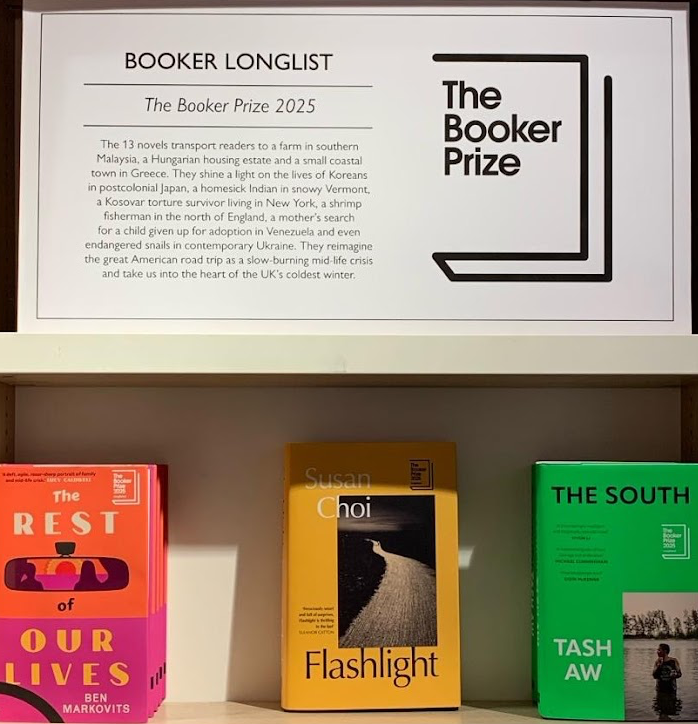
This year’s Longlist features 13 novels from debut authors, authors who have previously appeared on both the Longlist and the Shortlist, and the 2006 Prize winner herself. The novels range in length, from Kiran Desai's The Loneliness of Sonia and Sunny (over 650 pages) to Universality by Natasha Brown (156 pages). I chose to start somewhere in the middle of this list with Susan Choi’s Flashlight.
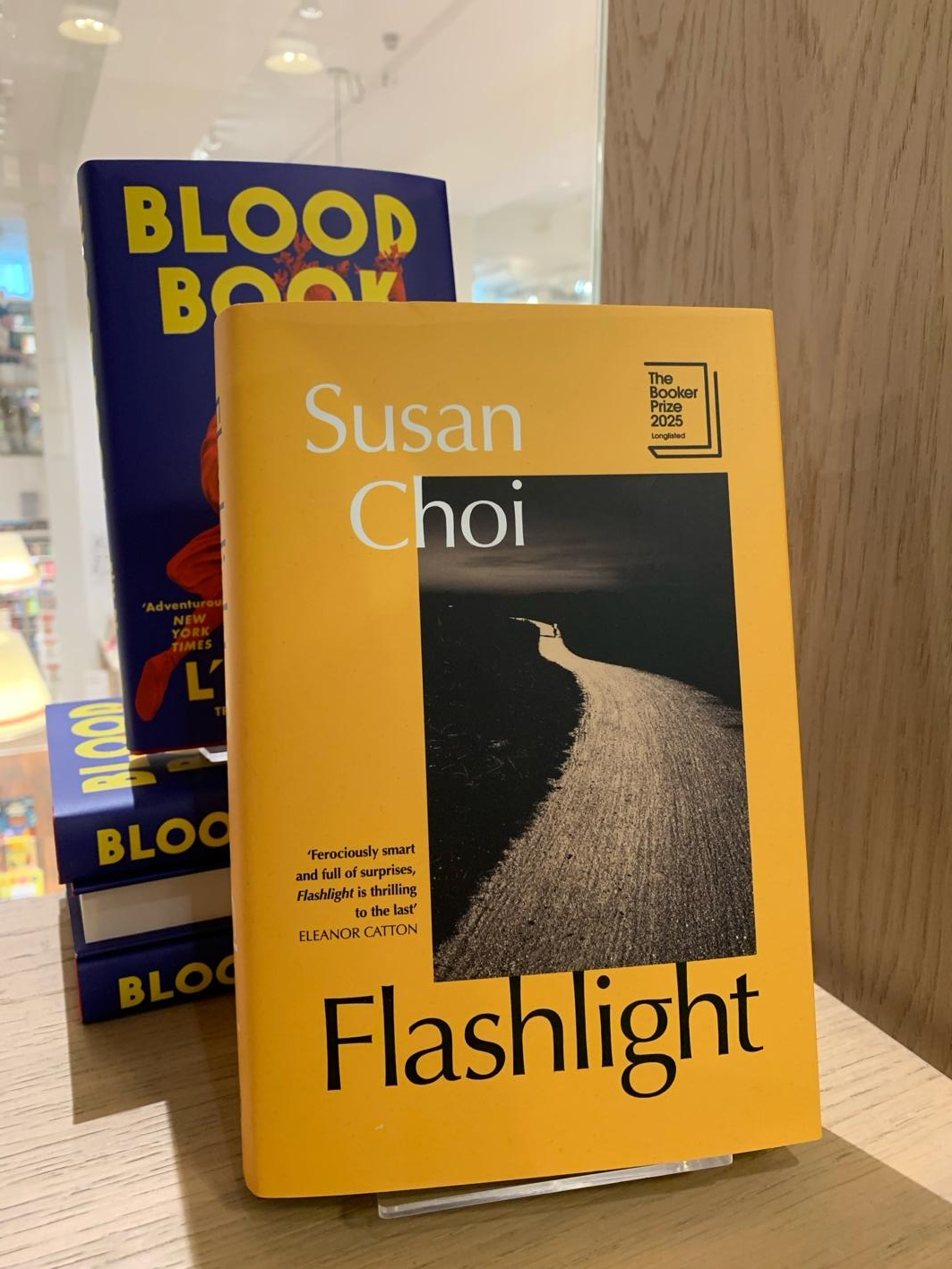
Flashlight is centred around themes of belonging, family, memory, and trauma. The narrative baton is passed between members of a family who don’t quite fit together, who show their love in unusual ways, or struggle to show it at all. The backdrop is postcolonial Japan, but the novel also takes readers to America, China, London, and Korea in an epic journey of discovery. Choi’s writing makes for a delightful read and her characters are developed so convincingly; they show the reader how history shapes us as human beings. You will not be able to miss this book in a bookshop, especially with its bright yellow cover signalling to you like a flashlight from the shelves (see what I did there!).
The second book I picked up was Audition by Katie Kitamura. This was significantly shorter than Flashlight, for anyone experiencing Big Book Fear, and I ripped through it in a single day. The novel is not only about what it means to perform in a theatrical setting, as the title suggests, but what it means to perform in our everyday lives. Like Flashlight, this is a novel centred around a family and about our interactions with others. It is split into two parts. The first part is fairly standard, but the second disrupts the narrative and poses a mystery that is slowly unveiled in the final pages. It certainly kept me hooked.
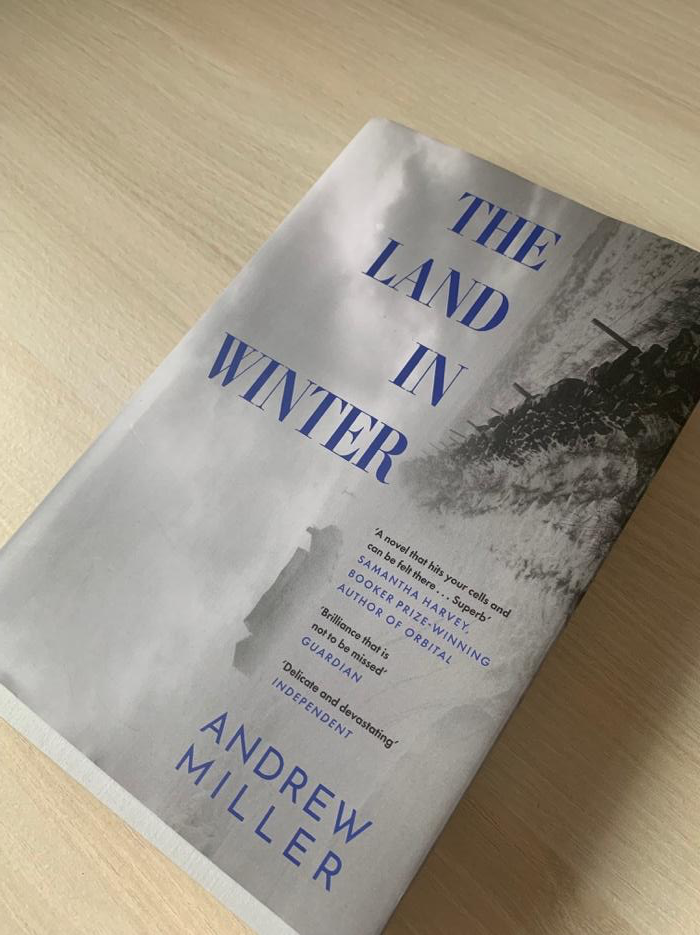
The third and final book I selected to read out of the Longlist was Andrew Miller’s The Land in Winter. Unfortunately, I did not get on with this book quite as well as the previous two. The novel is set in England during the winter of 1962-3, the coldest in the country’s recorded history. The writing itself was beautiful, and very poetic in parts, but I found there were too many characters to hang onto. I also struggled to remember the title (when my friend asked me what I was reading I could not remember the title – Our Land in Winter, Land in Winter, Winterland? – and not having a memorable title was a real dealbreaker for me). I don't intend to put you off reading it, it is set in Bristol after all, but this novel was not a winner in my books.
 Imogen Day
The winner of the Booker Prize 2025 will be announced on Monday 10th November, so there is still plenty of time for you to get reading. I recommend doing so before the judges have their final say so you can make up your own mind, independently of their opinion. I will certainly keep mining the Longlist for recommendations (until my uni reading list gets in the way, at least) and I hope you will join me too. The Booker Prize website even has a quiz to help you choose what to read first, so there are no excuses. Happy reading everyone.
Who do you think will win?
Featured Image: Epigram / Kashvi Cox