
By Katie Asha Ramamoorthy, First Year, English
Every year, Spotify Wrapped arrives wrapped in neon graphics and a series of story-curated posts, reminding us what three songs we rinsed during exam season or listened to on repeat a bit too heavily during the morning bus ride to uni. For many Bristol students, it’s become a cultural event.
But behind the aesthetic charm and colourful infographics, Spotify’s ethics are being drawn repeatedly into question. Musicians, unions, industry experts and even former fans are increasingly describing the platform as exploitative and corrupt. Some are boycotting it altogether. So what’s actually going on – and is the streaming platform simply imperfect, or fundamentally unfair?
The ‘fair pay’ illusion
Spotify’s biggest criticism is as old as the app itself: artists simply aren’t paid enough. Independent musicians routinely describe earnings per stream as ‘meagre’ or ‘insultingly low’.
While independent artists notoriously suffer for their lack of compensation in regards to music, even major artists have taken a stand. Taylor Swift famously pulled her entire discography from Spotify in 2014, openly stating ‘I'm not willing to contribute my life's work to an experiment that I don't feel fairly compensates the creators of this music’.
Despite Spotify’s insistence that it paid $10 billion to the music industry in 2024 — the highest yearly payout in history — the way that money is divided has caused deep fractures.
How the pro-rata system works (and why it’s so controversial)
To explain criticisms of unfair pay, we need to begin by getting into the method that Spotify uses to pay its artists. Spotify retains 30% of its total subscription revenue every month. The remaining 70% is then paid to various rights-holders: record labels, publishers, and distributors, who then pay musicians signed to them.
To distribute the 70%, Spotify uses a ‘pro-rata’ model of payment. ‘Pro-rata’ literally means ‘in proportion’, and means that every month, all revenue is placed in one pot, and then divided by the total number of streams on the platform. That amount is then multiplied to pay each artist proportionally to the amount of streams that their music received.
On paper, this system sounds fair: however, it has incurred several significant problems. If overall streams rise faster than revenue, per-stream pay rates shrink. Because Spotify does not pay the artists directly, instead paying rights-holders, what’s left for artists who are signed depends heavily on their contracts. For many, it’s minimal, typically falling between $0.003 and $0.005 per stream.
Due to the volatility in per-stream payment, artists’ pay often does not actually correlate to their success, instead depending on the amount of streams on the platform that month. Hypothetically, an artist could break personal streaming records one month, but still earn less money than before. Spotify itself admits that 357,000 songs reached over 1 million streams in 2024 alone, but the total revenue pool hasn’t grown nearly as fast.
Problems with AI
Furthering the struggle for artists to compete in an already over-saturated industry, AI music has recently begun infiltrating streaming platforms. AI-created bands like Velvet Sundown hit 1.2 million monthly listeners while openly using generative AI tools to create their music, branding, and profile pictures. Due to Spotify’s pro-rata model of payment, every stream to an AI artist takes up a proportion of Spotify’s monthly payments, reducing the amount of revenue left for real artists.
 Imogen Day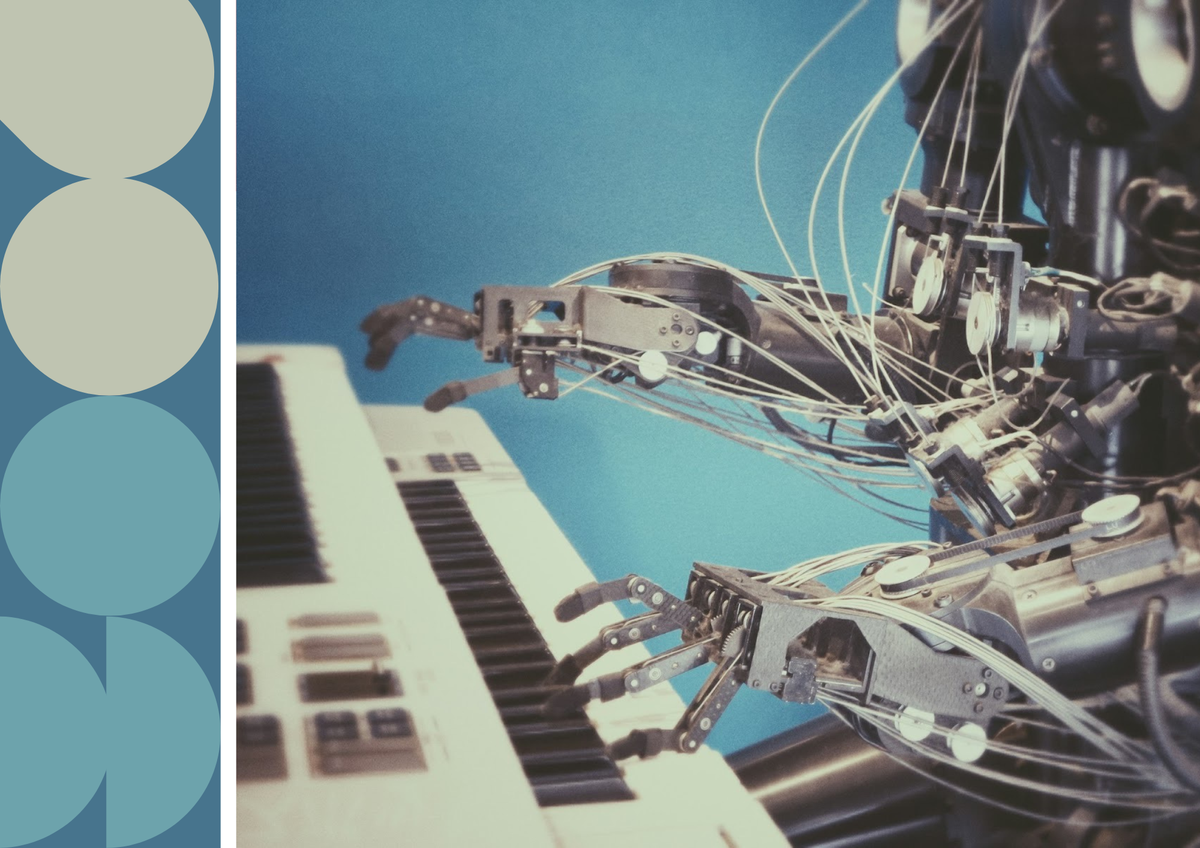
Spotify has allowed, and even in some cases encouraged, AI music to remain on the platform, despite concerns from musicians about authenticity, copyright, and a diluted revenue pool. While the company insists that it is actively removing spam (75 million tracks in the past year alone), some argue that the platform is designed to incentivise quantity over quality, and therefore it is not in Spotify’s profitable interests to restrict AI generated music to any significant extent.
Adding to controversy of Spotify being solely commercially centred rather than valuing human creativity and artist’s work, Spotify’s CEO Daniel Ek suggested that musicians cannot expect to succeed if they only release new music ‘every three to four years’ and that content creation costs are ‘close to zero’, reinforcing the idea that the platform treats music less as art and more as an endless commodity to be churned out.
‘Pay-for-play’ criticisms
In November 2020, Spotify launched a new feature, Discovery Mode, alleging that it would allow listeners to discover new songs that aligned with their current music taste, and diversify the amount of artists that they listened to.
The controversial premise of Discovery Mode is that artists can boost their chances of being recommended to listeners, on one condition – they must accept a 30% royalties cut. This effectively means that artists are paying Spotify a portion of their paycheck in advance for increased exposure in the algorithm. ‘Success is now openly for sale’, commented journalist Mark Beaumont about the implementation of Discovery Mode.
The Artist Rights Alliance has called Discovery Mode ‘exploitative’, ‘unfair’, and effectively a ‘money grab’. Critics say it puts independent musicians in an impossible situation: either devalue your work to stay competitive, or lose visibility entirely while major labels with enough financial security to take the cut in royalties gain even more traction.
Even major legislating bodies such as the U.S. government have taken notice. In 2021, the U.S. House Judiciary Committee warned Daniel Ek that Discovery Mode risked creating a ‘race to the bottom’ in which struggling artists have no choice but to accept lower and lower pay in return for the possibility of streams.
For ‘You’ Page?: Algorithmic inauthenticity
Following on from the idea that Spotify’s algorithm is based on pay-for-play rather than actual algorithmic data, increasing complaints have been made on Spotify’s online forums about the same few trending songs appearing in auto-play, despite being nothing to do with songs just played.
In summer 2024, multiple users of Spotify reported auto-play and playlist issues, in which Espresso by Sabrina Carpenter was put next in their queue after everything from metal to jazz.
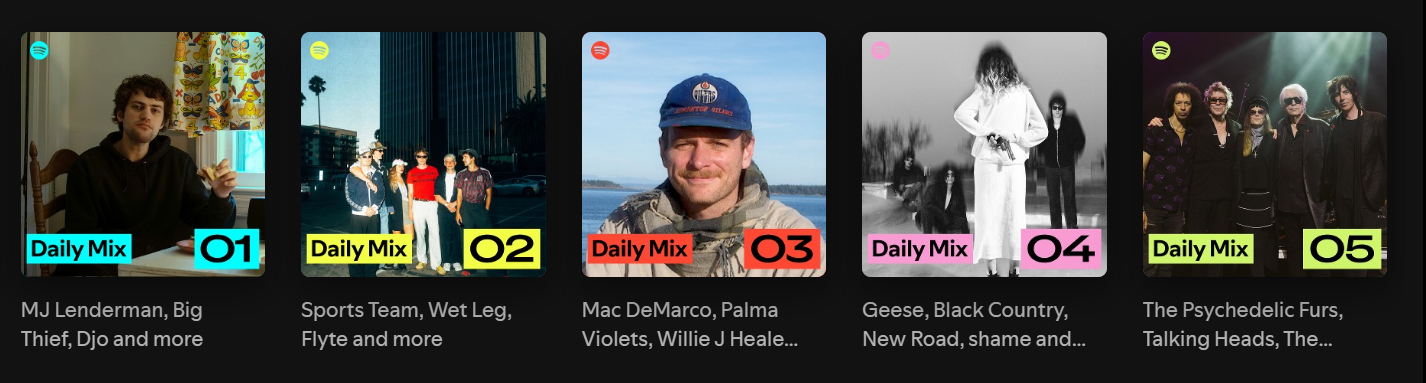
Just last month, a former Spotify user filed a lawsuit against the platform for this very reason. The claimant Genvieve Capolongo accused Spotify’s Discovery Mode of being a ‘pay-for-play scheme’ and said the streaming service would constantly recommend her ‘the same major-label tracks’ from artists like Drake, Zach Bryan and Justin Bieber that ‘bore little resemblance to her listening habits’, despite promising ‘a personalized listening experience built around her own tastes’.
Capolongo stated that Discovery Mode was just a new form of payola (the illegal practise of paying radio stations for increased airplay), and stated that ‘Spotify’s insistence on replaying the same songs’ only further highlights how on a platform that prioritises commercial success over authenticity and ethics, exposure is something that comes with a price tag.
Ethics
Again, Daniel Ek is at the scene of the crime. On the 17th June 2025, the CEO faced backlash after his investment into German company Helsing, a start-up specialising in the use of AI to develop military strike drones and surveillance. Ek’s substantial €600 million investment into the company led many artists to take a stand.
Indie band Deerhoof announced their boycott of Spotify alongside a public statement, saying bluntly ‘We don’t want our music killing people’. Singer-songwriter Laura Burhenn also addressed the issue in an Instagram video in which she urged artists and listeners to cancel their subscriptions, saying ‘Your labour, your money has gone directly to fund the war machine’.
Most recently, Massive Attack became the first major-label act to boycott Spotify (a Bristol-born band – although maybe now’s not the time), stating that ‘the economic burden that has long been placed on artists is now compounded by a moral and ethical burden, whereby the hard-earned money of fans and the creative endeavours of musicians ultimately funds lethal, dystopian technologies’.
For both artists and listeners alike, the platform’s ethical direction is becoming just as concerning as its economic one.
In Spotify’s defence
In its annual economic report Loud & Clear, Spotify argues that it has democratised music distribution and enabled more artists than ever to earn royalties. The company points to its most recent figures which show:
Spotify accounted for around 25% of global recorded music revenue in 2024
More artists are hitting annual royalty milestones than ever before
It paid out $10 billion to the music industry in 2024 – the largest sum in history
The platform also maintains that it is the only major streaming platform to disclose this level of data, priding itself on a level of economic transparency that is not provided by its competitors.
Is a ‘fair’ streaming platform even possible?
Spotify’s model undeniably works for consumers. Unlimited music for £11.99 a month is a bargain. The company also needs to satisfy investors: its 2024 operating profit hit $680 million, a major turnaround from years of losses.
But these wins come at a cost, and it is a cost borne almost entirely by musicians. For Spotify to keep subscription prices low while also maintaining business growth, something has to be sacrificed; and under the current pro-rata system, that ‘something’ is generally artists’ income.
This brings us to the key question: Is a streaming service that benefits owners, musicians, and listeners equally unachievable?
The uncomfortable truth
Spotify isn’t uniquely evil, nor is it the sole reason musicians are struggling. The entire streaming economy was built on low margins, high volume, and investor-first logic. But Spotify is the biggest player – and its decisions shape the future of the music industry.
 Katie Asha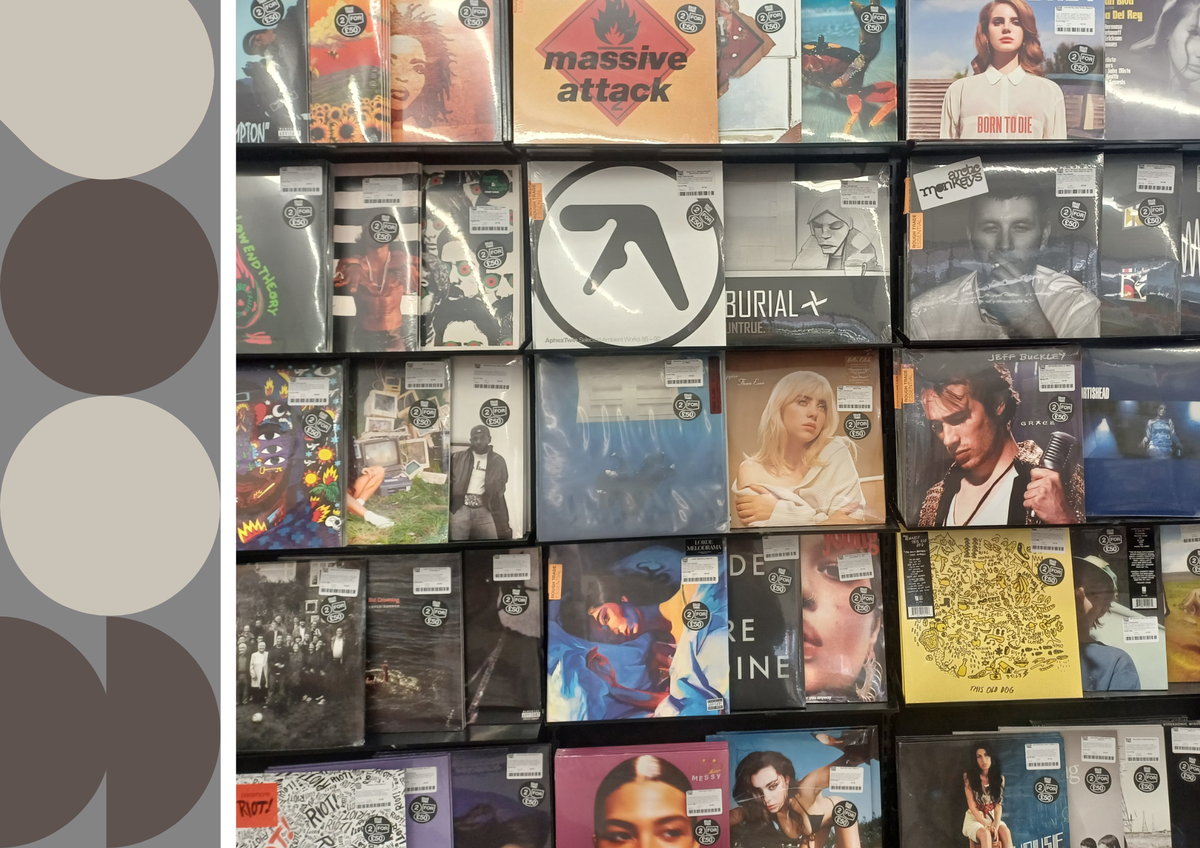
The question isn’t necessarily whether Spotify is ‘corrupt’. It’s whether the business model of modern streaming is fundamentally incompatible with fairly paying artists for their work. As AI-generated music climbs the charts, algorithms push homogenised hits, and artists continue to leave the platform, it seems increasingly clear that Spotify Wrapped might be wrapping up a much bigger, much more uncomfortable story.
Featured image: Spotify / collage by Sophie ScannellAre you a die-hard Spotify user?