By Erik Roderick, First Year, Economics and Mathematics
The opening of Song Sung Blue (2025) is a wry visual joke. Mike (Hugh Jackman) performs a soliloquy seemingly to the camera, the camera cuts to a wide and shows that he is in an AA meeting. His monologue continues and escalates to a performance of the title song, the Neil Diamond hit.
In this performance, the film presents these viewers through their faces in montage, in close shots, with great physical detail both of their faces and their response to the music. The segregation of these different responses in the frame and their subsequent connection through montage suggests at once one’s distinct individual relationship with music and how this forms a shared culture. The mutual familiarity with the music is indicative of a shared experience between the subjects of the frame.
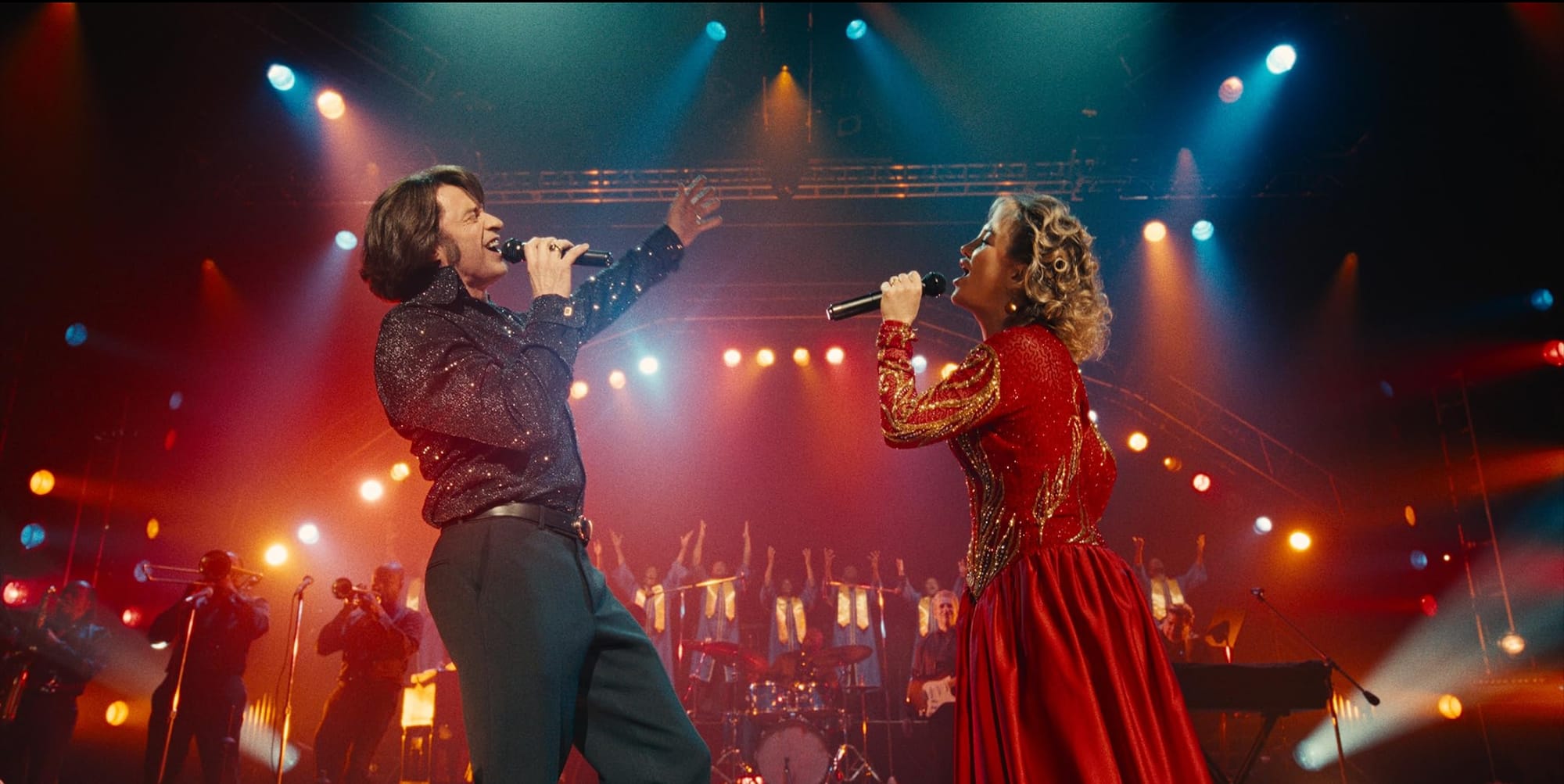
This presentation of different modes of cultural being underpins the use of Neil Diamond’s popular anthems. Mike performs music in small local venues under the moniker Lightning, which is where he meets fellow musician Claire (Kate Hudson), later nicknamed Thunder as she becomes Mike's musical and romantic partner. In the face of financial woes, the two decide to form a Neil Diamond tribute band; as Claire says, ‘nostalgia pays.’
Director Craig Brewer’s previous films have transnavigated the continental United States and generally are set among these different regions’ working classes, even as their subjects vary. Rather than centre around the labour class his leads are usually independent artists, typifying a deeply mythologised striver type rather than engaged with the class relations of their locales.
Class in these films instead exists mostly as an aesthetic phenomena. This sensibility gives Song Sung Blue what has been absent in such recent music hagiographies as Springsteen: Deliver Me from Nowhere (2025) and A Complete Unknown (2024). In mythologising ‘genius’ they neglect the base of their endearing popularity.

Song Sung Blue, rather than rewrite Newport, remains true to the endearment of popular music. Brewer’s aesthetic eye realises its assortment of music venues with great detail. Performances of Diamond’s music reverberate across the film, with performances in bars, restaurants and auditoriums proper alongside private renditions in rehearsals and the aforementioned AA meeting.
The context between each rendition varies, yet the audience work is consistently intuitive, through the close shot detailing a plurality of human experience across this community. Presenting a variety of independent local musicians, the film navigates between these performance spaces, staying true to their tactile, tacky decor without ever condescending. It is this keen eye that synapses Diamond’s music with the cultural conditions that created its mythology. All performances elucidate different modes of socialisation.
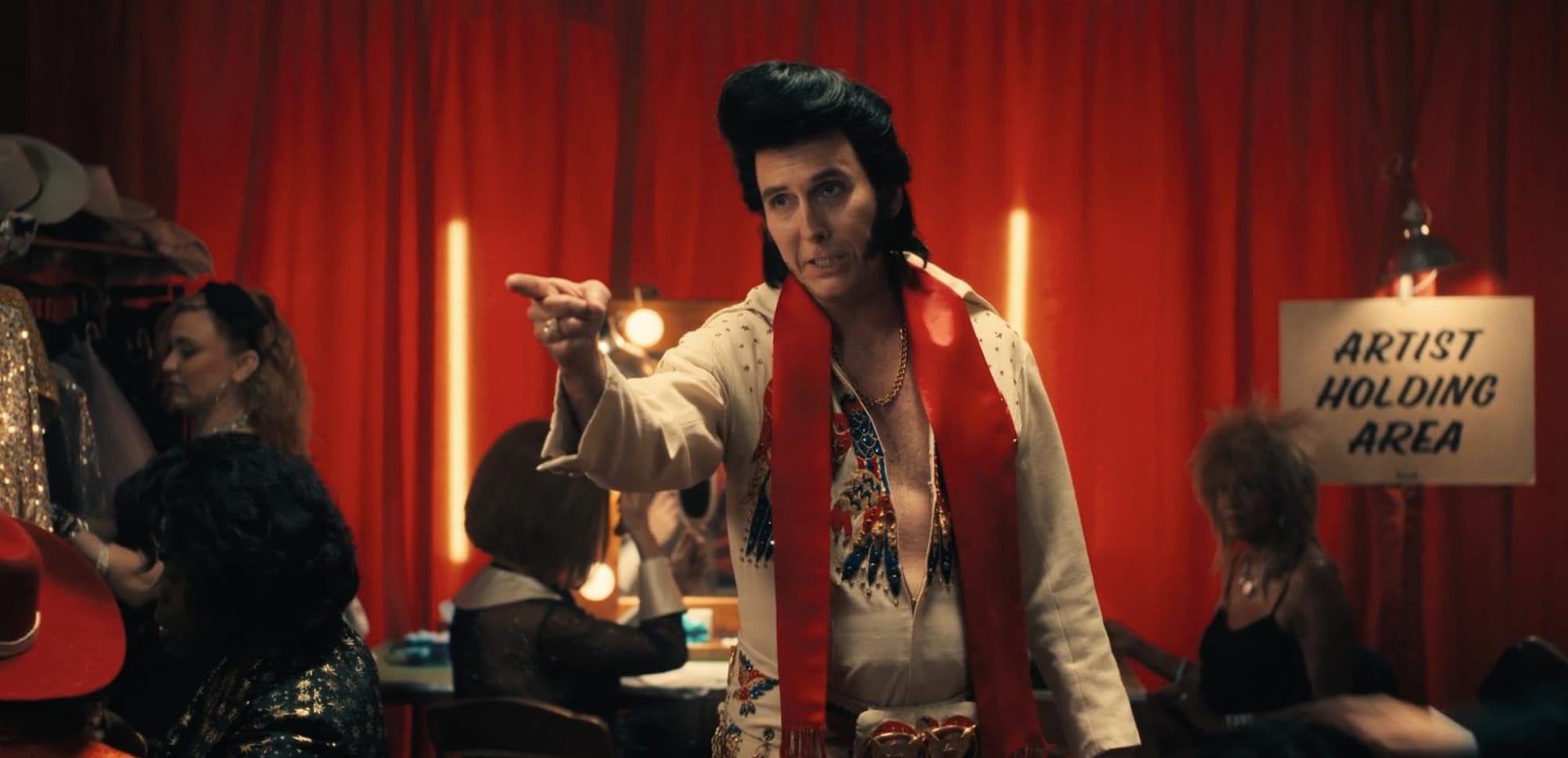
The film's dramaturgy is premised on a constant contraction and extension, with its musical interludes connecting a series of domestic scenarios charting Claire and Mike's interpersonal relationship over two years. These scenarios are low-key by design, with most of their emotional development designated to the music numbers. In keeping with the rest of the film, this establishes greater tangency between this development and their belonging to culture.
Simultaneously, much of the direct drama can be quite staid. Brewer's lack of seriousness about class becomes increasingly palpable as Song Sung Blue navigates the couple's financial woes, which are non-specific to the point of banality. Rather, money is owed when things are bad, and is earned when things are good.
 Charles Hubbard
Nostalgia pays indeed, and it is in that payment that the film struggles balancing its central contradiction - navigating its aesthetic argument of the material base of our cultural myths with that of inflating the mythology of the striver.
Brewer's aesthetic, as capable as it is at forming deeply cinematic connections, is never capable of resolving this insipidity.
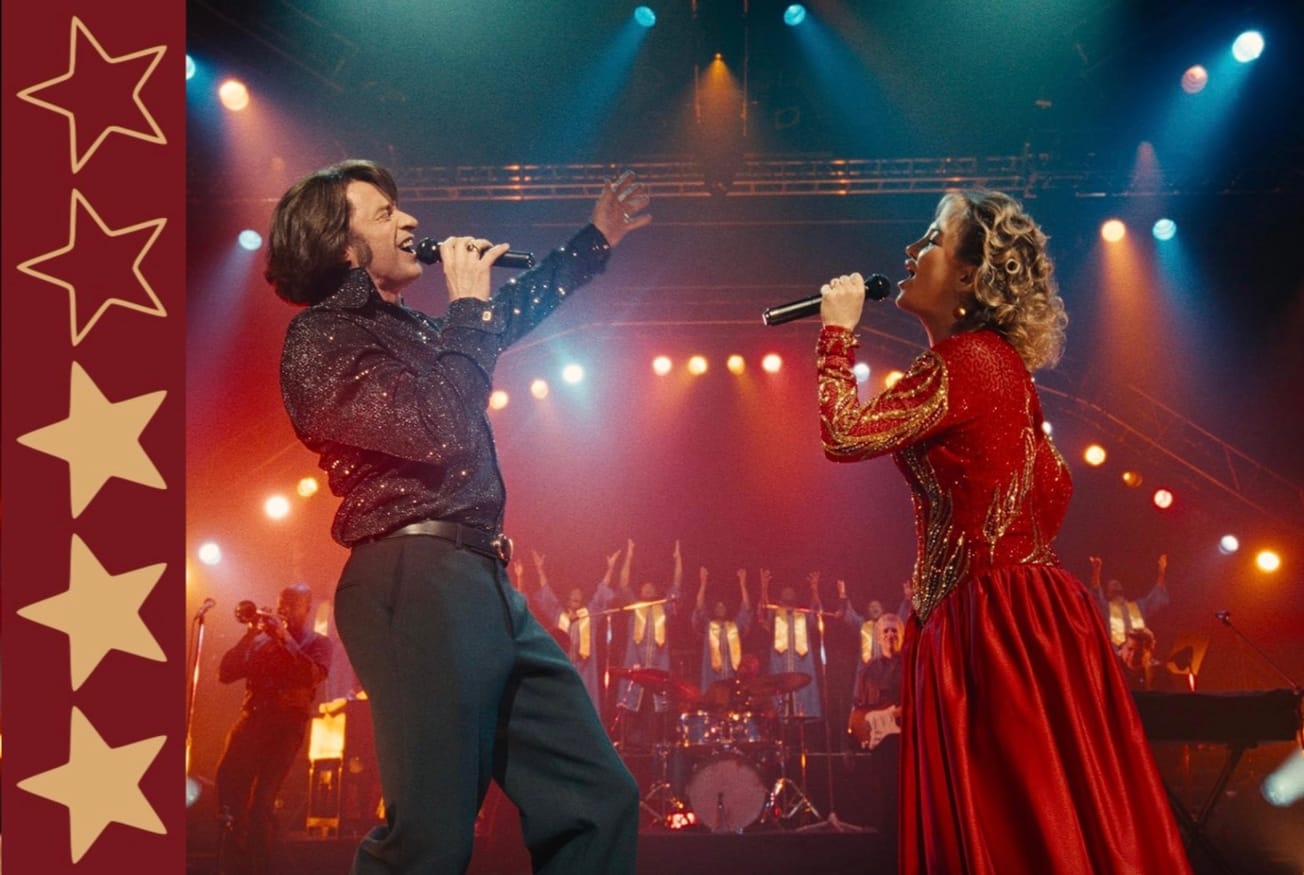
Featured Image: IMDb / Song Sung Blue | Illustration by Epigram / Sophia Izwan
What did you think of Song Sung Blue?