By Daisy Guilor, Third Year, MSci Business and Management with Innovation
A selection of 100 photographs, distilled from 60,000 entries, the Wildlife Photographer of the Year collection at the Bristol Museum (running until April 2026) showcases the wonder and vulnerability of the natural world through some of the world’s best contemporary nature photography. Alongside it, Andrej Bako’s sound installation plunges viewers into a full sensory immersion, designed to encapsulate the ‘Biomes of Life on Earth.’
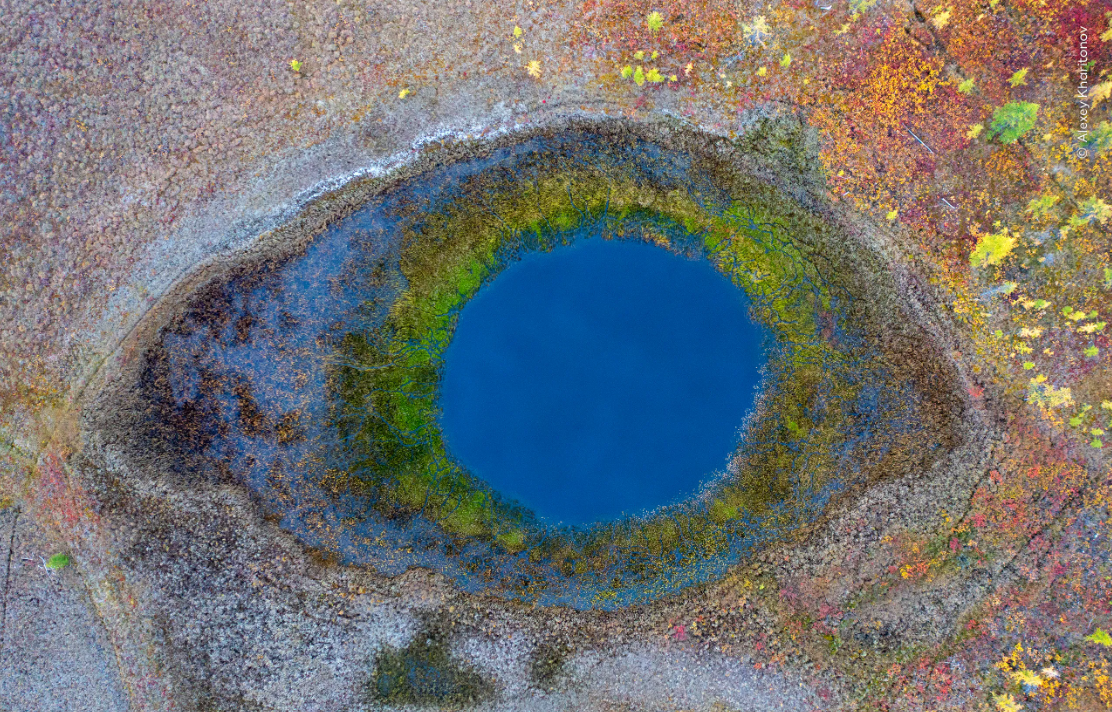
The exhibition invites us to marvel at the craftsmanship of mother nature on all levels. Alexis Tinker-Tsavalas brings us up close to a pair of long-jawed orb spiders; their jelly-like translucent limbs, prickly whiskers and eight gloopy eyes contrast with Beckett Robertson’s organic and menacing cave stalker. By comparison, Alexey Kharitonov’s portfolio of drone photography over Russia’s other-worldly landscape is exquisite. Both extremes represent the purpose of this exhibition; to see something beyond our reach, to be reminded that there’s still wonder waiting far outside the edges of our everyday routines.
The youth category pulses with vision and empathy. In the under 10s category, Jamie Smart’s winning trio reflects her commitment to the cause, already learning to see, value, and protect the natural world. Curiosity was prevalent in the 11-14s category; Zhixuan Sun’s camouflaged moth is an example of the magical beauty we’ll find if we slow down and take note of what’s around us. By 15-17, a new awareness emerges in photographs that confront the modern world rather than escape it.
‘The youngest eyes are already looking critically and tenderly at the planet they’re inheriting’
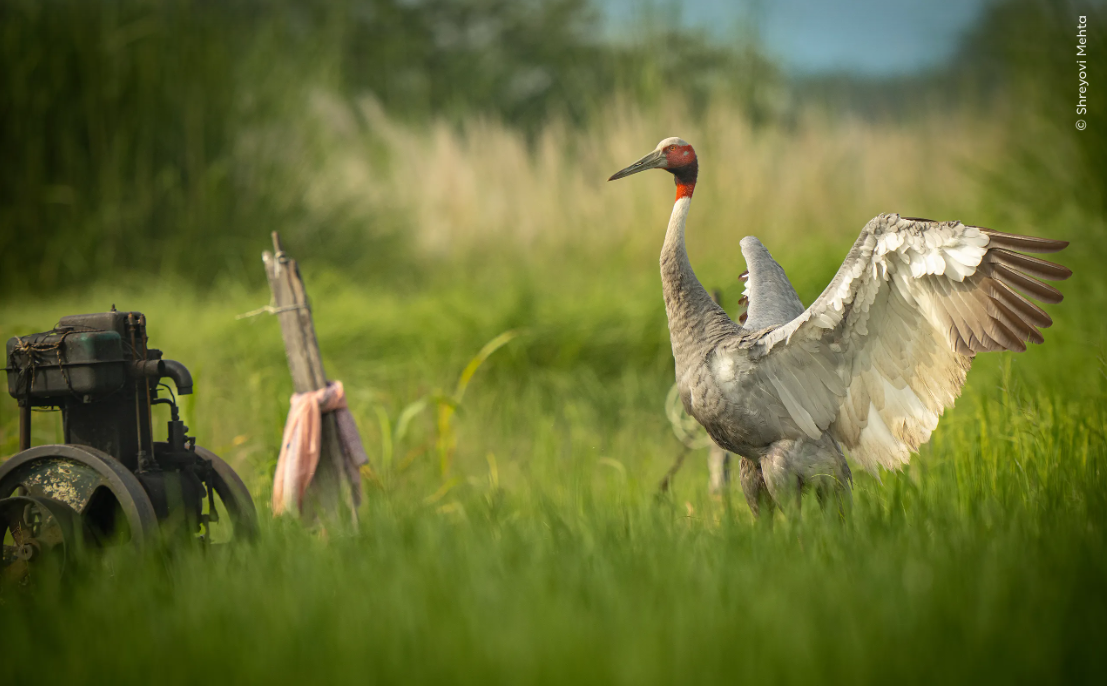
Personally, the youth standout was Shreyovi Mehta’s crane encountering a water pump: the photograph is washed with organic tones of the shrub, sky and feather, broken by a sharp shock of magenta across the crane’s neck. The composition captures disbelief at the man-made intruding on the natural. The patience required of the young people to capture such photographs feels especially striking here, along with the innate human curiosity they possess. Andy Parkinson, wildlife photographer, makes light of this; ‘as curiosity grows, so does learning and passion.’ This generational thread feels hopeful; the youngest eyes are already looking critically and tenderly at the planet they’re inheriting.
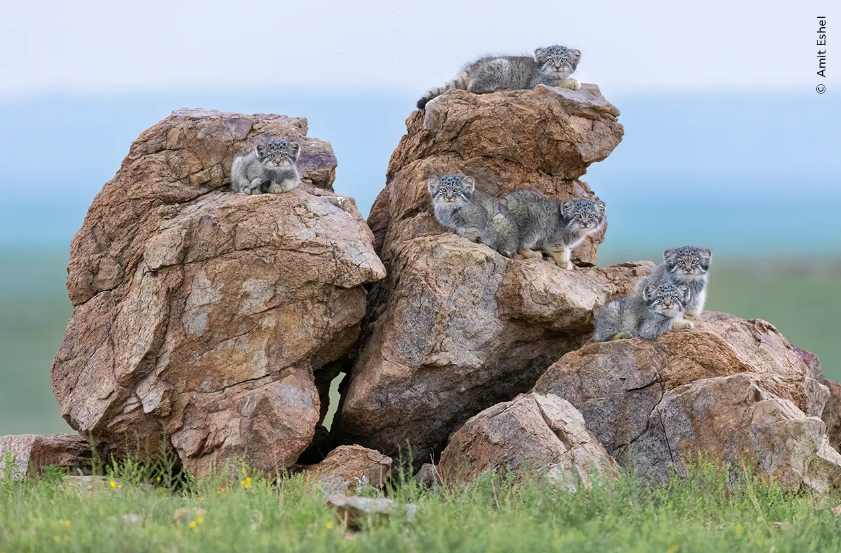
Patience was a theme constant through all categories. For example, Amit Eshel spent a week in hiding to capture his clowder of Pallas cats. These acts of endurance feel almost monastic. The care and waiting behind each image echo what life in the real-world strips us of; slowing down enough to really see and feel.
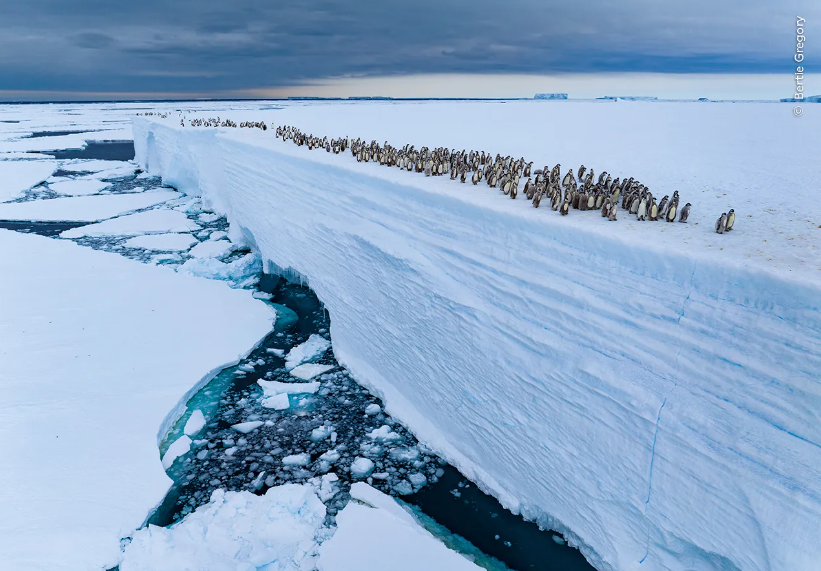
Fragility and the threatening effects of climate change thread through each room. Lubin Godin’s egret stands stoic but frightened amid degraded wetlands; Bertie Gregory’s penguins are pushed to breed on ice shelves and launch themselves into water below; Neo Koslowski’s tundra lark, the only one to live in such extremes, can face nature, but not man. These images are free from of theory and statistics, but strike a chord much deeper, forcing us to empathise with the suffering and resilience of a world reshaped by our own kind.
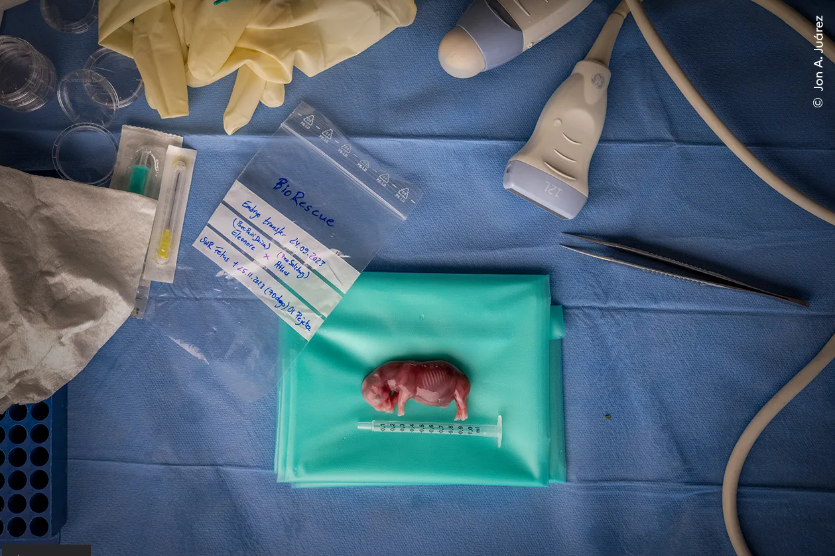
At the end of my journey through the exhibition was the photojournalism category; a harrowing dedication to the torture inflicted upon the animal kingdom, driving comparison by replacing wonder with urgency. The winner, Jon A. Juarez, photographed the glossy rhino embryo preserved in a sterile lab and glowing under clinical lamps – a symbol of what must be done to undo what’s been done. Award-winning photographer, Jennifer Hayes’ words come to mind ‘storytelling through compelling images can penetrate our cloud of indifference – they educate, shock, compel, illuminate, but most of all connect us.’
You’ll leave the Wildlife Photographer of the Year exhibition seeing differently. Like the photographers who captured wonder in the overlooked, you’ll find yourself noticing details you’d usually pass by. Let these photographs pull you in; let them ‘educate, shock, and connect you,’ as Jennifer Hayes said - ‘penetrate our cloud of indifference,’ and, perhaps, awaken something tender and hopeful within you.
The exhibition runs until 26th April 2026.
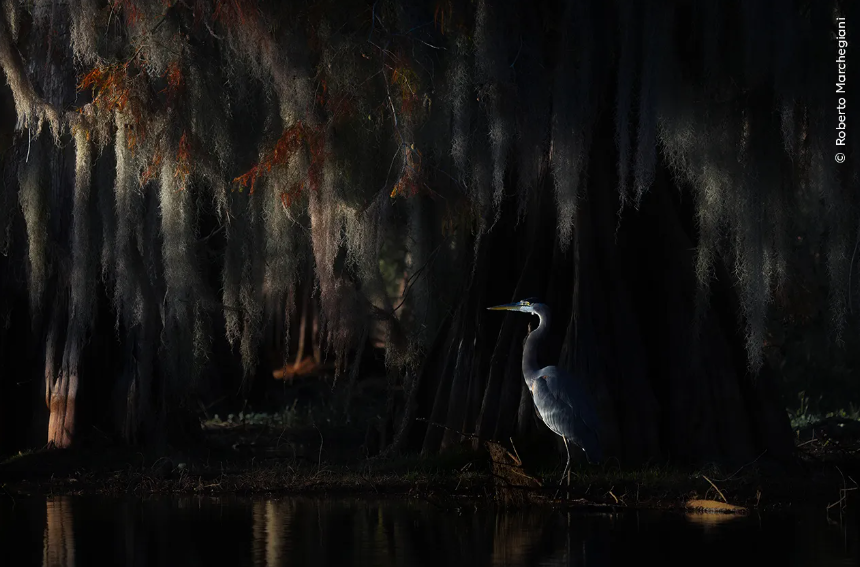
Featured image: Roberto Marchegiani
Will you visit the exhibition?