By Lily Grace Oliver, Third Year Film and Television
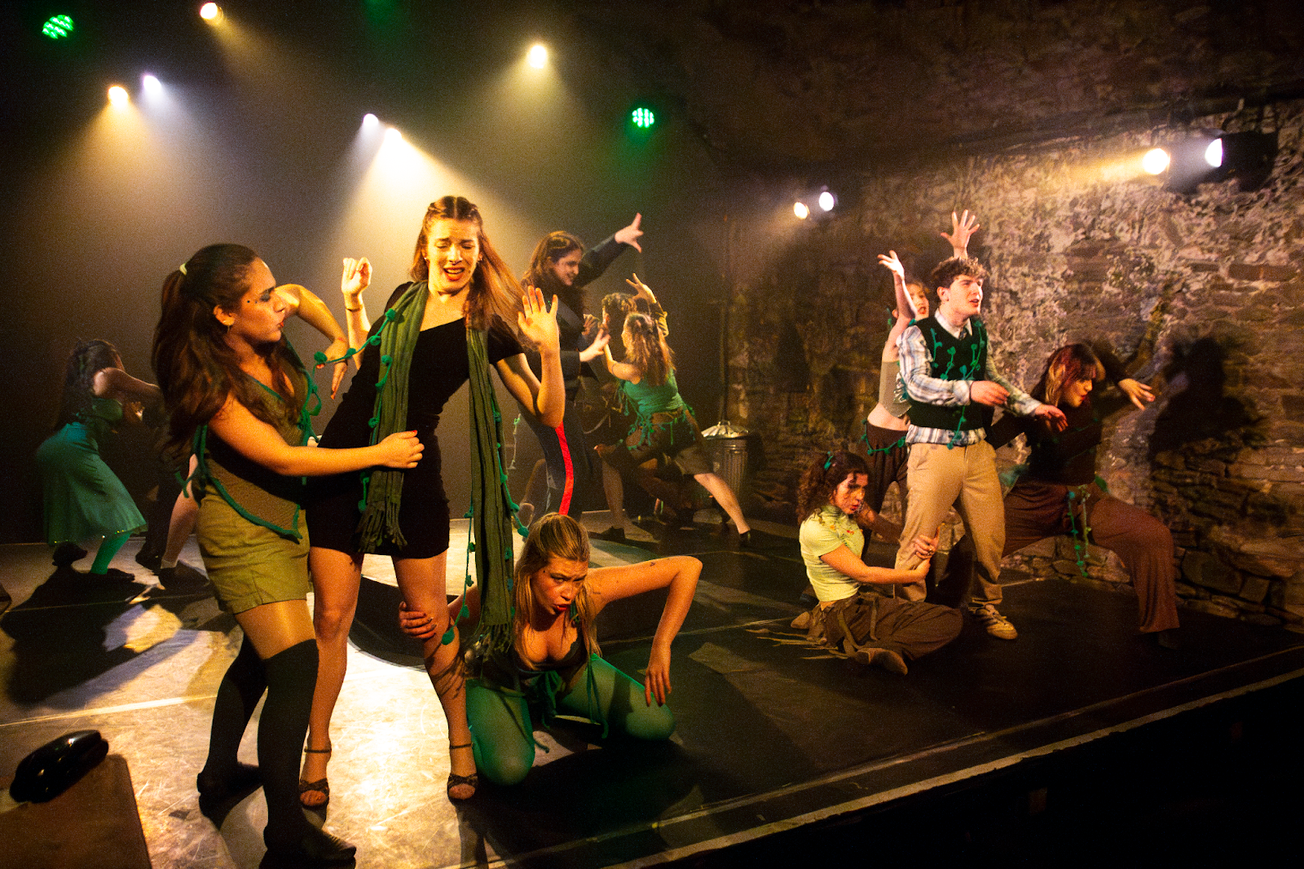
The Welkin, originally written by Lucy Kirkwood, premiered at The Loco Klub as one of the many shows staged by the University of Bristol's DramSoc. Co-directed by Connie Weston and Amelie Breach, as well as a primarily female-led production team, the play is a challenging historical drama that often veers into dark comedy. Despite its anachronistic elements, this is no Bridgerton.
Lucy Kirkwood, the play’s author, spent time collaborating with Clean Break, which is a company that works with female prisoners to tell their stories through theatre. This experience deeply lends itself to the nuanced portrayal of women throughout, as it is felt through the play’s interrogation of justice, autonomy, and institutionalised misogyny. The play is centred in a rural town in Suffolk in 1759, where twelve women must decide the fate of accused murderer Sally Poppy (Véia Zanelli), led by midwife Elizabeth Luke (Florence Green). If she is pregnant, she will be transported to America; if she is guilty, she will be hanged. In our contemporary political climate, where women’s autonomy is again under legislative scrutiny in the post #MeToo era, The Welkin feels as uncomfortably relevant as ever.
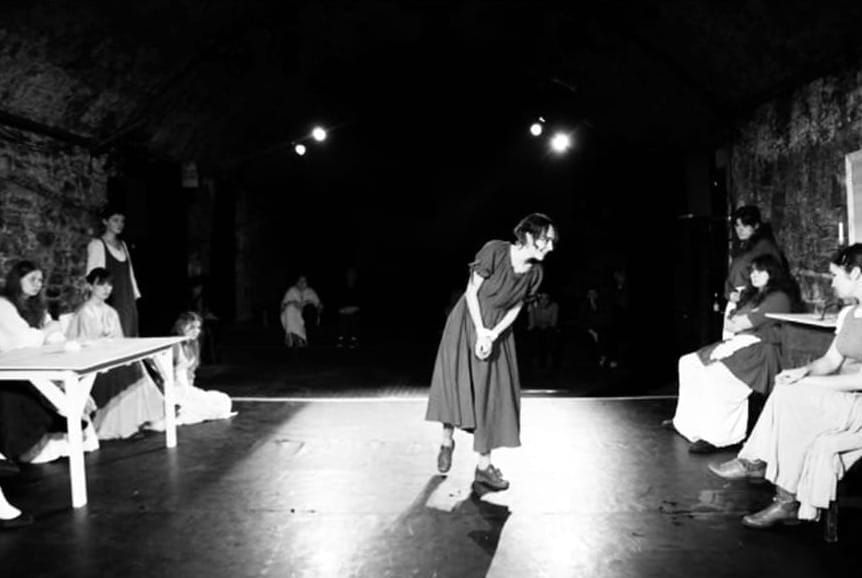
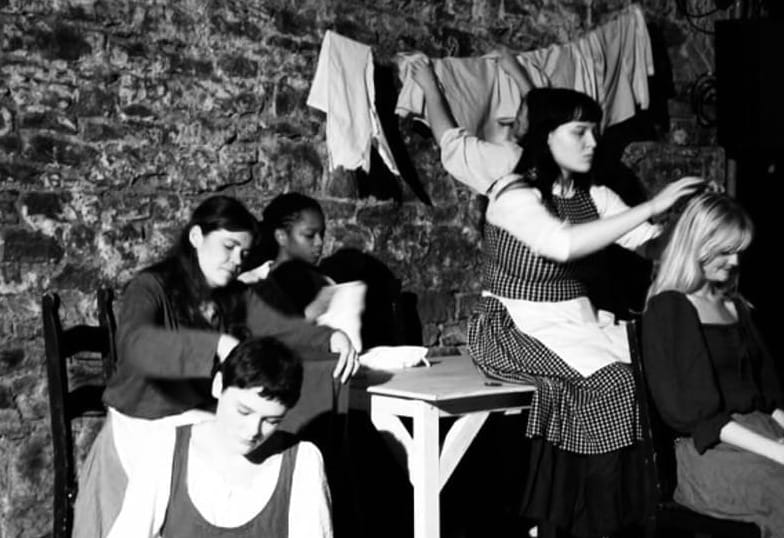
The play begins with the women engaged in their monotonous domestic duties. We see them talk to one another as they perform their tasks, play hand games, and chatter about their day. These moments set up intimacy and rhythm amongst the women at the beginning of the play. The set is minimal with the traverse staging creating a courtroom effect where the audience are silent witnesses. Midwife Elizabeth Luke is called to stand trial as part of the twelve-woman jury. Florence Green is commanding as the central protagonist, Elizabeth, yet allows herself to be vulnerable, passionate, and empathetic to Sally and the other women. We feel her bubbling frustration and exhaustion at the system around her, and despite her gravitas of experience and nurturing quality towards the women, she is undermined in the play and chastised. She is a modern woman’s voice in a misogynistic, brutal world. In a play of moral greyness, Green’s performance frames Lizzy as a martyr. The audience naturally roots for her to set the situation straight. Out of all the characters, she has the biggest heart, which I can tell comes straight from the performer's own soul and passion for the project.
As Sally Poppy, Véia Zanelli moves like a small, fragile bird around the stage, with eyes that size up the room and glitter like knives. Even from her first scene, where she appears on stage in a blood-soaked gown after the murder, she is exciting to watch. She is violent, crass, and provocative in how she presents herself amongst the women–yet crumples by the play’s shocking end into a girl you pity. She is unhappily married, living in her fantasy of running away with a demonic figure. Zanelli invests the role with a formidable grit, perfectly capturing Sally's refreshing indifference to being liked by the other women or how she is perceived.
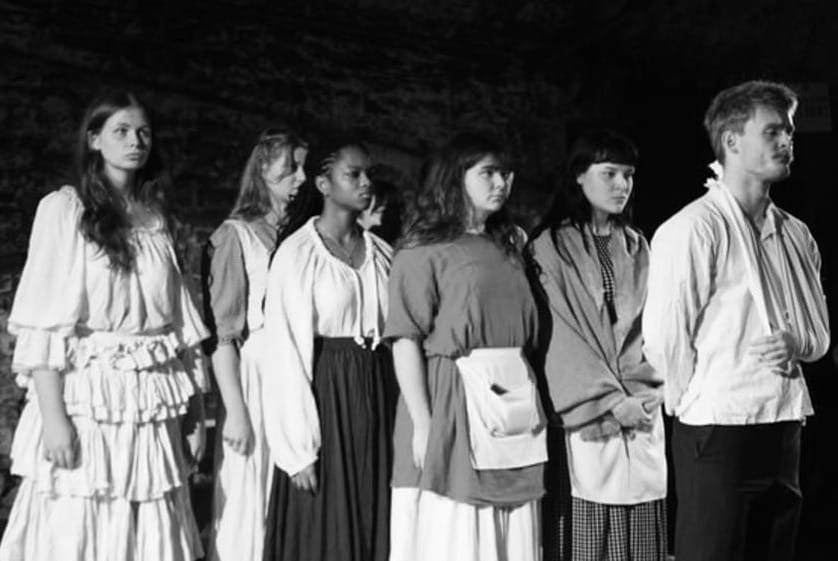
Much like in the classic Hollywood film 12 Angry Men (1954), the women on the jury range from different socioeconomic classes and age ranges. Each woman has a distinctive personality, and each actor brings their own unique flavour to the courtroom as members of an ensemble. Kathleen Keaney shines as Judith Brewer–the foul-mouthed and perpetually boiling-hot matron–earning a lot of laughs in the audience. Mia Rowe shines as bubbly, Irish Kitty Givens, Claudia Osborne as giggling Hannah Rusted, and Tilly Wade as the genuinely heart-breaking Helen Ludlow. A special mention must go to Jude Burrows for his performance as the restrained Mr Coombes, tasked with sitting in a corner with a broken arm and standing guard over the women–enduring a particularly hilarious segment about a missing testicle. He understands the quiet power of his stillness and does not lean towards a male caricature, showing a remarkable shift from trustworthy softness in his interactions with Elizabeth to eventual brutal chauvinistic violence.
DramSoc is a society that is oversubscribed by female performers. The presence of female-centred productions feels less like a creative choice than a practical necessity. There will often be triple the number of female performers fiercely competing for one single role. The Welkin sits squarely within this climate, allowing female performers to shine in a truly feminist and oftentimes challenging play. Its depiction of women operating in a pressure-filled environment—where tension is often more enduring—feels strikingly familiar. Even the play’s deliberate sidelining of its male characters feels powerful within the context of DramSoc.
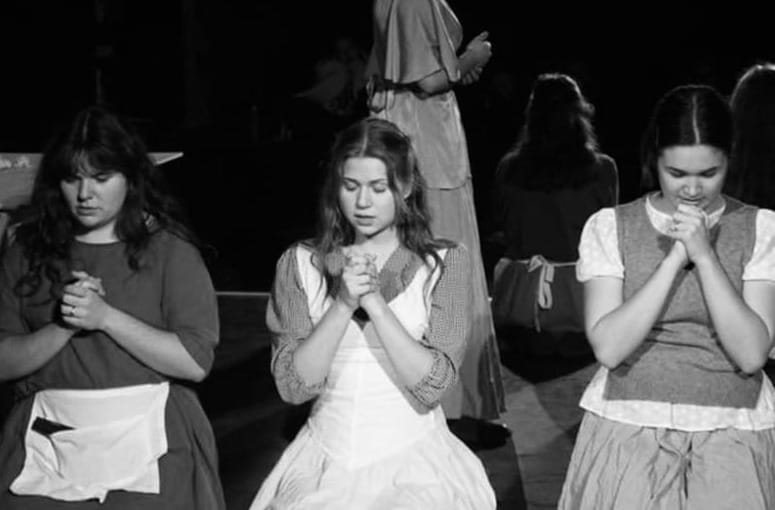
The play is full of clinical references about menstruation, genitalia, breast milk, pregnancy, and sex throughout. The audience responded enthusiastically to the humour throughout the play. The women's gossip is vulgar, and breaks conventions of femininity, particularly of women of that period. Amongst the sprinkling of anachronisms–such as a folk-inspired rendition of a Simon and Garfunkel track that plays in one of the scenes–we are reminded of the play’s setting throughout, with references to everyday village life and French colonialism. Oftentimes, the accents were slightly confusing and varied in skill, falling vaguely between stock 'working-class Londoner,' northern, and 'ye olde villager.' The script gestures toward rural specificity, yet the accents rarely map cleanly onto any identifiable region despite its setting of rural Suffolk. This undermines the piece’s sense of place and makes the 'rural community' feel more conceptual than lived in. However, with such a short turnaround of a couple of months of a standard student production, this is to be expected.
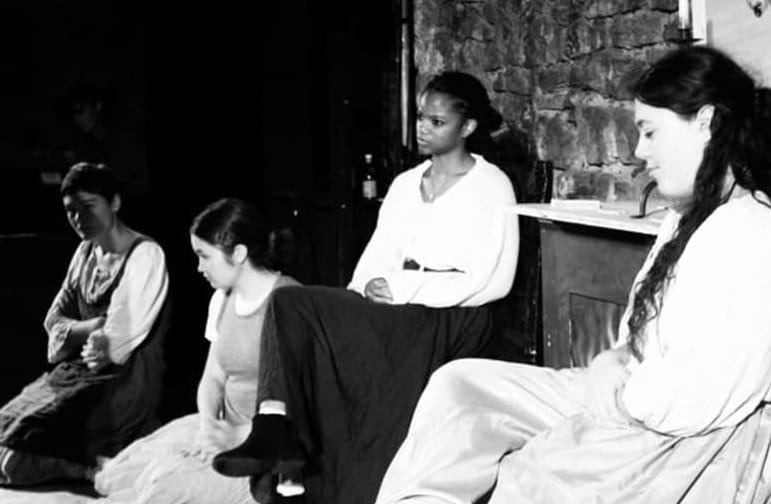
In the second act, there are more plot twists than a EastEnders episode. In an already convoluted plot full of a range of intersecting characters, this can become slightly outlandish at times in its appetite for dramatic reveals. In a standout performance, Aminah Jimoh absolutely shines in the role of Sarah Hollis. Tasked with the difficult job of spending the entire first half of the play in complete silence, she manages to spellbind us with her emotionally complex portrayal, as well as stillness and grace amongst the women before that moment. She delivers a wonderful, enticing monologue about the devil and childbirth. The true crime in that courtroom was not giving her more lines!
 Amelie Patel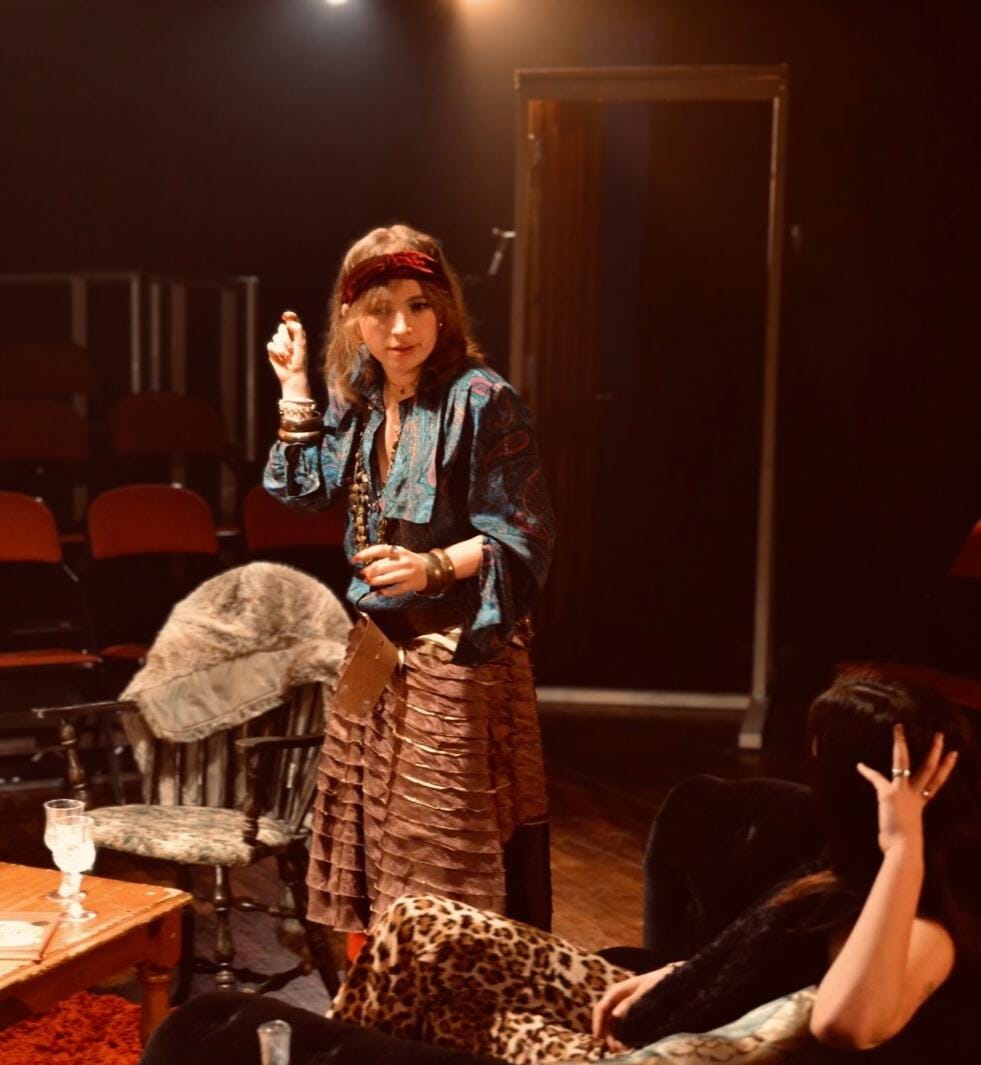
The Welkin is not an easy play to stage, and overall, the play is heart-breaking, funny, interesting, and cruel. By the last moments, we are reminded that justice, when filtered through prejudice and power, is far messier than the clean beheading it pretends to offer its criminal.
Feature Image: DramSoc / Emma Conway
What show will DramSoc stage next?