By Daisy Guilor, Third Year, Business and Management with Innovation
For many women, a trip to the doctor follows a familiar script. You explain the problem: migraines, cramps, fatigue, etc and almost reflexively, the solution appears… the contraceptive pill. Headache? The pill. Acne? The pill. Something we can’t quite explain? The pill. Edie Doherty’s new play, In Hysterics centres that well-worn experience in a sharp and ironic piece of theatre.
Staged at The Wardrobe Theatre and performed by a student-founded group, Late Shift Theatre, the play follows two women seeking treatment for their migraines one hundred years apart. At first the contrast feels obvious but by the end it’s difficult to tell the difference, leaving the audience with the troubling question: how far has women’s healthcare actually come?
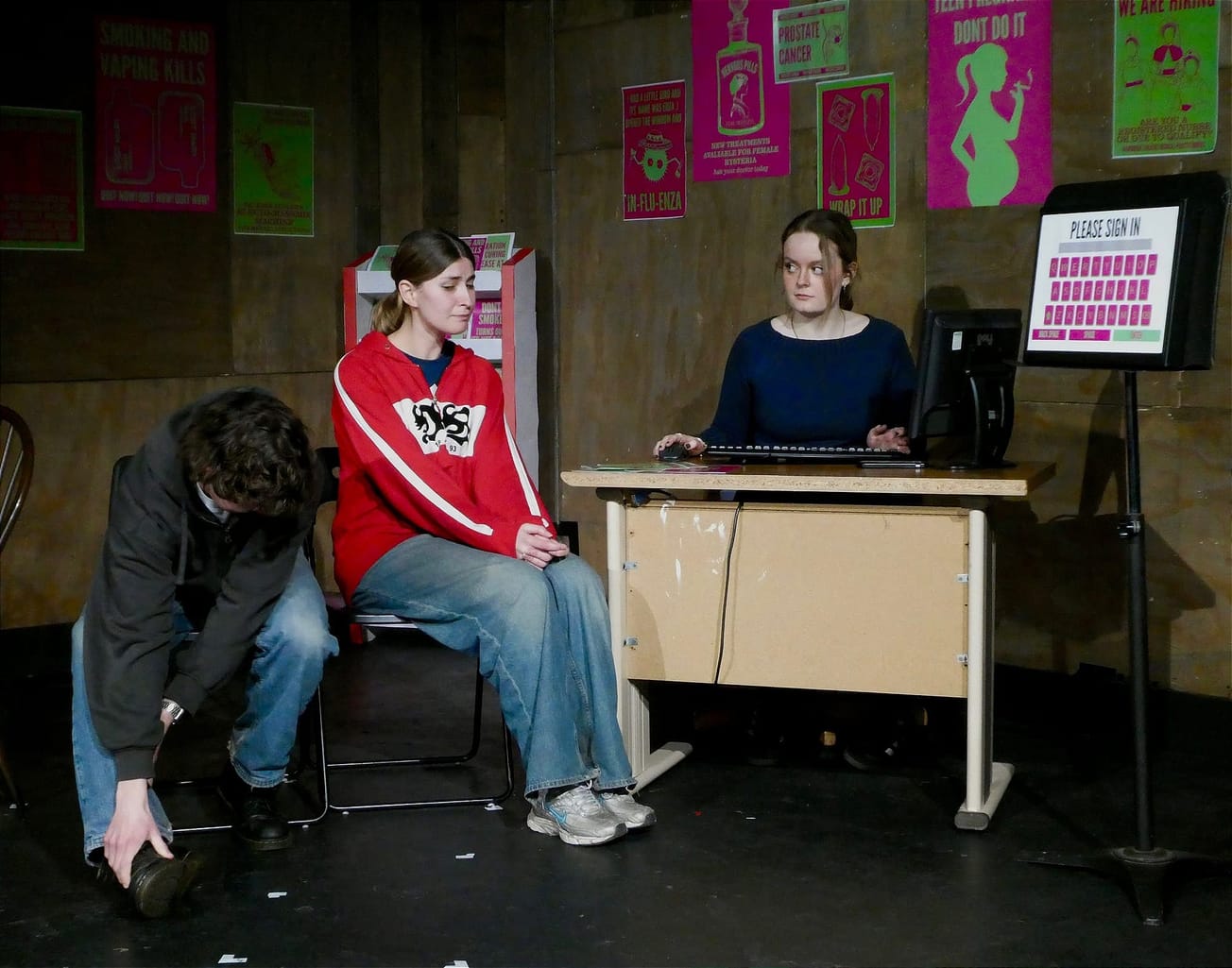
The 2026 storyline revolves around Millie, played by Bethany Griffiths, a student trying to get help for terrible headaches. Bethany captures the slow erosion of Millie’s patience in her demeanour. She begins the play upbeat and quick-witted, drawing comedic value from the awkwardness in a surgery waiting room and the interaction with a fellow student; however, as every appointment circles back to the same unhelpful conclusion, her confidence gives way to frustration. The audience is entirely behind her when she finally asks the question hanging over the entire play: ‘what would you do if I was a man?’
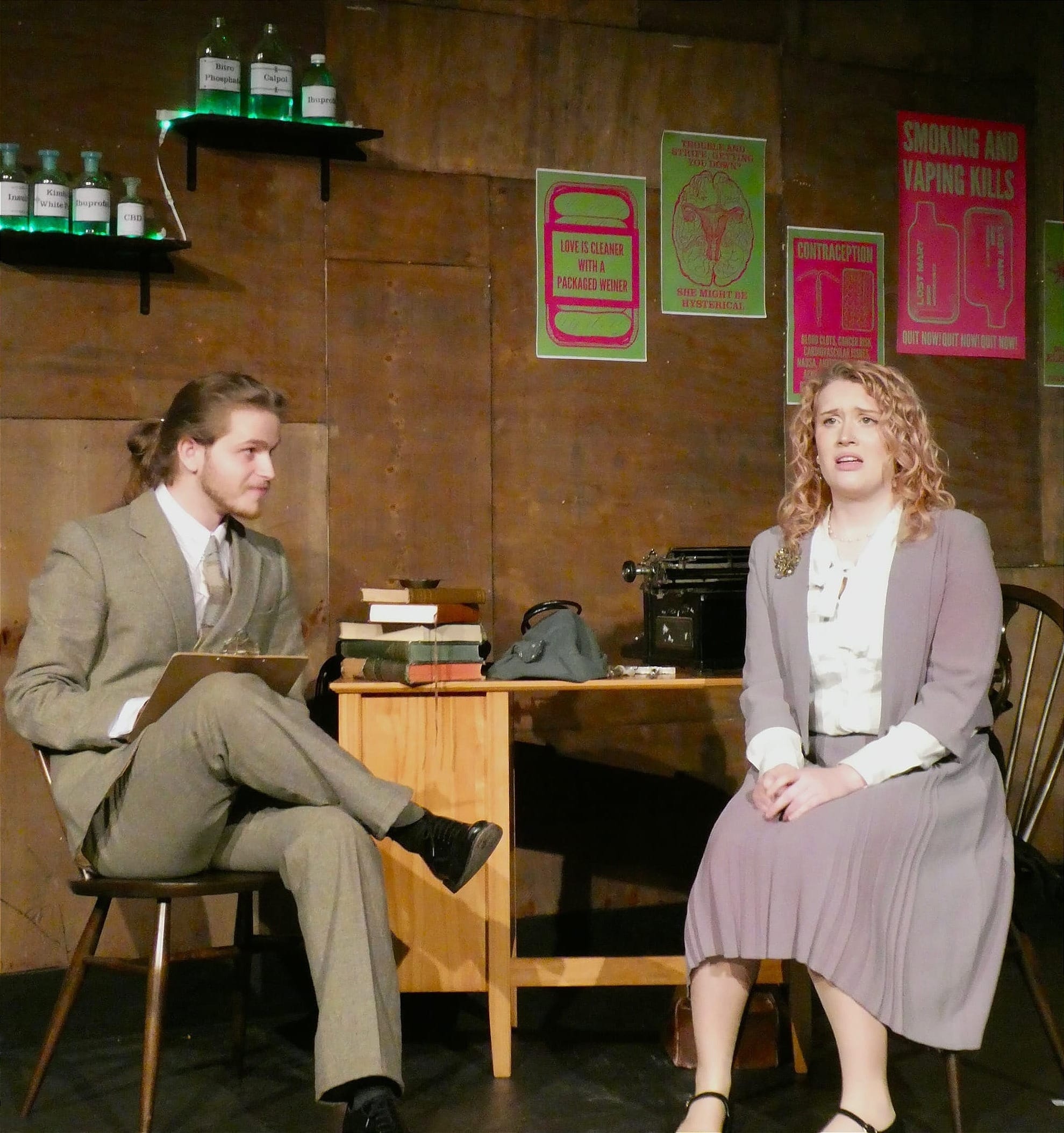
Running alongside Millie’s story is Margot’s in the 1920s, played with impressive physical detail by Li Friess. Her doctor, portrayed with booming confidence by Ruairi Tilley, explains her distress through the era’s favourite diagnosis: hysteria. The sketches initially feel ridiculous, filled with awkward euphemisms about ‘relations’ and sweeping declarations about female emotion and looking for attention.
But the distance between then and now quickly shrinks.
The doctors themselves feel recognisable rather than exaggerated. Flo Green's performance as Dr Wright offers sympathetic smiles which quickly slip into condescension, while Toby Bateman’s portrayal of Dr Richardson initially appears more thoughtful, raising hopes that Millie might finally be heard; that is until he arrives at the same prescription: the pill.
Seating in The Wardrobe Theatre wraps around the stage, and lighting spills into the front rows, drawing the audience into the waiting room with the actors. The production moves briskly between the two timelines on a split stage, the set mirrored almost exactly on either side: same desk, chairs and setup, only a computer where the typewriter once sat. What begins as a neat visual device gradually feels more pointed and the similarities feel like a warning.
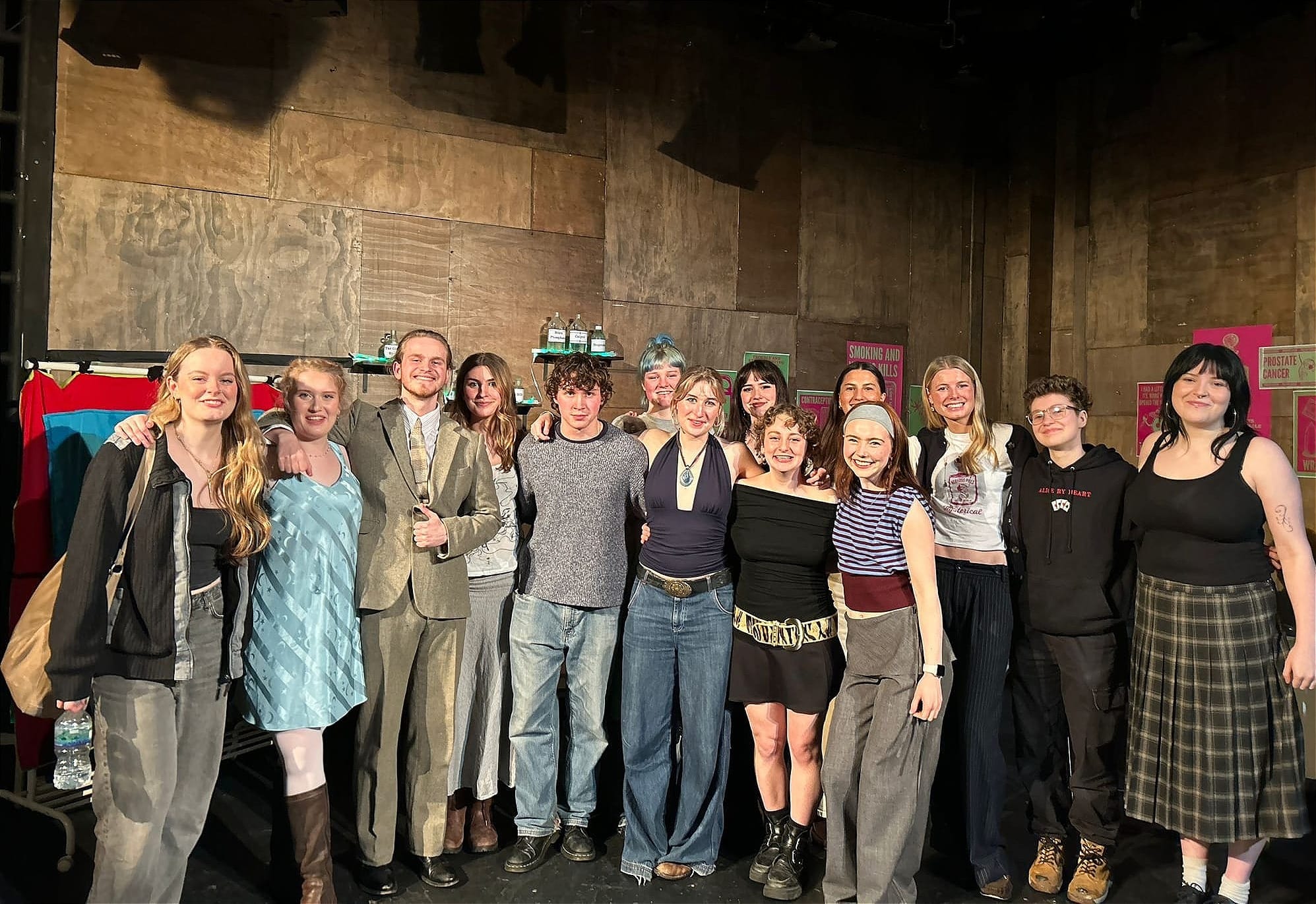
One of the play’s most ingenious devices is the gradual alignment of the two stories. Millie and Margot are brought on stage together for the first time during Ruairi’s confident lecture on the history of hysteria while Millie consults the veritable buffet of side effects on her Yasmin box: a poignant parallel.
There are lighter moments along the way. A standout scene on a bus seats a silent nun (played by Celia Kelly) beside Millie as she is forced to answer intrusive NHS screening questions over the phone in public. The nun becomes a human manifestation of the innate public judgement of young women, looming over the conversation while Millie attempts to explain her symptoms. Celia never speaks a word, but her perfectly timed expressions turn the scene into a sharp and relatable piece of humour pointed at the realities of the NHS telephone consultation system.
 Matilda Collard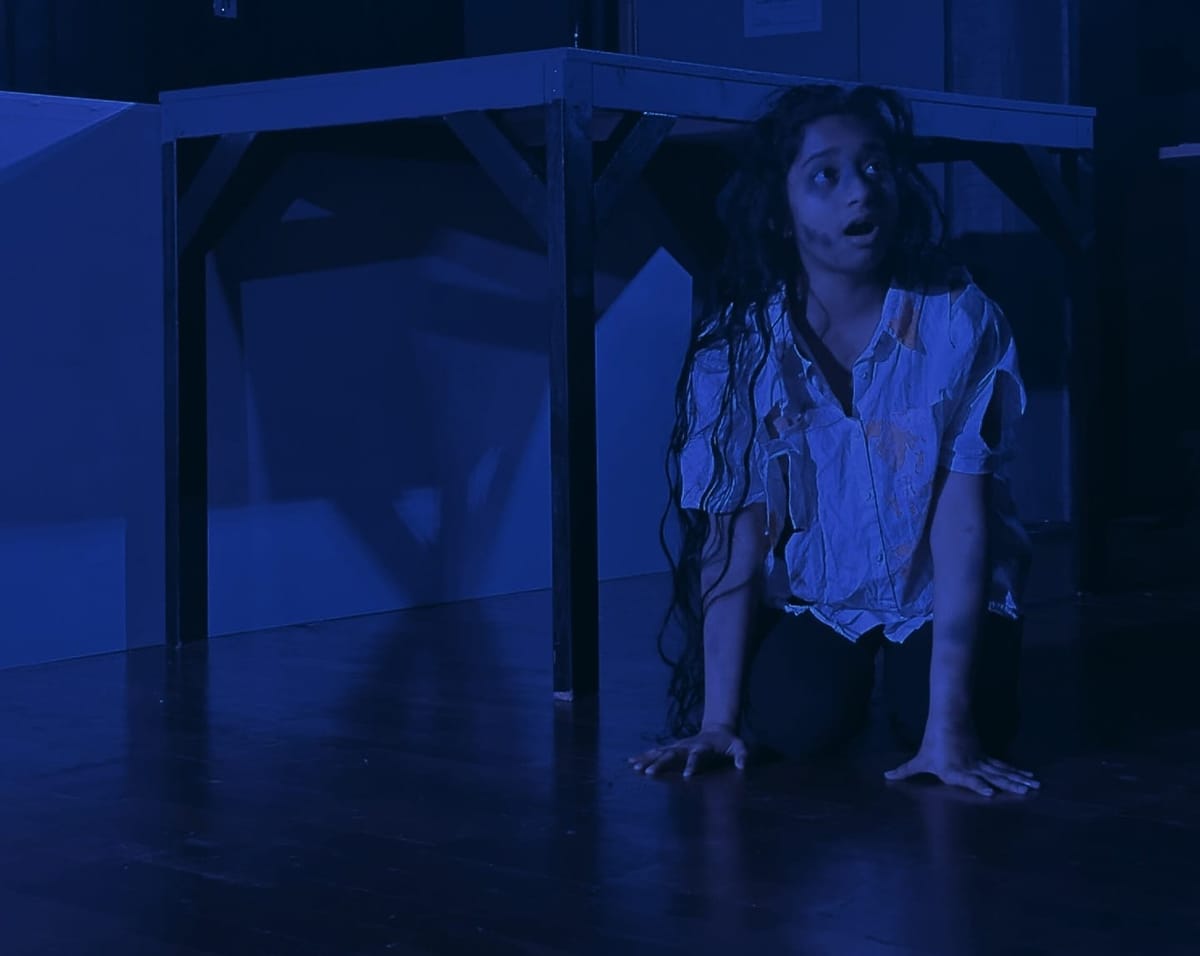
 Josie Horneff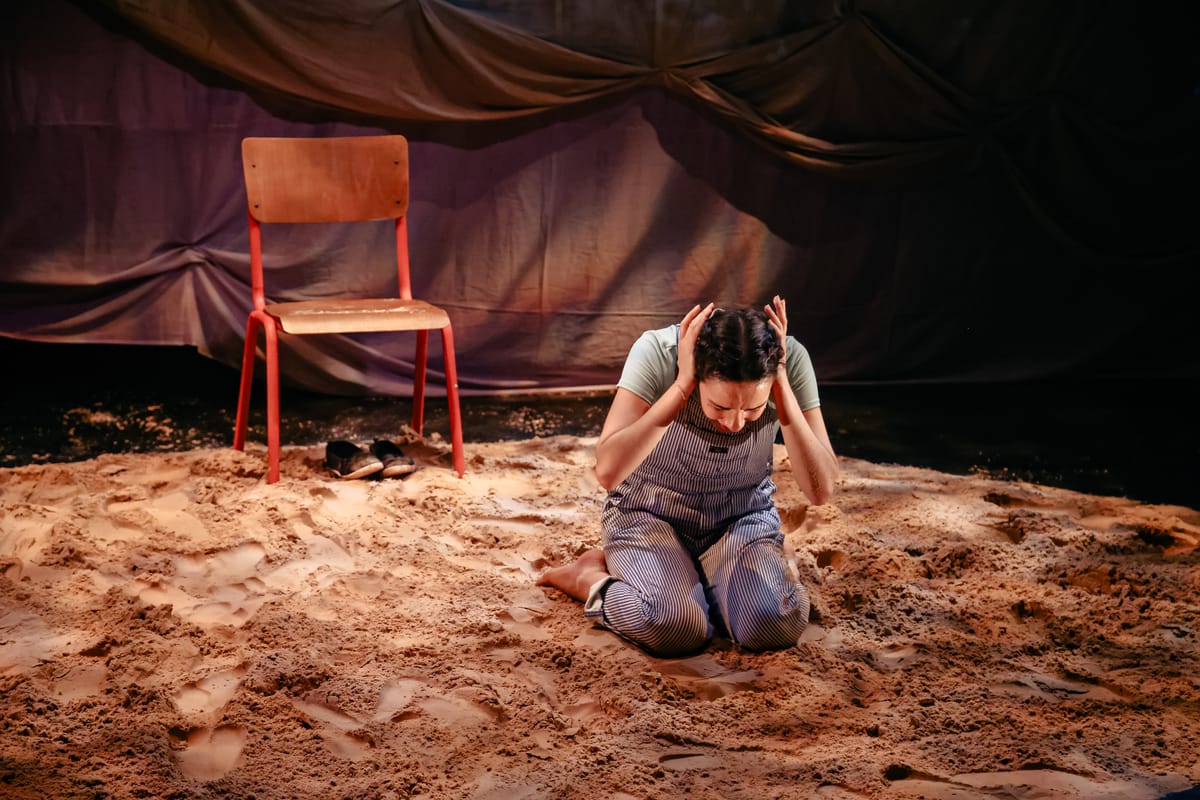
By the final scene, the timelines have completely collapsed into one another. Margot and Millie sit in simultaneous appointments, the dialogue gradually aligning until both doctors deliver identical lines. The audience erupts when both women finally lose patience and slap their doctors in unison. It’s a cathartic conclusion, even if it changes nothing. Neither migraine is solved and neither woman receives a real diagnosis.
Watching the two stories slowly merge is both exposing and unsettling. A century may separate Margot and Millie, but the conversation in the doctor’s office sounds alarmingly similar. The word hysteria may have disappeared from medical notes, but the instinct behind it hasn’t disappeared quite so quickly.
Featured image: Late Shift Theatre / Rosy Brown
Have you watched a Late Shift Theatre performance?