The traditional images of the circus that populate our imaginations are filled with bright, garish colours, exaggerated costumes, unbelievable bodies in motion, and animals leaping through rings of fire. It is a world of spectacle and excess, a stage for those positioned outside the boundaries of conventional society; a space where ‘misfits’ and ‘outsiders’ could fit in through their performance of difference within the circular confines of the tented walls.
Armour, created by Gilles Polet and Arno Ferrera, did not match this presupposed image of the circus I held. Although the audience encircled the performers in traditional circus fashion, and the performers were extraordinary in their strength and movement, the work initially appeared more like a performative art piece.
'From the outset this is an intimate affair'
The audience is guided into a room with cushions on the ground and benches behind them, all laid out to surround a padded arena in the middle of the floor where it seems the production will take place. From the outset this is an intimate affair.
'there was an immediate celebration of the male form in all its athleticism'
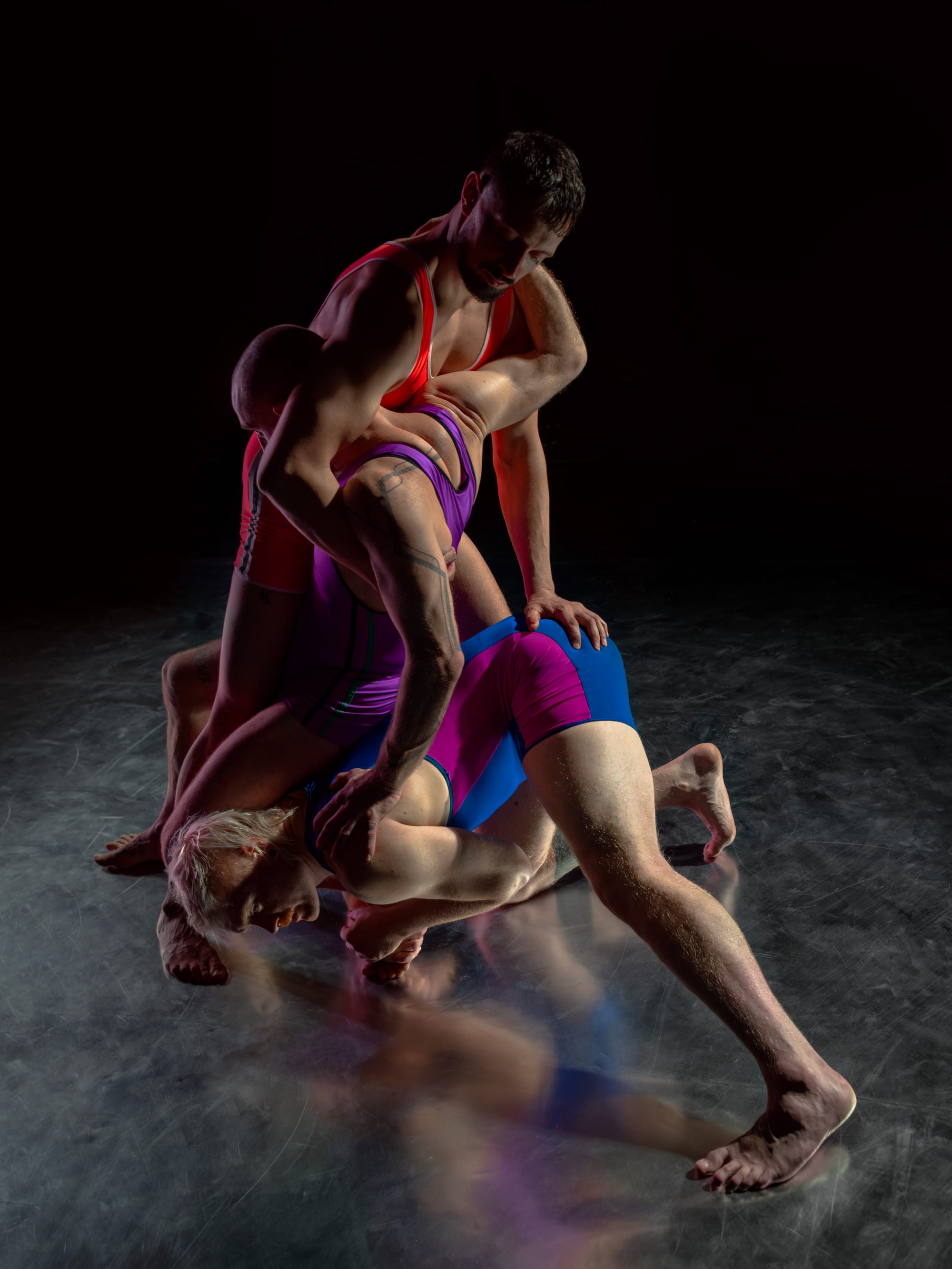
Once settled, the room is cast into darkness. Cries of distress echo through the space from the speakers above, followed by the clatter of chains, perhaps armour, rattling in the dark. A heavy thud. Our first acrobat makes his entrance, hurling himself into the centre of the circle. The audience, seated at floor level, feels the performance before seeing it, the weight of this unknown body reverberating through the ground. When the lights flicker on, we are met with a man in a minimalist lycra leotard, his physique illuminated in sharp relief. The programme described the piece as drawing on the “choreography of wrestlers and gladiators,” and indeed, there was an immediate celebration of the male form in all its athleticism.
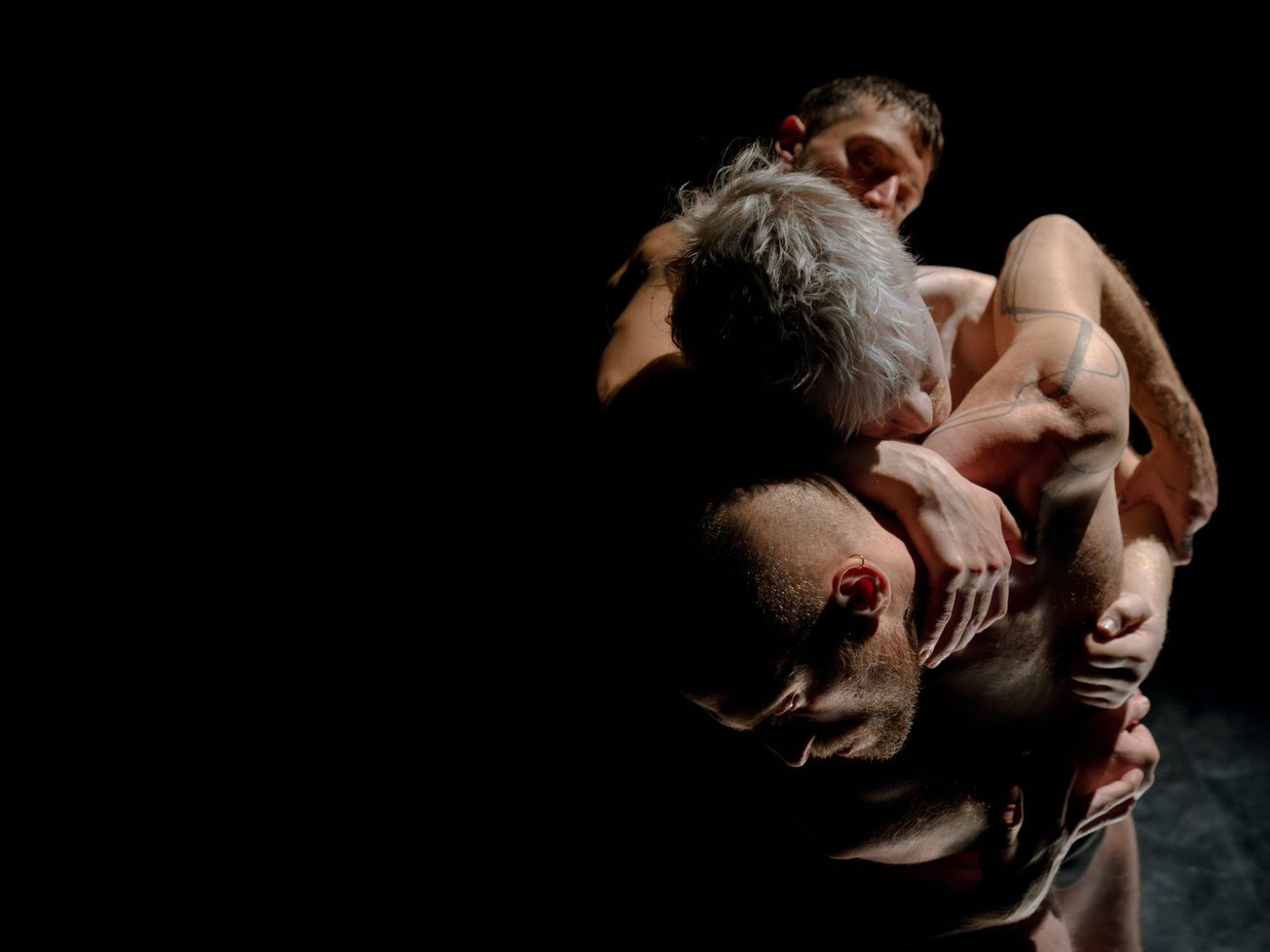
The entry of a second man throws the scene into a calculated wrestling match, defining itself clearly as a rehearsed routine rather than a raw contest of strength. Amid exhaustion, the two men’s movements soften; they embrace, faces nuzzling as they breathe each other in. When the third and final actor appears, the next hour becomes an exploration of the trio’s physical dynamism, moving among each other in support, or eventually as a singular, morphed organism.
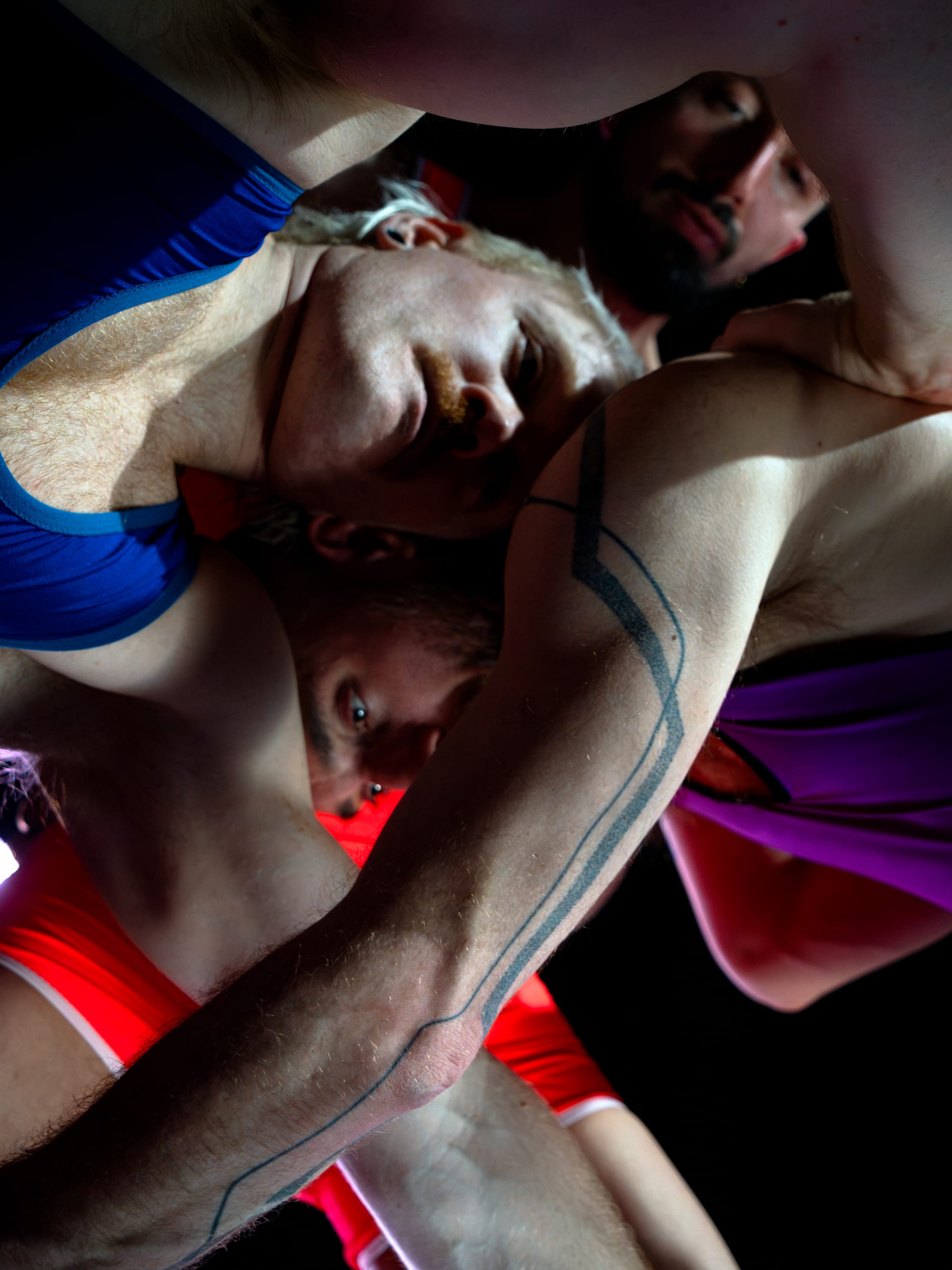
'Reactions shifted from laughter to uneasy silence as the men farted in turn, spoke into each other’s groins, and danced in a circle while holding one another's weight by their genitals'
The experience was at once uncomfortable and engrossing. Around me, reactions shifted from laughter to uneasy silence as the men farted in turn, spoke into each other’s groins, and danced in a circle while holding one another's weight by their genitals. These absurd gestures interrupted moments of startling sincerity with tender embraces and quiet stillness that made the audience feel almost voyeuristic, as though intruding on the most private of moments. I found myself uncertain: was this funny, erotic, or confrontational?
 Kashvi Cox
That confusion, I realised, was perhaps Armour’s most ‘circus-like’ quality. While there was no ‘misfit’ performer as in the traditional circus, the work itself felt like a misfit; something that resisted clear categorisation. It was unpredictable, oscillating between earnestness and parody, vulnerability and ridiculousness. By the end, I understood that Armour embodies the circus in its truest form: a space for the unexpected. And this performance was certainly not what I expected.
Armour has one more performance tonight (10th October 2025) and Bristol Circus City has events for the next few weeks, so get your tickets now!
Featured Image: Florian Hetz
Would you go to a circus performance?