

Welcome to Poker for Dummies
House rules:
a) No original thought or criticism of the text allowed.
b) DO NOT skip steps. Follow each one precisely, and to the letter.
c) Results may vary. We do not take responsibility for any insults or injuries that may follow.
Pick your friends wisely. Seize your opportunities. Say the right things.
Never show your hand.
Rule one: Know your hand
In order to win the game, you first need to take stock of what you have.
Some of us come to university with a full house: Connections. Confidence. Charisma. Cash. Others are not so lucky. Fair? Nothing is fair. Do not waste time thinking about fairness. Your starting hand is your responsibility; fair or not.
The trick is to identify your advantages early. Know what you have, and what you can offer.
Not starting with much? Let me introduce you to the art of ‘the bluff’. You might have the shittiest pair of cards, but it does not have to appear as such. So, smile, shuffle them around a little, and fake it till you make it.

Rule two: Build your network
Make friends. Make Connections. Make contacts. Ideally, all three at once. The best card players know how to build trust – it makes it easier to win.
University is the best place for networking. Take advantage of societies and events. Talk to people you would never normally talk to. Find out what they study, where they work. And, most importantly, if they would be useful.
Of course, friendship is important. Humans need community. Or they used to. In a world of likes, reposts, internships and opportunities – only the foolish try to make friends. Yes…cry together in the club bathroom, complain about your humiliationship, joke about your lecturer. But don’t forget it’s all a ruse. A game. Every relationship is an opportunity. The person sitting next to you could turn out to be your future colleague or boss.
So be friendly, memorable and accommodating.

Always smile. Never be inconveniencing. Vulnerability is for losers. And we don’t want to lose, do we?
Whatever you do, don’t call it networking. Nobody likes a networker. Remember: you are offering friendship, community…and another connection on LinkedIn.
Rule three: Never show your hand
Never endanger your professional image by wasting time being vulnerable. Struggle in private and succeed in public.
If you must fall apart, do so off the clock. Nobody likes a crier. Never be too much. It’s not about being happy, it's about appearing put together enough to be invited back.
Better cry in a BMW, right?
Rule four: Know when to fold
Learn to know your limits. Burnout is easy – the rules are strict, not evil.
Take breaks. Rest. Protect your wellbeing. Post about it online so potential employers can admire your commitment to self-care.
There is always another opportunity to take, another deadline to meet and another person doing more than you. However, even the best players know when to fold.
Just try not to make a habit of it. You wouldn't want anyone thinking you couldn't handle the game.
Rule five: Keep playing…or don’t
Never stop trying to win. Go on, and on and on – until you can’t. The game never really ends, so you have to be in it, to win it.
Oh, did I say win?
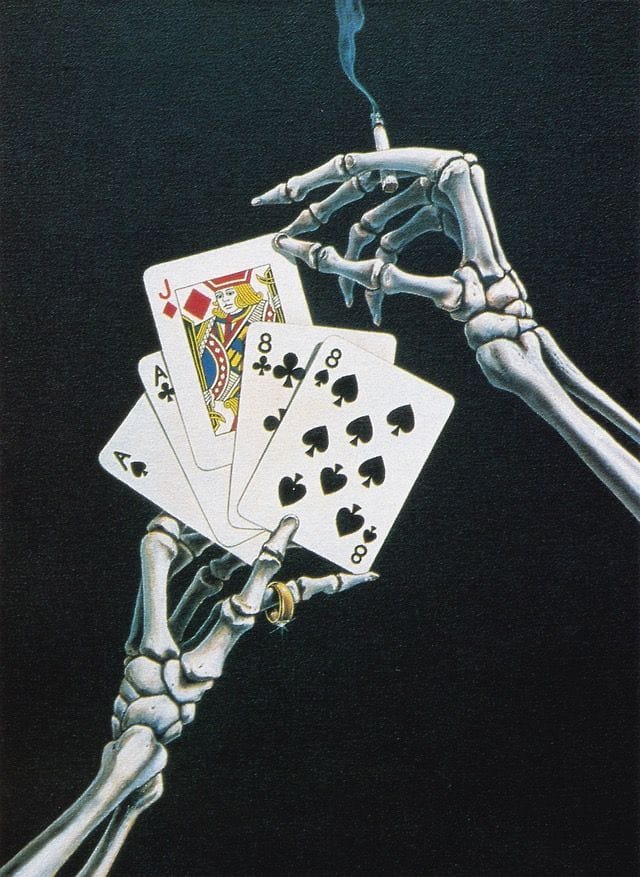
Rule six: No one ever wins this game.
Quit while you are ahead – leave the table, stop comparing hands, no more bluffing or folding. It’s better being a loser than being chained to an unwinnable game.
Your life was never supposed to be a game.