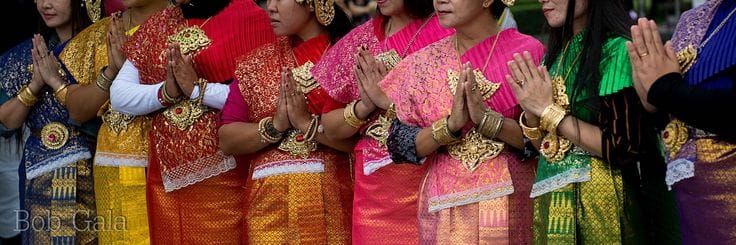
In Thailand, the wai is a greeting that reflects a conscious surrendering of defensiveness, used both for welcoming and for bidding farewell. Unlike a wave, it asks you to disarm yourself. You press your palms together near your chest and tilt your head in a bow, opening your body up to vulnerability and offering trust in return. Hands meeting at the centre and head inclined towards the heart, the wai binds arrival and departure to the same anatomical coordinate. Journeys both begin and end in the physical shape of surrender, anchoring geographical movement to the soft tissues of the body. It acts as an ultimate return to a calm centre, a way of grounding yourself amidst shifting landscapes. It grants us respite not in the places we settle but in the act of simply inhabiting our bodies again. Whilst the world we know fades and familiar streets fall away, our breath and bones become the home that we carry.
The world I knew was durian and rain-warmed asphalt. Gleaming glass atriums fracturing sunlight high above me. A humidity that both stifles and embraces you. Chicken rice and coffee with condensed milk under manicured banyan trees, and knowing the metro stations off by heart. Then it became calligraphy and clothing lines draped between alleyways. ‘Foreigner! Foreigner!’ and photos with strangers in frenetic motion. Learning a language, and losing it. Soy sauce, garlic and simmering broth drifting from plastic tables on the streetside. Four years later, the world I knew turned into sand and the sea. Motorbike rides against an evening heat that softens as daylight dissipates. A social grammar built on kindness. Longtail boats, mango sticky rice and a culture that moves like water.
When you exist in a world you know, you can move through it without hesitation. You can drift through familiarity with fluency, and the spaces you inhabit feel like your own. The environment and those that live in it dissolve seamlessly into song, and your movement within that small geography is effortless, lyrical, and belongs to you. But when we are displaced from what we know, it can feel as though our bodies stand bare and defenseless. As though our hands, empty and untethered, are not adjusted to the foreign climate. We try desperately to understand how a landscape can hold you, only to let you go. Often our instinct is to clutch and to resist, to anchor ourselves to the ground as it gives way beneath us. For me, the scariest thing is this sudden loss of orientation, that fraction of a second where you realise you no longer know which way is home. To let go of the familiar feels like an unravelling, even when leaving is an act of choice. When the rhythms of your movement no longer flow seamlessly through your surroundings, it can feel like you are spiralling out of control. Your body braces against the unexpected, and the shadow of home lingers, like love trying desperately to persevere.
In times of dislocation, culture offers a way to hold the ache. The wai does not treat arrival as a fresh beginning and departure as swift severance. Instead it emphasises circularity, reminding us to approach both the places we leave and the places we walk towards with the same open heart. When we arrive in a place, we are entrusting ourselves to its welcome, and when we leave it we bow to everything it has been. Palms open and honest, the wai encourages you to lower the shields built by a life in motion. It recognises that you will not always approach change wholeheartedly, and it does not ask this of you. Instead, it embodies the strength it takes to part from what is known and gracefully meet the unfamiliar – a way of bearing witness to the pain of impermanence whilst honouring our capacity to care.
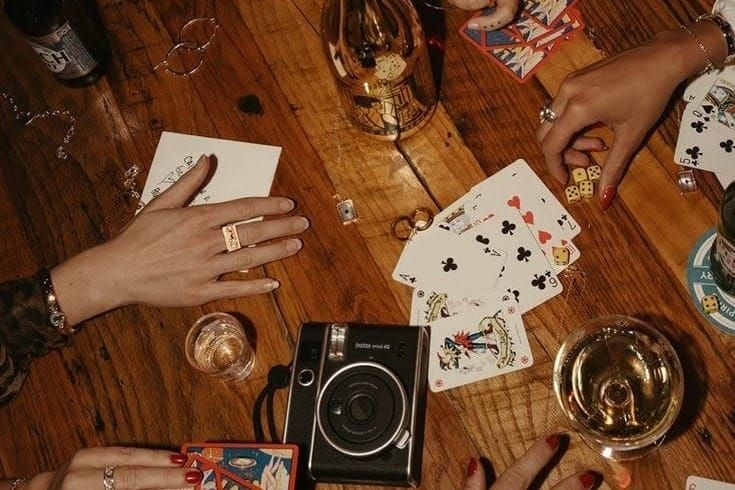
Today, my world is warmth, and Will’s Memorial. Cups of tea on the front steps and late nights that stretch into early mornings. Fry-ups and shared playlists and far too much alcohol. Laughter and lectures. A house on a hill and a city I’ll always come home to, where I can forget my keys and know that someone will be in to open the door. But the hand that welcomes you will eventually be the hand that waves you away. The glasses will be empty, the music will fade and it will be time to move on again. I think I’ve said goodbye to what I know more than most people, but practice has never made leaving any less painful. The philosophy of the wai has changed the way I carry this feeling. As graduation creeps closer, it reminds us to resist tightening our fingers around the present in an attempt to stop it from slipping away. For now, it lets us move through the world without hesitation – our spaces our own and our movements belonging to us. It reminds me how lucky I am to love a place so much that the thought of leaving it feels like a fracture, and I am proud that this is the price and proof of a heart resolved to stay open. It reminds me that someday soon, I’ll bow to the world I know and step into the unknown with acceptance; I will open my palms to the empty air and the end will become the beginning.