By Julia Mullins, Co Editor-in-Chief & Tillia Laing, Fourth Year, Politics and French
Guest lectures provide a valuable insight into academia, where your interests extend beyond your unit options. If you’re lucky you might rediscover a passion for your discipline as it wanes through the term, or at the least a chance to network away your fears of the post-grad job market.
Guest lectures differ between faculties; some departments timetable them weekly with non-mandatory attendance; the School of Arts offer regular research seminars and the School of Sociology, Politics, and International Studies (SPAIS) seem to constantly email us with their extra-curricular offerings.
However, beyond those mailing lists is a more exclusive type of guest lecture. These are the speakers invited to teach lectures within your units – the kind where your lecturer gets to sit down and let someone else teach for a change.
The highlight of our final year Politics education, and the inspiration for this article, has been the unit How to Win a Political Argument. Our condolences to anyone who failed to choose this unit when they had the chance. The syllabus was created by SPAIS lecturer Dr Jonathan Floyd, who has now been teaching it for the past eight years.
How to Win a Political Argument is grounded in theoretical knowledge but directed by applications to current political landscapes. This year, the unit hosted two guest speakers that were funded by SPAIS through their ‘teaching enhancement fund’ to reimburse the speakers' travel expenses.
The unit has also had a notable list of past guest speakers: Chief Speechwriter for Labour Leader Ed Miliband, Marc Stears; Bristol's Mayor at the time, Marvin Rees; and Stephen Hammond while he was MP for Wimbledon.
Guest speakers provide real world experiences which tie directly into the course syllabus and subsequent summative assessment. This year was particularly special as Dr Floyd was able to invite back his own previous students.
The first speaker to visit us was Ifrah Farooq, currently a Senior Visits and Protocol Manager in the Cabinet Office having graduated from Bristol in 2021. A large responsibility of her role is planning how speaking engagements and public visits are framed visually, which tied into the week's topic on visual communication in political arguments. Ifrah explained her role briefing the Senior Cabinet Minister on visits, both domestic and abroad, and liaising with protocol teams for other heads of state. In the following seminars we were then able to dissect the success (or failure) of decisions like these.
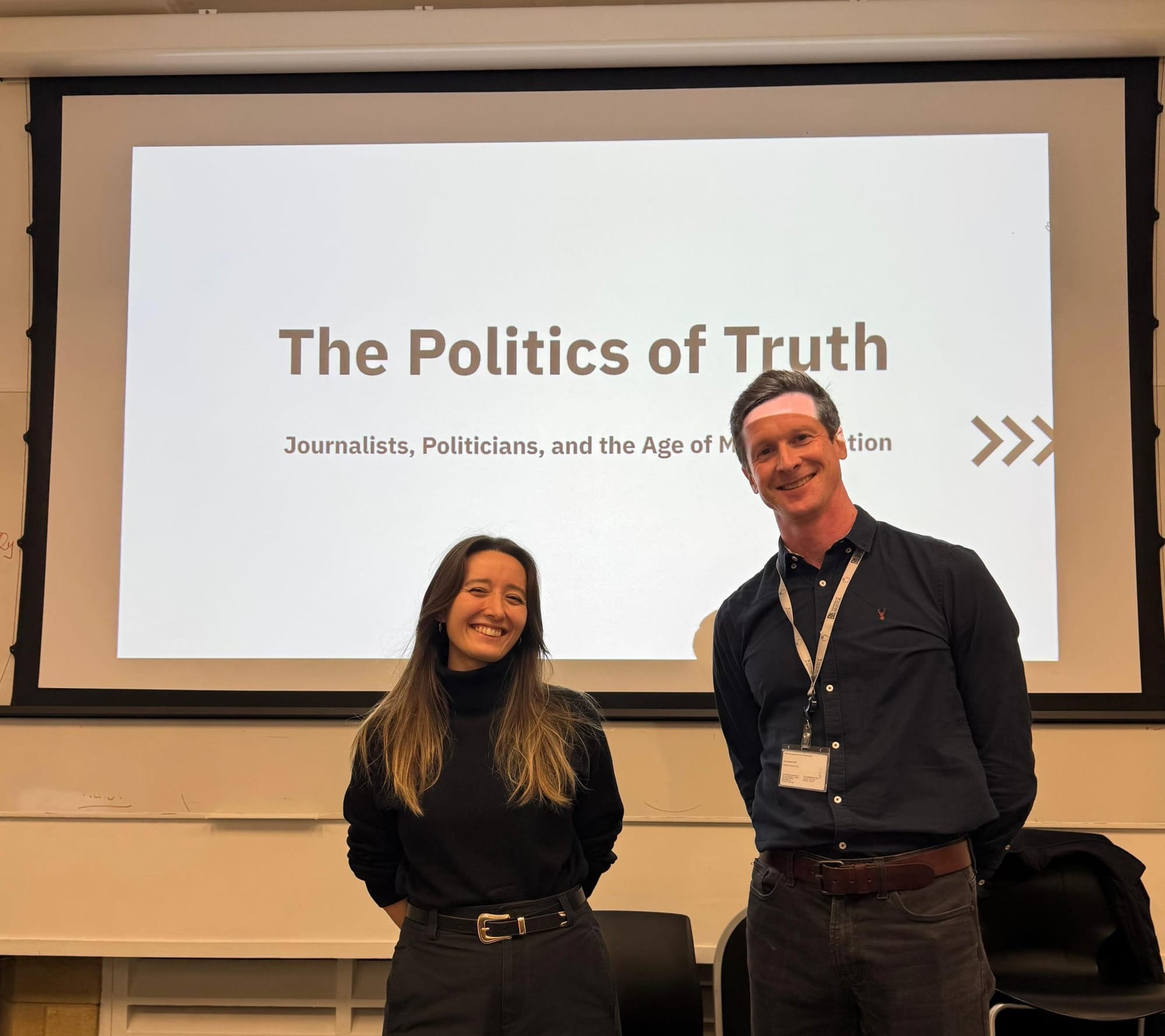
Our second speaker was Adele-Momoko Fraser, a Foreign News Editor and Field Producer at Sky News. Her work has taken her to the US to cover the 2024 Presidential Election, and across conflict zones in the Middle East. Most prestigious of her career credentials is of course her time here at Epigram in 2017 as Online Features Editor, even interviewing Dr Floyd after he won the ‘Best of Bristol’ lecture competition. Talk about full circle.
Adele was tasked with a week titled The Power of Truth. A perfect week for her to discuss the role of journalists and the media in communicating the truth. Adele opened up the floor to input from students to consider how we distinguish facts and truth, and what the role of a journalist should be, particularly in a time contending with populism and extreme misinformation.
Having an outside perspective on any subject is always fascinating, but engaging with previous students – from the same course no less – elevated both lectures. Speaking to other students in the cohort, our sentiments were echoed. Teo Guez, third year Politics student, said that the integration of lectures from alumni ‘made the unit feel much more meaningful.’ Industries that seemed ‘opaque’ were equally ‘humanised.’
For some insight into a lecturer's perspective, we asked Dr Floyd about his integration of guest speakers into the unit. Dr Floyd said that Ifrah and Adele, having previously been his students, were able to provide invaluable feedback on the course itself, and that speakers ‘generate content of a kind [he] could not have anticipated before hearing their talk.’
This flexibility allows seminars to take a truly unique form, one that can be directed in part by the students themselves. Speaking about his approach, Dr Floyd said: ‘I don't overly plan. Instead I tend to rely on the insight of both the speakers and, as always, the students involved. It's in part a luxury of teaching here at Bristol. You're all very sharp and quick off the mark.’ Note his blatant use of flattery here – a classic form of micro-rhetoric in political arguments.
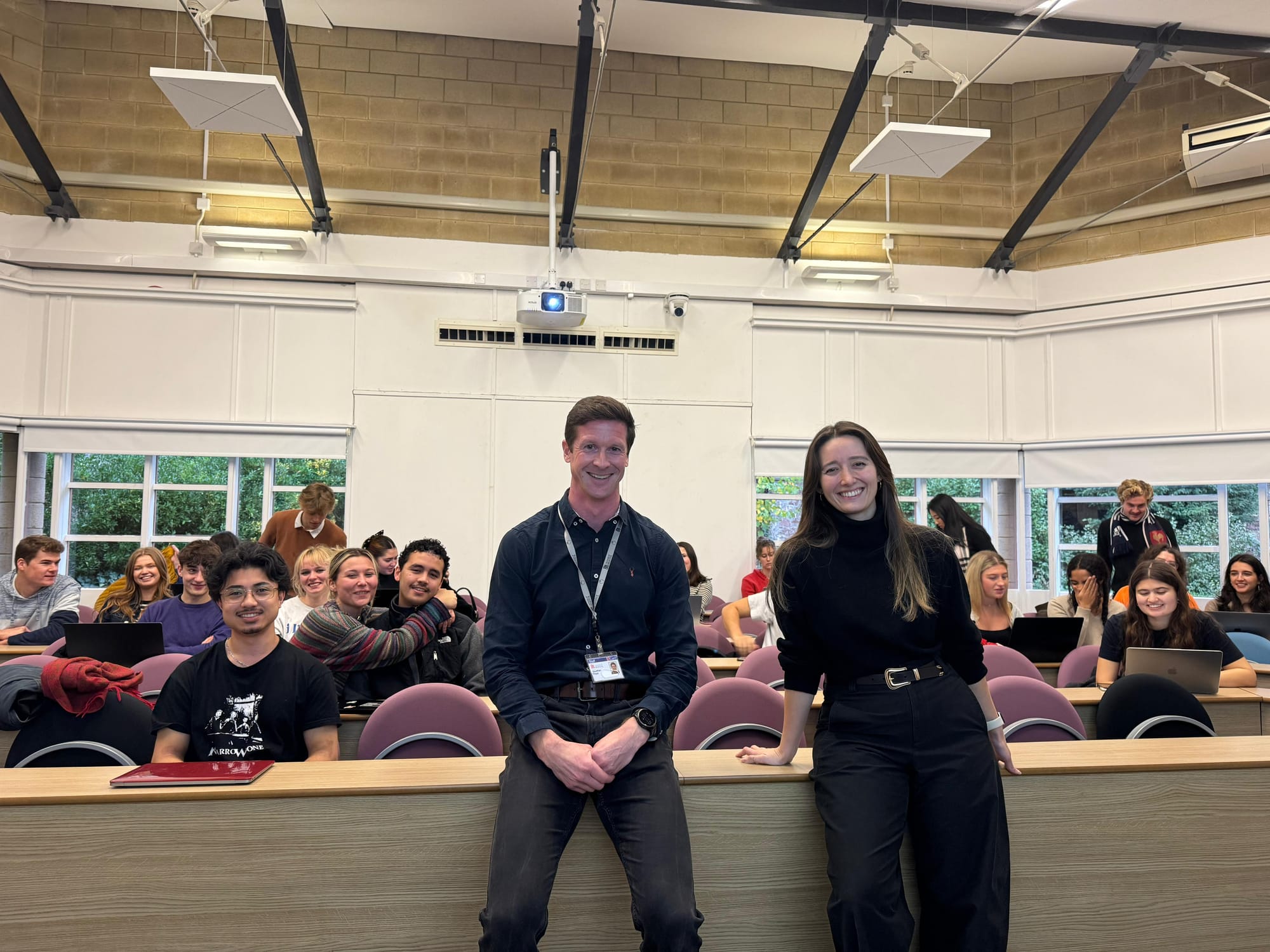
We asked Dr Floyd if he had any advice for a lecturer looking to incorporate something similar in their teaching. His response was twofold, firstly to make sure ‘that the speaker understands the themes of the course,’ and the second, to afford the speaker space to ‘deviate’ from that structure.
Ending on a heartfelt note, Dr Floyd described his approach as ‘a way of showing, very vividly, just where any of you could be in a few years' time. Today, Bristol; tomorrow, the world…’ For us students it has also added a new career milestone to aim for – to one day perhaps become the people that get invited back and have something worthwhile to say.
Featured image: Epigram / Julia Mullins