
By Alejandra Bonwick, Second Year, Medicine
On the 13th March, the UK Health Security Agency (UKHSA) received the first reports of a recent meningitis B outbreak in Kent. So far, 29 cases have been recorded and two young people have sadly died: a 21-year-old student at the University of Kent and one sixth form pupil in the Canterbury area. Health authorities have been working to trace and reach out to close contacts of those infected, and to offer certain groups free preventative antibiotics as a precaution.
This includes anyone who attended Club Chemistry, a nightclub in Canterbury linked to the outbreak, between the 5th and 7th of March. The UKHSA says this medication is ‘highly effective at preventing the disease and transmission’. Additionally, a targeted vaccination programme is being rolled out for anyone who has been offered the antibiotics; more than 2000 vaccines have been administered over the past three days.
What does this mean for students in Bristol – the last two confirmed meningitis B cases at the University were in 2018, so should alarm bells be ringing? Is there another large-scale lockdown on the horizon? In short, health experts do not believe that this will result in national, COVID-style measures. However, this presents an opportunity to raise awareness of meningitis amongst students, a group at relatively high risk of the disease and even higher risk of dismissing symptoms as the aftermath of an OMG Thursday. This outbreak serves as an important reminder that meningitis is a serious illness, and early recognition and treatment can save lives.

What is Meningitis B?
Meningitis is a disease which affects the protective membranes surrounding the brain and spinal cord; it is caused by bacteria – such as meningococcus – and viruses, which infect these membranes and cause inflammation. It is normal to find the bacteria that cause meningitis harmlessly in the human body - around 1 in 10 adults have it in the back of their throat without it necessarily causing illness - but some strains are more dangerous and more likely to cause invasive disease. In serious cases, it can progress to septicaemia (blood poisoning) and sepsis (the associated immune response), which is life-threatening.
The UKHSA has confirmed that meningitis B, or MenB, is responsible for this outbreak. This just means that group B of meningococcus bacteria caused these cases. Likewise, other groups of bacteria, known as serogroups, can cause other types of meningitis, like meningitis A, C, W and Y. Group B includes over a hundred different strains of bacteria with different effects in the human body. Samples from patients with suspected meningitis are being analysed in the laboratory and, so far, it does not appear to be a mutated (or new) strain of meningitis B, but one that has been circulating for five years.

How is Meningitis B spread?
Meningitis B is carried in droplets from your nose and mouth, so it is typically spread in prolonged and close contact with others. This can be through coughing, sneezing, and living in a shared space, but it also encompasses other activities popular in student life. For example, you could end up giving someone more than nicotine if you share your vape with them. Kissing and shared cigarettes or drinks are other ways meningitis can be passed on, as they all involve mouth-to-mouth contact in one way or another.
What should I look out for?
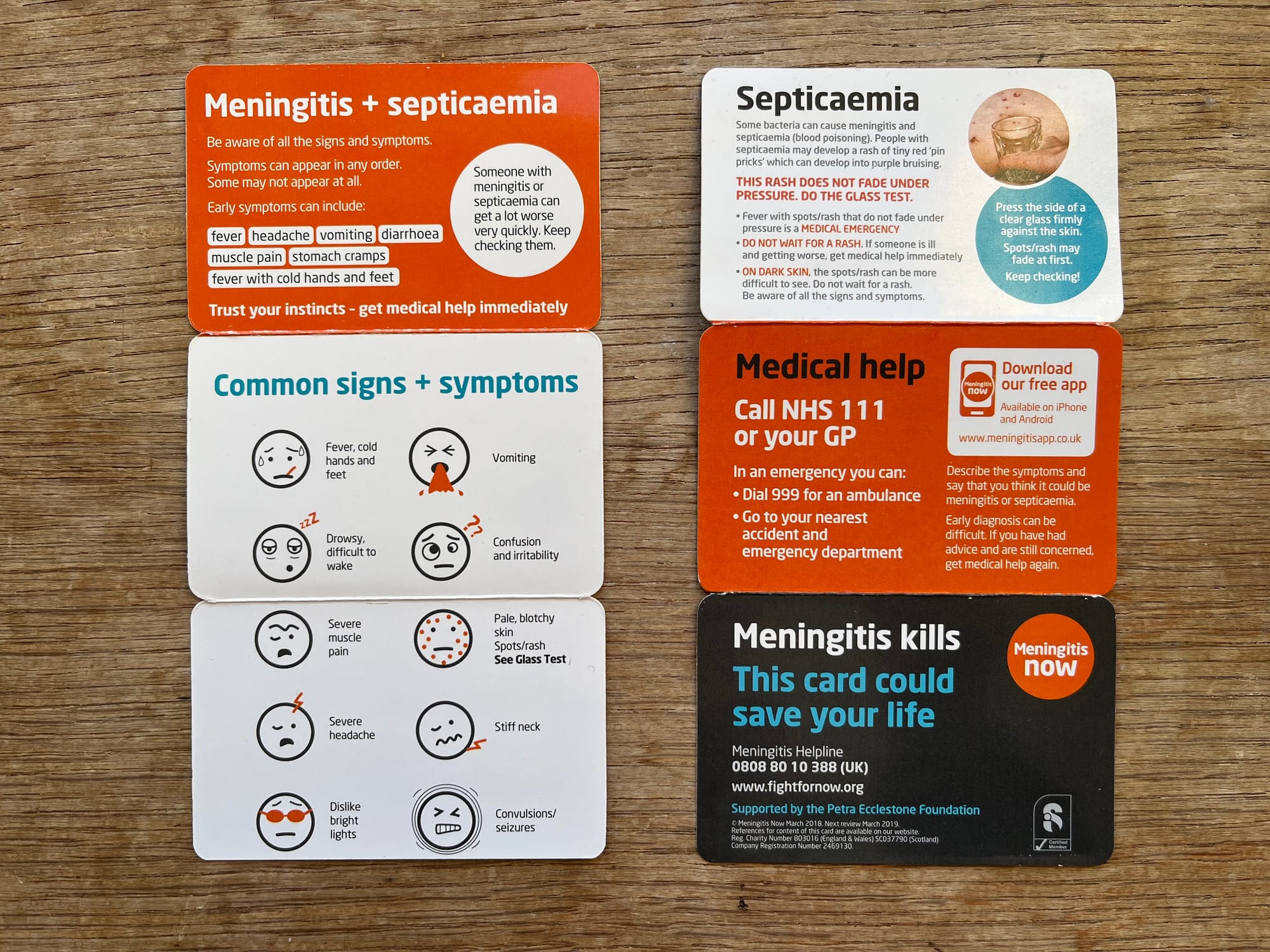
Early symptoms of meningitis can look like a cold, flu or even a bad hangover, but it can progress to something sinister within hours. This Epigram article goes through key symptoms of meningitis, how to tell it apart from the more common student ailments and when to seek help. The Student Health Service have also emailed information on meningitis to registered patients, as well as stocking free symptom cards on-site.
No red rash ≠ no meningitis
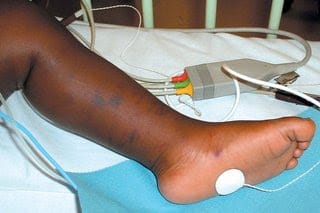
One of the best-known signs of meningitis is a rash that does not fade under pressure, which you can test by rolling a glass over the affected skin. However, there are a couple of important caveats. Firstly, meningitis does not always present immediately with a non-blanching rash – check your skin regularly and follow your instinct to seek medical help, even if there is no rash. Secondly, being aware of what meningitis looks like on all skin types is important for accessing treatment quickly. The rash presents differently on black, brown and white skin, appearing as purple or brown pinpricks as well as red ones. It can be more subtle on darker skin, so you can check lighter areas where it may be more obvious, such as palms, soles of feet, the roof of your mouth or inside the eyelids.
Why are students at increased risk of Meningitis B?
Anyone can get meningitis, but there are a few factors which mean that students are at increased risk of the disease. This strain specifically poses a threat to students because there is a gap in vaccinations against MenB. Although MenACWY vaccines have been routinely given to teenagers in UK schools for over a decade, the NHS only started to roll out the MenB immunisation program for infants in 2015. This means you are unlikely to have received it if you were born before then – basically, if you are older than 11 (presumably most of the uni student population). If unsure, you can check your vaccination record with your GP or on the NHS app.
It is possible to get the MenB vaccine privately from pharmacies, but there is a concern that the cost leads to inequitable access. In Bristol, there are clinics across the city where you can book an immunisation, but prices land between £200-£300 for a full course – this is similar around the UK. ASDA pharmacies offer the most affordable course at £179.76, but that still falls far out of many people’s budgets. That being said, demand for the jabs has soared over the past few days across the country – Superdrug have reported a 65-fold increase in bookings over the past week – so availability of the vaccine varies.
A campaign by Meningitis Now is advocating for the NHS to offer the MenB vaccine to teenagers and young people due to the increased risk of this age group. In light of the outbreak in Kent, there is currently a targeted vaccination program. This is for local university and sixth form students in the education settings in Kent with confirmed cases, and anyone who attended Club Chemistry from 5 March onwards, but it could be extended. Just a few days ago, Wes Streeting announced an independent review of who is eligible for a wider roll-out of the MenB vaccine programme in the future.
So, how worried should I be?
Despite being described as ‘unprecedented’ and ‘explosive’, there is a low risk of this outbreak becoming nationwide. In a statement on the Kent outbreak, Meningitis Now are reminding us that meningitis is a ‘relatively rare’ disease. To put it into perspective, there were 378 cases of meningitis between July 2024 and July 2025, including 31 people who died, and this has been on a downward trend since 1999-2000 (2595 cases). It also spreads less easily than diseases like COVID-19. For example, sitting on the bus with someone is not considered a risk (unless you’re exchanging saliva with the people you meet on public transport).
Although many people recover fully from meningitis, it can progress quickly and have devastating, even fatal, effects. It is not a disease to be taken lightly, but spotting it early significantly improves chances of recovery. Check the latest health advice, look out for yourself and any friends who seem particularly under the weather, and always seek medical help if you have any concerns.
 Carissa Wong
 Sofia Lambis
From the NHS website:
Call 999 immediately or go to your nearest A&E if you think you or someone in your care could have meningitis, septicaemia or sepsis. Trust your instincts and do not wait for all symptoms or for a rash to develop. People with meningitis, septicaemia or sepsis can become seriously unwell very quickly. Call NHS 111 if you're unsure whether it's serious. If you've already had medical advice but remain worried or symptoms worsen, seek medical help again.”
Featured Image: CDC / Unsplash