By Jemima Eardley, First Year, Neuroscience
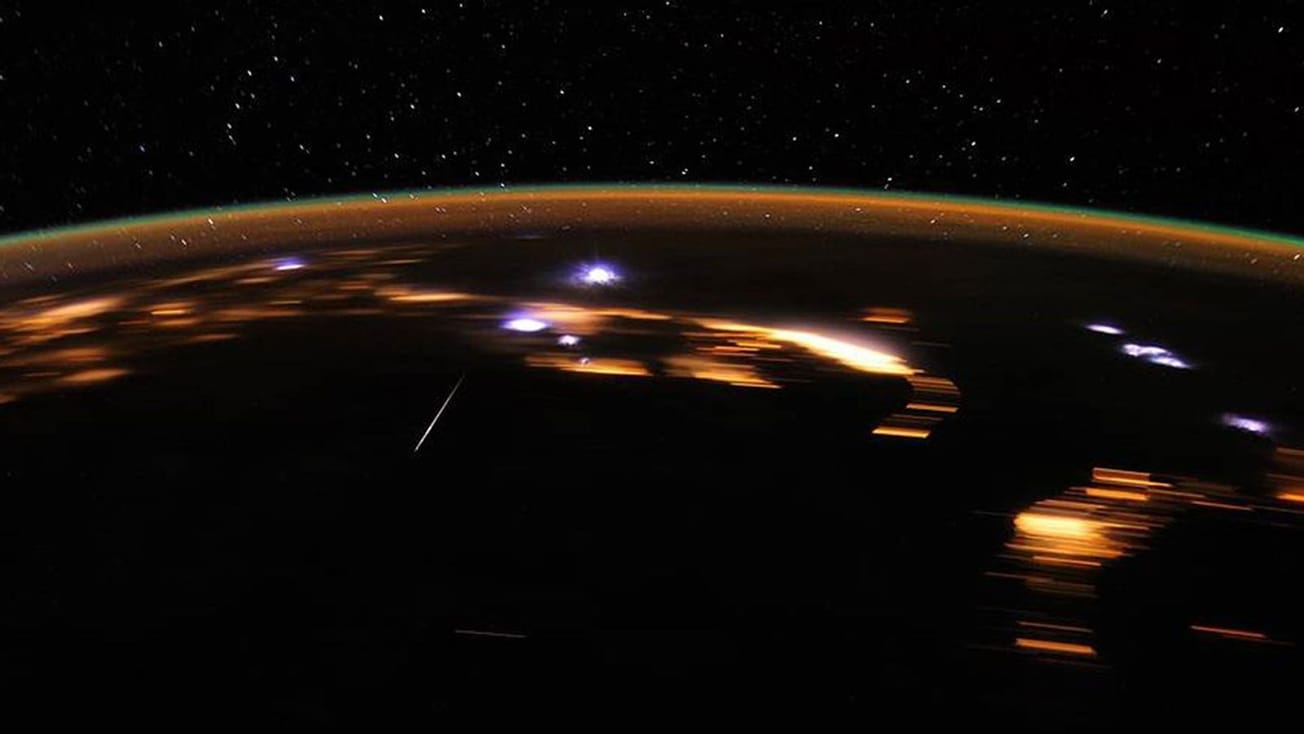
Every year, in late April, the dusty trails of the Lyrid meteors wander into our atmosphere and collide with our orbit, allowing us to see the beautiful white streaks they make as they disintegrate across the sky!
Meteors are broken parts of celestial objects, such as comets or asteroids, that fall so fast (around 50km/s) that the air in front of them doesn’t have time to move out of their path. This ionises (heats up) the air and squashes it, allowing meteors to reach very high surface temperatures – think crowded Thekla – and have a bright glow. The Lyrids are made up of multiple elements, including iron, magnesium and nickel, which when ionised create bright, white trails. The Lyrids come from the comet C/1861 G1 Thatcher, first recorded by the ancient Chinese in 687 BCE.
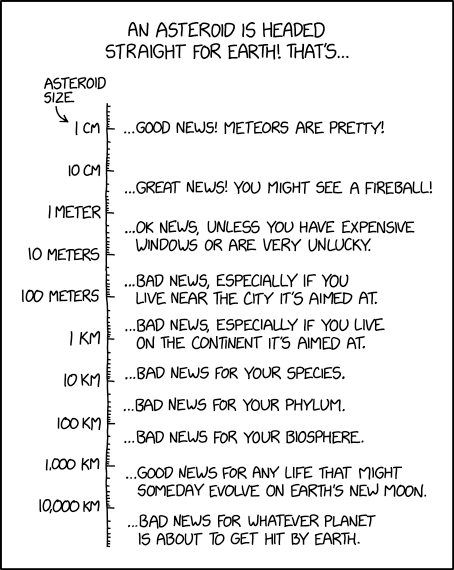
Whilst Lyrids don’t promise the green glowing trails that we have seen many times before in the classic superhero movies or the dramatic, dooming meteor showers in sci-fis, they do offer lovely views across the night sky and the occasional fireball.
(Alexa, play ‘Fireball’ by Pitbull)
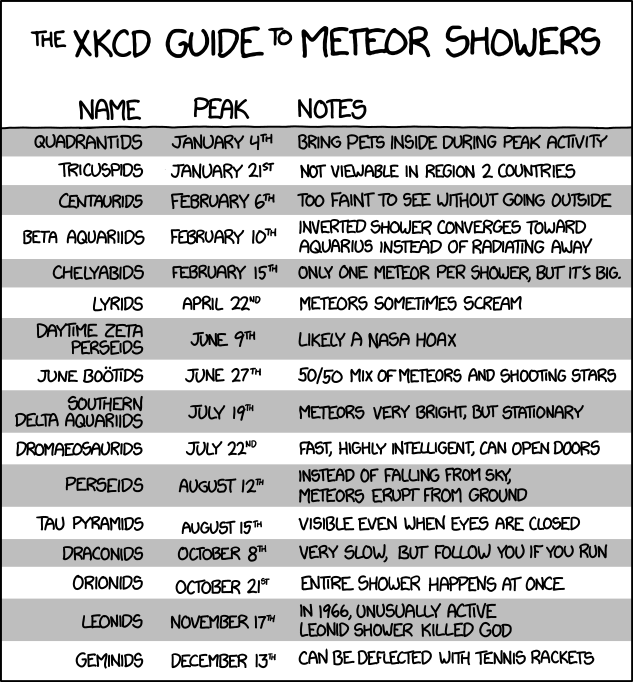
This year the annual Lyrid Meteor Shower will fall between the 16th and 25th of April, with its peak being the 22nd of April.
On a dark night, you should be able to see five to six meteors per hour, with this increasing to 10-20 per hour on the peak night (the 22nd of April). In some exceptionally heavy showers, this has been as high as 100 meteors per hour.
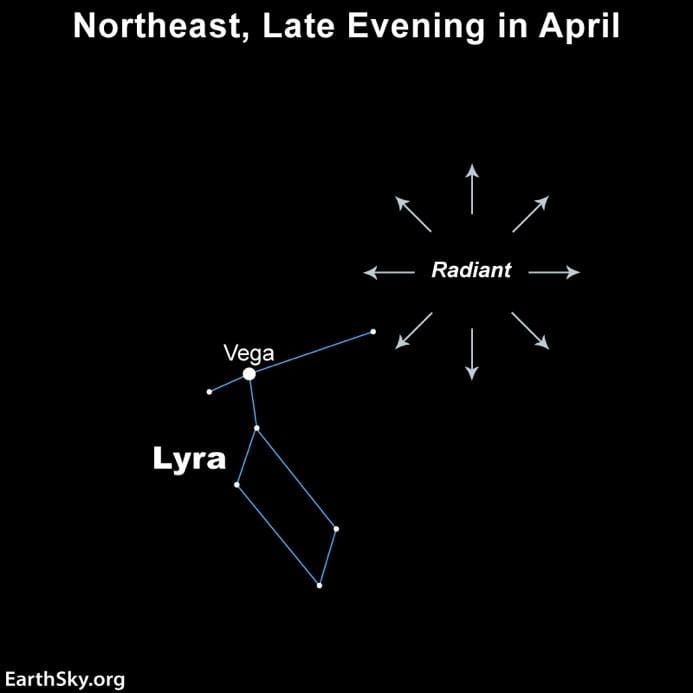
When looking for the Lyrids, you should first find the parallelogram-shaped Lyra constellation, named after the stringed musical instrument (a lyre). This constellation is near the meteor shower’s radiant – the point in the sky from which we can first see the Lyrids appearing. An easy way to spot the Lyra constellation is to find the star Vega (in the East) - the fifth brightest star in the sky. Around this area is where you should be able to spot the Lyrids! To help find this, I would recommend downloading the Stellarium App on your phone.
I’ve put together a few tips on how to maximise your chances of seeing the Lyrids.
- The Lyrids are best viewed when it’s dark (sunset is around 20.15 in late April). It takes your eyes around 20 minutes to adjust to the dark – so be patient and resist scrolling!
- To maximise your chances, base yourself away from any streetlights or city lights. Ideal locations in Bristol are: The Downs, Victoria Park and Brandon Hill.
- If the weather isn’t cold, wet or windy (unlikely in Bristol), it is recommended to find a spot outdoors and lie down to get a 360-degree view of the sky. Make sure to check the weather on the day (and take coats!).
- For some useful photography tips, check out the video on the Royal Museums Greenwich Lyrid Meteor Shower article.
- If you’re dedicated enough to go out, I would highly recommend a blanket, hot chocolate and maybe a friend or two…
 Evie Cushing
For the lazy student or the ‘it’s too cold to go outside’ student, there are other ways to potentially see the Lyrids. For anyone with a doorbell camera or even CCTV/security cameras on their building, check if they caught anything overnight. There’s also a chance you could spot something out of the window if it’s dark enough.
For the dedicated stargazers, photographer wannabes, constellation-painting picnic groups or friends who just wanna chill and watch with a few beers, observing a meteor shower can be a very nice way to spend one evening of your week. Whilst I can’t promise you’ll see the Lyrids, I’ve given some pointers as to the best days and places to go. Good luck!
Featured Image: NASA / D. Pettit
Where's your secret spot to stargaze in Bristol?