By Tom Forbes, First year, History and Modern Languages
On Valentine's Day the question of what love actually is and means to us in 2026 is in the air. How do we love, and how does it differ from preceding generations? As with most other fundamental questions of life, the feelings stay the same, even when the ways of expressing them change.
Love in Ancient Rome was largely regarded as something to be avoided, a threat to the social norms and laws that governed what was arguably the most patriarchal society to have ever existed.
'It was hoped that husbands and wives would be friends and get on amiably', Diane Ackerman argues, 'happiness was not part of the deal… sex was for creating babies… any kisses or touches were an extravagance.'
At a time when romantic love failed to materialise from marriage, some looked elsewhere. Ovid, the poet who wrote The Art of Love, scandalised high society by giving open and frank advice about extramarital affairs as well as the very rare and unusual 'love that makes us partners' with his own wife. The Middle Ages in Europe weren't much better, with marriage existing as a social contract to improve one’s social status or to secure a dowry.
Fast-forward to 2026 and increasing digital contact, to the detriment of physical proximity, is the most obvious shift in expressions, or refusals, of love. There are countless new ways to arrange a date and stand them up.
'The cut', is what the American socialite Emily Post described in 1922 as 'the direct stare of blank refusal' that can be inflicted in public and on the street. This enduring experience may be felt today, god-forbid, in the Brass Pig, but also on Snapchat and on our Instagram stories. Hurt and heartbreak are just as hard as they were forty years ago, but our screens let us go further than our parents could ever dream of. Algorithms fuel that misery by letting us linger over past love on a daily basis wherever and whenever we have a phone.
That’s not to say the digital age has destroyed expressions of love. When long-distance relationships were once effectively impossible, it was totally normal to get and go out with flatmates and colleagues. The ever-widening pool created by social media and dating apps has led to new rules and conventions. One wonders how rampant flatcest would be if Hinge didn’t have a 10+ mile radius option.
While life today throws new quandaries in the pursuit, what remains the same is that we all want love, even if it seems the 'soft launch' or the situationship now comes first. Relationships are no longer entered into out of mere necessity. Changing attitudes mean there is less social pressure on women to marry and have children. As Epigram have pointed out, the idea of marriage for some girls (though not all) is downright uncool.

Hearing family members say ‘In our day we were grateful for whatever we got’ shows that even in the past few decades, the requirements that Ackerman writes of, 'the checklist' of the natural world, are less relevant now that societal dynamics have changed. Visiting the stalls in the proverbial romantic marketplace, then, dating has become less about shopping for necessities than it has for the goods they want.
 Rosa Dunford
 Anonymous
This means that genuine friendships between heterosexual men and women, though they have always existed, arouse far less suspicion than they did even thirty years ago. Another positive development in recent years in Britain and a number of other countries has been the state recognition of same-sex love, although non-heterosexual relationships continue to face challenges and stigma.
Regardless of the type of relationship, any couple understands love is at times difficult to maintain. 'It's easy to sustain a relationship when sex plays no part, and impossible, I have observed, when it does', as the American writer Gore Vidal once wrote. The line between friendship and relationship is fraught enough as it is, in that any good relationship is also a friendship. But love is constant, and (as far as a first year student can presume) more durable. Above all else, whether you are or aren't in a situation/relationship this Valentine's, perhaps now is a good time to remember from the history of love that whatever happens, you are at least in good company.
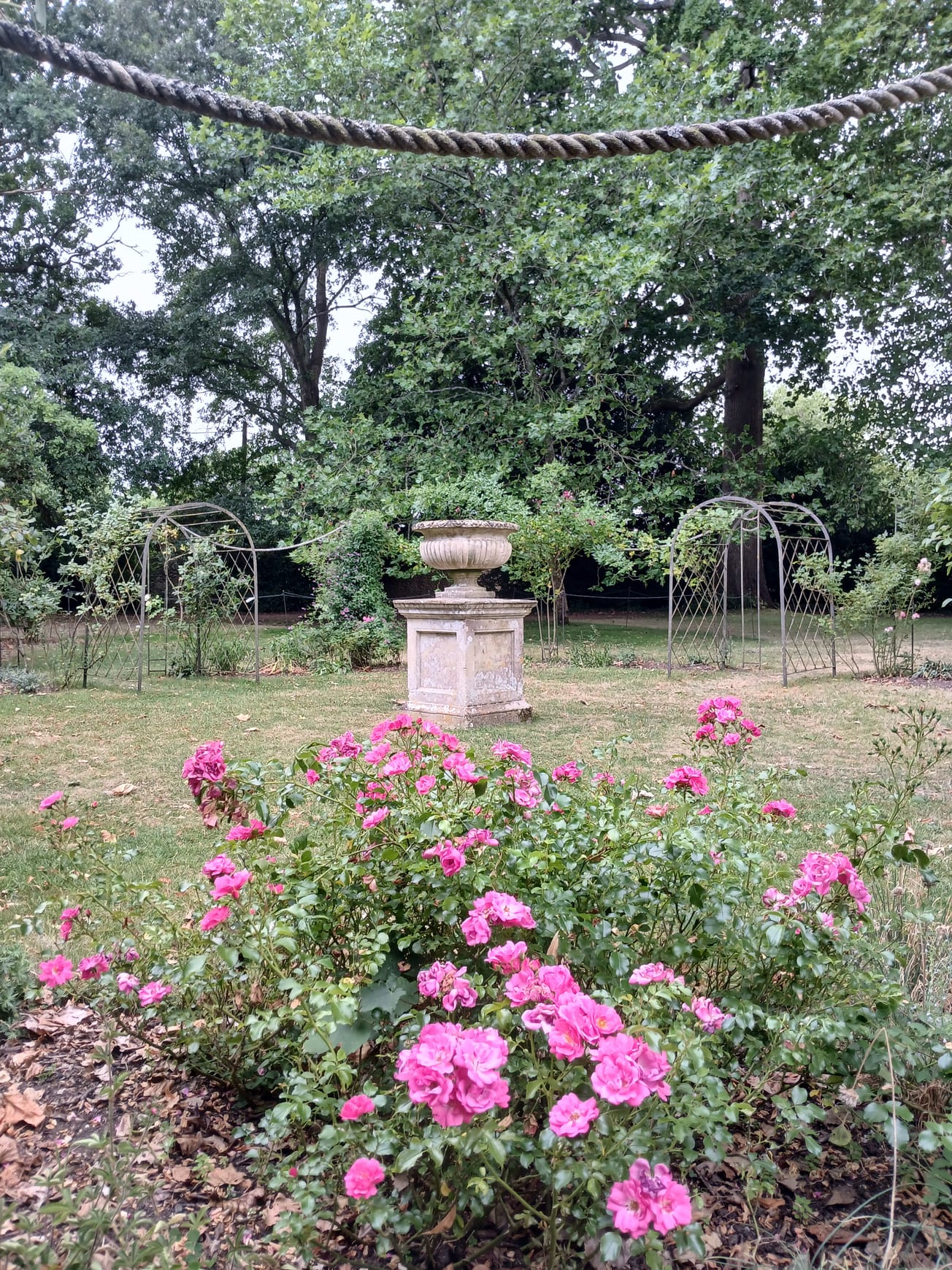
Featured image: Garden roses | Epigram / Hannah Corcoran
What will expressions of love look like in the future?