
By Meg Pantry, Second year, Law
It’s no secret that Love Island generally isn't regarded as the pinnacle of television, ethics, or romance. But with 1.3m viewers tuning into the final, can we still call it a harmless guilty pleasure, or does it perpetuate real, harmful attitudes towards relationships in contemporary society?
Perhaps the most common criticism of the show is the poor behaviour of the male contestants, and with good reason. This season alone has seen some of the most hateful, disloyal and generally incompetent men that the country has to offer given a platform on national television, culminating in Women’s Aid stating that, despite some positive steps taken by ITV to reduce unfavourable behaviour, 'we still see unhealthy patterns of behaviour on these shows, showing just how steeped in misogyny and sexism our society still is.'
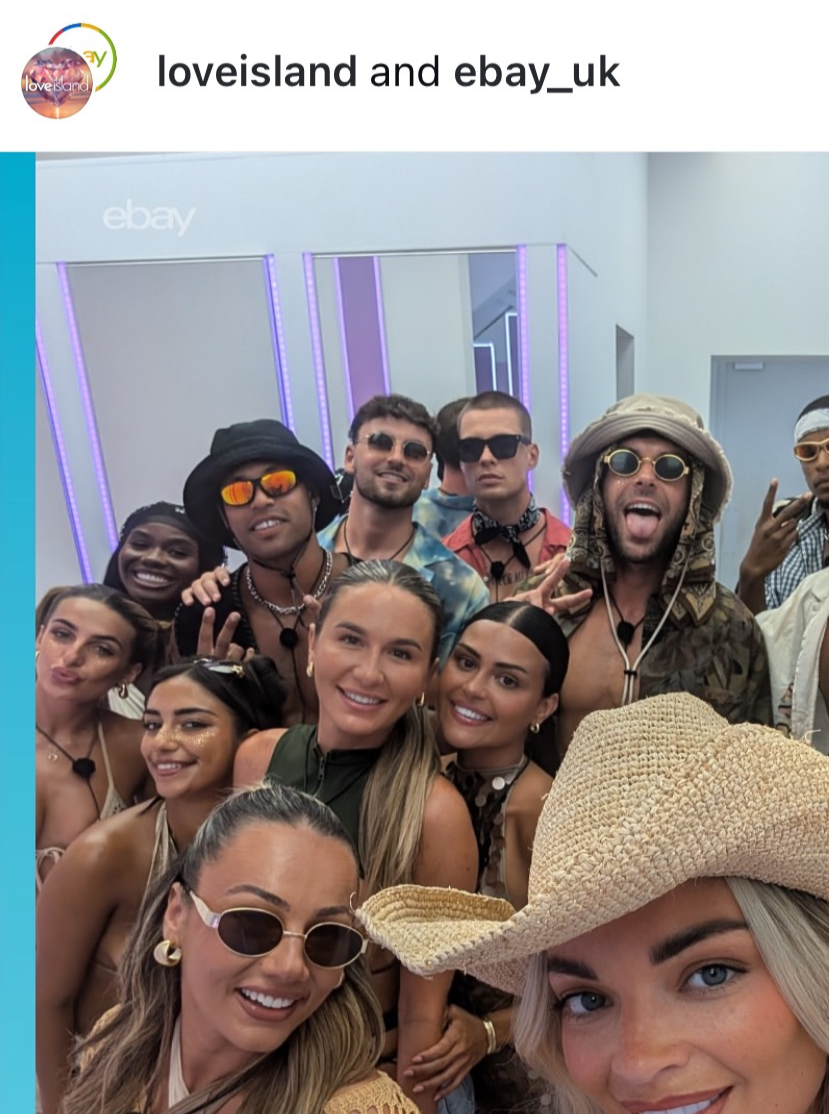
But is this the result of bad casting, or an innate problem with the show? On one hand, the producers are responsible for screening and running background checks on prospective contestants to ensure that they are suitable to be given a platform on national television, but it is also true that dating shows will inevitably perpetuate sub-par beliefs about relationships due to the way that they gamify romance. By presenting love as a competition, the show encourages the idea that ‘winning’ requires playing dirty, or ‘stepping on toes’ as multiple islanders put it in their introductory videos.
The negative impact of this gamification is also apparent in the way that the show seems to define ‘love’: far from the fairytales of yore, Love Island’s ‘love’ is a simulacrum of romance, between people who don’t seem to care if each other live or die and solely want to end up with the ‘fittest bird’ and a Boohoo brand deal. Throughout the months-long seasons, there are vanishingly few references to couples actually enjoying each other’s company – or anything about each other – which begs the question: what’s the point? Why go to such lengths to find ‘love’, if what they call love is just finding someone that matches their long list of aesthetic requirements? As much as some contestants may claim that their ‘type on paper’ is someone with a good personality, it is relatively rare to see a contestant (especially a male contestant) consider anything other than appearance when deciding whether they have a connection with someone. On the rare occasion that one of the male islanders comments positively on a woman’s personality, he says that she has ‘good banter’, which almost invariably means that she can withstand his relentless mocking under the guise of flirtation.
In fact, women often fare worse if they demonstrate any semblance of personality; if a woman is outspoken, she is 'too much' and 'need[s] to be humbled,' as Ben says of Shakira in this year’s show, or 'gives [him] the ick', as he says of Toni. If a woman is wise, she is 'extremely mature, she’s got her head screwed on, maybe a bit much for me,' according to Harry, after a conversation with Sophie about what she learned from suffering burns in a fire. The show’s obsession with types is so mechanical and, regrettably, it’s something that I see reflected amongst young people in real life. As time goes on, it feels like I see increasingly more relationships where neither partner seems to feel anything positive towards the other, but both want a relationship because modern society has put romantic love on such a pedestal, and has defined it as finding someone whose appearance ticks enough arbitrary boxes.

Regardless of whether Love Island’s flaws are a result of poor casting or an innate problem with dating shows, it is undeniable that the show sets a bad example of what people should expect from a partner. Although Love Island has, for many, become synonymous with shallow, disloyal and generally undesirable contestants, ITV’s digital controller Paul Mortimer confirmed in a 2018 statement that 'it's a very aspirational programme.' This statement (made in response to complaints about another of the show’s glaring issues: lack of body diversity) makes it clear that, as much as audiences may deride the islanders, they have always been intended to be examples of the perfect partner that viewers should aspire to have. Looking at the behaviour of the contestants with this in mind, it is clear that what Love Island dubs the ideal partner is anything but. In this season alone, islanders cheat, lie, and degrade each other unbelievably frequently. Harry describes ‘getting away with [cheating]’ as a talent that the younger men will learn one day, Harrison manipulates women and Tommy is unable to write one sentence about himself without ChatGPT. While these are undoubtedly things that real people do in real life, the show’s problem is that it paints these people as aspirational partners, which creates the impression that this behaviour is justifiable.
However, this year's show was not completely devoid of positive role models. In fact, the winning couple, Toni and Cach, were arguably two of the most subversive and authentic contestants in the villa. Throughout the season, we saw Cach hold men accountable for their manipulative behaviour and show genuine vulnerability, subverting the hegemonic masculinity that Love Island so often deifies, while Toni was bold and outspoken, far from the submissive partner that many male islanders wanted her to be. Additionally, the beautiful friendship that blossomed between Shakira, Toni and Yasmin is a testament to the strength of real friends. Their relationships showcased the importance of standing up for what you think is right, defending those you care about, and always being honest - even if it is difficult. The fact that Toni and Cach won Love Island is undeniably a good omen for the show, but the presence of the ever disloyal Harry in second place serves as a bleak reminder that the show still has a long way to go to be considered a positive influence on its viewers.
So, although hate-watching a reality TV show can be incredibly entertaining, it is important to recognise harmful behaviour and remember: Love Island's sunsoaked summer romances may not be as aspirational as the show would like you to believe.
Featured Image: ITV / Shutterstock
Is Love Island your annual guilty pleasure watch?