By Tylah Hendrickson, Arts Subeditor
Last year Jack Thorne reached an astounding form of notoriety after the phenomenal Netflix mini-series Adolescence (2025), sweeping awards at the Emmys and sparking a global debate on the consequences of internet consumption amongst young boys. In the same narrative vein, his most recent adaptation of William Golding’s Lord of the Flies (1954) reminds us of the viciousness of collective human behaviour, told through a tale of boys behaving torturously.
As the story goes, a large group of schoolboys are stranded on a tropical island after a plane crash – whilst there, they horribly fail at establishing any semblance of a functioning society. Power dynamics amongst the characters are obvious, interests diverge as their already fragile democracy crumbles, factions build, and chaos ensues as the self-proclaimed ‘hunters’ gain more influence – leading to the murders of notable characters before a sailor rescues them from the smoky remains of their ‘war’. They return to England to supposedly resume their regular schoolboy lives.
With a talented cast of young actors, the story remains so prominent because of how it subverts the perceived innocence of children. The book obviously cannot capture the characters' ages the way visuals can, and I was often left astounded by how small they were, especially the ‘little-uns’ whose voices were so darlingly cute – which only left me feeling more terrible about the inevitable fate they were going to face.
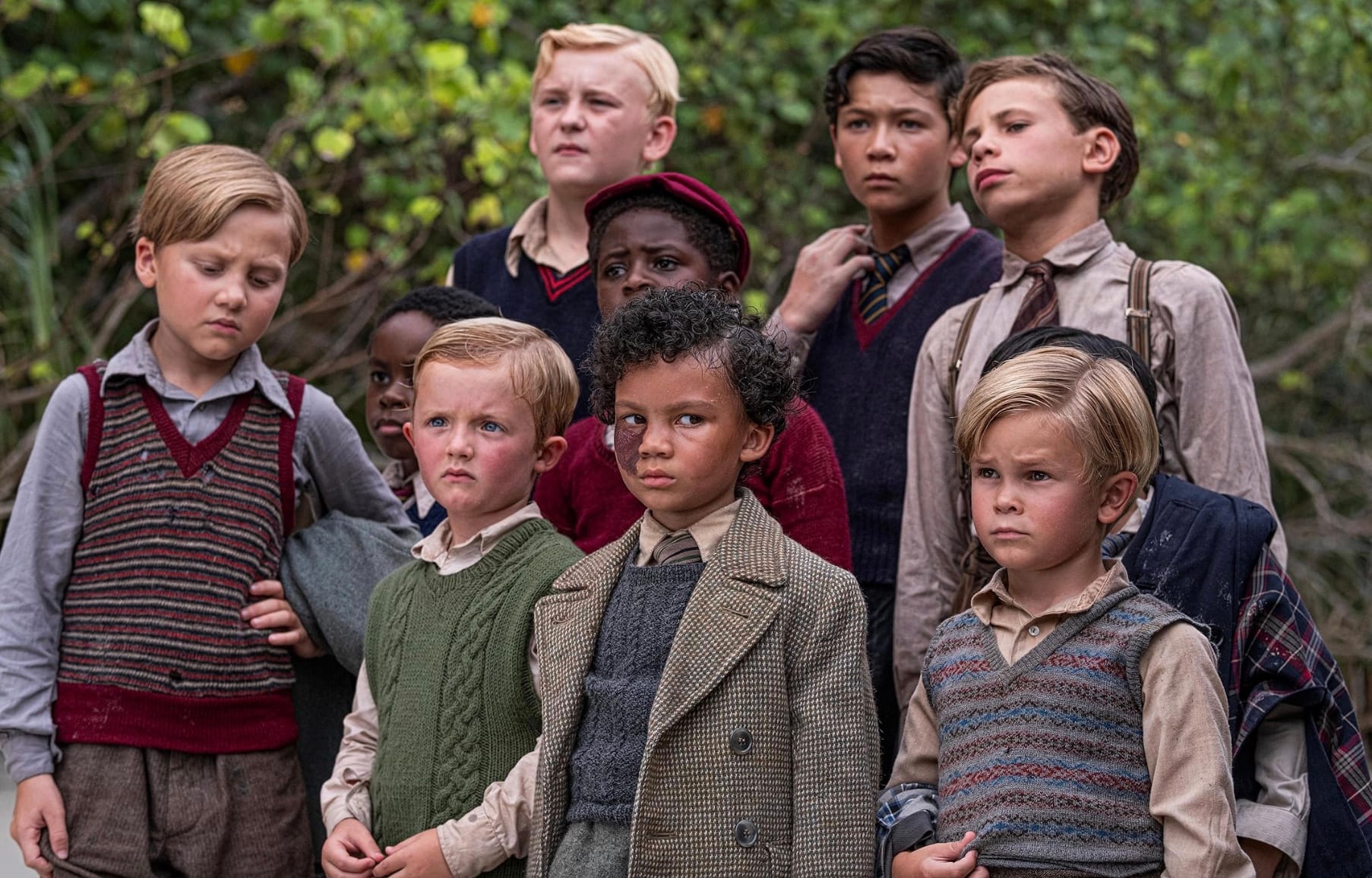
The production depends on the viewer having prior knowledge of the source content – suspense is built from the first five minutes with a score heavily relying on staccato strings and a fish-eye lens camera distorting the vast, overly saturated tropical landscape surrounding our main boy ‘Piggy’ (now doubly referred to as Nicky, a direct contrast to the novel where his identity was entirely subsumed by the allotted nickname). This reliance can be considered a failure, however, due to the widespread recognition of the original, the production expecting the audience to have a baseline understanding of the plot should not be considered a fault. Consider an adaptation of Animal farm (1945) or A Christmas Carol (1843), for example.
And similarly to its predecessor, Jack Thorne’s Lord of the Flies leans into the concept of taught behaviour – each episode is based around our four main characters, ‘Piggy’ (David McKenna); Jack (Lox Pratt), the leader of the Hunters; Simon (Ike Talbut); and the initial elected chief, Ralph (Winston Sawyers). It delves into the backstory of each character through flashbacks, providing psychological context as to why they enact certain views and actions whilst on the island.
Was this format entirely necessary? No, and I believe it somewhat takes away from the allegorical nature the book emphasises. It feels explanatory rather than interpretive, and by likening Jack’s savagery, for example, to the fact he’s unloved by his parents and overcompensates by acting ‘tough’ feels reductionary to Golding’s wider message. His new connection to Simon, told through diary narration, was also an interesting attempt at providing a sympathetic background for their follower-leader dynamic – humanising Jack whilst also elaborating on Simon’s overabundance of empathy.
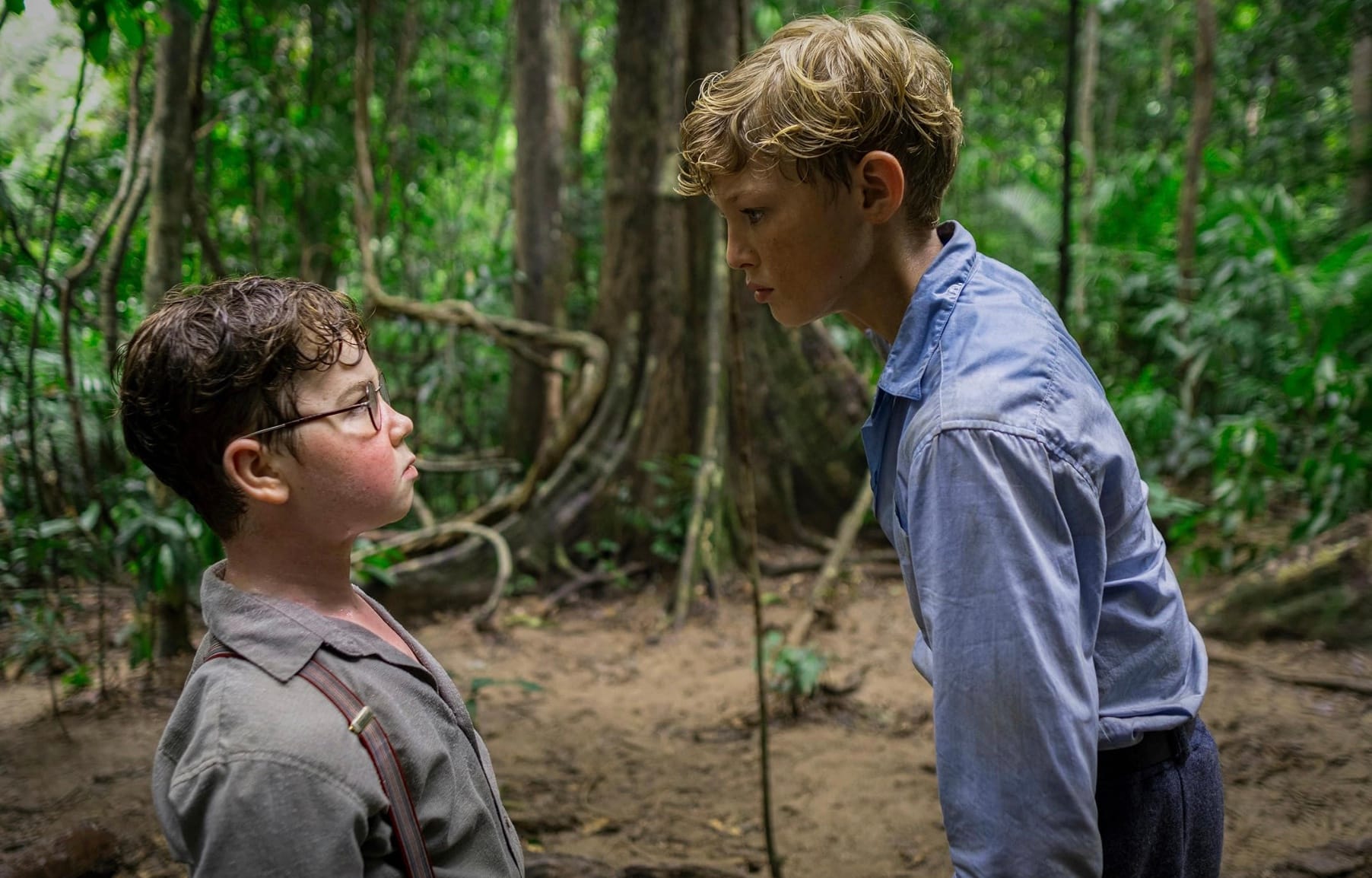
Golding was responding to imperial adventure stories and the idea that British boys represented inherent civility. His argument was that they do not, and that the capacity for brutality exists within the so-called ‘civilised centre’ itself. This gets hinted at briefly throughout with Ralph’s navy family, but is made deafeningly obvious when the sailor emphasises their Britishness and the lack of Ralph’s leadership – despite being British – in the final scene. The conch, found by Piggy on the beach (who cannot blow the conch himself because of his asthma), represents the dissolution of their democracy. The one who holds the conch can speak during group discussions, but its power is selective, especially to Jack who ends up beating Ralph (his antithesis) with the conch after a disagreement on how to handle the ‘beast’: a primary source of contention, fear, and collective control amongst the boys.
(Spoiler warning) The biggest departure from the source was how the deaths were handled, especially Simon’s in episode three. In the novel, he raced back to the camp after discovering the true nature of the ‘beast’ – which is just a dead pilot tangled up in his parachute (shown in one shot, but not discussed further). His death is symbolic rather than just a tragic mix-up, which is unclear until his body is brushed away in the ocean after being killed in a manic, hedonistic frenzy where the hunters chant ‘kill the beast, cut its throat, spill its blood.’ Piggy and Ralph’s involvement in his death is also entirely cut, probably to simplify the divide between the two groups and to show remorse for his death (which is left entirely unnoticed by the hunters). Simon’s death is the dissolution of moral order on the island – preceding the smashing of the conch and Piggy’s murder – and he isn't given the same ‘haunting the narrative’ treatment as in the books. A disappointment if you're familiar, and still a lackluster treatment of his character if not.
 Charles Hubbard
Despite these nit-picky remarks, there is a lot to enjoy in this adaptation. The stylish cinematography does not detract from the message and provides a fresh depiction of its source material. There’s a fantastic montage at the start of episode two with Jack crawling on the floor, beastlike as he hunts (and fails) to kill a pig. Whilst it may lack the allegorical purity of Golding’s novel, Thorne’s adaptation is a visually immersive exploration of social dynamics, grounded by a remarkable cast of newcomers.
Watch Lord of the Flies on BBC iPlayer here.
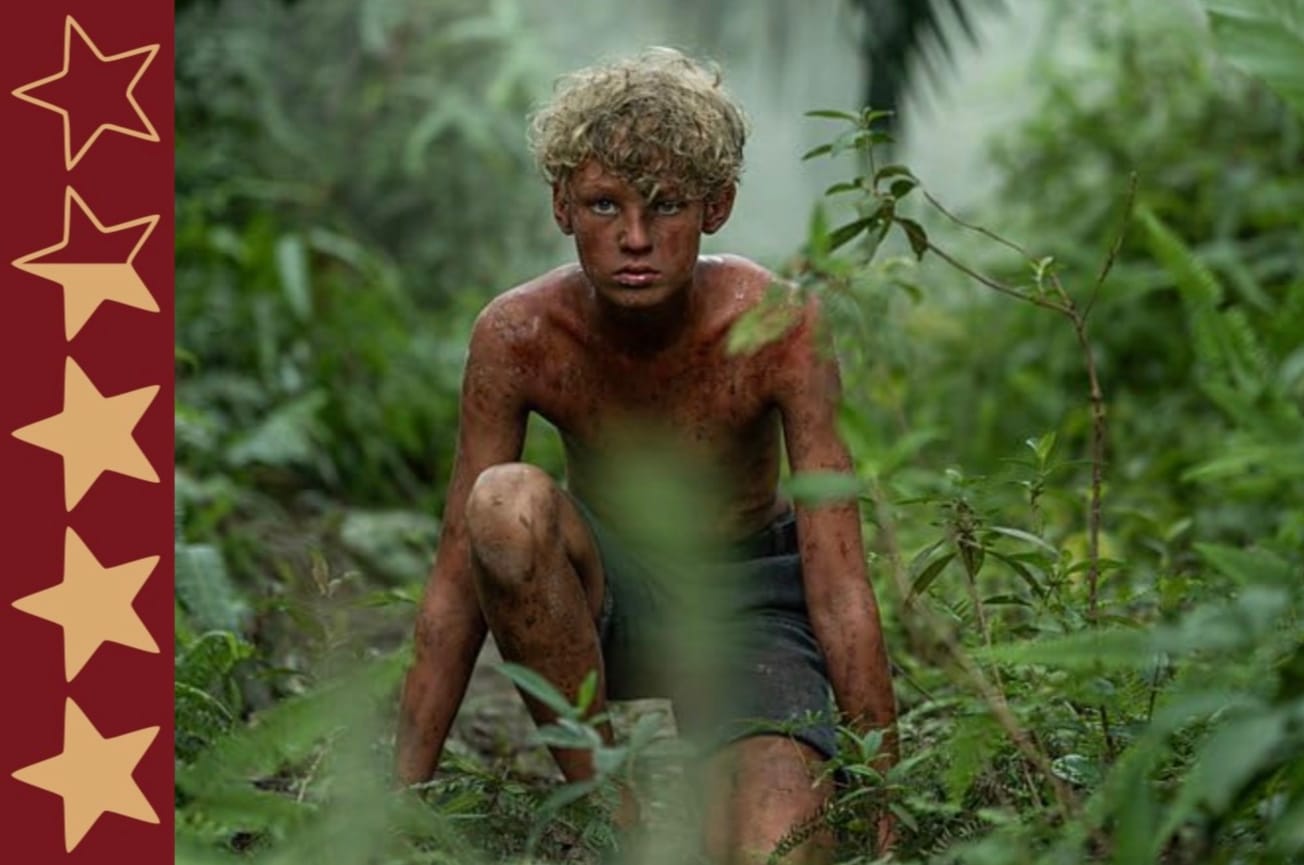
Featured Image: IMDb / Lord of the Flies | Illustration by Epigram / Sophia Izwan
What did you think of Lord of the Flies?