By Olly Francis, Second Year Theatre and Performance
It feels almost unnecessary to give a synopsis of William Shakespeare’s Macbeth. Every person who has been through the British education system will have their own relationship with the play. Whether it be their first foray into exams with GCSE English, or the first Shakespeare they encountered in drama lessons, this story is deeply entrenched into the cultural understanding of this country. It is therefore vitally important for any new production to put their own stamp on the play.
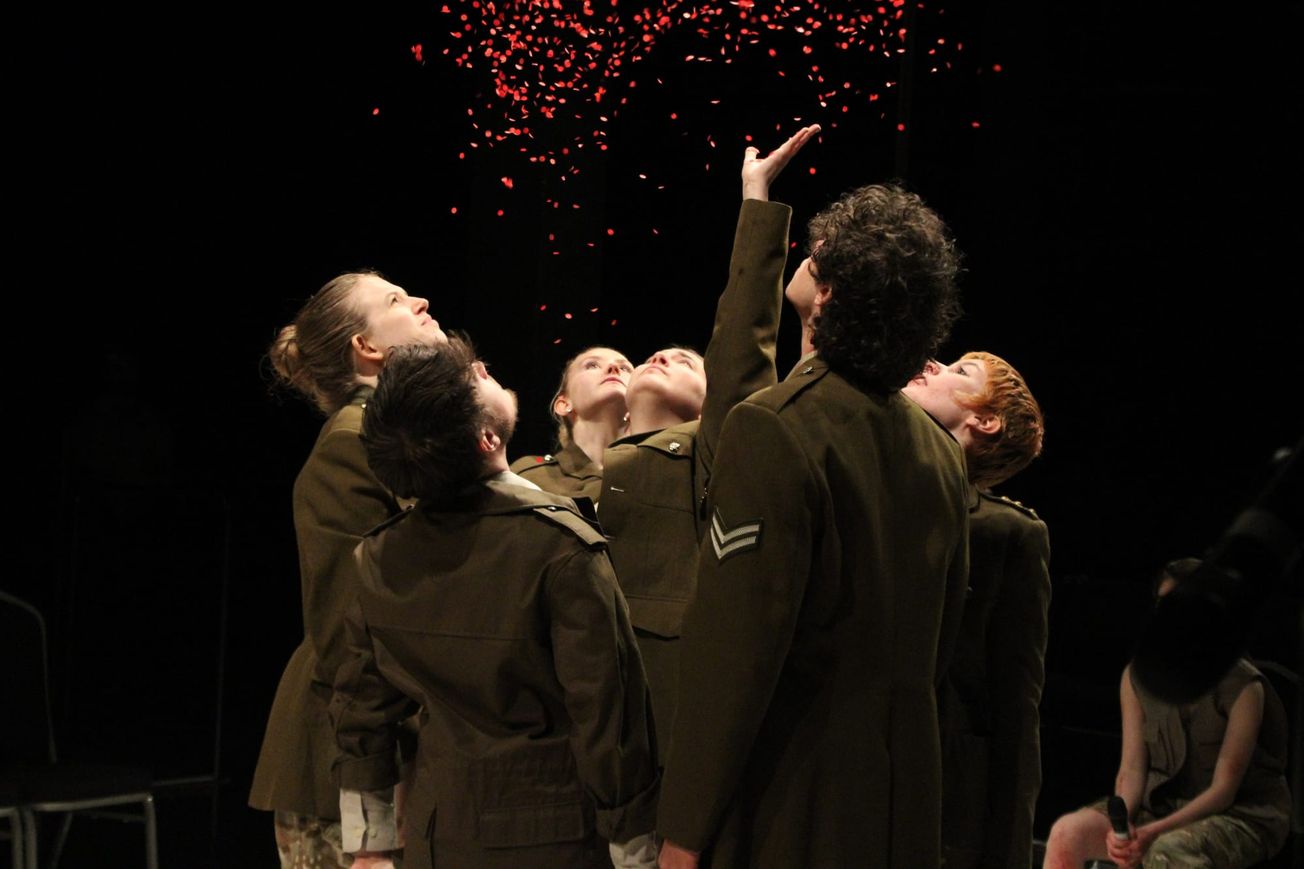
Thankfully, Director James Hattan’s extraordinarily confident production does just that. The flair of Hattan’s vision begins with the Witches (Meabh Brolly, Charlotte Curd and James Davies) crawling out of body bags, embodying dead soldiers who are cleverly re-interpreted to double both for the murderers and even Duncan. These Witches sit in the audience, stalking the proceedings. A further remarkable intervention by Hattan is the use of onstage microphones, which offer an interesting perspective to Macbeth’s asides and form a vehicle through which the Witches communicate to Macbeth. This more experimental staging offers intense immediacy with the actors. Each breath, snarl and laugh shakes through the auditorium.
InterAct’s Macbeth is at its strongest technically, with hugely impressive technical flair, the like that rivals most professional theatre, let alone student theatre. Make no mistake, Macbeth is a revolution for what can be achieved in student theatre, and it is testament to the entire production team led by Co-Producers Cleo French and Millie Fairs. Firstly, is the sound design which Hattan himself spent a year working on. This is certainly the production’s strongest asset and fuels the psychological terror of Macbeth and Lady Macbeth. We hear the distorted voices of the Witches, whirling soundscapes of war and the splintering and thumping of Macbeth’s mind, all culminating in a brutally thrashing battle scene. Furthermore, the sound design is just as beautifully subtle as it is momentarily overwhelming. Just as it seems like the production’s technical ambition would risk consuming the performances of actors, the pace shifts into a domestic quietness, carefully balancing the tone.
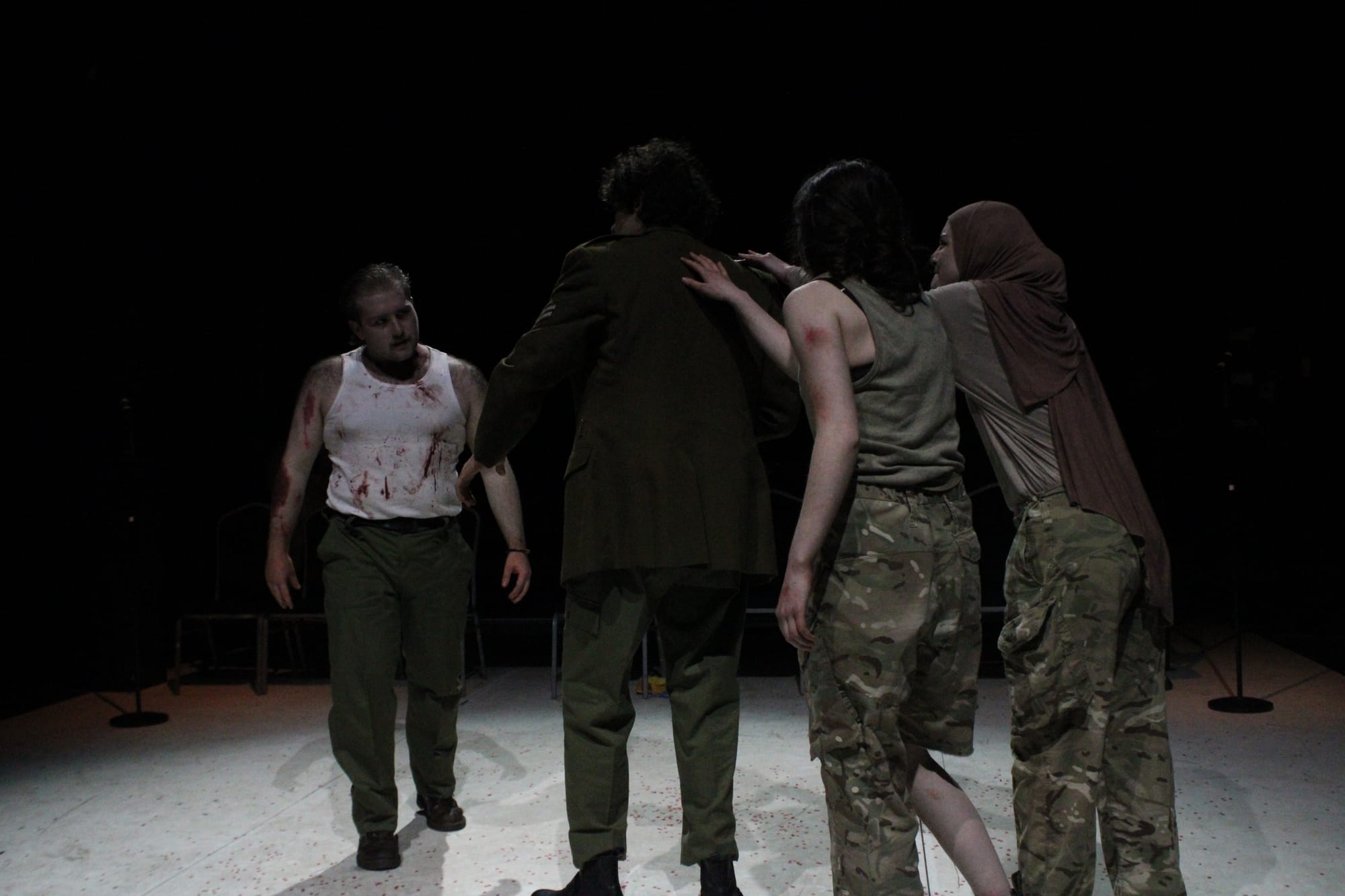
Just as strong was the lighting design by Rosy Jones, similarly striking in its technical prowess and ambition. Indeed, at two points in the play, the entire audience were submerged into extended blackouts, where we would sit in the inky darkness as the soundscapes rattled around us. It is this experimentation and intervention which makes Macbeth so successful. In the battle scenes, the lights strobed intensely, meticulously aligning with the peaks and valleys of the sound. At other times we sat in beautiful simplicity, namely just the single lantern which lit Lady Macbeth’s candle scene. The intimate in-the-round staging was a perfect canvas for the technical masterclass that the production treated us to.
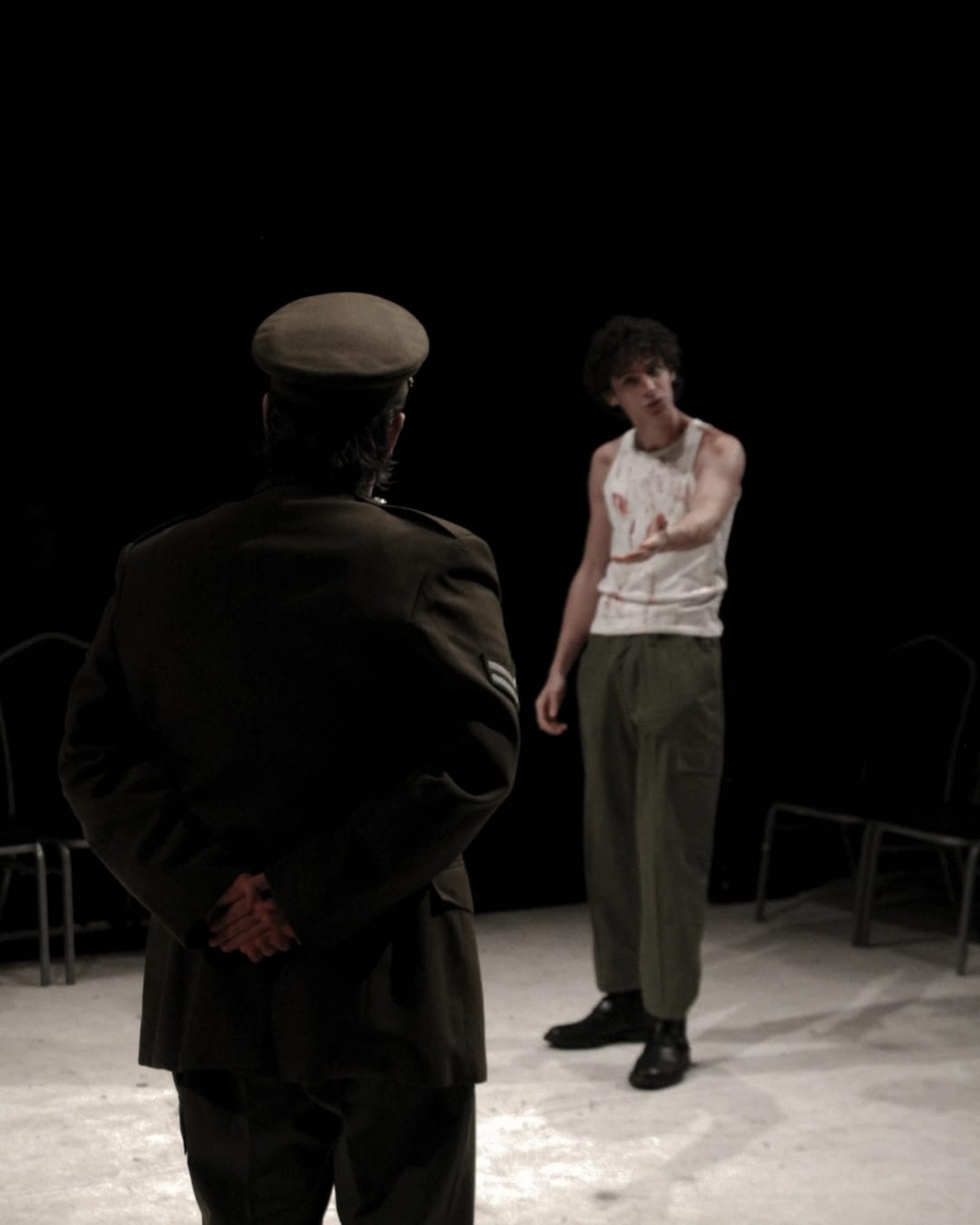
Jamie Schneider as Macbeth gave an incredibly assured performance, mediating the breakdown of Macbeth’s mind with the gravitas and bravado of the play’s exposition with ease. He particularly came into his own in the play’s climax in an exhilaratingly well-choregraphed fight scene (by Ruari Tilley) with Jack Harrison’s Macduff. Sophia Fantozzi as Lady Macbeth is another standout, a simply effortless actor who brought considerable depth to a character which can sometimes be performed with hyperbolic villainy. Instead Fantozzi was far more subtle in her performance, more grounded and even sympathetic. Another standout was James Davies as Duncan/Witch, magnetic in both roles and a fantastic physical actor alongside Meabh Brolly and Charlotte Curd as the deeply committed and sinister Witches. In fact, what struck me about the play was just how well the Shakespearean verse was delivered across the entire cast of thirteen. This not only contributed to the play’s sense of professionalism but also made it much more accessible for those less versed (excuse the pun) in Shakespearean language. Rounding off the strong cast was Isaac Reeves as Banquo, whose murder was interestingly staged alongside the banquet scene in yet another striking directorial intervention. Both he and Harrison gave strong supporting performances.
This production was such a profoundly strong offering, that I have to judge it not as a student production, but as a professional one. If I had any criticisms, it would be that there were a few tonal lapses. Firstly, with opening night running at 2 hours with no interval, the production slightly struggled to sustain its pace after the death of Duncan with a few of the quieter longer middle scenes beginning to drag slightly. Another tonal inconsistency was through its use of movement. While the opening movement sequence was convincing in isolation, effectively demonstrating a war-torn environment, it clashed with the rest of the play’s artistic style. The same could be said for the Banquet scene’s slightly dated and trivial parlour dancing which again differed from the hyper-cool technological mind of the rest of the production. Finally, whilst the Witches were well conceptualised and incredibly powerful especially in their uncanny miming to the soundscape and physical embodiment, some of the character direction felt slightly traditional and less sophisticated than the rest of the high-concept production. It seemed to lean into vaguely creepy tropes, i.e. creepy laughing, as opposed to what could have been the interesting angle of the dead soldiers. That said, their role in the play’s ending is beautifully chilling.
 Ambar Madhok
This doesn’t change the fact that this production is quite simply a revolution that completely changes the landscape of student theatre. It brings an experimentation and technical flair the likes of which I’ve simply never seen at Bristol. It is a truly outstanding achievement for all those involved.
Featured image: Macbeth by InterAct / Emma Conway
Will you go and see InterAct's next production?