By Lily Scogings, First Year, Film & Television and River Korkmaz, First Year, Film and Television
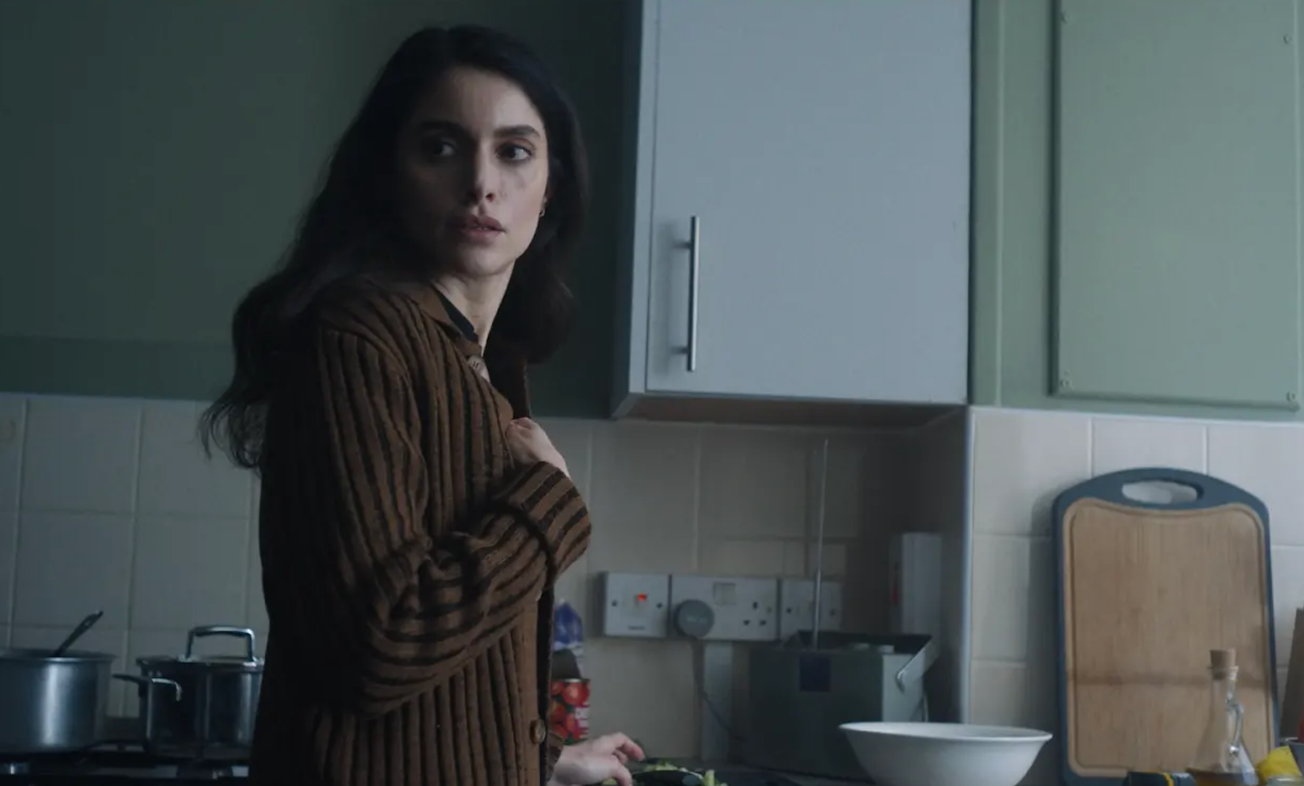
Alexandra Bahhiyih Wain’s short film In the Clouds (2025), mobilises the language of restrained horror to examine how fear and prejudice are absorbed, normalised, and quietly transmitted. Drawing inspiration from the hostility directed toward immigrants in contemporary public discourse, the film resists overt or declarative representation. Instead, social hatred is conceptualised as diffuse and atmospheric, perhaps something sensed rather than articulated.
This approach by Wain situates fear not as an exceptional eruption, but as a background condition that shapes perception and behaviour, particularly within the vulnerable logic of childhood. For her directorial debut, it distinguishes itself through its marked control of restraint, blended with its tender portrayal of displacement, innocence and loss.
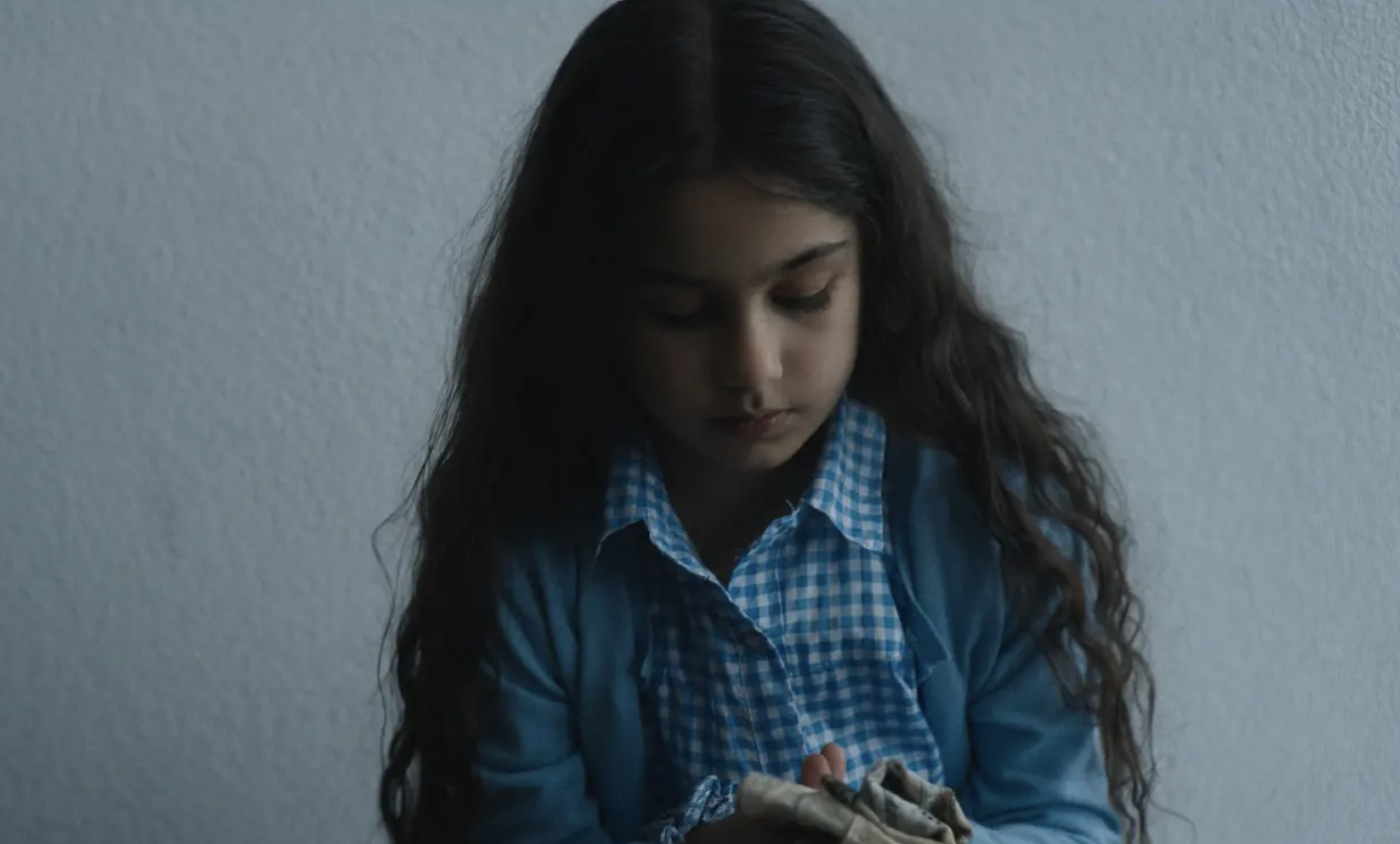
Situated in an unacquainted estate somewhere in London, the short centers around two young girls of an Iranian refugee family, resettling into an environment that should offer safety and solace, but instead offers seemingly no sense of belonging.
The film emerged from Wain’s perturbation towards the growing hostility and rise in anti-immigrant sentiment in the UK, channeling this context into her story that foregrounds the intimate, overlooked experience of resettlement.
In doing so, In the Clouds articulates an unspoken experience, often too familiar to many immigrants: the experience of inhabiting a space that offers settlement without any acceptance.
Central to the film's sentimental force is its alignment with the perspective of childhood, Wain has spoken of returning to memory as a structuring device, noting that she ‘tried to remember her own childhood.’ This retrospective gaze structures the film’s formal economy, whereby fear is articulated indirectly rather than through explicit threat.
By adopting a child’s perspective within an immigrant household, in the cloud exposes how structural hostility towards migrants is encountered not as overt aggression. Prejudice registers through the unspoken tensions of the resettlement, revealing how political hostility permeates domestic and communal spaces.
In discussion, Wain highlighted her desire for the film to resonate further beyond merely her own experience. She described the project as something she ‘couldn’t stop thinking about’, an impulse reflected within the film's refusal of didacticism and profound sense of emotional compulsion. Wain further articulated that a strong statement that resonated with the audience felt indispensable whilst creating this short.
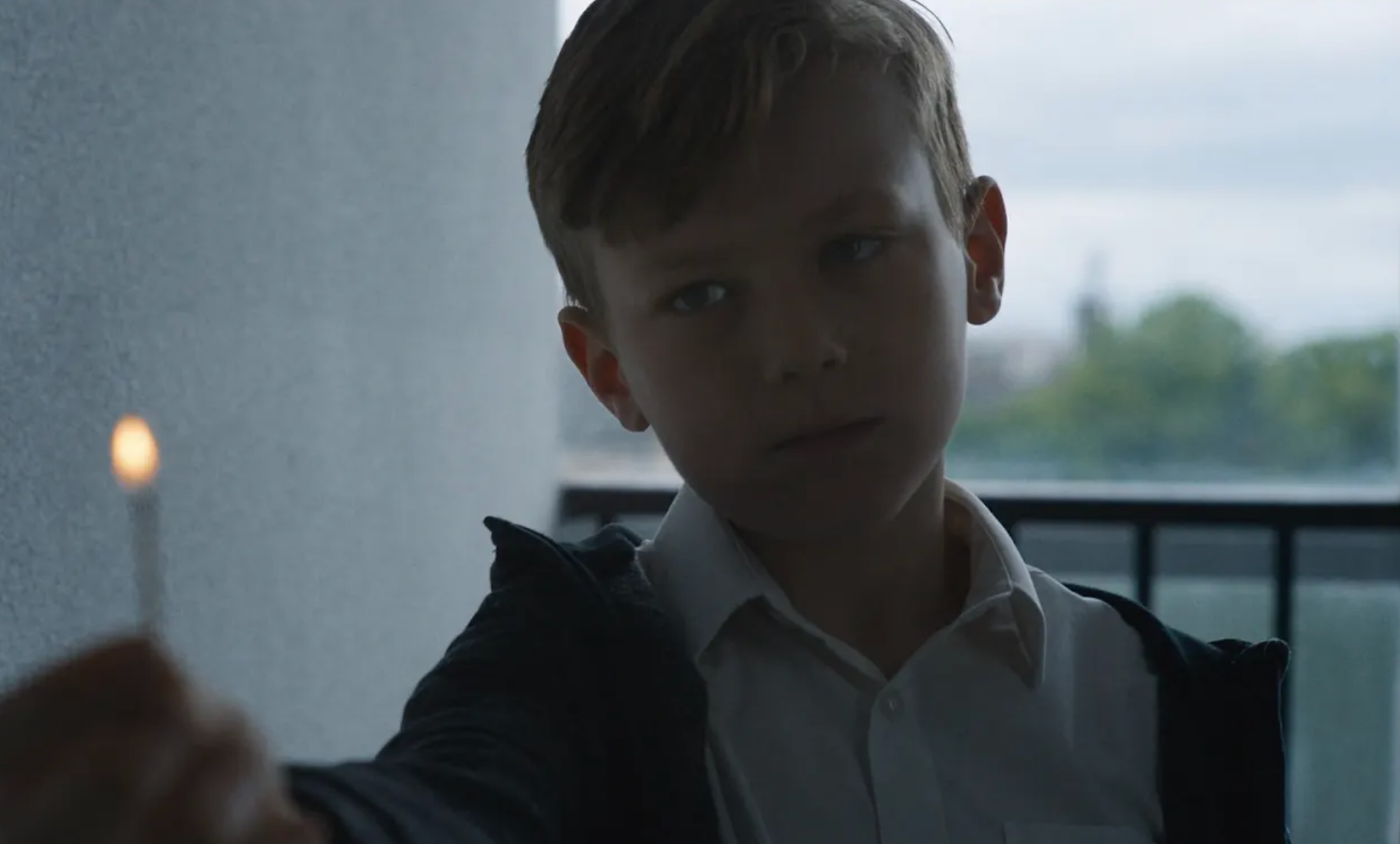
Furthermore, she described her film as both ‘topical’ and ‘uncomfortable’ responding to a cultural climate in which hateful ideologies persist, often directing the attention towards division. In the Clouds perhaps receives its accolades for its ability to respond to this context so tenderly through not confrontation, but through embedded sustained emotional register.
The film’s directorial poise is particularly striking given that In the Clouds marked Wain’s first experience directing, alone. Shot over the course of just three days, the production required coordination, particularly due to the expected challenges of working with child actors.
When asked, Wain reflected candidly upon her earlier uncertainties, admitting that she didn’t feel as though ‘she believed in herself’ at the time, further expressing regret at not having made a short film while at university.
 Harry Gillingham
However, it appears as though this self-doubt was counterbalanced by Wain’s strong commitment towards collaboration, as she spoke with notable warmth, about those who she worked alongside, highlighting the significance of clear communication and a calm working environment.
This ethos extended beyond production and distinctly into her approach to leadership; when asked what advice she would offer to future film students, her response was simple: ‘Stay Calm.’
Featured Image: Alexandra Bahhiyih Wain
Epigram is grateful to Alexandra Bahhiyih Wain for her words and Anthony Hon for his help to organise this interview.