
By Luca Woodruff, Second Year, Law
Mary Bronstein’s sophomore feature is a feverish, claustrophobic black comedy that shrouds its audience in moral ambiguity, offering neither compassion nor contempt for its unruly protagonist. Aronofskian in its suffocating intimacy, If I Had Legs I’d Kick You is an unfiltered account of an exasperated mother coming apart at the seams, delivering a film more interested in depicting burnout than examining its causes.
Linda, portrayed through a ferociously evocative performance from Rose Byrne, juggles overbearing patients, domestic displacement and chronic illness with the dimly suppressed fury of an incendiary wine-mum. She isn’t following her daughter’s treatment right, she didn’t order the pizza cheese-free, and great, now her ceiling’s caved in. She seems sad, laments the disembodied voice of her daughter.
They move to a nearby motel, where Linda is soothed only by self-medication; cannabis and alcohol, the latter gatekept by a sadistic shopkeeper who seems to relish her desperation. James (played by A$AP Rocky), another worker at the motel, offers Linda her only begrudging companionship, and the film gains its limited gasps of air.
But Bronstein insists on these moments as eyes of the storm; their warmth existing only in the context of surrounding failure and misery. It is this relentlessness that begins to expose the film’s central limitation. Bronstein gestures toward a breadth of concerns: maternal burnout, addiction, food-related illness and the failings of therapy culture, without rigorously exploring the depth of any one of these. We are overwhelmed alongside Linda but not given the distance to understand her. Though, perhaps this is the point. Exhaustion of adult life does not manifest as a single wound, so maybe the film’s refusal to choose one speaks more accurately to the experience of characters like Linda.
One of whom is pictured through Caroline (played by Danielle Macdonald), a therapy patient whose crippling infant-related anxiety leaves her on the brink of emotional collapse. In briefly abandoning her baby into Linda’s avoidant arms, Caroline enacts the very impulse Linda herself cannot look in the eye – the need to shrug off the weight of motherhood, if only for a few hours. The film’s opening epigraph speaks to this, a catastrophising strip of therapy-jargon: “time is just a series of things to get through. Each goal is a cliff; there’s nothing at the end of it. But then it comes, and it’s just another cliff.” It applies to Caroline’s condition, but is an equally astute diagnosis of Linda’s own. Their parallel becomes explicit when Linda eventually shirks her responsibilities and escapes to the beach in the final act.
What sympathy remains for our protagonist is slowly eroded by her own compulsions. The hole in the ceiling of her condemned apartment functions as the film’s most honest metaphor of her mental life. She is repeatedly drawn back to it, not to fix it, but to stand before it and look. Bronstein’s implication is stark. Linda is not just a victim of her circumstances. She is, to some degree, complicit in them.
And Linda’s interactions with those around her reveal an ingrained insecurity, buried behind a mask of disinterest and antipathy. “You’re making fun of me”, she remarks at James. She confronts her counsellor and colleague, “why don’t you like me?” She is both doctor and patient but has never stopped being the latter, as hungry to be seen and loved as any of her clients. A promise to be better is threaded through by Bronstein, said first by the child to the mother, then finally vice versa. But after the littered chaos of the second and third acts (hamster roadkill, assault of James, the tube removal and Linda’s deceit of her husband), we are not convinced by either of them.
Many perspectives have approached If I Had Legs I’d Kick You as an empathy project, a portrait of maternal burnout designed to foster understanding. This reading feels too generous. Bronstein is not asking us to understand Linda – she is asking us to dislike her, in the way that adults, at their most exhausted and irrational, grow to loathe themselves. The dream sequences, the tube pulling and the impossible ceiling hole are evidence of a surrealist texture bleeding at the edges of this film, the cinematic language of psychological projection, not realism. Linda is not a fully rendered human person in so much as she is a model of this self-hatred; a visualisation of human self-destruction so that we might review the way we treat ourselves.
 Tylah Hendrickson
It is only through this interpretation that the title can take its full shape. The idiom conveys both incapacity and viciousness in equal parts, the rage of someone disempowered. But in Linda’s case, it is not true. Linda has legs. She chooses to believe she does not, subscribing to a philosophy of helplessness that mirrors her daughter’s own defeatist mentality. This is Bronstein’s most interesting but least developed idea, culminating in a grippingly disarrayed narrative which, like Linda herself, cannot quite decide what it is trying to say.
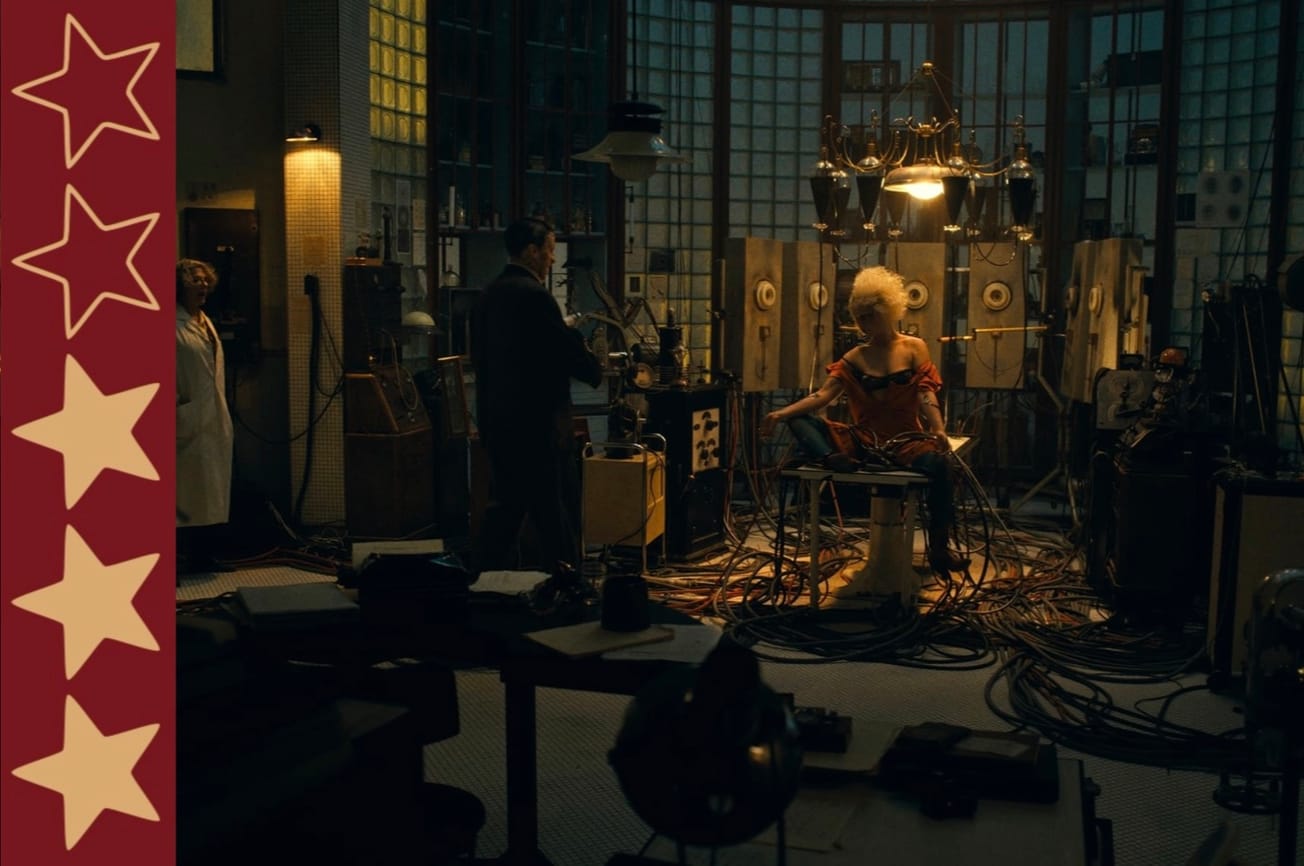
Featured Image: IMDb / If I Had Legs I'd Kick You | Illustration by Epigram / Sophia Izwan
What did you think of If I Had Legs I'd Kick You?