By Eluned Darwin Goss, Third Year Law and French
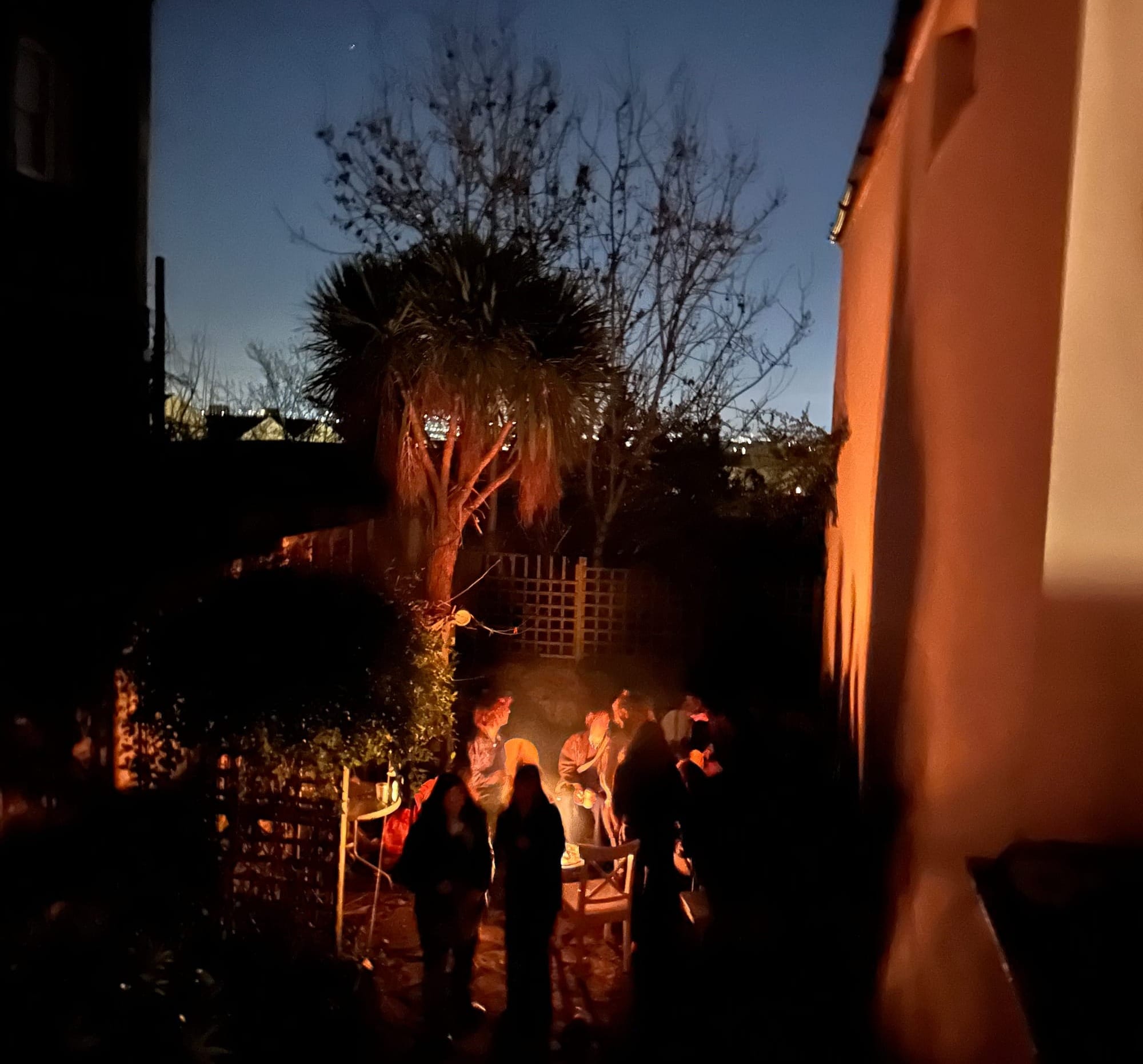
You're in second year, you finally feel comfortable in your university city, you have a secure friend group and you’re ready to seize the year. What better way to celebrate your return than to throw a big, busy house party?
Many students get caught out by noise complaints at the start of the first semester. Between 2020 and 2025, 2,451 noise complaints were made about University of Bristol students, with 375 of these resulting in disciplinary action. The police will show up to discuss the situation with a resident, before reporting back to the university. The residents of the house will attend a meeting at the Community Liaison Office for an investigation, and they will be provided with advice on how to reduce noise and the risk of noise complaints. More serious behaviour may result in more formal action.
The university’s policy regarding noise complaints is somewhat confusing to students. What really is going on? The first ambiguity lies in the university’s involvement in private accommodation, despite private housing not being student accommodation, i.e. student halls. The university works with the police to ensure that disruptive behaviour is resolved instantly. Student areas such as Chandos Road, Hampton Road, Redland Grove, Trelawney Road and others are patrolled on certain days of the week on which students typically make more noise – Wednesdays, Fridays and Saturdays. This plan is named ‘Operation Beech’, into which £25,000 was funded when it was established in 2019. Neighbours can text the address from which the disturbance arises to the number found online, to which the police will respond on a priority basis. In a survey of 20 students conducted by Epigram, 50% of respondents said that they have received a noise complaint whilst at university, 90% of them being in second year when they received it, and 10% in third year. Annex 2 of the Student Disciplinary Regulations (applicable to all registered students) outlines the ‘Local Rules and Regulations for Misconduct in University Residences and the Community’. A2.1 specifies the University may investigate ‘excessive noise or gatherings that cause a disturbance to members of the local community’, as well as other examples of behaviour which may harm neighbours. 66.7% of respondents said that they attended an investigative meeting with the Community Liaison Office. Interviewee, ‘L’ said that the meeting was ‘clearly just a formality…to tick a box’.
‘she thought the police were there "to scare us into stopping. They didn’t say anything of importance"’.
81.8% of respondents of Epigram’s survey said that they did not think that the noise complaint was reasonable. This could be due to the party being louder than the students expected, or that they did not think that it was ‘disturbing’ or ‘excessive.’ L said that she ‘would have appreciated it if the neighbour had spoken to us first’ before the police turned up, ‘as it was a Saturday at about 12am’. She also said that she thought the police were there ‘to scare us into stopping. They didn’t say anything of importance’. A2.2 outlines the Disciplinary Procedure, leaving the Senior Residential Wellbeing Manager the competence to make decisions regarding guilt and penalty. A2.3 outlines the potential penalties the students may be subject to, including sanctions. For some, the most daunting penalty is a fine: it will not exceed £250, bar where the behaviour is ‘likely to cause injury or impair safety on University premises’ – in which case the fine could be up to £400. The fines collected fund Operation Beech. A2.4 provides information on how to appeal the decision.
Another ambiguity lies in when this fine will be imposed. The Regulations note that ‘consideration will be given to the seriousness and circumstances of the misconduct, the Responding Student’s means and any other mitigating circumstances raised by the Responding Student or their representative.’ The University lacks legal powers to deal with complaints on a much larger scale. Contrastingly, the Bristol City Council Neighbourhood Enforcement Team can deal with persistent noise problems. Legal private nuisance usually involves repeated behaviour, and an Anti-Social Behaviour Order is only likely to be issued if noise is persistent. For this reason, Bristol Council asks that a complainant fills a ‘14 day noise diary’ before making the complaints.
 Sophie Scannell
 Sofia Athena Roberts
0% of our survey’s respondents said that they received a fine from the university, but some said that they received a warning. This may not be a representative percentage for such a big university, and other online sources suggest that in the past, many students have been fined. Whilst the situation may have changed, this percentage suggests that it is difficult for the office to determine the severity of a situation. L said that she has never met anyone who has been fined after a one-off noise complaint. It is possible that the office refrains from fining students for a one-off complaint, as many parties end up bigger than planned, and the sensitivity of surrounding neighbours is not linear. These potential ambiguities lead 90% of respondents to claim that they do not feel that their rights are clear when it comes to house party complaints and fines at the University of Bristol. L, however, said that she thought that the meeting was helpful to know what fines may be imposed next time.
A one-off noise complaint and its investigation by the university may thus largely be a warning and a way of calming down excited returners, delighted to have their own houses within real communities. No longer protected by the isolation of student halls from the rest of society, they have to be shocked into reality. One day, it will be them being rudely awakened by Fred Again and Groove Armada a few doors down Chandos Road.
Featured image: Epigram / Hanno Sie
Have you ever been fined for hosting a party in Bristol?