By Beth Nugent, Third Year, Film and Television
On a gloomy Thursday morning, whilst I was wracked with the flu that seems to be ravaging the Bristol population, the (not so) anticipated season of Bridgerton dropped. After a particularly boring season three, it was only the fact that I was bedridden and ill that made me tune into the scandalous period drama, and let me tell you, Bridgerton is so back.
It isn’t so much a new brilliance to this season as it is a return to the good old days. The first season of Bridgerton was new and different, and whilst I never really bonded with the main couple, Daphne (Phoebe Dynevor) and Simon (Regé-Jean Page), it was exciting. Season two has my entire heart; everything about it was phenomenal - Jonathan Bailey being the highlight, obviously. So, when season three was riddled with acrylic nails, false eyelashes and a mind-numbing plot, I was sorely disappointed. The world felt like a cheap mockery of the previous seasons, with costumes going from historically inspired with creative liberties to a tacky Met Gala with a sprinkle of Regency. Dresses were obscene, the makeup felt straight out of the 2020s, making a convincing argument for the ‘iPhone face’ phenomenon, and it all felt wrong and out of place. All this to say, I really had lost hope for this show after its sharp and sudden decline. But Benedict and Sophie changed everything.
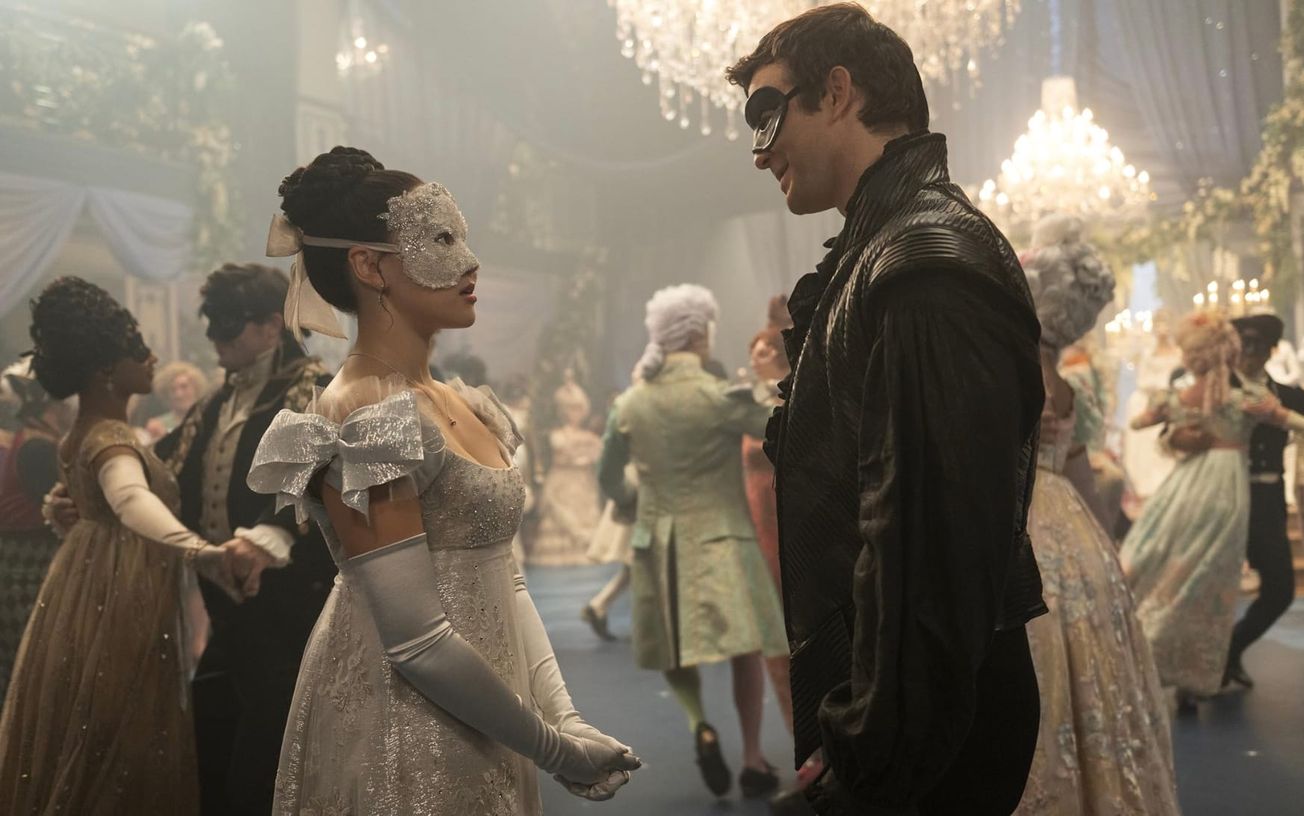
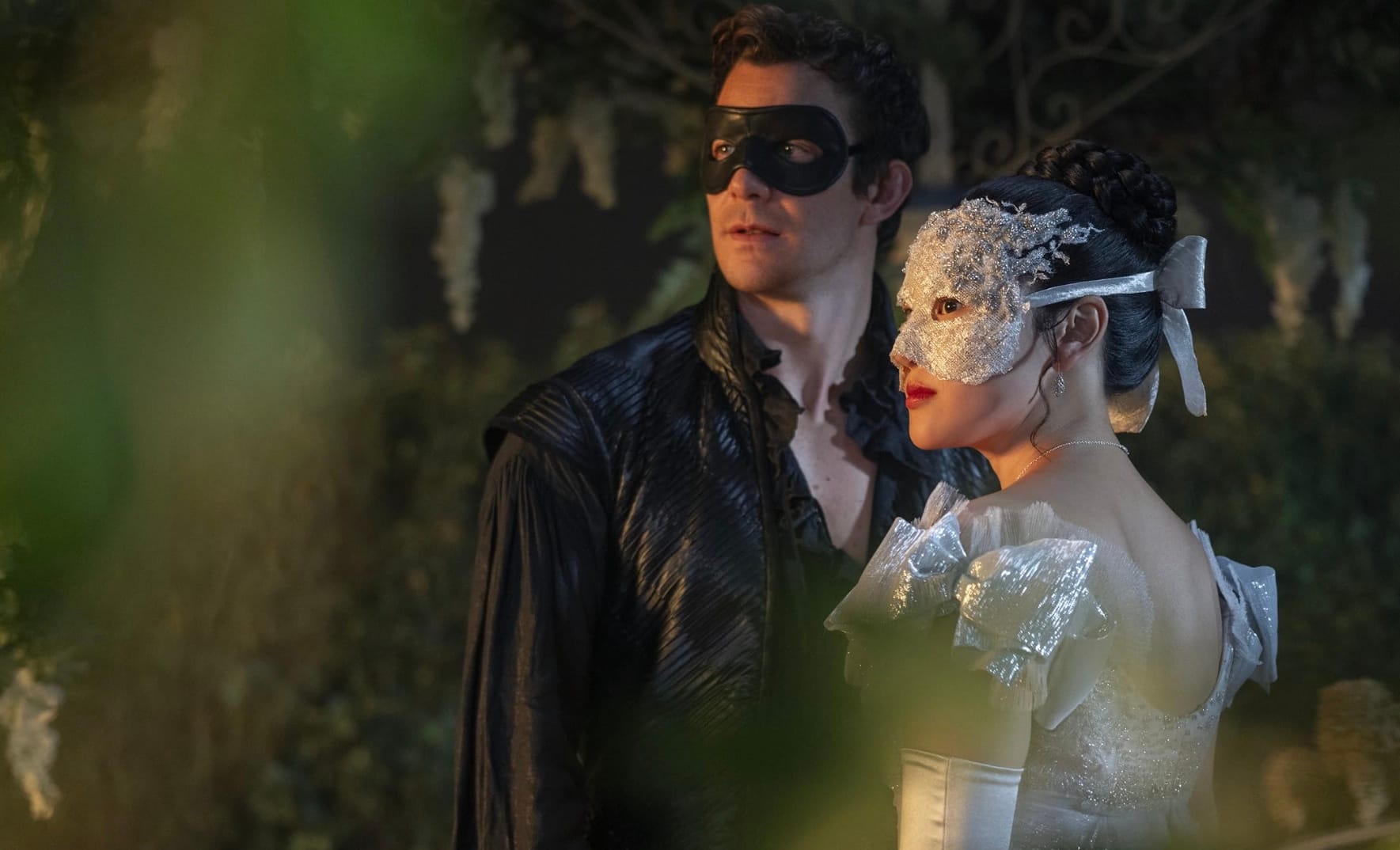
Season four is a Cinderella retelling, starting with a masquerade ball. Our Cinderella, Sophie Baek (Yerin Ha), is a maid adorned in a silver dress and mask and fondly referred to by our leading man, Benedict Bridgerton (Luke Thompson), as the lady in silver. After a quick dance lesson on a private terrace, Benedict removes Sophie's glove to give her a chaste kiss on the hand (unchaperoned!!!!). The clock strikes midnight, and when all guests are supposed to take off their masks and reveal their identities, Sophie runs off into the night, leaving Benedict not with a glass slipper, but with a satin glove.

As a fierce enemies-to-lovers fan, I was shocked that I really didn’t mind their instant attraction. What’s brilliant about period dramas is that the small things are emphasised to such an extent that when Benedict held Sophie’s ungloved hand with no chaperone present, I was genuinely giddy, giggling and kicking my feet. It’s just something that doesn’t translate to modern society - a brush of a pinky finger isn’t as heart-stopping, but in this world, it’s everything. The tension these two share doesn’t come from the potential looming threat of unrequited feelings but from both the class divide and the one-sided concealed identity. It’s always hard to pinpoint what makes two actors have chemistry, but from their first scene together, I can confidently say they’ve figured out the secret. Nothing felt forced or pre-rehearsed. Each look and smirk from Benedict had me squealing with delight, and something as simple as Sophie fixing his shirt button almost had me redownloading Hinge.
In recent years, the tropification of media has resulted in the mass production of predictable and boring stories, but even with the season being marketed as the ‘Forbidden Love’ trope, it had no shortage of twists and turns to keep us on our feet. In part, this is derived from the fact that Benedict still has no idea that his newest maid, Sophie, is the lady in silver. It perfectly presents the ever-looming question: which is better, living with the perfect fantasy in your head, or the slightly messier and more complicated reality in front of you? Throughout the first part of the season, we see Benedict toying with this very debate and eventually relinquishing his search for the silver maiden and choosing Sophie, unbeknownst to him that they’re the same person. The setup for the theme works perfectly, whilst we have already been introduced to the couple through Lord Bridgerton and the lady in silver at the ball, we get to know Sophie and Benedict in episode three where they are confined to a cottage together while Benedict recovers from an injury. Far away from the gossiping streets of London, this setting allows the viewer to fall in love with the pair whilst they are themselves, and the social divide is a distant memory. This means that once they return to London and we have to watch Sophie serve Benedict tea and clean after him, it hurts all the more, because we’ve seen them fall in love as equals.
And, while I know it’s obvious, I did really appreciate the symbolism of the staircase scenes. In the first one, Benedict and Sophie are walking side by side until Benedict travels up the stairs, whilst Sophie continues on her path down to the servant quarters. Get it? It’s a physical representation of their social status. In the second staircase scene, Benedict is on the upper level and travels down, Sophie is on the lower level and travels up, and they meet in the middle. Now, how’s that for some film theory? Anyway, even though it was basic, the film geek in me did love that.
What I didn’t love was the reminder of the audacity of these men. ‘Be my mistress’. That’s all I have to say on that.
 Emma Coleman
Part two comes out on the 26th of February, and I will unashamedly admit I will be anxiously waiting for its return. Sure, the show is predictable, not historically accurate, slightly cringey and odd at times, but it’s consistent enough and that in itself is admirable.
Featured Image: IMDb / Bridgerton
What did you think of Bridgerton Season 4 part one?