By Emma Griffiths, Sports Editor
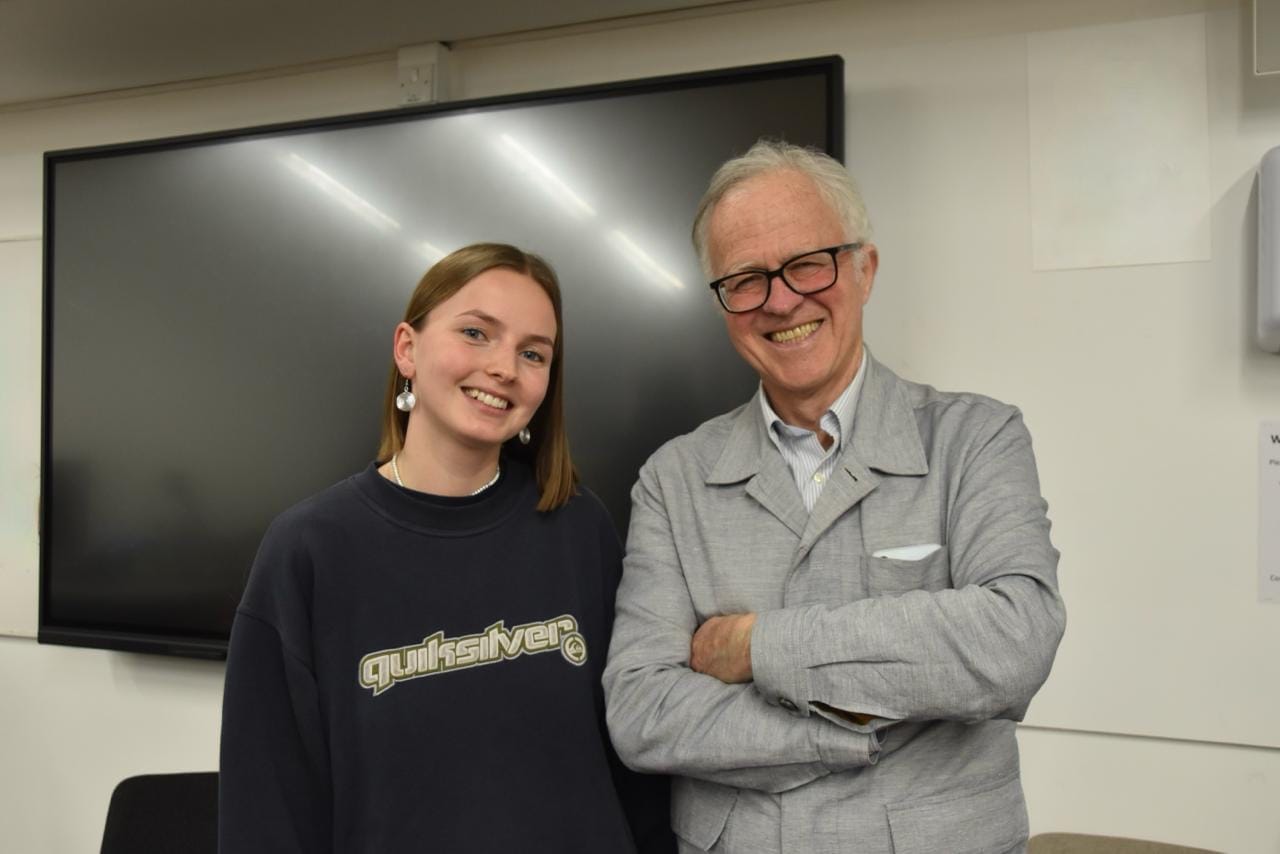
It is not often that I am happy to be in university past 5pm - in these times of short days and cold nights the call of home often proves just too tempting. However, on Tuesday, 3rd March, the lure of hearing Jim White trumped that call of my sofa, as he came into the Arts Complex to talk about his career in sports journalism.
Jim is nothing short of an icon in football journalism. He was one of the founding staff members of The Independent, and his words have graced the covers of four national newspaper. He has a longstanding football column with The Telegraph, as well as hosting a podcast ‘The Good Days Are Coming’. He’s written several acclaimed books about football, including a Manchester United biography and a memoir ‘You’ll Win Nothing With Kids’. Oh, and he’s covered seven World Cups and six Olympic Games.
In short, Jim White knows everything there is to know about the vast multimedia industry of sports entertainment. Anything he doesn’t know, to be honest, probably isn’t worth knowing in the first place.
It’s an incredible opportunity to be able to be sat in the same room as a legend of this calibre, one that has interviewed the likes of David Beckham - who White remembers ‘smells lovely’ - and many other household names that we have grown up with.
His stories are prolific and punctuate his advice constantly, painting a life and career that is not much short of the movies. From Frank Bruno, heavyweight boxing legend, making him get in his back garden ring against him before allowing him to have an interview, to being completely out of his depth at the Olympic dressage, the ‘most ridiculous sport of them all’, his career has truly taken him far and wide. White has a way of making everyone in the room feel at ease, regaling us with stories as a favourite, much-experienced uncle would.
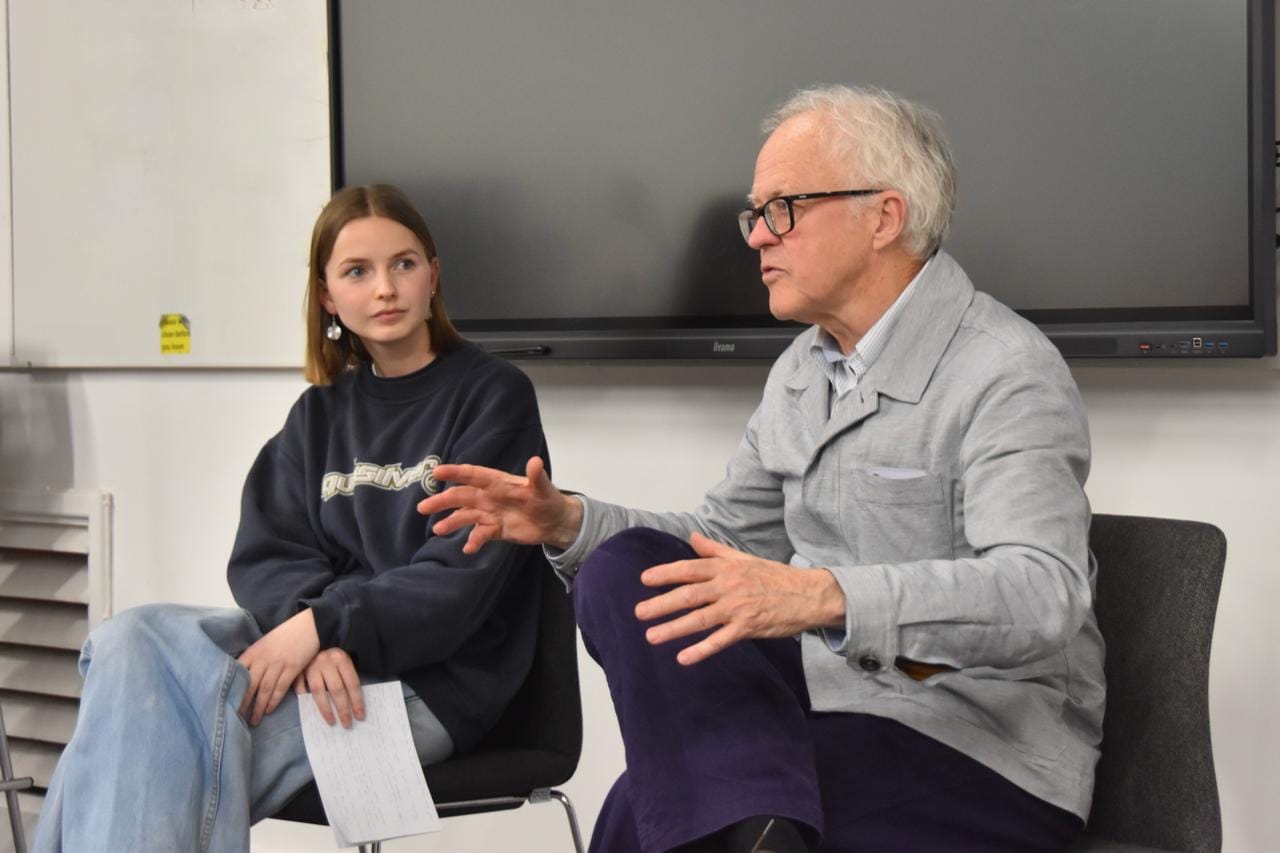
Yet he is not just here to romanticise the career that everyone gathered in the room dreams of pursuing. His has been a hard-fought, long career, built over many decades of polished work.
‘I’m not going to sugar-coat it, it’s really hard to get into the profession these days.’
‘When I first started at journalism, my first editor said there are two things you need to know about journalism - first of all, useable copy on time is what you’re delivering. And that absolutely covers everything. The other thing he said to me was “start with a bang, end with a bang, and run like hell in between.”’
It’s a rarity to be able to have so much wisdom accessible to you as a young, aspiring journalist, and those gathered were very aware of the opportunity presented to them. Ava Featon, Epigram’s own Sports Sub-Editor, was fantastic at asking questions pertinent and relevant to the gathered student body - namely, how on earth to get a job.
‘When I left [Bristol University], I got a job on a local paper - so immediately totally irrelevant to you guys’.
‘In my days, you got a job. I think now what you’ve got to do is that you’ve got to create the job. In a sense, you’ve got to become a bit of an entrepreneur … give yourself a portfolio of stuff, otherwise no one is going to be interested in you’.
He’s also aware of the short comings of his industry. When asked if journalism is a place for women, he is insistent that ‘Without a doubt and absolutely no reason why not. However, sports journalism is still fundamentally in the dark ages. On Sunday in the press conference [at Manchester United], do you know how many women were there? One’.
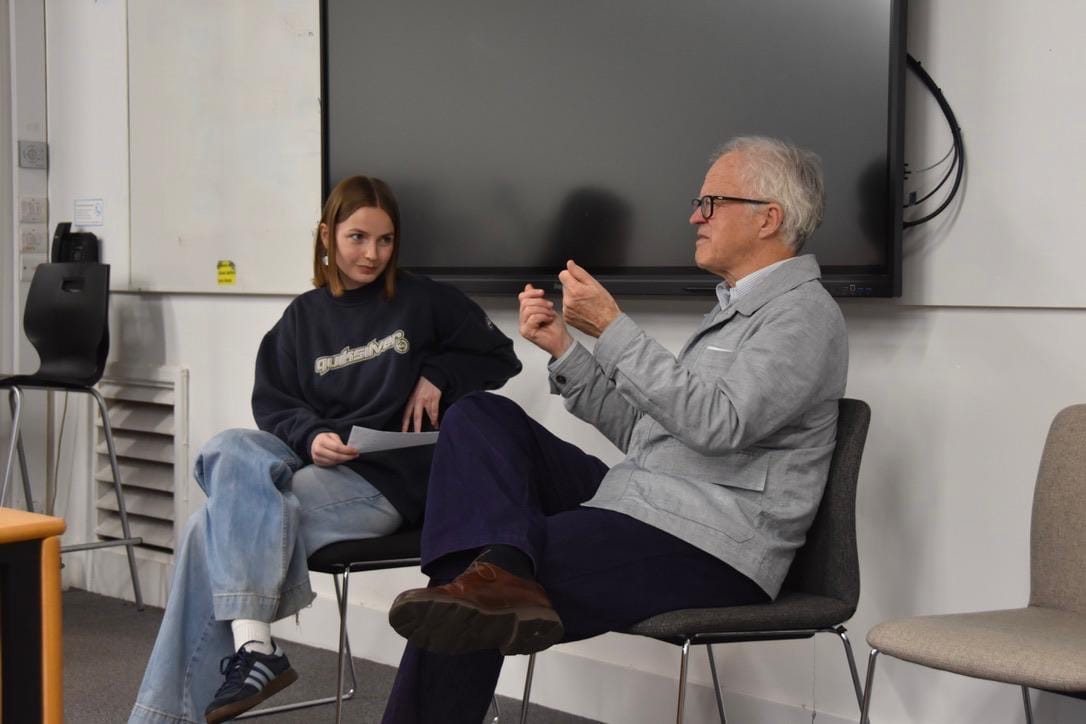
Despite these caveats of the hard work ahead of us, it is also oddly reassuring to hear such a veteran confirm the essentials: that ‘enthusiasm and love [are still] the principal thing’.
‘When you are a journalist, you’re the readers’ eyes and ears … everything’s storytelling... That’s what being a journalist is. Simple as that. It’s telling the world what you think about something’.
When put like that, the ever-more-untouchable first job suddenly seems just a bit more tangible. White is matter of fact and incredibly modest, despite his incredibly illustrious career. He emphasises that you can always improve your creative skills, that you need to ‘ask and find someone who knows about [the sport] if you don’t know about it - that’s how you progress’.
It’s obviously a tried and tested formula for White. From his first match report, which ‘you had to phone your copy through to the copy taker’, the world of sports broadcasting has changed almost unrecognisably to the instant machine that we now know, with match reports available the second the final whistle blows.
White recalls how ‘I did the Euros final at Wembley in 2021, for the front page of The Daily Telegraph, and I had to send 800 words on the final whistle, so the moment the match was over - and it went to penalties. So, I quickly wrote two opening paragraphs. One ‘England win, glory glory Marcus Rashford hits the back of net …' and the other that said 'Sixty five years of hurt, it goes on' …. Guess which one they used’.
It's easy to forget when White is recalling these stories that these are some of the highest profile sporting events of our time, from the Euros finals to the opening ceremony of the London and Paris Olympics. Yet it is obvious that his passion for telling these stories is not founded on the celebrity.
‘My dad said to me when I was looking for something to do in life, if you can make your living out of your hobby, you’ll always be happy - and that’s basically what I’ve done’.
Epigram are incredibly grateful to Jim White for sharing his wisdom with us - I think everyone in that room left feeling that the career of their dreams might actually be achievable.
Who else would you like to hear speak with Epigram?
Featured Image: Epigram / Sian Clarke