By Katy Salamon-Andrew, Third Year, English and History
Harry Richards and Rufus Love's Contact Hours (2024) is able to achieve a remarkable amount in just 25 minutes. Filmed about this time last year, the short has received various accolades including qualifying for the British Independent Film Awards. Its focus on student suicide means it's not an easy watch, but it's an essential one.
In the wake of the pandemic, student mental health has rightly achieved more attention than ever, and this short is deeply rooted in that conversation. Every student who has traded the familiarity of home for the anonymity of university accommodation will recognise the uneasy feeling of identical corridors and closed doors. Freshers’ week might be a blur of parties and introductions, but when the noise dies down, loneliness can set in.
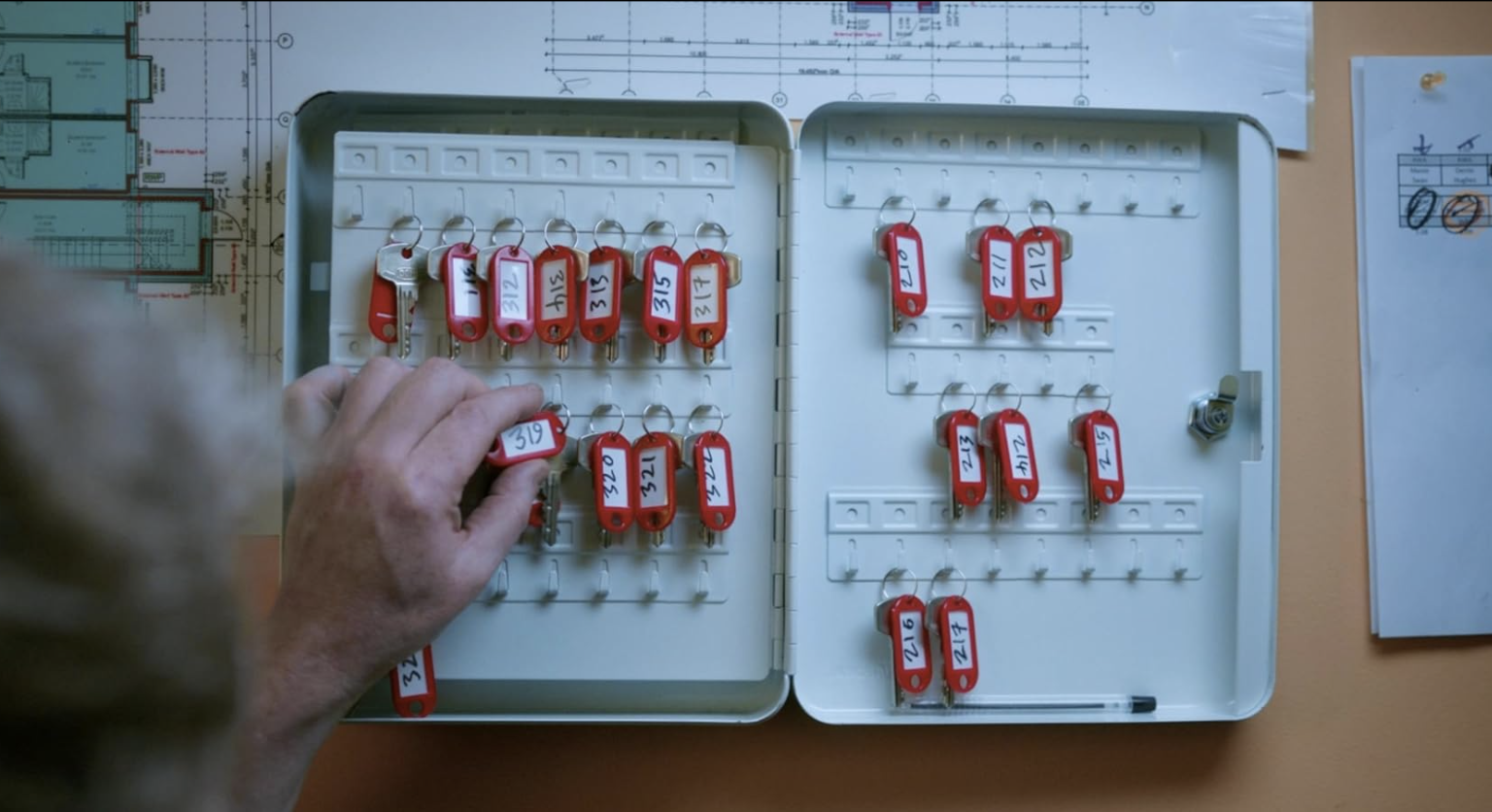
Contact Hours hold up a mirror to this reality. Based on a true story, it follows a university caretaker (Kris Hitchen) who discovers the body of a student who has taken his own life. Interwoven throughout is a focus on his detached relationship with his son (George Osborne) and their struggles to communicate with one another. Although they live under the same roof, they are rarely in the same room or uttering more than a few syllables to one another, and never quite saying what they mean. Silence becomes one of the film’s most powerful tools, with every pause feeling loaded with what people can’t bring themselves to say. We see him eat dinner alone in near-total quiet, later, he drinks alone in an empty pub, a place we associate with laughter and conversation. Not even a hello is exchanged when a girl calls him about a smell in her room, he simply asks ‘315?’.
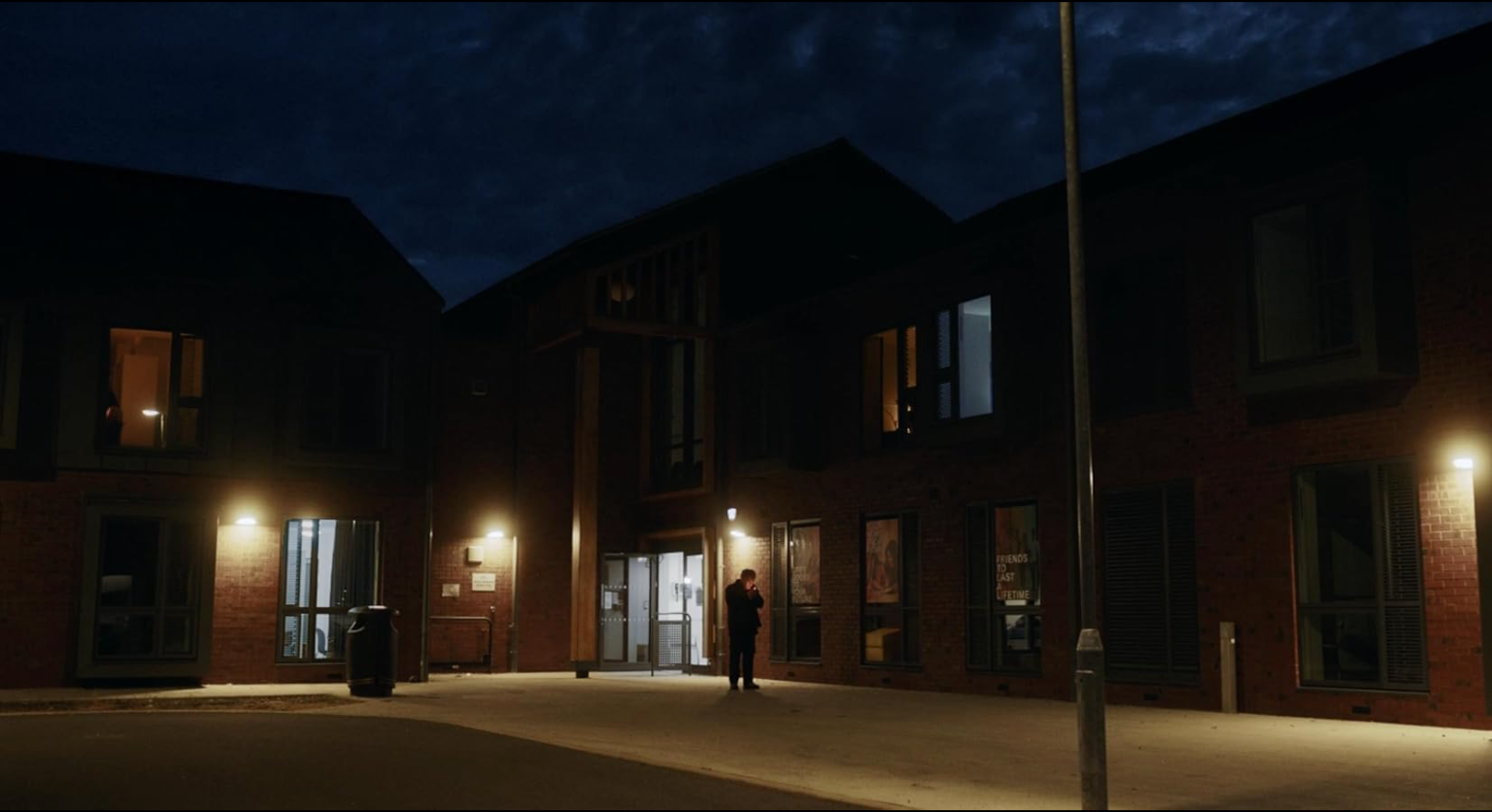
The theme of disconnect and isolation runs through the film’s every frame. When the caretaker enters the halls he encounters a rowdy group of students heading off to a party. This is immediately contrasted to the glum scene of the common area of the flat. A few students sit in the clinically lit space - no one is speaking to one another - they’re either on their phones, one listens to his headphones and one is slumped over a desk asleep. The room encapsulates the feeling of being surrounded by others yet being completely alone.
The boy who passes is never even given a name, simply referred to by his room number 319, adding more dimension to the prison-like feel of the flat. The camera lingers down long, grey corridors stripped of personality, as if to suggest that anyone could live there, and just as easily, be forgotten. Even when we get a glimpse of the boy’s mail, it's just addressed to ‘the occupier.’
However, the film's ending doesn't leave us without hope. The caretaker and his son finally find a way to take steps towards healthy communication triggered by the simple question of ‘you alright?’ demonstrating that even the smallest attempt to talk can break the cycle of silence that defines so much of men’s mental health.
I spoke with Fay Hawkins, a former Bristol student who managed Nightline during her time at the university and is now helping to coordinate the Contact Hours screening at the Winston Theatre.
Hawkins described the film as a ‘call to action to check up on your mates’ stressing that open, honest conversation is key to breaking the stigma around mental health.
‘There’s a lot of fear when talking about suicide’ she said, ‘Even just bringing up that word can do so much to break stigma. Asking someone directly if they’re thinking about suicide shows them it's okay to talk.’
Contact Hours excels in its mission to de-stigmatise conversations around suicide, using art to engage audiences in a way that feels both moving and necessary. By touring universities across the country, the team behind the film are opening up vital discussions with students. In the UK, suicide remains the biggest killer of men under 35, making spaces for open dialogue more important than ever. To support viewers, volunteers from Bristol Mind will be present at the screening as wellbeing staff, and the event will include a panel discussion and Q&A, where the audience will also have the chance to ask questions.
Tickets for the screening are free on Headfirst, and I strongly encourage students to attend, as opening up these conversations can help make a real difference.
Featured Image: IMDb/ Headrush Films
You can catch the screening of Contact Hours at the Winston Theatre on Wednesday 19th November here https://www.headfirstbristol.co.uk/whats-on/winston-theatre/wed-19-nov-film-screening-and-q-a-contact-hours-139087#e139087