By Nancy Laurenson, Second Year, Film and Television
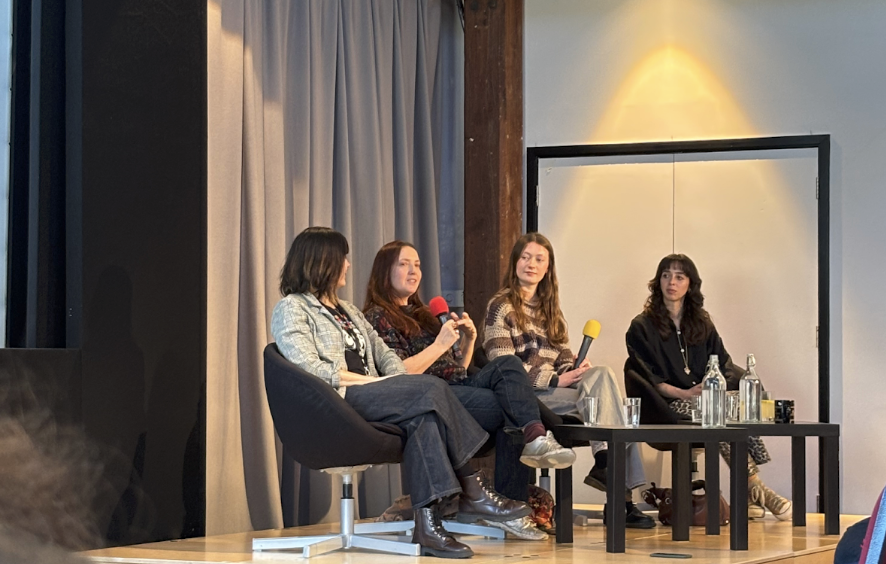
The Palestine Laboratory (2025), showcased at the Arnolfini, and followed by an intimate Q&A with director Dan Davies Nadia Naser-Najjab and Anna Farooque, is a two-part mini-series documentary adapted from the book by Antony Loewenstein. This screening was part of an extensive programme of films that spotlight Palestinian voices, it both moved the audience and provoked insightful reflection that has left a lasting impression on me since the viewing.
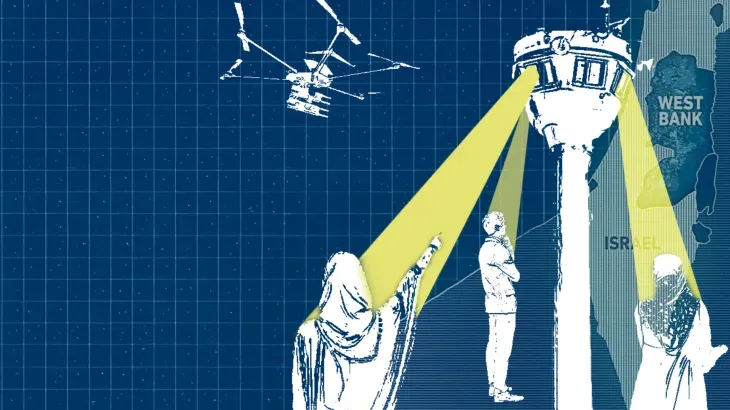
The Palestine Laboratory is a prominent and important depiction of Israeli’s growing dominance achieved through their production of arms and surveillance weaponry. This investigation unveils in detail how Israel has exploited their 50-year occupation of Palestine by turning it into a testing ground for their advanced weaponry. Antony explores how this testing has in fact supported Israel’s economy, advancing their technology to a point where it can be exported globally.
In the first episode the audience are accompanied into Palestine and Israel by Antony who examines Israel’s position as a dominating production site of hi-tech weapons. This episode features interviews with both Palestinians and Israelis alongside a combination of archive footage compiled of promotional videos of their various weapons.
The documentary clarifies any questions surrounding Israel’s treatment of Palestine and shows in clear detail the physical and psychological effects that the advanced weapons have had on Palestinian people. In doing so it highlights the reality of Israel’s power, grown through weapons, that has indeed originated through the testing on Palestinian people.
An effective cinematic device used throughout was the extreme long shots, that paused unapologetically to frame various military giants such as Elbit’s surveillance towers. These shots successfully asserted the physicality of Israel’s dominance and when positioned next to shots of the war-torn landscape of Palestine emphasised the significant power imbalance between the two places.
The use of various personal interviews with Palestinian civilians delivered a truly haunting reality of the everyday life of a Palestinian. Personally, it was the particularly humane, mundane and intimate actions that Antony invited us to share with Palestinian people that truly shone perspective on the scope of Israel’s control and provoked an emotional response. For example, in the first episode there is a moment where we speak to a woman hanging up her washing outside her house who points to a camera you can see tracking her explaining that even menial acts are being watched and demonstrating the total lack of privacy and peace.
 Keira Guy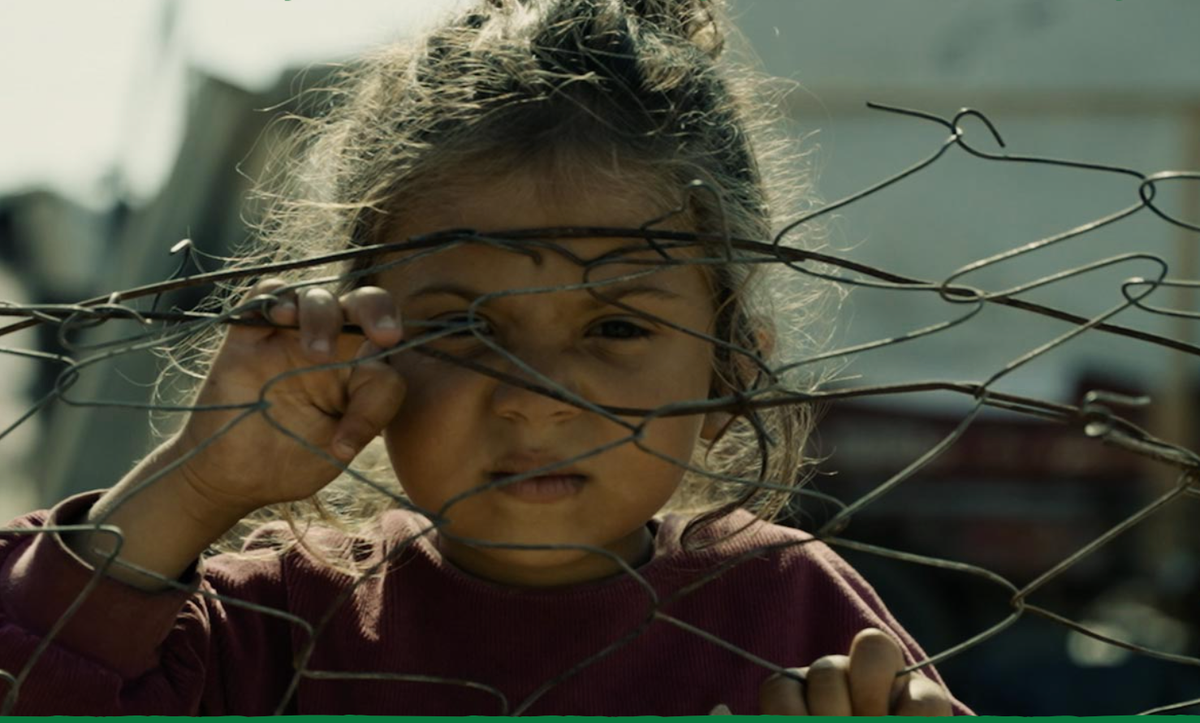
Whilst this may not be the worst effect of Israel’s advanced technology and weapons, this moment truly contextualised the scope of Israel’s control for me. Since the media is currently dominated by distressing images of incomprehensible violence taking place, I found that this documentary poignantly discussed the everyday psychological warfare Israel have forced upon Palestine.
The second part of the documentary contextualises the effects of the testing during the occupation, positioning it within a global context where we visit, India, the border between Mexico and America, South Africa and Europe to cement the reality of how, where and why this technology is implemented, often through racist motivations that seek to control and subjugate groups of people.
This documentary, accompanied by an educational and moving Q+A successfully delivered extremely complex information in an accessible manner that has informed me of the extent of Israel’s modern technology and the ways it is being used, equipping me with the knowledge to fully understand Israel’s current power and occupation. I would highly recommend attending any event that is part of the Palestine Film Festival.
Featured Image: Bristol Palestine Film Festival
Make sure you check out the Bristol Palestine Film Festival next year!